

Choosing the right machine quilting thread is arguably one of the most critical decisions you'll make for any project. It’s the final brushstroke that can turn a lovely quilt top into a true work of art. The perfect thread does so much more than just hold layers together—it builds texture, defines your quilting motifs, and ensures your creation stands the test of time.
Why Your Thread Choice Is a Game Changer
Walking down the thread aisle can be dizzying. With a seemingly endless variety of fibers, weights, and colors staring back at you, it’s easy to feel a bit lost. But don't worry. Think of this guide as your personal roadmap, designed to turn that confusion into confidence by breaking everything down into simple, practical advice.
The quilting world is a massive, passionate community, generating around USD 4.5 billion in revenue each year. That translates into an enormous demand for quality supplies, with quilters everywhere—from home studios to professional longarmers—going through miles of thread. For any shop owner, stocking the right threads isn't just a good idea; it's essential for serving your customers well.
Your Path to Thread Mastery
By the time you finish this guide, you’ll have a solid foundation for making smart thread choices that elevate your quilting and make sense for your budget. We'll cut through the jargon and get straight to what matters.
You'll discover how to:
- Pick the right thread fiber and weight for any project you tackle.
- Sidestep common machine frustrations like shredding, breaking, and wonky tension.
- Buy smarter, saving yourself time, money, and headaches.
- Choose the perfect color and finish to make your quilt’s design pop.
The right thread isn’t just a supply; it’s a design tool. It can melt into the background to let your fabric shine or step into the spotlight to make your stitching the star of the show.
Ultimately, getting a handle on thread selection gives you total creative control. Whether you're aiming for subtle texture or bold, graphic lines, the thread you choose is what brings your vision to life. Ready to see what's out there? You can start exploring our comprehensive collection of machine quilting threads.
Let's Talk Thread Fibers
Choosing the right thread is a lot like picking the perfect fabric—the fiber itself completely changes the end result. Every material has its own personality, from its strength and shine to how it behaves with your quilt top. You wouldn't use a delicate silk on a sturdy utility quilt, right? It's all about matching the tool to the job.
Getting to know the main players in the thread world is the first step to making your stitches look intentional and professional, every single time.
The Timeless Classic: Cotton
Cotton is the quilter's old friend. It's what most of our quilt tops are made of, so it just makes sense. The finish is soft and slightly matte, letting the thread sink into the fabric and become one with the quilt. This creates a beautiful, subtle texture that ages right alongside the fabric for a harmonious look that lasts for generations.
It's fantastic for piecing, since a fine cotton thread creates incredibly flat seams. When it comes to quilting, a high-quality, long-staple cotton is your secret weapon for letting the fabric be the star. For that classic, blended-in look, something like the options in our Aurifil 50wt large spools collection is perfect.
The Powerful Workhorse: Polyester
If cotton is the classic, polyester is the modern workhorse. This stuff is engineered for pure strength and durability, which is why longarm quilters absolutely love it. Polyester is slick, so it glides through the machine with less friction, meaning fewer frustrating thread breaks and a whole lot less lint buildup, especially at high speeds.
Key Insight: Polyester's strength is its superpower. It lets you tackle dense, complex quilting designs without holding your breath, waiting for the thread to snap. It's a serious time-saver in a busy studio.
That durability is no joke. Globally, synthetic threads like polyester make up a massive 70%-80% of all thread consumption. For a quilter, a good polyester thread can be 20%-50% stronger than a cotton one of the same weight. That's a huge difference when your longarm is flying.
The Best of Both Worlds: Cotton-Wrapped Polyester
Ever feel torn between the natural look of cotton and the sheer muscle of polyester? Well, you don't have to choose. Cotton-wrapped polyester thread gives you a strong polyester core wrapped up in a soft cotton sheath.
It’s a brilliant hybrid that delivers the best of both:
- The Look: You get the gentle, low-sheen aesthetic of traditional cotton.
- The Strength: That inner polyester core provides serious durability.
- The Performance: It sews like a dream, with minimal lint and breakage.
This thread is a true all-rounder, great for everything from piecing to quilting on any machine. It's the perfect compromise when you need strength but don't want to give up that classic, soft finish.
Comparing Machine Quilting Thread Fibers
Use this quick reference to select the right thread fiber based on your project needs, desired aesthetic, and machine type.
| Fiber Type | Best For | Key Characteristic | Pairs Well With |
|---|---|---|---|
| Cotton | Traditional quilts, piecing, heirloom work where you want stitches to blend in. | Soft, matte finish that sinks into fabric. Ages with the quilt. | Natural fiber battings like cotton or wool. |
| Polyester | Longarm quilting, dense designs, utility quilts needing high durability. | Very strong, low-lint, and has a slight sheen. Resists wear. | Polyester or 80/20 blend battings. |
| Cotton-Wrapped Poly | All-purpose quilting and piecing. A great "do-it-all" thread. | The look of cotton with the strength of polyester. | Virtually any batting type. |
| Silk | Fine detail work, heirloom quilting, appliqué, and show quilts. | Beautiful natural luster, very fine yet strong. Creates almost invisible stitches. | Silk, wool, or bamboo battings. |
| Rayon | Decorative stitching, embroidery, and when you want stitches to be a feature. | Vibrant color and high-gloss sheen. Makes stitches pop. | Low-loft polyester or blend battings. |
Ultimately, the best thread is the one that gives you the look and performance you need for the quilt you're creating. Don't be afraid to experiment!
Luxury and Specialty Fibers: Silk and Rayon
Sometimes, a project just calls for something extra special. That’s where luxury fibers like silk and rayon come into play.
Silk thread is pure elegance. It has a natural luster that's just unmatched, and it's both incredibly fine and surprisingly strong. It's the go-to for delicate heirloom work or appliqué where you want the stitches to practically disappear. That beautiful sheen just catches the light in the most stunning way.
Rayon, on the other hand, is all about drama. It screams color and high-gloss shine. While it isn't as tough as polyester, it’s absolutely perfect for decorative topstitching or embroidery when your stitches are meant to be a main feature. If you want your quilting to stand out and make a bold statement, the brilliant, saturated colors of rayon will make your work sing.
Getting to Grips with Thread Weight
If you're new to machine quilting, the way we talk about thread can feel like learning a whole new language. The most common point of confusion? Thread weight. You’ll see numbers like 50wt, 40wt, or 30wt on spools, and it's easy to get them backward.
Here’s the secret: it’s the opposite of what you’d expect.
Think of it like this: a higher number means a thinner thread. A fine, delicate 60wt or 50wt thread is like drawing with a sharp pencil—it creates subtle, elegant lines that blend in. A lower number means a thicker thread, more like a bold marker that stands out and makes a statement.
The type of fiber—cotton, polyester, silk—also plays a huge role in how these different weights behave on your quilt.
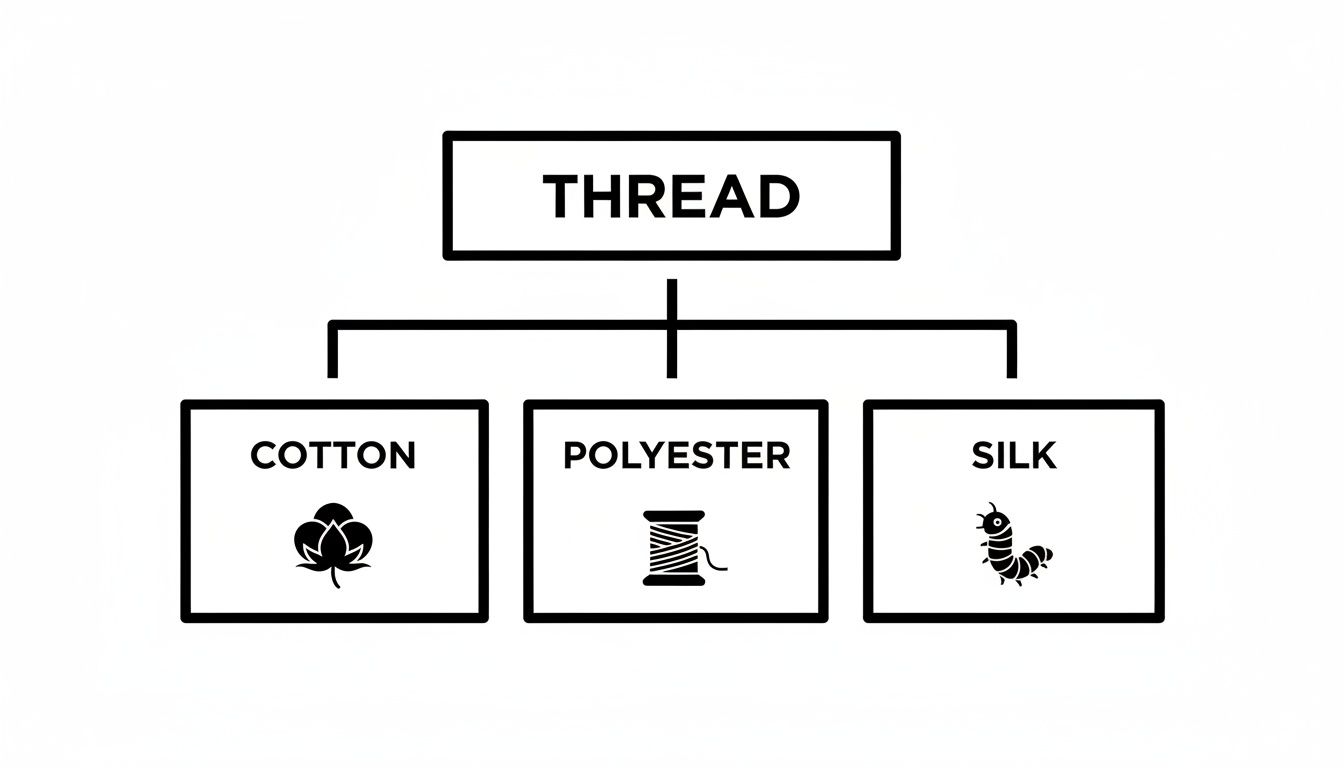
Once you know the fiber you want, picking the right weight for the job is the next crucial step.
Fine Threads: For When Texture is the Star
Fine threads are the workhorses of the quilting world. You reach for them when you want the quilt's texture and beautiful fabrics to do the talking, not the stitches themselves.
These lighter threads are your best bet for a few key jobs:
- Detailed Quilting: If you're doing intricate work like micro-stippling or filling in a background with dense quilting, a fine thread lets that gorgeous texture pop without making the design look messy or heavy.
- Piecing: This is a big one. Using a 50wt thread for piecing your quilt top is a total game-changer. Your seams will lie incredibly flat, which makes quilting over them later a breeze.
- "Invisible" Stitching: Want your quilting to melt into the background? A fine thread that matches your fabric color will practically disappear, letting the lovely dimension of the quilting shine through.
A fine thread builds texture with shadows and light, not with the line of the stitch itself. It's the secret to getting that soft, professional finish you see on award-winning quilts.
For a perfect example of a versatile, fine-weight thread that’s brilliant for both piecing and quilting, you can explore the So Fine! #50 collection. It's a favorite for both home and longarm quilters because it’s strong, smooth, and low-lint.
Medium and Heavy Threads: Making a Bold Statement
Ready for your quilting to take center stage? It’s time to grab the "bold markers"—the medium and heavy-weight threads. A 40wt thread is a fantastic all-around medium choice. It gives you more definition than a 50wt but isn't so thick that it overwhelms the quilt.
Then you have the true show-offs: 30wt or even super-chunky 12wt threads. These are made for decorative work. Their thickness makes every single stitch pop, turning your quilting lines into a major design element. They're perfect for graphic outlines, adding bold texture, or making a feature out of your quilting motifs.
Don't Forget: Match Your Needle to Your Thread
This is where so many quilters get tripped up. Forcing a thick thread through a needle with a tiny eye is a recipe for disaster. You'll end up with shredded thread, skipped stitches, and a whole lot of frustration. The thread has to glide through the needle's eye without a struggle.
Keep this simple guide handy to make the perfect match every time:
| Thread Weight | Recommended Needle Size | Best Used For |
|---|---|---|
| 60wt or 50wt | 75/11 or 80/12 | Piecing, appliqué, delicate quilting, bobbin thread. |
| 40wt | 80/12 or 90/14 | General quilting, topstitching, decorative work. |
| 30wt or heavier | 90/14 or 100/16 | Heavy topstitching, buttonholes, bold decorative quilting. |
Pro Tip: A Topstitch needle is a quilter's best friend. It’s designed with a longer eye and a deeper groove down the front. This design protects thicker threads from friction as you sew, which is the number one cause of shredding, especially with decorative threads or when you’re quilting at high speeds. Picking the right needle isn’t just a suggestion—it’s just as important as picking the right thread.
Choosing Your Perfect Thread Color and Sheen
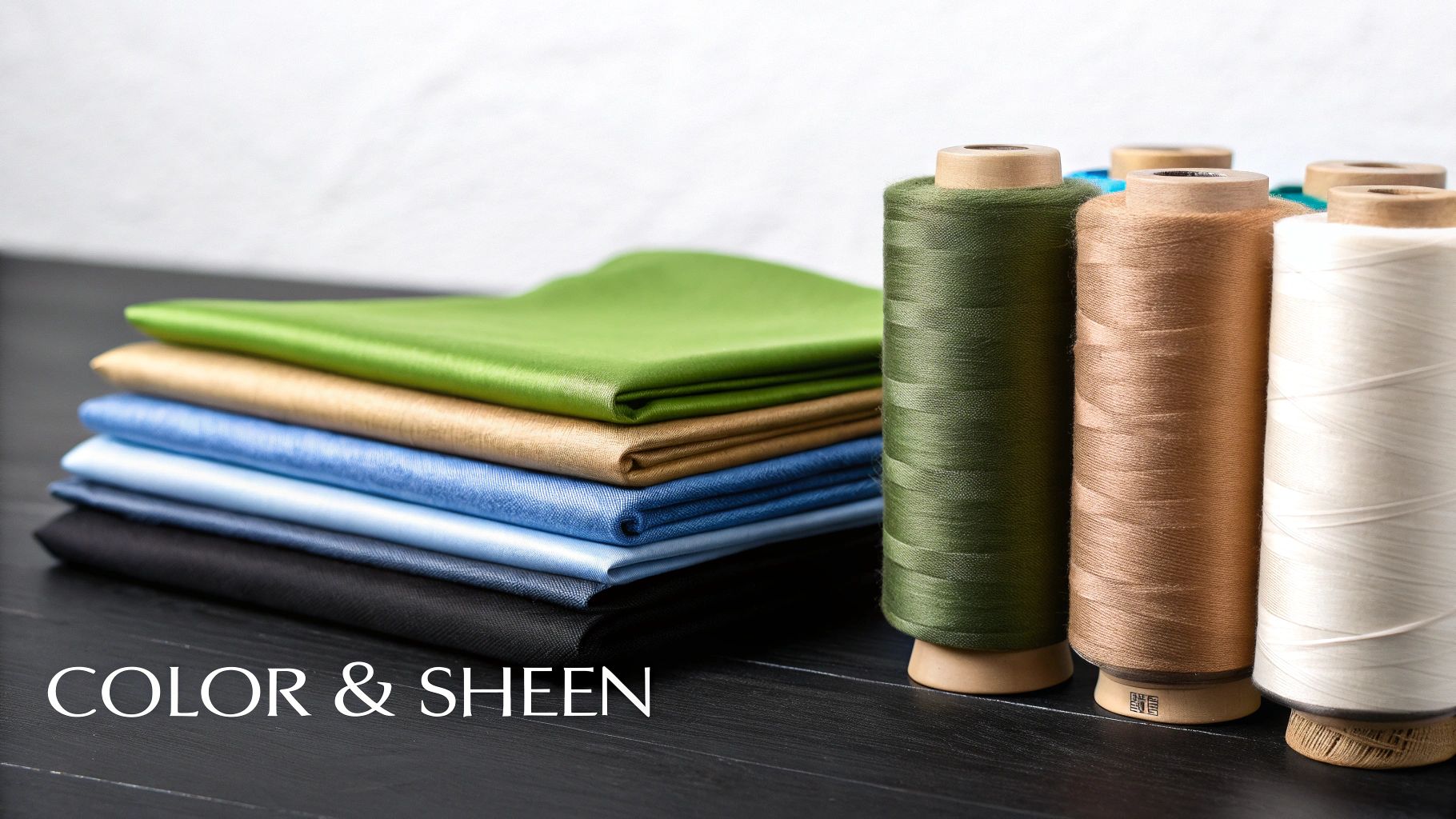
Alright, we've covered the technical side of things—fibers, weights, and needles. Now for the fun part: color. This is where your quilt really starts to get its personality, and the color and sheen you choose can either whisper in the background or shout from the rooftops. It’s one of the most powerful design decisions you’ll make.
And what a time to be a quilter! We have more creative control than ever before. The global sewing thread market, valued at around USD 3.85 billion in 2024, is booming precisely because we demand this level of choice. This constant innovation means an ever-expanding palette of colors and finishes, as highlighted by recent sewing thread market growth research.
The Art of Blending Your Thread
Let’s start with the classic approach: blending. The goal here is simple—you want your quilting texture to be the star, not the thread itself. By picking a thread that melts into your fabric color, the stitches recede and instead create beautiful shadows and highlights. This gives the quilt incredible depth and that soft, traditional feel we all love.
This strategy is a lifesaver when you’re working with a busy, complex fabric print. Blending the thread adds a gorgeous layer of texture without fighting the pattern for attention.
Here’s a pro tip: don’t just hold the spool up to your fabric. Unwind a single strand and lay it right across your quilt top. You'll be amazed at how different a single thread looks compared to the concentrated color on the spool. This gives you a much more honest preview of the final effect.
Making a Statement with Contrasting Colors
But sometimes, quiet and blended just won't do. Sometimes you want your quilting to be a bold, deliberate part of the design. This is where contrast comes in. Choosing a thread that pops against the fabric turns every stitch into a powerful graphic line, demanding attention and making your quilting a prominent feature.
Think of a modern, solid-color quilt stitched with a bright, contrasting thread—the quilting is the art. This is a fantastic technique for sharp geometric patterns, echo quilting, or any design where you want to show off the stitch path.
Creative Tip: A dark gray or charcoal thread is a secret weapon for contrast. It provides a strong, clean line without the harshness of pure black, and it works beautifully across a surprising range of fabric colors.
Adding Movement with Variegated Threads
Variegated threads are like pure magic on a spool. They're dyed with multiple colors that shift every few inches, creating a stunning, multi-tonal effect as you quilt. They add instant movement, depth, and visual texture to any project.
Consider pulling out variegated threads for:
- Large, open areas: They can break up a plain background with a dynamic, watercolor-like wash of color.
- Leaf or floral motifs: The color changes beautifully mimic the subtle variations found in nature, adding a wonderful touch of realism.
- Meandering or stippling: The shifting hues keep the quilting from looking flat and give it a lively, almost sparkling quality.
Understanding Thread Sheen and Finish
Beyond the color itself, the thread's sheen—or lack thereof—has a massive impact on the final look. It dictates how the stitches catch the light, which can either amplify or soften your quilting lines.
You'll generally run into three main finishes:
- Matte: Classic cotton threads have that soft, matte finish that tends to absorb light. This helps them blend seamlessly into the fabric, reinforcing a traditional, heirloom vibe.
- Lustrous: Most polyester threads have a gentle, subtle sheen. It gives the stitches just enough definition to look clean and crisp without being distractingly shiny.
- High-Shine: For maximum bling, rayon and silk threads are your go-to. They offer a brilliant, high-gloss finish that reflects light beautifully, making them perfect for decorative stitches that are meant to be seen and admired.
Before you ever commit a thread to your actual quilt, do yourself a favor: audition it. Stitch it out on a small practice sandwich made from scraps of your project's fabric and batting. What looks perfect on the spool can look totally different once it’s in the fabric. This one small step will save you a world of regret and give you the confidence that you'll absolutely love the final result.
Setting Up Your Machine for Perfect Stitches
Let's be honest, even the most gorgeous, high-end thread is going to misbehave on a machine that isn't set up correctly. Nailing your machine settings is the secret sauce to getting those flawless stitches we all crave, and it stops frustrating issues like thread nests and wonky tension before they even start.
Think of it as setting the stage for your thread's big performance.
The biggest hurdle for most quilters? Thread tension. It sounds intimidating, but the idea behind it is actually pretty simple.
Mastering the Tension Tug-of-War
Picture a perfectly balanced game of tug-of-war. Your top thread is one team, and your bobbin thread is the other. When they pull with equal force, the knot they form locks right in the middle of your quilt sandwich, hidden away inside the batting. That’s the dream—a beautiful, balanced stitch.
But things get messy when one team pulls too hard.
If your top tension is cranked up too high, it yanks the bobbin thread upward, leaving tiny, tell-tale dots of color on your quilt top. On the flip side, if the bobbin is too tight (or the top is too loose), it’ll pull the top thread down to the back of your quilt.
You don't need a mechanic's license to figure this out. A quick look tells the whole story:
- Top Tension Too Tight: You'll see little specks or "pokies" of bobbin thread on the quilt top.
- Bobbin Tension Too Tight: You'll see loops or dots of your top thread peeking through on the quilt's backing.
Always start by tweaking your top tension dial first, and make only small, slow adjustments. Seriously, a quarter-turn can work wonders. After each tiny change, sew a few inches on a practice scrap to see what happened. It's a much safer bet than going straight for that tiny, sensitive screw on your bobbin case.
A well-balanced stitch is the hallmark of a pro. The top thread should live on the top, the bobbin thread on the bottom, and their interlocking knot should be tucked away securely inside the batting.
The Bobbin Thread Advantage
Want a game-changing tip that solves a ton of tension headaches? Use a finer thread in your bobbin. This is a trick many professional longarmers swear by. Pairing a 60wt or even an 80wt thread in the bobbin with a standard 40wt or 50wt on top makes getting perfect tension so much easier.
So, why does this work? The finer bobbin thread has a much easier time being pulled up to meet the thicker top thread in the middle. Not only does this simplify your tension settings, but it looks better, too. A thinner bobbin thread cuts down on bulk, especially in densely quilted areas, which means your finished quilt will drape more softly and feel less stiff.
If you're building your toolkit and need to explore different threads or find replacement parts, you can find a wide variety of options in our collection of essential machine parts and accessories.
Tips for Home vs. Longarm Machines
While the basic idea of tension is the same everywhere, how you handle it can differ a bit between your domestic sewing machine and a big longarm quilter.
For Domestic Machines:
- Start Fresh: Always, always begin a new quilting project with a new needle. A dull or bent needle is the number one culprit behind skipped stitches and shredded thread.
- Clean It Out: Lint is your mortal enemy. Give your bobbin area and feed dogs a regular cleaning to keep the thread path clear and smooth.
- Use a Walking Foot: For straight-line quilting, a walking foot is absolutely non-negotiable. It grabs and feeds all three layers of the quilt through evenly, which is the key to preventing ugly puckering.
For Longarm Machines:
- Check the Thread Path: Before you panic, double-check that your thread is seated correctly in every single guide and tension disc. A mis-threaded machine is the cause of 90% of tension issues.
- Bobbin Case Check: Do the "drop test." Pop your bobbin into its case, hold the thread tail, and give it a gentle bounce. It should drop an inch or two smoothly. If it doesn't budge, it's too tight. If it plummets to the floor, it's way too loose.
- Consistent Speed: Try to avoid herky-jerky movements. Maintaining a smooth, consistent speed as you guide the machine is crucial for producing those even, rhythmic stitches.
How to Fix Common Quilting Stitch Problems
Tangled threads and skipped stitches can be incredibly frustrating, but the fix is usually simpler than you think. This chart will help you play detective and quickly diagnose the most common stitch issues you'll encounter.
| Symptom | Potential Cause | How to Fix It |
|---|---|---|
| Thread Shredding or Breaking | Old or poor-quality thread; wrong needle size/type; tension too tight. | Switch to a fresh, high-quality thread. Ensure your needle is sharp and the right size for your thread. Slightly loosen the top tension. |
| Skipped Stitches | Dull, bent, or incorrect needle; incorrect needle installation. | Change to a new needle. Make sure the needle is inserted all the way up and facing the correct direction. |
| Loops on Back of Quilt | Top tension is too loose; machine threaded incorrectly. | Increase top tension in small increments. Completely re-thread the top of your machine, ensuring the presser foot is up. |
| Loops on Top of Quilt | Bobbin tension is too loose; bobbin inserted incorrectly. | Check that the bobbin is seated correctly in its case and winding in the right direction. Slightly tighten the bobbin case screw. |
| Puckered Fabric | Top tension is too tight; stitch length is too short for the fabric. | Loosen the top tension. Increase the stitch length slightly. Use a walking foot if you're not already. |
| "Railroad Tracks" | Tension is balanced, but both top and bobbin tension are too tight. | Loosen both the top and bobbin tension slightly until the knots are pulled gently into the batting without distorting the fabric. |
Remember, a little patience and methodical testing on a scrap piece will save you a lot of seam-ripping later. Once you learn what your machine is trying to tell you, you'll be fixing these issues in no time.
By mastering these fundamental setup steps, you’re not just operating a machine—you're conducting an orchestra. You’re giving your thread the support it needs to create the beautiful, durable stitches it was made for, turning potential frustration into pure quilting joy.
Building Your Thread Collection Smartly
Let's talk about building a thread stash. A truly great thread collection isn't just a rainbow of random spools; it’s a smart, strategic investment in your creative toolkit. When you build your collection with intention, you'll find you always have the right thread for the job, without having a drawer full of impulse buys gathering dust. The secret is to think versatility first, specialty second.
Thinking like a pro from the get-go will also save you a lot of money. If you're quilting a lot, and especially if you're running a longarm business, buying thread on large cones is a game-changer. Yes, the upfront cost is a bit more, but your cost-per-yard plummets. We're talking savings of 30% or more in the long run. That's a huge difference when you're managing your quilting budget.
Your Blueprint for a Versatile Collection
It’s so easy to get dazzled by all the beautiful colors and buy one of everything. Resist that urge! Instead, start with a solid foundation of hardworking neutrals. A high-quality, all-purpose 50wt thread is your best friend here—it’s the perfect workhorse for both piecing and quilting.
Your must-have starter set should include these three essentials:
- Cream or Off-White: This is your go-to for almost any light-colored fabric. It just melts into traditional quilt tops.
- Medium Gray: I can't say enough about medium gray. It’s the chameleon of the thread world, reading as a subtle shadow on a massive range of colors without the starkness of black.
- Tan or Greige: When you're working with fabrics that have warm undertones, this is your perfect match. It gives you a soft, beautifully blended finish.
Honestly, with just these three threads, you can confidently handle the vast majority of your projects. Once you have this core set, you can start adding fun colors and different thread weights as your projects call for them. This approach saves you from ending up with a collection of lonely, unused spools.
A smart thread collection is built, not bought. It grows organically with your skills and projects, starting with a reliable core of neutrals and expanding into a personalized palette that reflects your unique style.
Protecting Your Thread Investment
Remember, thread is a fiber product, just like your precious fabric. It needs a little TLC to stay strong and reliable. If you just toss it anywhere, even the most expensive thread will get brittle and weak, leading to endless frustration with breaking and shredding. The two biggest culprits? The environment and just plain old disorganization.
To keep your collection in peak condition, just follow a couple of simple rules.
1. Block UV Light
Sunlight is thread's mortal enemy. Its UV rays are brutal, breaking down the dyes and fibers, causing colors to fade and the thread to lose its strength. The fix is easy: always store your spools and cones in drawers, covered bins, or cabinets—anywhere away from direct sunlight.
2. Control Dust and Humidity
Dust seems harmless, but it can get wound into your thread and create a linty mess in your machine's tension discs and bobbin area. At the same time, high humidity can make cotton threads weak and susceptible to mildew. The solution is to keep them in clean, dry containers with lids.
By buying smart and storing your thread properly, you're ensuring that every spool is ready to go the moment inspiration strikes. It's a simple strategy that not only saves you money but also protects the quality and longevity of your beautiful quilts.
Quick Answers to Common Quilting Thread Questions
Even when you feel like you've got the hang of it, questions always seem to pop up right in the middle of a project. Getting a quick, clear answer can be the difference between a frustrating afternoon and a finished quilt. I've pulled together some of the questions I hear most often about machine quilting threads to help you solve problems on the fly.
Think of this as your go-to cheat sheet. It’s here to help you make confident choices, whether you're just starting or have been quilting for years. Let's get into the details that truly make a difference.
Can I Use Regular Sewing Thread for Machine Quilting?
You absolutely can for piecing your quilt top—in fact, a good all-purpose thread is perfect for that. But when it comes to the actual quilting? That’s a different story.
Machine quilting threads are built tougher. They’re designed to be stronger and create way less lint, which is a big deal when your machine is running at high speeds. Using a standard sewing thread for quilting often leads to constant thread breaks and a machine clogged with fluff. Save yourself the headache: use a quality 50wt for piecing, but always switch to a dedicated quilting thread for the main event.
Using the right tool for the job prevents headaches. A dedicated quilting thread is stronger and smoother, ensuring it can handle the stress of securing multiple layers without snapping or leaving your machine clogged with lint.
How Do I Match My Needle Size to My Thread Weight?
Getting this partnership right is crucial for beautiful, smooth stitches. The rule of thumb is simple: your thread should glide through the eye of the needle with no resistance. If the eye is too small, it creates friction that will shred and eventually break your thread. It’s that simple.
Here’s a handy guide to get you started:
- Fine threads (50wt or 60wt): An 80/12 Quilting or Topstitch needle is your best bet.
- Medium threads (40wt): A 90/14 needle is the perfect match.
- Thick threads (30wt or 12wt): You'll need to go up to a 100/16 needle to make room for the extra bulk.
Pro-tip: A Topstitch needle is a fantastic all-rounder. It has a larger eye and a deeper groove down the front, which does a brilliant job of protecting the thread as it flies through the fabric.
What Is the Best Thread for Wool or Polyester Batting?
Honestly, the look you're going for matters more than the batting fiber itself. That said, if you're looking for a reliable, all-around workhorse, you can't go wrong with a high-quality 40wt or 50wt polyester thread.
Its strength is a huge plus, especially for securing lofty wool or springy polyester batting. It gives you that extra peace of mind and keeps your stitches looking sharp and well-defined. It’s the kind of thread you can count on for just about any project.
At Quilt Batting, we know that the right supplies are what turn a good idea into a great quilt. From the perfect batting foundation to the threads that bring your vision to life, we're here to help you create. Explore our curated selection of quilting essentials at https://quiltbatting.shop and find exactly what you need for your next masterpiece.