

When you’re making something designed to protect you from heat, like a potholder, the batting you choose is everything. The absolute, number-one rule? Stick with 100% natural fiber batting. Synthetics just can't take the heat—literally.
For the very best protection, especially when grabbing things out of a hot oven, my go-to method is layering a piece of specialized insulated batting like Insul-Bright between two layers of good old cotton. This combo is the gold standard for a reason.
Choosing The Best Batting For Potholders
Walking into a fabric store and seeing a giant wall of batting options can be intimidating, I get it. But picking the right one for a potholder is actually pretty straightforward once you know what to look for. The most critical thing to remember is to steer clear of anything synthetic, like polyester. Polyester batting can melt when it gets too hot, which is a serious burn risk you don't want to take.
This is where natural fibers, especially cotton, become your best friend. Cotton can handle high temperatures without melting, making it a trustworthy barrier between your hand and a sizzling hot pan.
And what about projects that might end up in the microwave, like a bowl cozy? For those, 100% cotton is the only safe choice—no exceptions. To make things even easier, you can grab packs of large bowl cozy pre-cut batting that are perfectly sized and ready to go.
Insulated vs. Cotton Batting
If you want maximum heat-blocking power for oven mitts and serious potholders, insulated batting is a total game-changer. A product like Insul-Bright has a special reflective metallic layer inside that literally bounces heat away from your hands.
But here’s the crucial part: because of that metal, insulated batting is never, ever microwave-safe. It will spark and can cause a fire.
The secret to the perfect potholder is what I call the "batting sandwich." You take one layer of insulated batting and place it between two layers of 100% cotton batting. This gives you the powerful heat reflection from the Insul-Bright and the heat-absorbing, non-melting safety of cotton. It’s the best of both worlds.
So, how do you decide? It really comes down to one simple question: will this item ever go in the microwave?
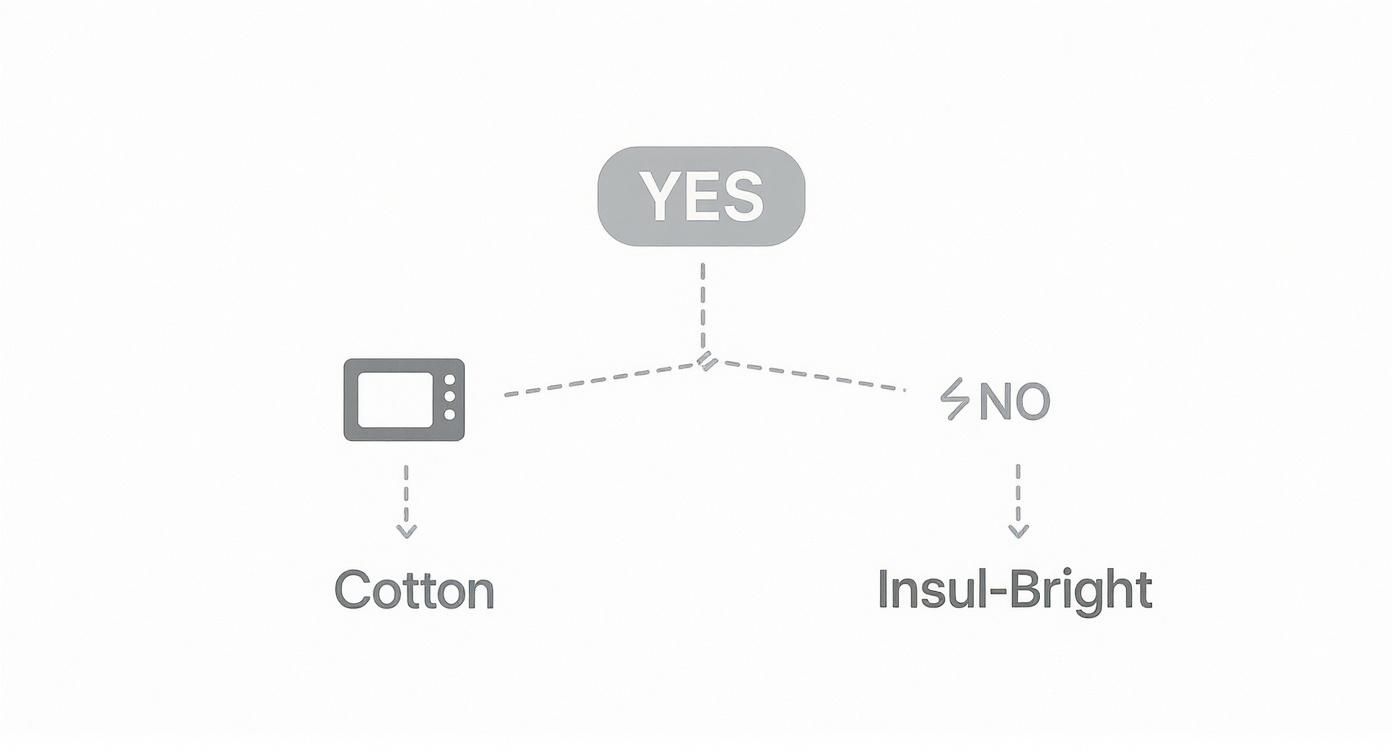
As you can see, the project’s final use dictates your material. A quick thought about whether you’re making an oven-only potholder or a microwave-friendly bowl cozy will tell you exactly which batting to reach for.
Potholder Batting At a Glance
To make it even clearer, here’s a quick breakdown of your main options. This little cheat sheet can help you decide in an instant which batting fits your project's needs.
| Batting Type | Heat Resistance | Microwave Safe | Best For |
|---|---|---|---|
| 100% Cotton | Good | Yes | Bowl cozies, trivets, general use potholders, and as outer layers in a batting sandwich. |
| Insulated (e.g., Insul-Bright) | Excellent | No | The inner core of oven mitts and heavy-duty potholders that will handle extreme heat. |
| Polyester Blends | Poor (Melts) | No | Quilts and other projects that will not be exposed to high heat. Avoid for potholders. |
| Wool | Good | No | Can scorch and has a distinct smell when heated. Better suited for quilts. |
Ultimately, for any project that involves heat, safety comes first. Sticking with cotton or an insulated/cotton combination ensures your finished potholder is not only beautiful but truly functional and safe.
Why Your Batting Material Choice Is a Safety Decision
When you pull a piping-hot pan out of the oven, you’re putting a lot of trust in that little fabric square. But the real hero isn't the pretty fabric on the outside. The heavy lifting is done by the hidden layer inside—the batting—and choosing the right material is a serious safety call.
Think of batting like the insulation in your house. Its main job is to trap air, creating a buffer that slows down heat transfer. A good material keeps the searing heat from a casserole dish from reaching your hand in those critical seconds you need to get it from the oven to the counter.
The Gold Standard: Natural Fibers
This is why 100% natural fibers are the hands-down winner for potholder safety. Cotton is the absolute best choice because of how it reacts to intense heat. It can take the high temperatures, spreading the heat out across its fibers instead of just melting under pressure.
That resistance to melting is non-negotiable. When a material can handle the heat without breaking down, you get a reliable, predictable barrier every single time. It's also why anything you make for the microwave, like a bowl cozy, must be made with 100% cotton—that includes the batting, the thread, and the fabric—to avoid a fire hazard.
The most important takeaway is this: the material you choose directly impacts the safety and reliability of your finished project. It's not just about aesthetics or feel; it’s a functional decision that prevents serious burns.
The Dangers of Synthetic Batting
Now, let's talk about what to avoid. Synthetic materials like polyester batting are a definite no-go for potholders, and here’s the crucial reason why: polyester is essentially a plastic. When it comes up against the heat of an oven rack or a hot skillet—we're talking temperatures that can easily top 400°F (204°C)—it doesn't just fail you. It becomes dangerous.
Polyester has a low melting point. Introduce it to high heat, and it can liquefy in an instant, transferring that scorching heat directly to your skin. Worse yet, that melted plastic can stick to you, causing severe burns. Your simple kitchen helper suddenly turns into a real hazard. While polyester is a fantastic choice for many quilting projects, you can learn more about where it shines in our guide to polyester fiber batting.
Ultimately, picking the right batting for your potholders isn't just another crafting choice. It's a deliberate safety measure. By sticking with natural fibers like cotton, you can be confident that your beautiful handmade projects will actually keep you and your loved ones safe in the kitchen.
A Deep Dive into Heat-Resistant Batting Options
Now that we've got the science of heat transfer down, let's talk about the specific materials you'll be working with. Think of this as meeting the star players—each one has a unique strength perfect for certain situations in your kitchen. Choosing the right batting is what turns a pretty kitchen accessory into a seriously reliable safety tool.
1. The All-Around Champion: 100% Cotton Batting
First up is the undisputed champion of versatility: 100% cotton batting. Consider cotton the trustworthy workhorse of the potholder world. It’s dense, great at absorbing heat, and most importantly, it absolutely will not melt when things get hot. This natural fiber is your only safe choice for any project that might see the inside of a microwave.
Because it’s completely free of synthetic fibers, it won't spark or melt, which is why it's a must-have for things like bowl cozies or potato-warming bags. For a trusted, specifically designed microwave-safe option, our Pellon® Wrap-N-Zap® batting is the gold standard, giving you total peace of mind.
2. The Specialist: Insulated Batting
When you need to handle something serious, like a cast iron skillet or a dish straight out of a 450°F oven, it's time to call in the specialist. This is where insulated batting, like the well-known Insul-Bright, truly shines.
The best way to think of it is like a tiny space blanket for your hands. Insulated batting has a thin, heat-reflective metalized film tucked between layers of polyester fibers. That film acts like a mirror, literally bouncing radiant heat away from your hand before it can get through.
Critical Safety Note: The metal content makes insulated batting completely unsafe for microwave use. Putting it in a microwave will cause dangerous sparks and can easily start a fire. This material is designed exclusively for blocking intense, direct heat from ovens and stovetops.
The demand for high-quality, heat-resistant sewing materials is growing right alongside a larger trend of people investing in better, more durable home goods. For instance, as the market for items like flower pots and planters expands—a market projected to hit USD 1.70 billion—consumers are also looking for top-notch accessories for all their home activities, including reliable potholders. You can explore more about this trend and market growth, which really underscores this shift toward quality and safety in home products.
3. Other Natural Fiber Options
While cotton really is the top contender, wool is another natural fiber worth a look. It's naturally flame-retardant and offers pretty decent insulation, which makes it a perfectly viable option for potholders.
It does have a couple of minor drawbacks, though. Wool can sometimes scorch at very high temperatures and might give off a distinct "hot wool" smell when heated. For these reasons, while it’s definitely safe, it’s not as common for heavy-duty kitchen tasks as cotton or specialized insulated batting.
To make the choice even clearer, let's break down how these materials stack up against each other.
Detailed Batting Material Analysis
Here’s an in-depth look at each material's strengths, weaknesses, and where it performs best.
| Material | Pros | Cons | Recommended Use |
|---|---|---|---|
| 100% Cotton | - Excellent heat absorption - Microwave safe - Won't melt - Breathable & natural |
- Less effective against radiant heat - Can be bulky in multiple layers |
Potholders, trivets, oven mitts, and especially bowl cozies or any item intended for microwave use. |
| Insulated Batting | - Superior radiant heat reflection - Great for extreme temperatures - Thinner than multiple cotton layers |
- NOT microwave safe - Contains polyester, will melt if iron is too hot - Not breathable |
Heavy-duty oven mitts and potholders for handling items from high-heat ovens or stovetops. |
| Wool | - Naturally flame-retardant - Good insulation - Natural fiber |
- Can scorch at very high heat - May have an odor when heated - Can be more expensive |
A solid, natural alternative for general-purpose potholders and trivets. |
So, by understanding these distinct roles, you can make the perfect choice for your project. Cotton is your everyday hero and microwave expert, while insulated batting is the super-protector you bring in for extreme oven heat.
How to Properly Layer Batting for Maximum Protection
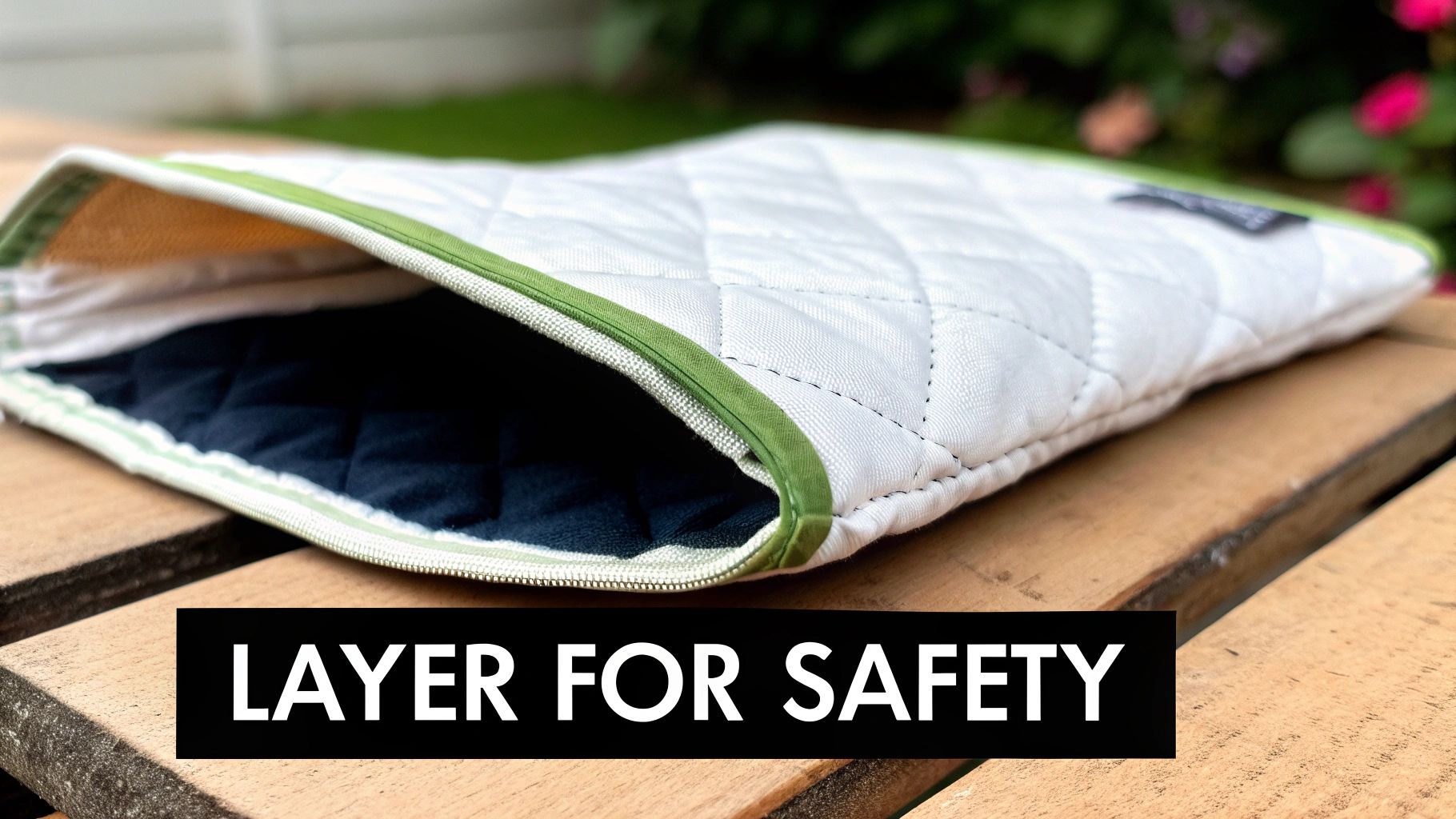
Think of a single layer of batting like a light windbreaker in a snowstorm. It’s better than nothing, but it won’t keep you from feeling the bite of the cold. The same goes for potholders. If you want to confidently grab a hot pan, layering your batting isn't just a suggestion—it's the only way to guarantee your hands stay safe.
The secret is to build what seasoned sewists call a "potholder sandwich." By combining different types of batting, you play to each material's strengths, creating a thermal shield that a single layer could never hope to achieve on its own.
The Gold Standard Layering Formula
After years of trial and error, the quilting community has landed on a tried-and-true combination that offers incredible protection. This three-layer method creates a barrier that can handle both the direct heat of a pan and the radiant heat of an oven, keeping you safe even when pulling something out of a 450°F oven.
Here's the recipe for success:
- Fabric Side: Place one layer of 100% cotton batting right behind your pretty outer fabric.
- The Core: Next, add a layer of insulated batting, like Insul-Bright. This is the real star of the show, reflecting intense heat away.
- Lining Side: Finish it off with another layer of 100% cotton batting next to your lining fabric.
This trio works together beautifully. The two cotton layers absorb heat, while the insulated core acts like a mirror, bouncing the most intense thermal energy back where it came from. The result is a thick, reliable shield that’s still nimble enough for a standard sewing machine to handle.
This need for heat protection isn't just a kitchen concern. Think about gardening, where the global market for planters and pots is set to grow by an estimated USD 1.05 billion. Anyone who has tried to move a ceramic pot after it's been sitting in the sun all day knows how hot it can get! Crafting quality protective gear is a skill with applications all over the home.
Finding the Sweet Spot: Protection vs. Sewability
Now, when you start layering, you have to think about loft. Loft is just a quilter's term for the thickness and fluffiness of the batting. High-loft batting is thick and puffy, which sounds great for insulation, but it can make your potholder stiff and create a real headache for your sewing machine.
This is why a low-loft cotton batting is usually your best bet for the outer layers. It’s dense enough to do its job but slim enough to quilt without a fight. Some battings even have a scrim—a very thin grid-like stabilizer that adds strength and prevents stretching without adding any real bulk. If you're curious, you can learn more about what scrim in batting is and how it keeps your projects looking sharp.
In the end, it’s all about finding that perfect balance. You need enough bulk to feel safe, but not so much that you can't even bend the potholder to get a good grip on a cookie sheet. The "cotton-insulated-cotton" sandwich almost always nails this balance, giving you a finished potholder that’s not just safe but a genuine pleasure to use.
Sewing Tips for Safe and Long-Lasting Potholders
You’ve picked out the perfect materials, and now it’s time for the fun part. The way you put it all together is what transforms a pretty kitchen accessory into a tool you can truly count on. A well-made potholder gives you that extra bit of confidence, whether you're grabbing a cast-iron skillet from a 450°F oven or moving a sun-baked pot on the patio.
Before you even thread your needle, there's one step you absolutely cannot skip: pre-wash and dry everything. Toss your cotton fabric and your cotton batting right into the machine. Cotton is notorious for shrinking, and getting that out of the way first ensures your finished potholder won't warp into a sad, puckered mess after its first trip through the laundry.
Why Dense Quilting is Your Best Friend
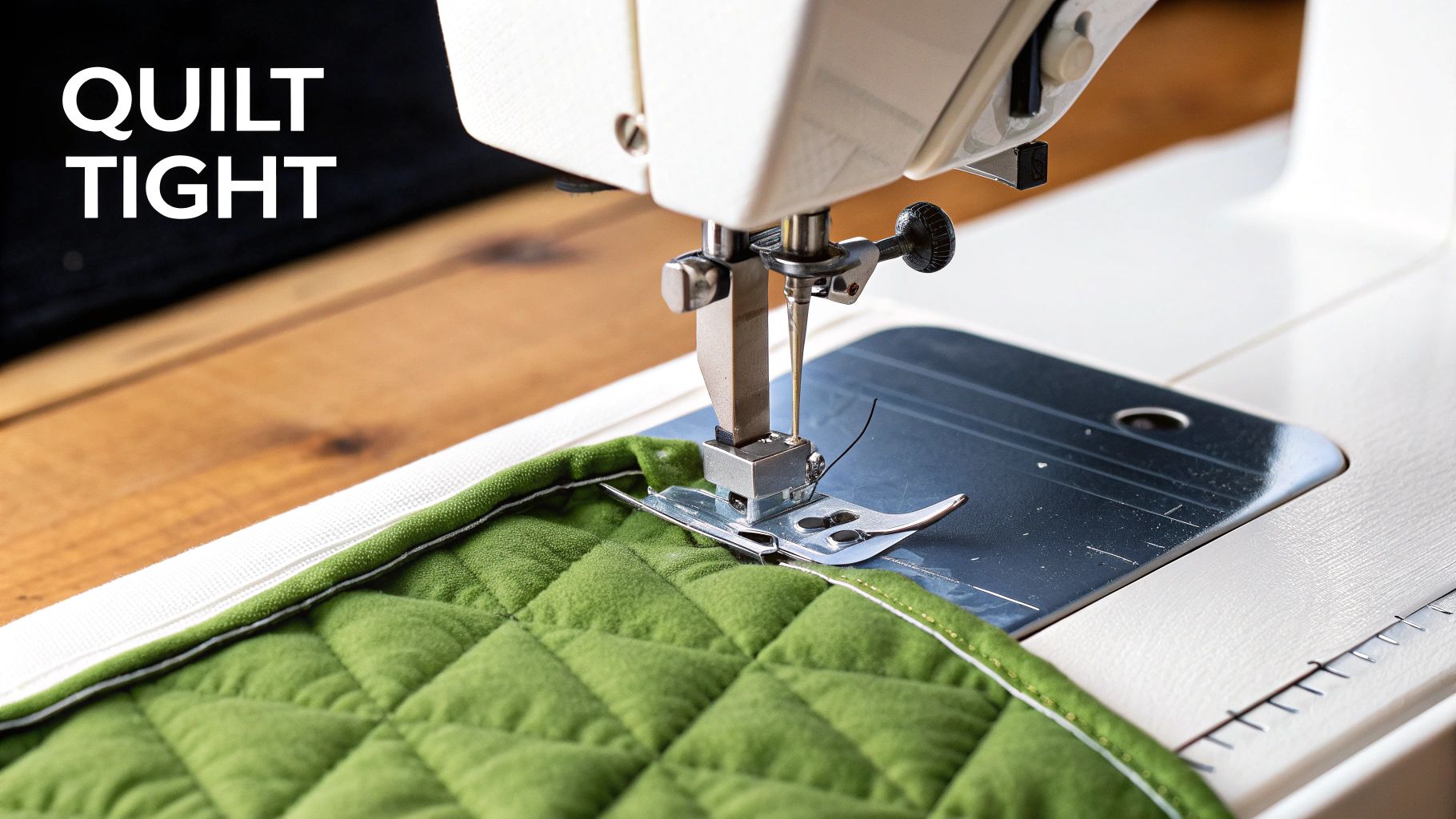
With your materials prepped, it's time to stitch your potholder "sandwich" together. This is where dense quilting makes all the difference for safety and durability. I’m talking about stitch lines no more than 1.5 to 2 inches apart. It might seem like a lot of stitching for a small project, but here’s why it’s so critical:
- It Boosts Heat Resistance: Tightly spaced stitches compress the batting, minimizing air pockets and creating a more effective barrier against heat. Think of it as creating a denser, more protective shield.
- It Stops the Dreaded Bunching: All that stitching locks the batting in place. It won't shift, clump up, or fall apart in the wash, which is the number one killer of homemade potholders.
- It Gives You a Better Grip: A densely quilted potholder feels substantial and firm, not floppy. This gives you a much more secure hold on heavy, awkward pans.
Those quilting lines are the skeleton of your potholder. The stronger you build that framework, the better it will perform and the longer you'll have it in your kitchen.
Finishing Touches That Really Matter
How you finish the edges and add the details is just as important as how you started. A weak binding or a flimsy hanging loop is a recipe for frustration down the road.
Your craftsmanship is a key safety feature. Strong seams, secure binding, and dense quilting aren't just for looks—they ensure your potholder functions reliably under heat and stress, protecting you from burns.
It’s no surprise that as people invest more in their homes and hobbies, from cooking to gardening, they expect quality. The global garden pot market, for example, is seeing steady growth as consumers focus on home aesthetics. People handling those hot ceramic or metal pots need protective gear they can trust. You can see how consumer trends are shaping the home and garden market and why durable, well-made accessories are in demand.
When you get to the finishing line, focus on two key areas:
- The Hanging Loop: Don't just tack it on. Make sure you securely anchor the loop by catching it in the binding seam at least twice for extra strength.
- The Binding: Always use a sturdy, double-fold bias binding. Attach it with a strong stitch that fully encases all the raw edges to keep them from fraying after countless washes.
Your Go-To Potholder Safety Checklist
Before you even think about threading your needle, let's run through the absolute must-dos for making potholders that actually protect you. This isn't just about making something pretty; it's about crafting a reliable kitchen tool that stands between your hands and a hot pan.
Getting these details right is what makes a potholder truly functional. Think of this as your final check before you start sewing—a quick review to ensure every stitch counts towards safety.
The Five Golden Rules of Potholder Making
Run through this list every single time. It's that important.
-
Rule #1: Stick with 100% Natural Fibers. This is non-negotiable. Your fabric, your batting, and even your thread need to be made from natural materials like cotton. Why? Because natural fibers can take the heat without melting.
-
Rule #2: Zero Synthetics Allowed. Polyester, nylon, or any synthetic blend is a major hazard in the kitchen. When these materials get too hot, they don't just burn—they melt, turning into a dangerous, sticky substance that can cause severe burns. Keep them out of your potholder projects, period.
-
Rule #3: Layer Up for Serious Protection. One thin layer of batting just won't cut it. To really block the heat, you need to build what I call the "potholder sandwich": a layer of insulated batting tucked between two layers of cotton batting. That’s how you get real, trustworthy heat resistance.
Remember, the whole point is to create a tool that prevents burns. Every choice you make, from the type of batting to how closely you quilt, directly impacts how safe and effective your finished potholder will be.
-
Rule #4: Pre-Wash All Your Materials. It’s tempting to skip this step, but don’t. Tossing your cotton fabric and batting in the wash before you cut prevents your finished potholder from shrinking into a wonky, misshapen square after its first cleaning.
-
Rule #5: Quilt It Densely. Your quilting lines should be no more than 1.5 to 2 inches apart. This isn't just for looks—stitching the layers together this closely compresses the batting, which seriously boosts its ability to resist heat and makes the whole thing far more durable.
Got Questions About Potholder Batting? We've Got Answers.
Even after reading a guide, you're bound to have a few questions pop into your head once you start a project. It happens to all of us. Getting those specific answers can be the difference between a project you love and one that ends up in the scrap bin. Let's tackle some of the most common questions about potholder batting so you can get back to sewing with confidence.
We'll clear up any confusion about what's safe, what isn't, and why some materials are absolutely essential for making potholders that actually protect you.
Can I Just Use Regular Polyester Batting for Potholders?
Please, don't. If you take away only one thing, let it be this: never use polyester batting for anything that will touch a hot pan.
Polyester is a synthetic material, which is just a fancy way of saying it's a type of plastic. When it gets too hot, it melts. That melted plastic can fuse to fabric, or worse, your skin, causing a very serious burn. It completely fails as a protective barrier.
For any project meant to handle heat, stick with 100% natural fibers. Cotton and wool are the gold standard here because they char rather than melt, giving you a safe and reliable layer of protection.
Is Insul-Bright Safe to Put in the Microwave?
That’s a firm no. Insul-Bright is fantastic for oven mitts and potholders, but it is never safe for microwave use.
The magic behind Insul-Bright is its core of reflective metalized film—that's what bounces radiant heat away so effectively. But as we all know, metal and microwaves are a dangerous combination that can spark and easily start a fire.
For anything you might pop in the microwave, like a baked potato bag or a soup bowl cozy, every single component must be 100% cotton. That means the fabric, the batting, and even the thread you sew it with.
The rule of thumb is simple: If it might see the inside of a microwave, use only cotton. If it’s strictly for grabbing hot pans from the oven, an insulated batting like Insul-Bright is an excellent choice for one of the inner layers.
Do I Really Need to Pre-Wash My Batting Before I Sew?
Yes, this is one of those steps that’s truly worth the effort, especially with cotton. Cotton fabric and batting are known for shrinking, sometimes by a noticeable 3-5%.
If you skip the pre-wash, the batting and your fabric will likely shrink at different rates the first time you toss your potholder in the laundry. This can turn your perfectly flat, smooth project into a puckered, lumpy mess. A quick wash and dry beforehand ensures your potholder stays looking great for years to come.
Ready to create potholders that are not only beautiful but genuinely safe and functional? Explore the highest quality, 100% cotton and insulated batting options over at Quilt Batting. Find the perfect materials for your next kitchen project by visiting us at https://quiltbatting.shop today