

If you’ve ever snuggled under a warm, puffy quilt, you’ve experienced the magic of batting. Polyester fiber batting is that secret ingredient—the lightweight, synthetic filling that gives quilts their cozy warmth and inviting structure. For many quilters, it’s the go-to choice for its affordability, durability, and sheer ease of use.
The Unsung Hero Inside Your Quilt
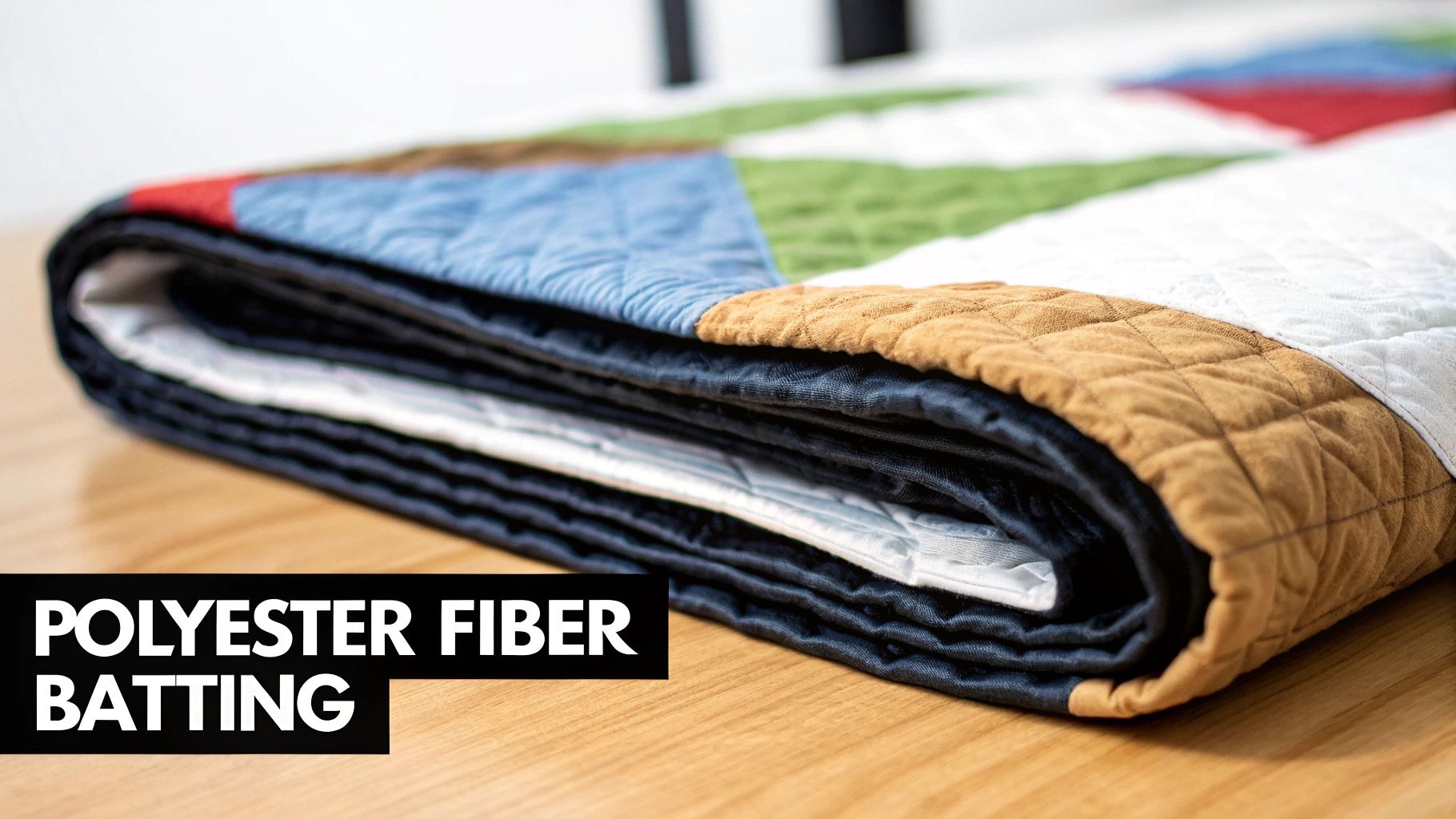
Think of batting as the insulation in your quilt. Much like the insulation in your home traps air to keep you warm, this layer of fine, bonded polyester strands does the exact same thing. It’s the essential middle layer, sandwiched between your beautiful quilt top and the backing fabric, and it's what creates that wonderful three-dimensional feel we all love.
Without batting, a quilt is really just two pieces of fabric sewn together—flat, lifeless, and not very warm. Polyester batting breathes life into your work, giving it substance and turning it from a simple covering into a truly comforting blanket.
From Industrial Fiber to Crafting Staple
Polyester's journey into the quilting world isn't surprising when you look at its massive growth in the textile industry. It went from being a novel synthetic fiber to a household name in just a few decades. Consider this: global polyester fiber production recently hit 71.1 million metric tons, an incredible jump from just 3.37 million back in 1975.
This explosion in production made polyester an accessible, reliable, and budget-friendly option for crafters everywhere. Its widespread availability means that whether you're just starting your first quilt or you're a seasoned longarmer, you can count on polyester to provide a consistent foundation for your projects.
Key Takeaway: Polyester batting isn't just filler. It's a foundational choice that directly impacts your quilt's final warmth, weight, and texture. Its proven performance and great price point have made it a favorite for countless quilters.
While polyester is a fantastic and versatile option, it's just one of several materials you can choose from. To see how it stacks up against cotton, wool, and blends, check out our guide exploring the different types of quilt batting. Knowing your options is the first step toward creating the perfect quilt.
How to Choose the Right Batting Loft
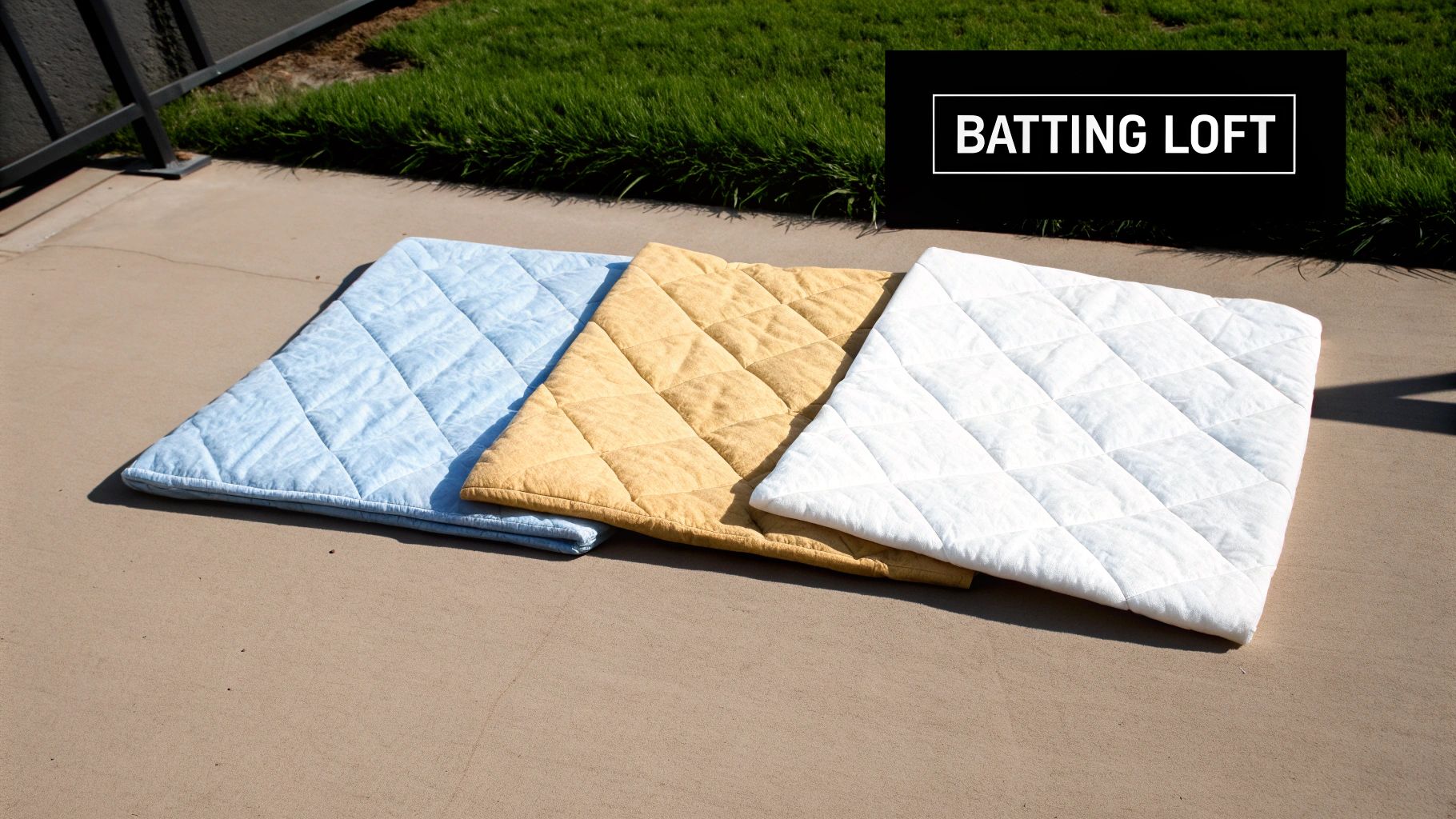
When it comes to picking the right polyester batting, understanding loft is everything. Think of it as the batting's fluffiness or thickness. This one characteristic completely shapes the final look and feel of your quilt, from how warm it is to the way it drapes over a bed.
Picture a flat, crisp sheet versus a big, puffy cloud. That’s the difference between a low-loft and a high-loft batting. One isn't better than the other; they just create entirely different effects. The perfect choice boils down to the artistic vision you have for your quilt.
The Role of Low Loft Batting
Low-loft polyester batting is your go-to for a flat, modern profile. It’s thin, dense, and usually about 1/8 inch thick. This creates a sleek finish that lets your piecing and intricate stitch work become the star of the show.
It’s the perfect partner for projects where you want your quilting to really pop:
- Wall Hangings: You get a clean, flat drape that hangs perfectly without any puffiness distorting the design.
- Intricate Machine Quilting: Every detail of your quilting will stand out with sharp, defined lines.
- Table Runners and Placemats: These items need to lie flat, making low-loft the only practical choice.
- Baby Quilts: It provides lightweight warmth that holds up beautifully to frequent trips through the washing machine.
Because it’s so stable and flat, low-loft batting is a dream to work with, especially on a home sewing machine. If you want to dive deeper, you can learn more about the benefits of low loft batting for quilts right here on our blog.
Embracing High Loft for Volume
High-loft polyester batting is where you turn when you want serious volume, texture, and warmth. We're talking 1/2 inch thick or more, creating that plush, comforter-like feel everyone loves.
High loft doesn’t just add warmth; it transforms the quilt's texture. The quilting stitches sink into the batting, creating dramatic shadows and a puffy, inviting surface that begs to be touched.
This is the batting you want when your goal is a big, soft hug in quilt form. It’s fantastic for tied quilts, where simple knots allow the batting’s cloud-like fluffiness to shine. If you’re making a cozy bedspread for a chilly bedroom or a super-soft throw for snuggling on the couch, high-loft polyester is unbeatable.
To make it even simpler, here's a quick guide to help you match the loft to your project.
Polyester Batting Loft Guide
This table breaks down which loft works best for different quilting goals, helping you choose with confidence every time.
| Loft Level | Typical Thickness | Best For | Quilting Effect |
|---|---|---|---|
| Low | Up to 1/4 inch | Wall hangings, placemats, intricate quilting | Sharp stitch definition, flat profile, modern aesthetic |
| Medium | 1/4 to 1/2 inch | Everyday quilts, bedspreads, charity projects | Soft definition, light puffiness, versatile drape |
| High | 1/2 inch and up | Comforters, tied quilts, projects needing warmth | Deep texture, dramatic puff, luxurious and cozy feel |
Ultimately, the loft you choose is an artistic decision. Do you want your stitches to be the focal point, or do you want the quilt to have a plush, three-dimensional quality? Answering that question will always point you to the right batting.
Weighing the Good and the Bad: Is Polyester Batting Right for Your Quilt?
Every material we use has its give and take, and polyester batting is certainly no exception. Getting to know its unique personality—both the good and the not-so-good—is the secret to figuring out if it's the right fit for your next project. For certain quilts, its strengths make it the absolute best choice, hands down.
The Upside: Where Polyester Really Shines
One of polyester's biggest selling points is its incredible durability. This stuff is tough. It can handle repeated use and countless trips through the washing machine without falling apart, making it a fantastic choice for quilts that are meant to be loved and used—think a child's bedspread or that comfy throw everyone fights over on the couch. Plus, it's naturally resistant to mold and mildew, a real bonus if you live somewhere humid.
Another huge win is how lightweight it is. Polyester gives you all the warmth without the heft of natural fibers. This is a game-changer when you're wrestling a king-sized quilt under the needle of your machine. The last thing anyone wants is to feel like they're in a workout session just trying to stitch a straight line.
So, why do so many quilters keep a roll of poly on hand? Here's the breakdown:
- It’s Easy on the Wallet: Let's be honest, polyester is one of the most affordable options out there. This means you can go big with your quilting projects without breaking the bank on materials.
- No Shrinkage, No Surprises: Polyester is dimensionally stable. What you make is what you get, even after washing. It won’t shrink, so you can skip that crinkled, vintage look if it’s not what you're going for.
- An Allergy-Friendly Choice: For anyone sensitive to wool or other natural fibers, polyester is a wonderfully safe and cozy alternative.
The Other Side of the Coin: Potential Downsides
Of course, it's not all sunshine and rainbows. Polyester is a synthetic fiber, and some quilters just don't love its drape compared to the soft, natural feel of cotton or wool. It's also less breathable than its natural cousins, so it might feel a bit too toasty for someone who tends to sleep hot.
The other hiccup you might run into is something called "bearding." This is when tiny little fibers work their way through the fabric of your quilt top, creating a slight fuzz. You can usually sidestep this issue by choosing high-quality, tightly woven fabrics for your top and using a fresh, sharp needle that slices cleanly through the material instead of punching a hole.
A Quilter's Takeaway: It really all boils down to what the quilt is for. If you're creating a show quilt with tons of detailed stitching, the stability of polyester is your best friend. But for a light and airy summer throw, you might want to reach for something more breathable.
When you zoom out and look at the bigger picture, polyester's place in the world is significant. Global fiber production recently topped 132 million tonnes, and polyester makes up a whopping 59% of that. Most of this is still made from virgin, fossil-based materials, which keeps the conversation around sustainability in textiles going. If you're curious, you can dig into the full data and complexities of fiber production.
At the end of the day, knowing both sides of the story lets you use polyester batting smartly. You can play to its strengths to create gorgeous, durable quilts that are exactly what you imagined.
Comparing Polyester, Cotton, Wool, and Blends
Picking the right batting is a lot like choosing the perfect flour for a cake—it completely changes the final result. Your decision between polyester, cotton, wool, or a blend isn't just about the fiber. It's about deciding on the exact drape, warmth, and texture you want for your finished quilt. Each material brings its own distinct personality to your project.
Think of it this way: if you're making a light and airy summer throw, a breathable cotton batting is the obvious choice. But for a puffy, durable comforter destined for a chilly bedroom and frequent trips to the washing machine? Polyester fiber batting is your absolute champion. The key is to match the material’s strengths to your creative vision.
A Head-to-Head Comparison
So, how do these popular choices really stack up? Let's break them down by what matters most to us quilters.
-
Drape and Feel: Cotton batting gives you that classic, soft drape that just gets cozier with every wash, creating that beloved crinkled, heirloom look. Polyester, on the other hand, offers a lighter feel with more structure and almost no shrinkage, which means your quilt will have a smoother, more modern finish.
-
Warmth and Weight: When it comes to warmth, wool is the undisputed king of natural fibers, offering incredible insulation without the bulk. Polyester is a strong contender for warmth and is even lighter, making it a fantastic choice for huge quilts where the weight can become a real struggle during quilting.
-
Stitch Definition: Do you want your quilting stitches to really pop? A high-loft polyester is made for that, creating gorgeous shadows and texture. A low-loft cotton, however, is perfect for sharp, flat stitch work where intricate piecing is the star of the show.
This graphic sums up polyester's main selling points and its biggest trade-off in a nutshell.
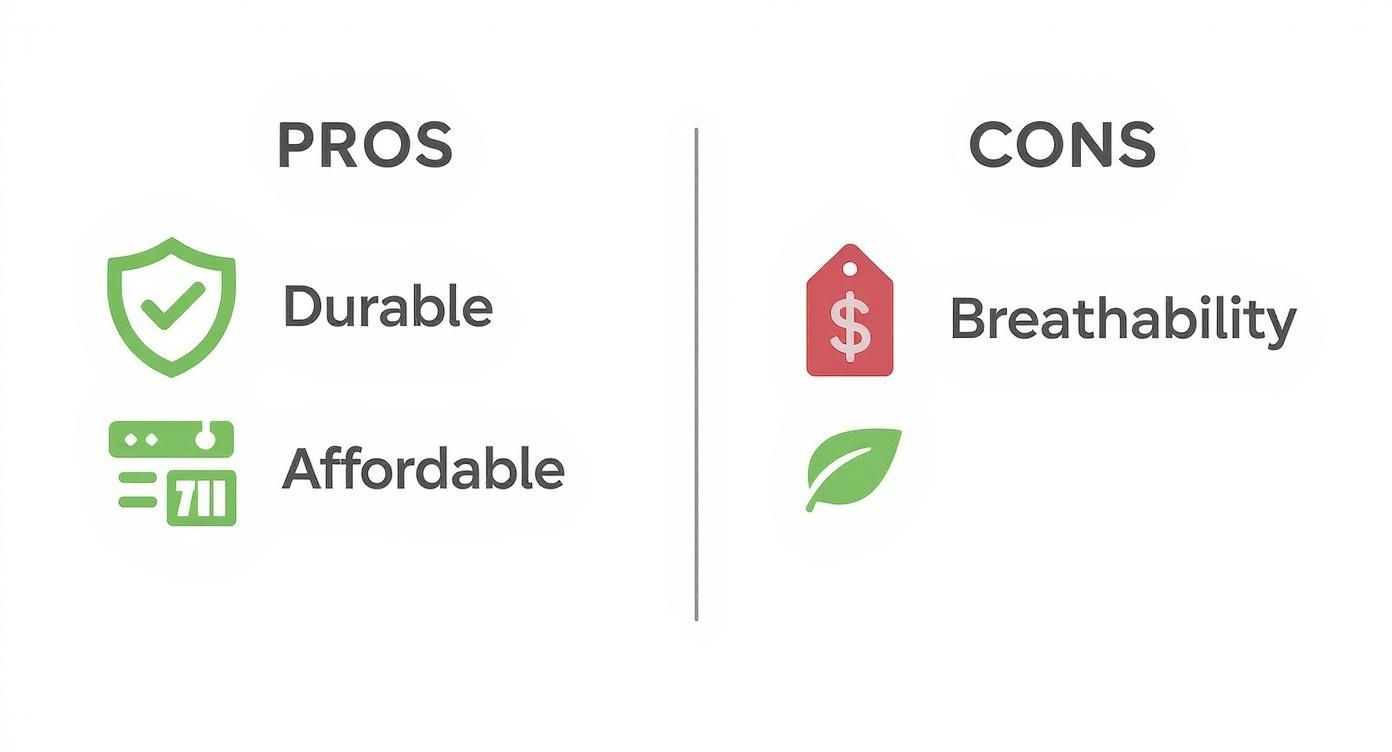
As you can see, polyester’s biggest strengths are its durability and affordability, but the trade-off is that it isn't as breathable as natural fibers.
Finding the Sweet Spot With Blends
But what if you want the best of both worlds? That’s where poly-cotton blends, usually an 80/20 mix, come into their own. There’s a good reason these blends are a huge favorite among longarm quilters.
Expert Insight: An 80/20 blend gives you the softness and breathability of cotton combined with the stability and strength of polyester. This mix shrinks much less than 100% cotton but still gives you that slightly crinkled, well-loved look that so many quilters are after.
This hybrid approach creates a batting that’s a dream to quilt on a machine, holds up beautifully, and is more affordable than pure cotton or wool. It’s a true workhorse for all sorts of projects.
To make things even clearer, here’s a quick chart comparing the main players side-by-side.
Batting Material Comparison Chart
| Feature | Polyester Batting | Cotton Batting | Wool Batting | Poly-Cotton Blend |
|---|---|---|---|---|
| Drape | Smooth, modern, less crinkle | Soft, traditional, crinkles after washing | Drapes beautifully, soft and supple | Soft drape with less shrinkage |
| Warmth | Very warm for its weight | Moderately warm, breathable | Exceptionally warm, natural insulator | Good warmth, fairly breathable |
| Loft | Available in low to high loft | Typically low loft, lays flat | Naturally high loft, very lofty | Low to medium loft |
| Durability | Extremely durable, holds shape | Durable, gets softer over time | Resilient, springs back into shape | Very durable, stable |
| Care | Machine washable, resists shrinking | Machine washable, some shrinkage | Requires gentle care or pre-washing | Machine washable, minimal shrinkage |
| Cost | Most affordable option | Mid-range price | Higher price point | Good value, mid-range |
This chart should help you see at a glance how each type of batting performs. And for an even more detailed breakdown, we’ve put together an in-depth quilt batting comparison chart that dives deep into the properties of each one.
At the end of the day, there’s no single "best" batting—only the best one for your quilt. By thinking about your project’s final use, the look you’re going for, and your budget, you can confidently pick the perfect foundation to bring your vision to life. Whether you go for pure polyester for its resilience or a blend for its perfect balance, the right choice is out there waiting.
A Buyer's Guide for Hobbyists and Professionals
Whether you’re buying batting for your very first quilt or stocking a bustling professional studio, the choices can feel a little overwhelming. But here’s the good news: polyester batting is one of the most versatile options out there, serving both home quilters and business owners beautifully. The trick is simply knowing what to look for and how to buy smart.
Smart Shopping for Home Quilters
If you're a home quilter, your batting journey probably starts at the local quilt shop or your favorite online retailer. You’ll find batting neatly folded into pre-packaged, standard bed sizes—Crib, Twin, Queen, King. This is incredibly convenient. It takes the guesswork out of the equation and gives you just what you need for a specific project without a ton of leftover material.
But here’s a classic rookie mistake I see all the time: buying a package that’s the exact size as your quilt top. You’ll want to save yourself a headache by always choosing a size that gives you at least four inches of extra batting on all sides. This little bit of overhang is your safety net, accounting for any shifting or pulling that happens during the quilting process. Trust me, you'll be glad you have it.
So, when you're standing in that aisle, what should you look for?
- Feel the Loft: Give the package a gentle squeeze. Does it feel like the flat, low-loft batting that will let your detailed stitching shine? Or is it the plush, high-loft kind perfect for a cozy, puffy comforter?
- Read the Fine Print: The manufacturer’s instructions on the package are pure gold. Look for the maximum quilting distance. Polyester is forgiving, but sticking to the guidelines ensures your quilt will last.
- Think About the Quilt's Future: If you're making a baby quilt that’s destined for many trips through the washing machine, you'll want something durable and reliable. A go-to option like Hobbs CloudLoft Polyester Batting is a fantastic choice that holds up wash after wash.
Scaling Up for Longarm Studios
For professional longarm quilters, buying individual packages just doesn't make sense financially. The only way to go is buying polyester fiber batting on large bulk rolls, usually 30 yards or more. This simple switch drastically cuts the cost per yard and means you’ll always have a consistent supply ready for client quilts.
Of course, buying in bulk brings a different set of factors into play. You aren't just buying batting anymore; you're making a strategic investment in your business's inventory and, by extension, your reputation.
A Pro's Perspective: When you buy a roll, consistency is everything. As a professional, you need to know that the batting's density and loft will be the same from the first yard to the last. This guarantees every client quilt gets that same high-quality, predictable finish they're paying for.
When you're sourcing rolls, pay close attention to the width. They typically come in widths like 96", 108", and 120". Opting for a wider roll can be a game-changer, minimizing waste and eliminating the need to piece batting together for those increasingly popular oversized quilts. It saves both time and money.
It's no surprise that demand for these materials is solid. The global polyester fiber market was recently valued at over USD 77 billion and is projected to keep growing. If you're curious, you can discover more insights about these market dynamics, but the takeaway is that you're investing in a stable and reliable product.
Finally, always ask your supplier how the batting performs under the high tension of a longarm machine. A quality polyester batting won't stretch or tear under pressure, giving you a smooth, dependable foundation for creating beautiful quilting.
Your Top Polyester Batting Questions, Answered
Jumping into a project with a new-to-you material always brings up a few questions. Even if you've been quilting for years, it's easy to forget the little details about working with polyester batting. We get it.
To help you skip the guesswork and quilt with confidence, we’ve tackled the most common questions we hear from fellow quilters. Think of this as your personal cheat sheet for getting the best results.
Do I Really Need to Pre-Wash Polyester Batting?
Nope! This is one of the best things about working with polyester. Unlike 100% cotton batting, which has a tendency to shrink up a bit after washing, polyester batting is incredibly stable. It holds its shape, meaning it won’t shrink or get distorted when you wash the finished quilt.
You can pull it right out of the package and get straight to quilting. This is a huge time-saver, letting you dive into the fun part instead of spending time on prep. It also gives you peace of mind that the beautiful quilt top you worked so hard on will stay perfectly flat for years to come.
How Far Apart Can My Stitches Be?
Polyester is famously forgiving here, which is a big reason so many quilters love it. Most polyester battings let you place your quilting stitches anywhere from 4 to 10 inches apart. That’s a massive range that opens up a ton of creative possibilities.
This generous spacing makes polyester a perfect match for:
- Modern, Minimalist Quilts: If your design calls for lots of open, un-quilted space, polyester has the stability to handle it beautifully.
- Tied Quilts: The strong fibers are ideal for tying, where the "stitches" are naturally far apart.
- Your First Few Projects: As a beginner, you can relax and focus on your technique without worrying about keeping your quilting super dense.
A Quick Pro-Tip: While polyester gives you a lot of leeway, it's always smart to glance at the manufacturer's packaging for their specific guidelines. Sticking to their recommendation is the surest way to guarantee your quilt stays strong and looks great over the long haul.
Is Polyester a Good Choice for Baby Quilts?
It can be an absolutely fantastic choice, especially when you're thinking about real-world use. For starters, a good quality polyester batting is hypoallergenic, which is a great feature for a baby's sensitive skin. But the real win for parents is its durability—this stuff is made to survive the endless cycles of washing and drying that baby quilts go through.
Another huge plus is how quickly it dries. Polyester doesn't hold onto moisture like cotton does, so you can get that beloved quilt washed, dried, and back in the crib in no time. The only real trade-off is that it's not as breathable as natural fibers. But if your main goals are easy care, toughness, and affordability, a low-loft polyester batting is a brilliant, stress-free option.
How Can I Stop "Bearding"?
Ah, "bearding"—those annoying little fibers that poke through your fabric. The good news is that it’s almost always preventable, and the fix comes down to your materials and your needle. Your best defense is to use high-quality, tightly woven fabrics for both your quilt top and backing. A loose, open weave is like leaving the door wide open for those fibers to escape.
Your needle is just as crucial. Always start a new project with a fresh, sharp needle. A microtex or a needle specifically designed for quilting is ideal. A dull needle doesn't pierce the fabric cleanly; it punches a ragged hole, dragging tiny bits of batting right along with it. A sharp needle, on the other hand, creates a clean, precise entry point, keeping the batting tucked neatly inside where it belongs.
Ready to give your next quilt a reliable, high-quality foundation? At Quilt Batting, we stock a wide selection of premium batting by the roll to fit any project you can dream up. Come explore our collection and find the perfect polyester fiber batting for you at https://quiltbatting.shop.