

Let's be honest, the single most important decision you'll make for any quilt—the one that sets the stage for everything else—is choosing the right fabric for quilting. If you're just starting out, there's one clear winner: 100% quilting cotton. It’s stable, holds color like a dream, and is wonderfully easy to work with. It's the perfect canvas for a masterpiece that will last for generations.
Your Quilt's Foundation: Choosing the Right Fabric
Welcome to the wonderfully tactile world of quilting! This is an art form where your fabric choice quite literally shapes the final quilt. Think of it like building a house: the batting is your frame, the thread holds it all together, but the fabric is the very foundation. A shaky foundation means trouble down the line, and the same goes for quilting.
Choosing a high-quality fabric isn't just a friendly suggestion; it's practically a requirement for a quilt you’ll be proud of. Using premium material like a good quilting cotton is your best defense against future headaches—warping after the first wash, colors fading into a muddy mess, or seams fraying under the slightest stress. Your time, creativity, and effort are far too valuable to waste on subpar fabric.
Understanding Fabric Fundamentals
To make the best choice, it helps to know what you're looking for. We'll dive deeper into these topics later, but let's get acquainted with the three key players that determine a fabric's quality and whether it’s right for your quilt:
- Fiber Type: This is simply what the fabric is made of. The most common are cotton, linen, flannel, and even silk for those truly special projects.
- Thread Count: Just like with your bedsheets, a higher thread count in quilting fabric means a tighter, more durable weave. It’s what gives the fabric that smooth, crisp feel and helps it hold stitches beautifully.
- Fabric Weight: This tells you about the thickness and sturdiness of the material. You need a fabric that can stand up to all the piecing, pressing, and quilting you're about to throw at it.
These three elements work together to create a fabric that is stable, easy to press, and strong enough to become a cherished heirloom.
Think of your fabric as the 'skin' of your quilt and the batting as its 'bones'—they have to work together perfectly. Starting with a solid foundation of high-quality quilting cotton ensures your project will stand the test of time, free from premature wear and tear.
The passion for quilting isn’t just a feeling; you can see it in the numbers. The global quilting fabric market hit a staggering USD 3.5 billion in 2023 and is expected to soar to USD 5.7 billion by 2032. This incredible growth shows just how many makers out there are demanding premium materials they can trust. You can explore more data about quilting fabric industry trends to see how this influences what's available.
In the end, selecting the best fabric for your quilt is about setting yourself up for success from the very first cut. When you invest in quality from the start, you ensure every single stitch contributes to a beautiful, lasting work of art. We invite you to check out our selection of premium fabrics to find that perfect starting point for your next project.
What Are the Best Fabrics for Quilting?
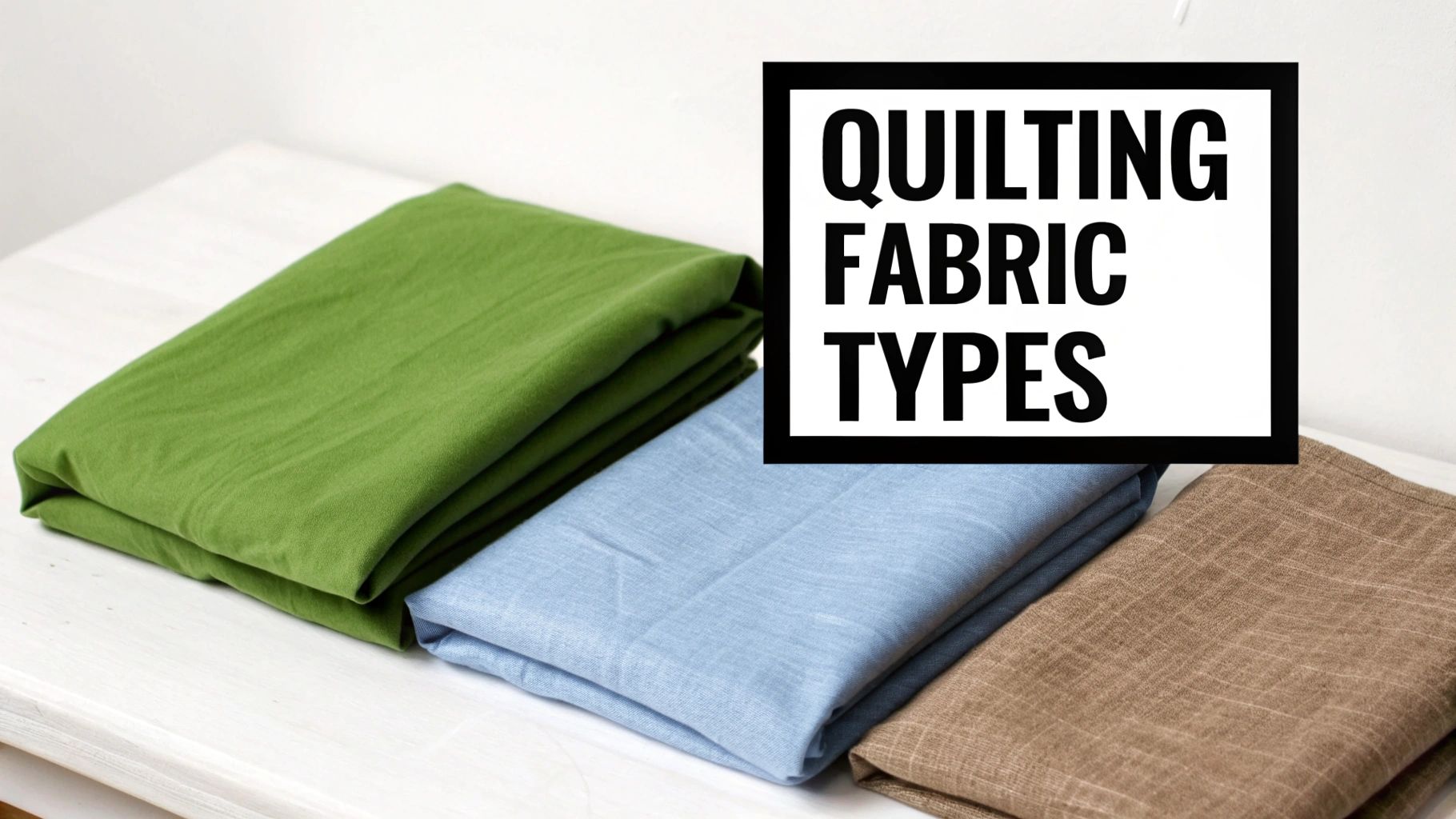
The moment you choose your fabric is when your quilt really starts to come alive. But not just any fabric can handle the rigors of quilting—the constant cutting, pressing, and stitching demands something special. Let's walk through the fabrics quilters swear by, so you can match the perfect material to your vision and create something that lasts.
The Gold Standard: 100% Cotton
If there's one undisputed champion in the quilting world, it's 100% quilting cotton. This isn't your average bedsheet or apparel cotton; it's engineered specifically for our craft. Its tight, stable weave makes it a dream to cut and sew. It holds a press beautifully for those crisp, perfect seams, and it shows off printed designs with stunning clarity.
For beginners and seasoned quilters alike, quilting cotton is the trusted workhorse. It has minimal stretch, which is absolutely critical for keeping your quilt blocks precise and your points sharp. This stability ensures your finished quilt top lies flat and square, not wonky and stretched out.
This reliability is why cotton is everywhere in quilting. It’s the go-to choice for the 9-11 million active quilters fueling the industry’s growth. You can dive deeper into the quilting market's expansion to see just how central cotton is to modern quilting.
Cozy and Textured Alternatives
While cotton is king, sometimes a project calls for a different feel. Other fabrics can bring wonderful texture, warmth, and character to your quilts.
- Flannel: Think of flannel as cotton’s cozy cousin. It’s been brushed to create that soft, fuzzy surface (called a "nap") that we all love. It’s incredibly warm, making it the perfect choice for a snuggly winter quilt or a baby's first blanket. Just be aware that it frays more than standard cotton and has a bit of stretch, so handle it with a gentle hand.
- Linen and Linen Blends: If you’re aiming for a rustic, heirloom feel, linen is a fantastic choice. It has a gorgeous drape and a unique texture that only gets softer with every wash. Pure linen can be a bit wrinkly and prone to fraying, but a cotton-linen blend gives you the best of both worlds—the stability of cotton with that lovely homespun character of linen.
Pro Tip: When working with fabrics that fray easily like flannel or linen, consider using a slightly larger seam allowance—maybe a scant ½ inch instead of the usual ¼ inch—or finishing your seams to give them extra strength.
Specialty Fabrics for That Wow Factor
Ready to take a project from beautiful to truly breathtaking? Specialty fabrics are your secret weapon. They might require a little extra care, but the stunning results are always worth it.
Batik fabrics are a perfect example. These cottons are dyed using an ancient wax-resist method, which creates incredibly rich, saturated colors and intricate, one-of-a-kind patterns. A neat bonus is that the dye penetrates so deeply that the front and back are often indistinguishable. Batiks also have a crisp, firm feel that makes them surprisingly easy to work with.
For larger quilts, discovering wideback fabric is a total game-changer. These fabrics come in extra-wide bolts, often 108 inches or more, which means you can back your quilt without having to piece together multiple cuts of standard-width fabric. You can learn more about the convenience of using wideback fabric per yard and give your quilts a seamless, professional finish.
Finally, don’t shy away from a little luxury, especially for art quilts or wall hangings. Silk brings an unmatched sheen and vibrancy that catches the light beautifully. It can be slippery and delicate, but a lightweight fusible interfacing will stabilize it, making it much easier to handle and allowing you to add a touch of elegance to your most special projects.
To help you keep these options straight, here's a quick cheat sheet comparing the most common fibers you'll encounter.
Quilting Fabric Fiber Comparison
This table gives you a quick-reference guide to the most popular fabrics, so you can easily compare their best uses and unique personalities.
| Fabric Type | Best For | Key Characteristics | Things to Consider |
|---|---|---|---|
| 100% Cotton | All-purpose quilting, beginners, precision piecing | Stable, easy to cut & sew, holds a press well, wide variety of prints | Can shrink, so prewashing is often recommended |
| Flannel | Cozy quilts, baby blankets, rag quilts | Soft, warm, fuzzy texture | Prone to fraying and stretching, shrinks significantly |
| Linen/Linen Blends | Heirloom quilts, home decor, projects with texture | Beautiful drape, softens with age, rustic aesthetic | Wrinkles and frays easily, can be less precise for piecing |
| Batiks | Vibrant quilts, projects needing rich color | Saturated color, crisp feel, front/back are nearly identical | Higher thread count can make hand-quilting more difficult |
| Silk | Art quilts, wall hangings, decorative accents | Luxurious sheen, vibrant colors, beautiful drape | Slippery, delicate, requires stabilizer or careful handling |
Think of this as your starting lineup. While 100% cotton is the reliable all-star you'll use for most of your projects, don't hesitate to bring in these other players to add unique texture, color, and personality to your work.
Decoding Fabric Specs: Weave, Weight, and Width
Beyond the gorgeous prints and colors that first catch our eye, there are a few technical details that make or break how a fabric behaves in a quilt. Getting a handle on things like thread count, weight, and width isn't just for textile geeks—it's your secret weapon for getting crisp, predictable results every single time you sew.
Honestly, these specs are what separate a beautifully flat quilt top from a puckered, frustrating mess.
Think about buying a nice set of bedsheets. You already know that a higher thread count feels smoother, stronger, and just plain better. It’s the exact same principle with your quilting fabric. A higher thread count means more threads are packed into every square inch, creating a tight, stable canvas for your stitches.
This dense weave is precisely why quilting cotton is king. It holds a sharp crease when you press it, it doesn't fray into a mess at the edges, and it provides a sturdy foundation that won't distort under the tension of thousands of stitches. Lighter apparel fabrics just can't offer that same reliable stability.
Getting a Feel for Fabric Weight and Weave
You’ll hear the term “quilting weight” thrown around a lot. It refers to a specific medium-weight cotton, usually weighing in at 4.0 to 4.4 ounces per square yard. This is the sweet spot—it’s beefy enough to be durable but not so thick that it’s a nightmare to piece or quilt through multiple layers.
If you grab a fabric that’s too light, like a cotton lawn or voile, you’ll start to see your seams shadowing through, or worse, the fabric will stretch and warp as you work. On the flip side, something heavy like canvas or denim is just too bulky for the tiny, precise ¼-inch seams we live by in quilting. The result? Chunky, unmanageable points that refuse to lie flat.
The perfect quilting fabric walks a fine line. It has to be firm enough to hold its shape while you're cutting and sewing, yet pliable enough to create a soft, beautiful drape in the finished quilt. This magic happens when a tight weave is combined with high-quality, long-staple cotton fibers.
Mastering Fabric Cuts and Measurements
Okay, so you've found the perfect fabric. Now, how much do you actually need? Fabric shops have their own lingo, and knowing your way around the cutting counter is key to following patterns and not blowing your budget.
Here are the most common terms you'll run into:
- Width of Fabric (WOF): This is simply the measurement of the fabric from one finished edge (the selvage) to the other. Most quilting cottons are 42 to 44 inches wide. Patterns will often tell you to cut strips "WOF," meaning across this entire width.
- Yardage: Fabric is sold by the yard. A yard is 36 inches long by the full WOF. You can almost always buy smaller cuts, like a half-yard (18 inches) or a quarter-yard (9 inches).
- Fat Quarter: A quilter's best friend! A fat quarter is a quarter-yard of fabric cut to be more square-shaped, measuring about 18 x 21 inches instead of a long, skinny 9 x 44-inch strip. This "fat" shape is way more versatile for cutting a variety of different-sized pieces for your blocks.
On top of these basic cuts, you’ll also find beautifully curated bundles called pre-cuts. These are coordinating fabrics from a single designer's collection, all cut into standard sizes for you. They’re a fantastic shortcut for scrappy quilts and save you a ton of time at the rotary cutter.
You'll see them called:
- Jelly Rolls: Bundles of 2.5-inch x WOF strips.
- Charm Packs: Stacks of 5-inch squares.
- Layer Cakes: Stacks of 10-inch squares.
Smart Sourcing for Studios and Businesses
For most of us quilting at home, buying by the yard or in pre-cut bundles is perfectly fine. But if you’re running a longarm studio, a quilt shop, or a small business that goes through a lot of fabric, that approach just doesn't make financial sense. The answer? Buying your fabric by the bolt.
A bolt can hold anywhere from 8 to 15 yards of a single fabric, and purchasing one offers some serious perks. The price per yard drops significantly, which directly boosts your profit margins. It also ensures absolute color consistency for large projects or across multiple customer quilts, since the entire yardage is from the same dye lot. This is a game-changer for quilt backings, solids, and those go-to blenders you use over and over again.
Getting Your Fabric Ready for Quilting Success
The work you do before ever making that first cut is just as important as the final stitch. Seriously. Properly preparing your fabric is the secret handshake among seasoned quilters—it’s what separates a quilt that lies beautifully flat from one that ends in a puckered, frustrating mess.
This all kicks off with the great quilting debate: to prewash, or not to prewash? While some quilters like to live on the edge, I’m a firm believer that prewashing is a non-negotiable step. Think of it as cheap insurance for the dozens, or even hundreds, of hours you’re about to pour into your project.
Prewashing your quilting cotton tackles three potential disasters before they even have a chance to start. It gets rid of any excess dye that could bleed all over your hard work, preshrinks the fibers so your quilt doesn't get all wonky after its first wash, and it washes away any chemicals or sizing left over from the factory.
The Best Way to Prewash and Press
Getting your fabric ready isn't complicated, but it does need a little bit of attention. If you follow a consistent process, you'll end up with beautifully prepared fabric that’s an absolute dream to cut and sew.
- Wash on Gentle. Toss your fabrics in the machine with similar colors, using cool water on a gentle cycle. I always throw in a color catcher sheet—it’s a cheap and easy way to see if any sneaky dyes are running.
- Dry with Care. Tumble dry everything on low to medium heat. The real trick here is to pull the fabric out while it’s still slightly damp. This little step dramatically cuts down on wrinkles and fraying.
- Press to Perfection. This is the final, and maybe most important, step. Set your iron to the cotton setting (steam is your friend!) and press the fabric until it’s perfectly smooth, flat, and totally dry. A beautifully pressed piece of fabric is stable, which makes accurate cutting so much easier.
Once your fabric is prepped, you'll move on to basting your quilt sandwich, which is a make-or-break stage before the actual quilting begins. If you need a hand with that, our guide on how to baste a quilt will walk you through it step-by-step.
Thinking About Print Scale and Direction
Beyond the wash-and-press routine, there’s an artistic side to fabric prep. The way you cut and use your prints can completely change the personality of your quilt. This is where we need to talk about print scale and directionality.
Print scale is just a fancy way of describing how big the designs are on the fabric. A print with huge, showy flowers is a large-scale print. One with tiny, repeating pin-dots is a small-scale print. Simple as that.
A truly stunning quilt almost always has a good mix of scales. Large-scale prints make incredible focal points in bigger blocks, while small-scale prints and solids give the eye a place to rest, creating balance and letting your star fabrics shine.
Directional prints are fabrics that have a clear "up" and "down"—think of a pattern of little birds all sitting on a branch, or stripes that only run one way. When you're cutting these, you have to be careful to make sure all your pieces are oriented correctly so your birds aren't flying sideways in the finished block. Non-directional prints, like a random floral or polka dots, are much more forgiving because you can cut them from any angle.
Taking the time to wash, press, and really look at your prints sets you up for a smoother quilting journey and a finished quilt you'll be proud to show off for years to come.
The Perfect Partnership: Pairing Fabric with Batting
Your meticulously pieced quilt top is a work of art, but it’s only half the story. The batting—that unseen middle layer—is what gives your quilt its soul, transforming it from a flat textile into a cozy, three-dimensional creation.
Think of it as a strategic partnership. The fabric is the star performer, and the batting is the brilliant supporting actor. A perfect pairing brings out the best in both.
Choosing the right batting is all about matching its characteristics to your fabric and how you want the finished quilt to behave. Just as you wouldn’t pair delicate silk with a heavy-duty needle, you need to select a batting that complements your fabric's weight, drape, and fiber content. This synergy is what creates the final look and feel, from a crisp, modern wall hanging to a soft, crinkly heirloom.
Matching Batting to Your Fabric Type
The goal here is harmony between your quilt top and its inner core. A breathable, lightweight 100% cotton batting is the classic choice for a traditional quilt made from high-quality quilting cotton. It creates a beautiful, low-loft finish that gets that wonderfully soft, crinkled texture after washing—the hallmark of a vintage-style quilt.
For a quilt that needs to withstand a bit more life, like a child’s blanket or a family room throw, an 80/20 cotton-poly blend is a fantastic workhorse. The 80% cotton provides softness and breathability, while the 20% polyester adds a touch of extra loft and durability, making it more resistant to repeated washing. It’s a versatile option that balances tradition with modern resilience.
The connection between fabric and batting choice reflects the broader artisan boom in quilting. The global quilt market, valued at USD 5.61 billion in 2025, is projected to reach USD 9.67 billion by 2035, growing at a 5.6% CAGR. This growth is fueled by a rising consumer demand for personalized, high-quality quilts, underscoring the importance of premium materials. For quilters considering options like Hobbs 100% cotton with scrim or specialty black batting, these figures highlight a vibrant market driven by a passion for quality textiles. You can discover more insights about the expanding quilt market and its trends.
This decision tree shows a simple workflow for preparing your fabric, a critical first step before you even think about batting.
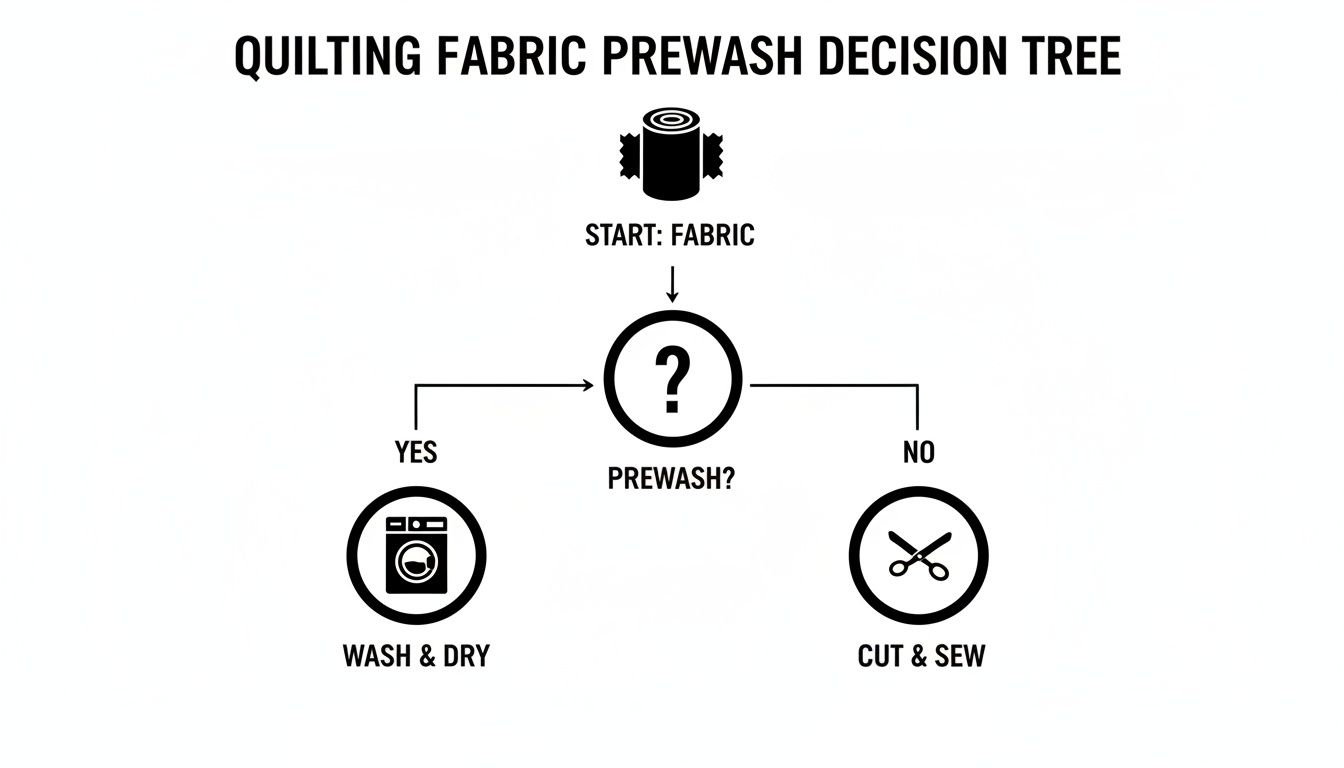
This visual guide simplifies the prewashing debate, emphasizing that preparing fabric is a foundational step toward a successful quilt sandwich.
Specialty Pairings for Unique Projects
Sometimes, your project demands something beyond the basics. This is where specialty battings can truly elevate your work and solve common quilting challenges.
-
For Maximum Warmth: If you’re sewing with cozy flannel to make a winter quilt, pairing it with wool batting is the ultimate combination. Wool is incredibly warm yet surprisingly lightweight and breathable. It also has a wonderful springy loft that gives your quilting stitches beautiful definition.
-
For Dark and Moody Quilts: Have you ever noticed tiny white fibers poking through a dark quilt top? This frustrating issue is called "bearding," and it happens when light-colored batting fibers migrate through the weave of dark fabric. The solution is simple: black batting. It’s specifically designed to be used with deep jewel tones, navy, or black fabrics, ensuring your quilting remains flawless and free from distracting white specks.
-
For Simplified Basting: The process of layering your quilt top, batting, and backing—known as basting—can be a tedious chore. Fusible batting is a game-changer here. It has a light, heat-activated adhesive on both sides. You simply layer your quilt sandwich and press it with an iron, and the layers fuse together, completely eliminating the need for pins or spray basting. It’s an incredible time-saver, especially for smaller projects like table runners and wall hangings.
To make these choices a little easier, here's a quick guide to help you find the right match.
Batting and Fabric Pairing Guide
| Fabric Type | Recommended Batting | Primary Benefit | Best For Projects Like |
|---|---|---|---|
| 100% Cotton | 100% Cotton | Soft, vintage crinkle, breathable | Traditional quilts, baby blankets, heirloom projects |
| Cotton Blends | 80/20 Cotton/Poly Blend | Durability with a soft feel | Everyday throws, children's quilts, bedspreads |
| Flannel | Wool | Exceptional warmth, lightweight | Winter quilts, cozy lap quilts, mountain cabin décor |
| Dark Cottons | Black Cotton/Poly | Prevents "bearding" (fiber migration) | Quilts with navy, black, or deep jewel-toned tops |
| Silk / Linen | Silk or Bamboo Blend | Incredible drape, low loft | Art quilts, wall hangings, lightweight coverlets |
| Any Fabric | Fusible Batting | Time-saving, no-pin basting | Wall hangings, placemats, table runners, small projects |
Understanding how these materials interact is the key to getting the look and feel you've envisioned. By thoughtfully selecting both your fabric and your batting, you ensure that every stitch contributes to a beautiful, functional, and long-lasting quilt.
For an even more detailed breakdown, you might be interested in our guide covering all the different types of quilt batting available.
Got Questions About Quilting Fabric? We've Got Answers.
Stepping into the world of quilting fabric can feel a little overwhelming at first. There's a whole new language to learn, and even after you've got the basics down, new questions always seem to pop up.
Think of this as your personal cheat sheet for those practical, "what-if" moments that patterns don't always cover. From swapping fabrics to storing your stash, let's clear up some of the most common head-scratchers so you can get back to quilting with confidence.
Can I Use Regular Cotton Instead of Quilting Cotton?
I get this one a lot, and while you can technically sew with any cotton, I really advise against it for a quilt you want to see last. There's a reason we call it "quilting cotton"—it's a specific grade of fabric built for the job.
It’s woven with a much tighter weave, usually around 60x60 threads per inch or higher, using high-quality, long-staple cotton fibers. This dense, stable weave is your best friend in quilting. It doesn’t fray nearly as much when you’re cutting and handling dozens of small pieces, it holds a beautifully crisp press, and it can handle the tension of machine quilting without puckering or pulling apart.
Your average apparel cotton or broadcloth is just...flimsier. It's lighter, has a looser weave, and is notorious for shrinking unevenly. If you're pouring your heart, time, and money into a quilt, using true quilting cotton is the single best way to make sure it becomes a cherished heirloom, not a frustrating mess.
How Do I Know How Much Fabric to Buy for a Quilt?
Ah, the dreaded quilt math! It can feel a bit like high school geometry all over again, but it really boils down to two simple paths.
- You're Using a Pattern: This is the easy route! The designer has already done all the heavy lifting and will tell you exactly how much of each fabric to buy. My pro tip? Always add a little extra to your shopping cart—about a 1/4 yard—as a buffer. This "fabric insurance" covers you for any pre-washing shrinkage or the occasional mis-cut.
- You're Designing Your Own: Time to put on your math hat, but I promise it’s not too scary. First, figure out the finished size of your pieces. To that, you'll add your 1/2 inch seam allowance (which is just 1/4 inch on all four sides). From there, you just need to calculate how many of those cut pieces you can get out of your fabric's Width of Fabric (WOF), which is usually 42-44 inches.
Let's be honest, sometimes you just don't want to do the math. Thankfully, the internet is full of free and fantastic quilt fabric calculators. Just plug in your numbers, and they'll spit out an accurate shopping list. It’s a lifesaver for avoiding costly mistakes!
What Is the Best Way to Store Quilting Fabric?
Your fabric stash is an investment, and you need to protect it from its three biggest enemies: sunlight, moisture, and critters. The goal is simple: keep it in a clean, dark, and dry spot.
Sunlight is a fabric-fading machine, so keeping your stash out of direct light is non-negotiable. A closet, a cabinet with solid doors, or even opaque storage bins are perfect. You also want to make sure the area is bone-dry to avoid mildew, which can permanently stain and ruin your beautiful fabrics.
When it comes to organization, everyone finds their own groove:
- Fold and stack: Create your own mini-bolt library on shelves.
- Wrap it up: Wind your fabric around comic book boards or specialty fabric rulers. This keeps everything neat, visible, and mostly crease-free.
- Hang it: Use multi-pant hangers in a closet to store larger cuts of yardage.
One last tip: try to avoid sealing fabric in plastic bags for long-term storage, as it can trap moisture. And giving your fabric a quick prewash before stashing it away helps remove any starches or chemicals that might attract pests.
Is It Better for a Small Business to Buy Fabric by the Bolt?
If you're running any kind of quilting business—whether you're a longarmer, own a small shop, or sell finished quilts—the answer is a resounding yes. Buying fabric by the bolt isn't just a convenience; it's a smart business move.
A typical bolt holds anywhere from 8 to 15 yards of fabric. Buying in this kind of bulk unlocks two huge benefits. First, your per-yard cost drops significantly, which directly pads your bottom line. Second, it ensures absolute color consistency. When you're working on a large quilt backing or using the same background solid across multiple projects, having everything from the same dye lot is critical.
Ultimately, it simplifies your inventory, saves you money, and is a key step in scaling your passion from a hobby into a thriving business.
At Quilt Batting, we know that great quilts start with great materials. From our premium batting by the roll to all the essentials you need, we're here to supply home quilters and quilting businesses with the consistent, high-quality products they count on. Explore our collection today and build your next masterpiece with confidence.