

Every quilt has a secret ingredient, the hidden heart that gives it warmth, body, and character. That heart is the batting. Hobbs Bonded Fibers has perfected the art of creating that essential soul for your quilt, using a special process to lock fibers together so your masterpiece lasts a lifetime.
The Heart of Your Quilt: Hobbs Bonded Fibers Explained
Choosing the right batting is just as important as picking your fabrics or thread. It determines how the finished quilt will feel, how it drapes over a bed, and how it holds up to years of cuddles and wash cycles. Think of it as the invisible architecture giving your quilt both structure and comfort.
So, what exactly makes bonded fibers so special?
Imagine just stuffing a loose pile of cotton fluff between two pieces of fabric. It would be a disaster! The fibers would shift, clump into balls, and eventually start poking right through your beautiful quilt top. The "bonding" process from Hobbs Bonded Fibers is the elegant solution to that exact problem.
The Secret of the Bond
Think of the bonding process like a delicate, invisible net gently holding all the fibers in place. Hobbs uses either a light resin spray or a special heating technique that melts the fibers just enough to fuse them together where they touch. This creates a stable, even, and reliable sheet of batting.
This simple but brilliant method gives you several huge advantages:
- It prevents shifting and bunching, keeping your quilt’s filling perfectly distributed for good.
- It stops "bearding", that annoying phenomenon where loose fibers migrate through the quilt top fabric.
- It adds strength and durability, which means you can quilt further apart without the batting pulling itself apart inside.
In short, bonding gives the batting integrity. It transforms a simple collection of loose fibers into a trustworthy foundation, letting your stitch work and fabric choices shine without you ever having to worry about what’s going on inside.
Understanding Batting Basics
To pick the perfect Hobbs product for your next project, you just need to know a few key terms. You'll see these on every package, and they're your guide to matching the batting to your creative vision. For a deep dive into every product and its specs, a resource like the Hobbs Batting Spec Chart is invaluable.
- Loft: This is just a fancy word for thickness and fluffiness. A low loft batting creates a flat, modern look, while a high loft one gives you that puffier, more traditional comforter feel.
- Drape: This describes how the quilt hangs and folds. You want a batting with good drape—one that’s soft and flexible, not stiff as a board.
- Fiber Content: Batting comes in all sorts of materials, from classic cotton and wool to polyester, silk, or even special blends. Each fiber brings its own unique qualities of warmth, weight, and breathability to the table.
With a history stretching back over 60 years, Hobbs is a true pillar in the industry. From their facilities in Texas, they produce an incredible 34.5 million linear yards of material every year, a testament to their experience and quality. That expertise is woven into every product, trusted by home quilters, longarm professionals, and even industrial clients. You can learn more about Hobbs' long-standing heritage and production scale on their site.
Navigating the Hobbs Product Lines
Stepping into the world of Hobbs Bonded Fibers batting can feel a bit like walking into a specialty fabric store for the first time. The sheer variety is exciting, but how do you know which one is just right for your project? Let's break it down together.
Think of this as your guided tour through the Hobbs family of products. We won’t just list names; we'll get to know the personality of each batting by looking at its core material—the very soul of your quilt. From classic cotton to cozy wool and high-performance blends, there's a perfect match for every creative vision.
The Cotton Classics: For That Timeless Crinkle
For generations of quilters, cotton has been the go-to. It breathes beautifully, feels incredibly soft, and gives you that gentle, puckered texture after washing that just screams "heirloom." Hobbs has perfected cotton for modern quilting.
- Heirloom® Natural 100% Cotton: This is the one you probably think of first. It’s lightly needle-punched and resin-bonded, giving it just enough stability for both hand and machine quilting without feeling stiff. You can expect a gentle 3-5% shrinkage, which is what creates that classic, well-loved look.
- Tuscany® 100% Unbleached Cotton: When you need an exceptionally soft, supple drape, the Tuscany line is your answer. It’s perfect for projects that need to feel gentle and flexible, like a cherished baby quilt or a lightweight throw for the couch.
The Power of Wool: Warmth Without the Weight
Wool batting is the secret ingredient for quilts that are both incredibly warm and surprisingly lightweight. It’s a natural insulator that breathes, making it perfect for cozy bed quilts. But it's also a showstopper for wall hangings where you want your quilting stitches to really pop with dimension.
The Hobbs Tuscany® 100% Wool Batting is a prime example. It has a higher loft than cotton, which gives your stitch work a gorgeous, dimensional quality. And despite its cozy warmth, it’s a dream to needle, earning it a devoted following among hand quilters.
One of wool's best-kept secrets is its natural resilience. The fibers resist creasing and spring right back into shape, helping your quilt maintain its beautiful loft and structure for years.
The batting is truly the heart of your quilt, sandwiched between your pieced top and backing fabric to bring the whole project to life.
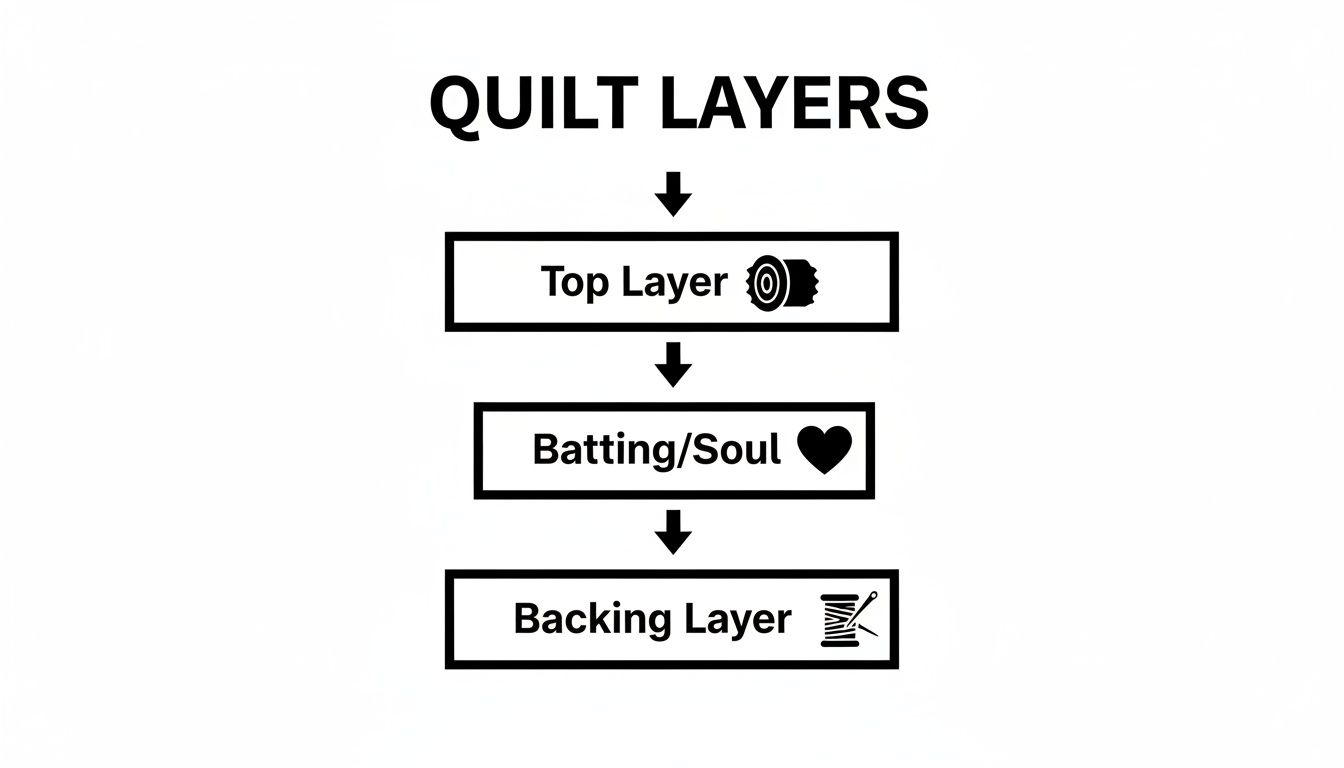
While your quilt top gets all the attention, the batting is what gives your quilt its character, drape, and warmth.
The Versatile Blends: The Best of Both Worlds
Sometimes, you get the best results by combining the strengths of different fibers. Hobbs figured this out long ago with its iconic blends, creating battings that quilters have relied on for decades.
The undisputed champion here is the Hobbs Heirloom® 80/20 Cotton/Polyester Blend. This is the workhorse of the quilting world, and for good reason. The 80% cotton gives you that soft, breathable feel, while the 20% polyester adds a dose of strength, stability, and reduces shrinkage. It’s tough enough for quilts that get lots of love and a huge favorite among longarm quilters who need a batting that can handle the rigors of their machines.
The Dependable Polyesters: Loft and Durability
Forget what you think you know about polyester! The modern polyester battings from Hobbs are a far cry from the stiff, flat stuff of the past. Today’s polys are engineered to be lightweight, incredibly resilient, and an amazing choice when you want extra puff and dimension without the weight.
- Poly-Down®: This one is designed to mimic the lovely softness and drape of down. With its medium loft, it’s a wonderful choice for fluffy bed quilts and comforters.
- Thermore®: If you're making quilted clothing, Thermore® is your new best friend. It’s an exceptionally thin, drapable batting that provides warmth without adding any bulk, making it perfect for jackets, vests, and bags.
Specialty Battings for Unique Projects
Beyond the everyday essentials, Hobbs also makes a fantastic range of specialty battings designed to solve specific problems or help you achieve unique effects.
For instance, the Heirloom® 80/20 Black batting is an absolute game-changer if you’re working with dark or black fabrics. Using a black batting means you’ll never see a tiny white fiber poking through your dark quilt top, keeping your work looking crisp and professional.
Another brilliant problem-solver is the Heirloom® Fusible 80/20. This batting has a light, heat-activated fusible on both sides. Just press with a hot iron, and your quilt sandwich is secured without a single pin! It's a massive time-saver for smaller projects like wall hangings, table runners, and placemats. You can check out the full range of Hobbs batting available for purchase by the roll to see all the options.
Hobbs Batting Product Line At a Glance
To help you sort through the options, here’s a quick-glance table comparing some of the most popular Hobbs lines. It breaks down the key features to help you zero in on the perfect choice for your next masterpiece.
| Product Line | Fiber Content | Loft | Quilting Distance | Ideal For |
|---|---|---|---|---|
| Heirloom® 80/20 | 80% Cotton / 20% Polyester | Low | Up to 4" | Everyday quilts, longarm quilting, general use |
| Tuscany® Wool | 100% Wool | Medium-High | Up to 4" | Warm bed quilts, show quilts, hand quilting |
| Heirloom® Cotton | 100% Natural Cotton | Low | Up to 4" | Traditional quilts, breathable throws, baby quilts |
| Poly-Down® | 100% Polyester | Medium | 2" - 4" | Lightweight comforters, projects needing loft |
| Thermore® | 100% Polyester | Ultra-Low | Up to 6" | Quilted clothing, apparel, lightweight crafts |
Ultimately, choosing the right Hobbs Bonded Fibers batting comes down to what your project needs and the final look you’re dreaming of. Whether you’re crafting a durable family heirloom or a delicate piece of fiber art, there’s a Hobbs batting ready to help bring it to life.
Match Your Method: Choosing the Right Hobbs Batting
The right batting does more than just fill a quilt—it can make or break your entire quilting experience. Think of picking the perfect Hobbs Bonded Fibers batting as a crucial part of the creative process. What works wonders for a longarm quilter might cause a headache for someone stitching by hand.
Your method—whether you're using a needle and thread, a trusty domestic machine, or a high-powered longarm—really dictates what you need from the batting. A hand quilter needs a batting that’s soft and yielding. A domestic machine user needs something stable that won't bunch up. A longarmer needs a foundation that can take on high speeds and tension without stretching.
Getting this match right is the secret to a project that flows smoothly and ends with a quilt you can be proud of.
The Gentle Touch of Hand Quilting
Hand quilting is an art of patience, where every single stitch is placed with intention. The last thing you want is to fight with your batting. For hand quilters, it all comes down to one thing: how easily the needle glides through the quilt sandwich. A dense, resistant batting will turn a peaceful afternoon of stitching into a battle that leaves you with sore fingers.
You’re looking for something soft, light, and wonderfully easy to needle.
- Hobbs Tuscany® Silk Batting: This is the top-shelf choice for a reason. Silk is incredibly fine yet strong, letting your needle pass through like a hot knife through butter. It gives your quilt a luxurious, soft drape that's simply unmatched for heirloom projects.
- Hobbs Tuscany® Wool Batting: A long-time favorite in the hand-quilting community. Wool is a dream to stitch through and creates beautiful, soft puffiness around your stitches. It's also lightweight and warm, making the entire process feel effortless.
- Heirloom® Natural 100% Cotton: If you love a traditional, classic feel, you can't go wrong here. This batting is soft right out of the package and only gets softer with washing. Its lower loft makes it perfect for detailed handwork without creating too much resistance.
When you're quilting by hand, the journey is just as important as the destination. Your batting should feel like a partner, not an adversary. The goal is to feel your needle dancing through the fibers, not wrestling them into submission.
Success with Your Domestic Sewing Machine
Quilting on a domestic machine comes with a unique set of challenges—namely, wrangling a whole quilt through the small throat space. The batting you choose is your number one ally in this fight. It needs to be stable enough to handle being pushed, pulled, and pivoted without stretching out of shape, but also flexible enough to maneuver.
Stability is the name of the game here. A bonded batting will prevent the layers from shifting while you work.
- Hobbs Heirloom® 80/20 Cotton/Polyester Blend: This is the go-to for countless quilters for a good reason. It’s the best of both worlds: the cotton gives it that soft, classic feel, while the 20% polyester provides the strength and stability to prevent distortion.
- Heirloom® Fusible 80/20: This stuff is a game-changer. It has a light, heat-activated adhesive on both sides, letting you iron your quilt sandwich together. No more pins or messy sprays! This is a massive help when you're working in a confined space.
- Thermore® Polyester Batting: Making a quilted jacket or a tote bag? This is what you need. It’s ultra-thin, providing structure without adding the bulk that makes projects impossible to manage on a home machine.
Digging into the different types of quilt batting can give you an even better understanding of what will work best for your next project.
Powering Through with a Longarm Machine
Longarm quilting is all about speed and precision. These powerful machines glide across a tensioned quilt top, and the batting has to be tough enough to handle the stress. The last thing a longarmer wants is a batting that stretches, creates drag, or—even worse—pulls apart under the needle.
For longarmers, consistency and exceptional stability are non-negotiable.
- Hobbs Heirloom® 80/20 Cotton/Polyester Blend: Yes, this blend shows up again! Its legendary stability makes it a trusted workhorse for longarm quilters who need a batting that can withstand high tension and speed without a single issue.
- Tuscany® Wool: When you want to create quilts with gorgeous, deep texture, wool is a fantastic choice for the longarm. It’s resilient and has just enough loft to make your quilting stitches pop, creating that beautiful dimension everyone loves.
- Poly-Down® Polyester: For that classic, puffy comforter look, this polyester batting delivers. It’s lightweight, holds its loft beautifully, and stands up to the demands of a longarm frame without breaking a sweat.
At the end of the day, matching your Hobbs Bonded Fibers batting to your quilting method sets you up for success, ensuring the process is as enjoyable as the finished quilt itself.
How to Buy and Store Your Batting
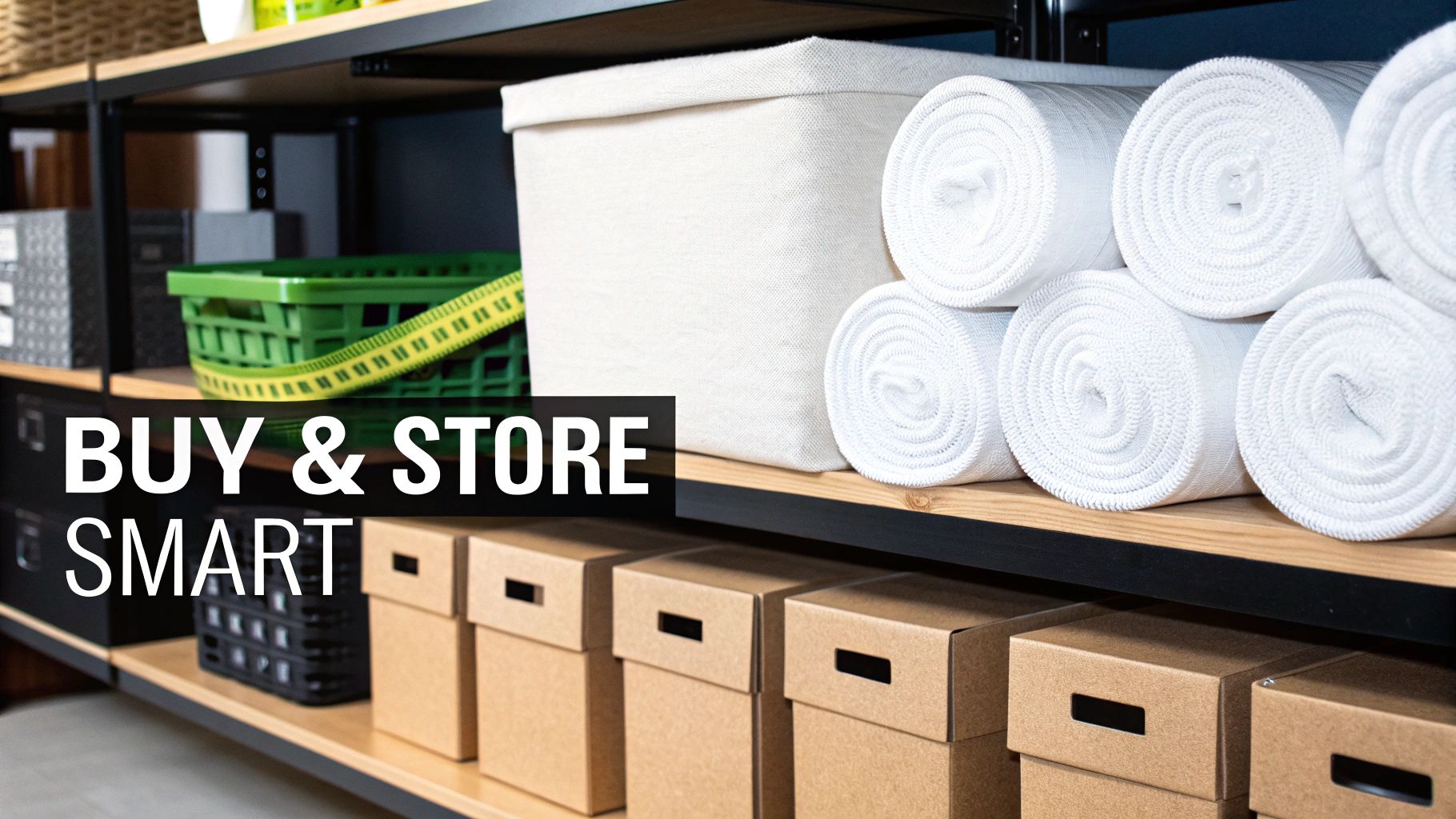
You’ve found the perfect Hobbs Bonded Fibers batting for your next masterpiece. Now what? Bringing it home is more than just a transaction; it's about making a smart investment in your craft. Knowing the different ways batting is sold can save you money, reduce waste, and make sure you’re always ready when inspiration strikes.
Whether you're making a single baby quilt or running a busy longarm studio, Hobbs has a format that fits your needs. Let's break down the options so you can buy like a pro.
Choosing the Right Size and Format
For most of us, batting comes in three main flavors. The best choice really boils down to how much quilting you do and how much space you have in your studio.
-
Packaged Pre-Cuts: This is what you’ll see most often at your local quilt shop. Hobbs packages their batting in standard bed sizes—think Crib, Twin, Queen, and King. It’s incredibly convenient. Just grab the size you need for a specific project, and you’re good to go with very little left over.
-
Batting on the Board: You’ve probably seen these folded neatly around a cardboard bolt in fabric stores. This setup lets you buy batting by the yard, which is a lifesaver for quilts with custom dimensions or when a pre-cut package just isn’t quite enough.
-
Batting by the Roll: For the quilter who never stops, this is the holy grail. Buying by the roll is, without a doubt, the most cost-effective way to get your batting. These rolls typically hold 15 to 30 yards of batting in generous widths like 96" or 120". The savings per yard really add up, making it a no-brainer for longarmers and prolific quilters.
This kind of bulk buying isn't just a quilter's trick; it's a reflection of a bigger picture. The global market for high-performance fibers, valued at USD 4.04 billion in 2024, is expected to climb to USD 6.32 billion by 2032. That tells you that quality materials like Hobbs are always in demand. You can dig deeper into the growing global fiber market on databridgemarketresearch.com.
Smart Storage for Your Investment
You wouldn't leave a beautiful cut of fabric out in the sun, and your batting deserves the same care. Since it’s a fiber product, batting can pick up moisture, attract pests, or absorb funky smells from its environment. Protecting it is easy, though.
Your main goals are simple: keep it clean, keep it dry, and keep it out of direct sunlight, which can make fibers brittle over time.
Storage Pro-Tip: Whatever you do, don't leave your batting stuffed in its original plastic bag for long-term storage. Those bags are notorious for trapping moisture, which is a recipe for mildew. Always give your batting room to breathe.
Follow these simple guidelines to keep your Hobbs batting fluffy and fresh:
- Find a Dry Spot: Store your batting in a climate-controlled area of your home, like a linen closet or under the bed. Damp basements and scorching attics are its worst enemies.
- Keep Critters Out: Moths and other insects have a taste for natural fibers like cotton and wool. Keep your stash safe in breathable cotton bags or in sealed (but not airtight) plastic bins.
- Avoid the Squish: Try not to pile heavy things on top of your batting. While Hobbs products bounce back beautifully, leaving them compressed for months on end can flatten the loft. If you’ve got a big roll, standing it on its end is a great way to save space and protect its fluff.
Thinking a little strategically about how you buy and store your batting ensures that every single quilt you make starts with the best possible foundation. If you need a hand figuring out just how much you need for a certain project, our guide on understanding standard quilt batting sizes is a great place to start.
Care Instructions for Your Finished Quilt
You’ve poured your heart, soul, and countless hours into creating a beautiful quilt. Now, how do you make sure it lasts a lifetime? Caring for a quilt made with Hobbs Bonded Fibers isn’t complicated, but a little know-how goes a long way in preserving the fibers, colors, and stitches you so carefully put together.
A question I hear all the time is whether to pre-wash batting. Honestly, you probably don’t need to. Hobbs battings are exceptionally clean right out of the package and are designed for minimal shrinkage—usually just 3-5% for their cotton and blended products. That little bit of shrinkage is what creates the gentle, crinkly pucker that gives a finished quilt that classic, well-loved texture.
Of course, if you’re aiming for a super flat, modern aesthetic with absolutely zero shrinkage, you can pre-wash it. Just soak the batting in cool water, gently squeeze out the excess (never, ever wring or twist it!), and then lay it out flat to air dry. For most of us, though, skipping that step is the secret to achieving that perfect heirloom look.
Washing Your Masterpiece
When the time comes for a wash, think gentle. The last thing you want is to put any stress on your seams or fabrics.
- Keep it Cool: Use a delicate or hand-wash cycle on your machine with cool or cold water.
- Use a Mild Soap: A pH-neutral detergent made for quilts or delicates is your best friend. Harsh soaps can be tough on both your fabric and the batting fibers over the years.
- Give it Space: Wash your quilt by itself, especially for the first few washes, just in case any fabric colors decide to run.
If you’ve used a wool batting, like the gorgeous Hobbs Tuscany Wool, be extra careful. It’s machine washable, but agitation and heat are the enemies of wool. A gentle soak and a low-spin cycle are usually all it needs to come out looking perfect.
A quick tip: A quilt is at its absolute heaviest when it's soaking wet. When you move it from the washer, be sure to support its full weight to avoid stretching the fabric or popping your stitches.
Drying and Storing for Longevity
Drying your quilt properly is just as crucial as washing it. High heat is public enemy number one for quilts—it can cause too much shrinkage and weaken the fibers.
Here are your best bets for drying:
- Tumble Dry on Low: Use the lowest, gentlest heat setting on your dryer. I like to toss in a few wool dryer balls to help fluff things up and speed up the drying time.
- Air Dry Flat: This is the gold standard. Lay the quilt flat on a clean sheet or a few towels, keeping it out of direct sunlight. This helps it dry evenly without any risk of stretching.
When it's time to put your quilt away, skip the plastic bags, which can trap moisture and cause mildew. Instead, fold it loosely and store it in a breathable cotton or muslin bag. A spot on a closet shelf or inside a cedar chest is perfect for keeping your masterpiece safe for generations to come.
Common Questions About Hobbs Batting
Even after you've picked out the perfect batting, a few questions always seem to pop up right as you're laying out your quilt sandwich. It's totally normal, and getting those last-minute details ironed out is what separates a good quilt from a great one. We've been there, so we've put together answers to the most common questions we hear about Hobbs Bonded Fibers batting.
Think of this as having an experienced quilter right there in the room with you. We'll cut through the confusion with practical, straightforward advice to help you get stunning results every single time.
Do I Need to Pre-Wash Hobbs Batting?
This is probably the number one question in the quilting world, and I'll give you the short answer: almost never. For the vast majority of Hobbs battings, including their flagship Heirloom® 80/20, pre-washing isn't just unnecessary—skipping it is part of the magic.
Hobbs designs their batting for minimal shrinkage, usually just 3-5%. That tiny bit of shrinkage happens after you've finished the quilt and washed it for the first time. It’s what creates that wonderful, crinkly texture and soft pucker that we all associate with a cozy, well-loved quilt. It’s a feature, not a flaw!
But, what if you're aiming for a perfectly flat, modern quilt with zero crinkle? In that case, you can absolutely pre-wash it.
- To pre-wash: Just give it a gentle soak in a tub of cool water. Definitely don't throw it in the washing machine on an agitation cycle.
- Get the water out: Carefully squeeze the excess water out. Whatever you do, don't wring or twist it, as that can stretch and distort the fibers.
- Dry it flat: Lay the batting out on a clean, flat surface and let it air dry completely.
Honestly, though, for 99% of your projects, you can confidently pull that Hobbs batting right out of the package and get to quilting.
What Does 80/20 in Hobbs Heirloom Mean?
When you see "80/20" on a package of Hobbs Heirloom®, you're looking at the simple recipe for what many quilters consider the perfect all-around batting. It just means it's made from a blend of 80% natural cotton and 20% polyester.
This isn't just a random mix; it's a thoughtfully engineered blend that gives you the best of both worlds.
- The 80% Cotton: This is the soul of the batting. It brings that soft, natural, breathable feel that makes a quilt so comforting. It's the reason your quilt feels like a classic from day one.
- The 20% Polyester: This is the batting's backbone. Those polyester fibers add strength and stability, keeping the cotton from shifting or migrating through your quilt top (a pesky problem known as "bearding"). It also gives the batting enough integrity to allow for quilting up to 4 inches apart.
Together, they create a durable, reliable, and beautifully soft batting that has become a go-to for quilters using both home machines and longarms. It’s a true workhorse.
Which Side of the Batting Goes Up?
This is a fantastic question, and it shows you're paying close attention to the details! For many Hobbs Bonded Fibers products, there is a "right side up," and knowing which is which can make a real difference in your final quilt. It all comes down to how the batting is made.
With needle-punched battings (which includes most of the cotton and blended Hobbs products), take a close look at the surface. One side has tiny, almost invisible dimples where the needles pushed the fibers through during manufacturing.
Pro-Tip: That dimpled side is the "scrim" side, and it should always face up, toward your quilt top. Placing it this way helps lock the fibers down, drastically reducing the risk of bearding and giving you a much cleaner finish.
Now, if you're using a thermally bonded batting like Hobbs Thermore® or Poly-Down®, you can relax. The heat-bonding process makes the batting uniform on both sides, so there's no right or wrong way to place it in your quilt sandwich. When in doubt, the packaging always has the final say!
Can I Use Hobbs Batting for Other Projects?
Absolutely! Don't let the word "quilt" limit your imagination. The unique qualities of Hobbs batting make it a brilliant choice for all sorts of creative projects. The trick is simply to match the batting's characteristics—its loft, drape, and fiber type—to what your project needs.
Once you start thinking outside the quilt block, you'll see possibilities everywhere.
- Quilted Garments: For quilted jackets, vests, or robes, you need something with a lovely drape. Hobbs Tuscany® Silk or Wool are perfect because they provide warmth without being stiff or bulky. For something even sleeker, Hobbs Thermore® was designed specifically for apparel.
- Home Decor: Need a little extra poof for decorative pillows or plush placemats? A polyester batting like Poly-Down® is a great choice. The stability of Heirloom® 80/20 makes it ideal for table runners and wall hangings that need to hold their shape and lie flat.
- Crafts and Accessories: Never throw away your batting scraps! They're perfect for smaller projects like tote bags, cosmetic pouches, potholders, and even soft toys. The fusible varieties are a lifesaver for small, fiddly items where pinning is a pain.
By getting to know the personality of each Hobbs product, you can choose the perfect foundation for just about any fiber art project you dream up.
Ready to start your next masterpiece with the industry's most trusted batting? At Quilt Batting, we offer a comprehensive selection of Hobbs Bonded Fibers by the roll, perfect for quilters of every style and scale. Find the ideal foundation for your project and enjoy the convenience of buying in bulk by exploring our collection.