

Imagine your favorite insulated coffee mug. It doesn't magically create heat, but it does an amazing job of keeping your coffee piping hot for hours. That's the best way to think about Insul-Bright thermal batting—it’s like a high-tech, flexible thermos you can sew right into your projects.
This unique quality makes it the secret ingredient for all sorts of functional crafts, from oven mitts that really protect to lunch bags that actually keep things cool until noon.
What Is Insul-Bright and How Does It Work?
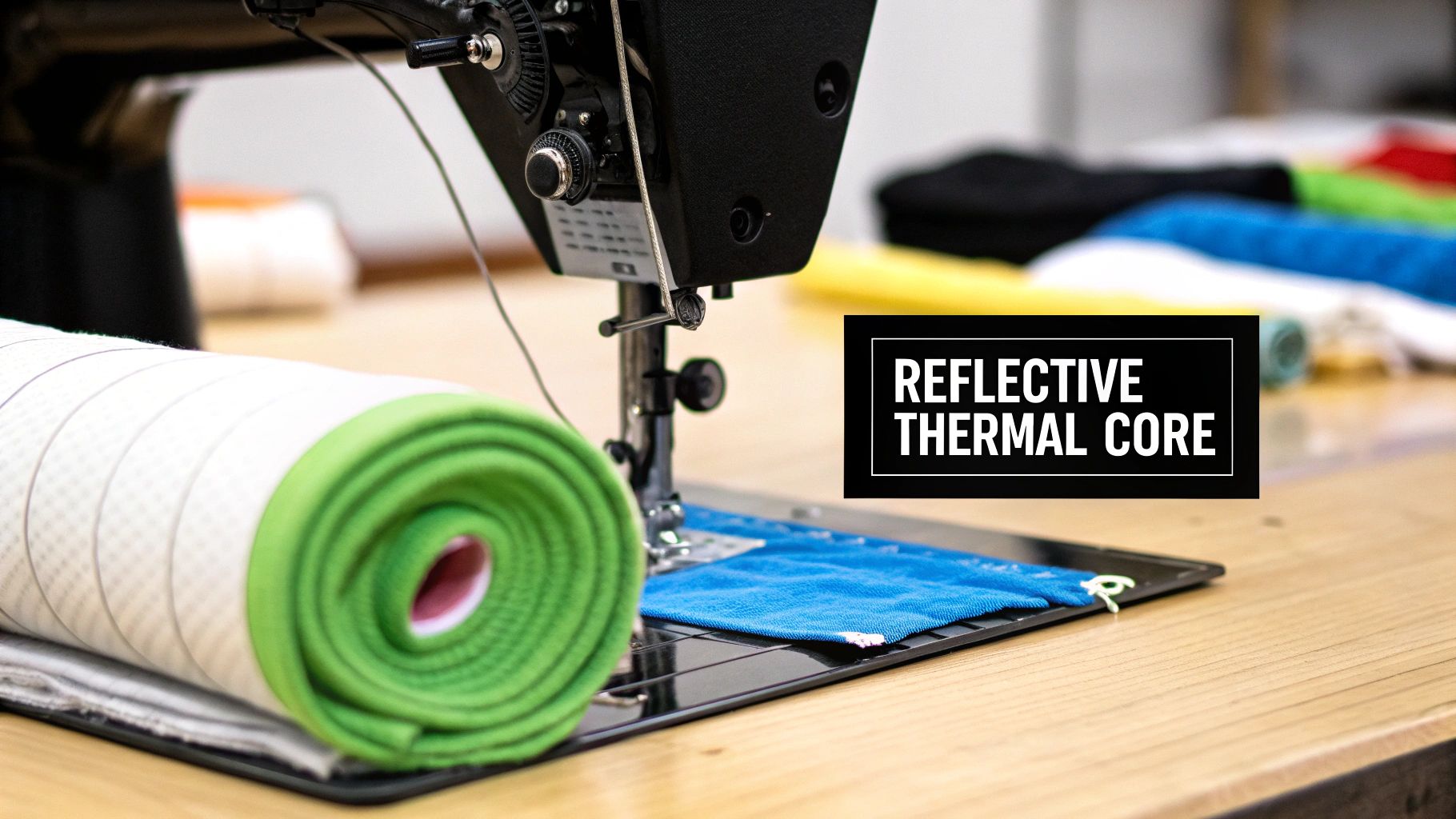
At its heart, Insul-Bright is a specialty batting engineered to stop temperature in its tracks. It's not about being super thick or fluffy like the batting you’d put in a quilt. Instead, it relies on a clever combination of materials to manage heat energy. Think of a space blanket, but one that’s soft, pliable, and ready to be stitched into your next creation.
The construction is simple but brilliant: a layer of hollow polyester fibers is needle-punched through a reflective, metalized polyester film. This "sandwich" is what makes it so effective. The polyester fibers create tiny air pockets that slow down heat transfer, much like how a cozy fleece jacket traps your body heat to keep you warm on a chilly day.
But the real magic is hidden inside.
The Power of Reflection
That shiny metallic core is where Insul-Bright truly shines. It acts as a radiant barrier, which is a fancy way of saying it reflects heat and cold energy instead of letting it pass through.
- For Hot Things: When you line a casserole carrier with it, the heat radiating from the dish gets bounced right back, keeping your food toasty for much longer.
- For Cold Things: In an insulated lunch bag, it works in reverse. It reflects the outside heat away from your food, helping that sandwich and soda stay refreshingly cool.
This ability to reflect thermal energy is what makes Insul-Bright a game-changer compared to standard cotton or polyester battings, which only insulate by trapping air. The demand for materials like this has exploded, with the global thermal insulation market reaching USD 71,851.2 million. North America alone accounts for over 40% of that demand, showing just how much people value high-performance materials in their everyday lives and crafts.
To give you a quick snapshot of what makes Insul-Bright so special, here's a simple breakdown of its core features.
Insul Bright At a Glance
| Feature | Description | Primary Benefit |
|---|---|---|
| Material Composition | Needle-punched polyester fibers through a metalized polyester film. | Combines air-trapping insulation with radiant heat reflection. |
| Primary Function | Reflects hot and cold thermal energy back to its source. | Maintains the temperature of items, keeping them hot or cold longer. |
| Flexibility | Soft, drapable, and easy to sew through. | Ideal for a wide range of projects, from bags to apparel. |
| Safety | Heat-resistant, not heat-proof. | Significantly slows heat transfer but requires extra layers for high-temp uses. |
This table shows why it's become a go-to for so many crafters—it delivers a level of performance that traditional materials just can't match.
One Very Important Safety Note
Let’s be crystal clear about something: Insul-Bright is heat-resistant, but it is not heat-proof. It does an incredible job of slowing down heat, but it won’t protect you from a scorching-hot pan forever.
This is exactly why you'll often see it layered with a good old-fashioned cotton batting in projects like oven mitts and potholders. The cotton adds that extra buffer, creating a powerful team that’s perfect for safely grabbing things out of the oven.
The Big Idea: Insul-Bright works its magic by combining two types of insulation: the air-trapping fluffiness of polyester fibers and the powerful heat-reflecting ability of a metallic core. This dual-action design is why it's the undisputed champion for any project where temperature control is the name of the game.
The unique structure of Insul-Bright includes a thin stabilizing layer called a scrim. If you're not familiar with that term and want to dig a little deeper, our guide on what scrim is in batting is a great place to start. Getting to know the materials you work with is the first step toward creating handmade goods that are not only beautiful but also safe and effective.
Choosing the Right Batting for Your Project
Walking into the batting aisle of a fabric store can feel a little overwhelming. You're faced with a wall of fluffy rolled-up materials, and they all start to look the same. But here’s the thing: not all batting is created equal. Picking the right one is the secret to a project that doesn't just look amazing but actually works the way it's supposed to.
Think of it like choosing the right tires for your car. You wouldn't put racing slicks on an off-road truck, right? The same logic applies here. You can't just grab any old quilt batting to make an oven mitt, or you're in for a very hot surprise.
This is especially true when it comes to Insul-Bright thermal batting. Its unique construction puts it in a class of its own. For some projects, it’s the undisputed champion. For others, it’s completely wrong for the job.
When to Use Insul-Bright vs. Other Battings
The biggest mistake I see makers make is thinking all battings handle heat in the same way. A standard polyester batting, for instance, can literally melt when it gets too hot—a disaster waiting to happen in a potholder. On the flip side, the metallic film in Insul-Bright means it is absolutely unsafe for the microwave. For that, you need 100% cotton through and through.
To clear things up, let's break down when to use which material.
Batting Comparison Guide
This quick guide should help you pick the perfect batting for what you're making. It’s all about matching the material's properties to your project's purpose.
| Batting Type | Best Use | Heat Handling Property | Microwave Safe? |
|---|---|---|---|
| Insul-Bright Thermal Batting | Potholders, oven mitts, lunch bags, casserole carriers | Reflects heat and cold | No (Contains metal) |
| 100% Cotton Batting | Microwave bowl cozies, traditional quilts, potholder layers | Absorbs heat, heat resistant | Yes (If fabric/thread are also 100% cotton) |
| 80/20 Cotton-Poly Blend | Bed quilts, wall hangings, table runners | Low heat resistance; for warmth not high heat | No |
| Fusible Fleece | Bags, placemats, adding structure | Adds body; very low heat resistance | No |
As you can see, your project's function is what really drives the decision. If you're making something that will touch a hot dish, a frozen lunch, or go anywhere near an appliance, choosing the right batting is a matter of both performance and safety.
Key Takeaway: Don't choose based on loft or feel alone—think about function and safety first. Insul-Bright is built to reflect temperatures, while cotton is designed for heat absorption and is the only option for microwave safety.
Making the Smart Choice
At the end of the day, picking between a soft, breathable cotton blend for a quilt and Insul-Bright thermal batting for a lunch bag is just a practical decision. A quilt needs to drape nicely and breathe, which is exactly what an 80/20 blend is made for. A lunch bag, on the other hand, needs to create a thermal shield to keep your food fresh, and that's a job tailor-made for Insul-Bright.
The more you understand the various types of quilt batting out there, the more confident you'll become. When you know the "why" behind each material, you'll be able to create projects that aren't just beautiful, but perfectly functional, too.
Creative Project Ideas Using Insul Bright
Sure, oven mitts and potholders are the classic go-to projects, but they're really just the beginning of what Insul Bright thermal batting can do. Once you understand that its real power lies in reflecting thermal energy, a whole world of creative possibilities opens up. You can start turning simple handmade items into high-performance gear for your home, your kitchen, and your life.
Let's move past the basics and get into some of the brilliant ways you can put this stuff to work.
Think about your weekly grocery run. An insulated grocery tote lined with Insul Bright is an absolute game-changer. It keeps your frozen goods solid and your milk perfectly chilled on the drive home, especially on a hot day. It essentially turns a simple fabric bag into a soft-sided cooler by reflecting the outdoor heat away from your food.
That same principle makes it perfect for those stylish casserole carriers. You can show up to the next potluck with your famous mac and cheese still bubbling hot, all because that reflective core bounced the heat right back into the dish. It’s a simple touch that makes a huge difference.
Expanding Your Insulated Creations
The applications don’t stop with just carrying food around. Insul Bright is the secret ingredient behind all sorts of clever and practical handmade goods where temperature matters.
- Custom Lunch Bags: Ditch the brown paper bag for good. Sew a durable, washable lunch bag that actually keeps food fresh for hours.
- Cozy Tea Cozies: A charming tea cozy isn't just for looks! When lined with this batting, it will keep your teapot wonderfully hot, so that second (or third) cup is just as good as the first.
- Durable Ironing Board Covers: Here’s a clever one—the heat-reflective quality of Insul Bright makes for a far superior ironing surface. It sends the iron's heat back into the fabric you’re pressing, making the job quicker and more efficient.
- Protective Sleeves for Electronics: In extreme cold, an insulated sleeve can help protect a tablet or laptop battery from draining too quickly. A little bit of warmth goes a long way.
This chart is a great way to visualize when you should reach for Insul Bright versus other battings you might have in your stash.
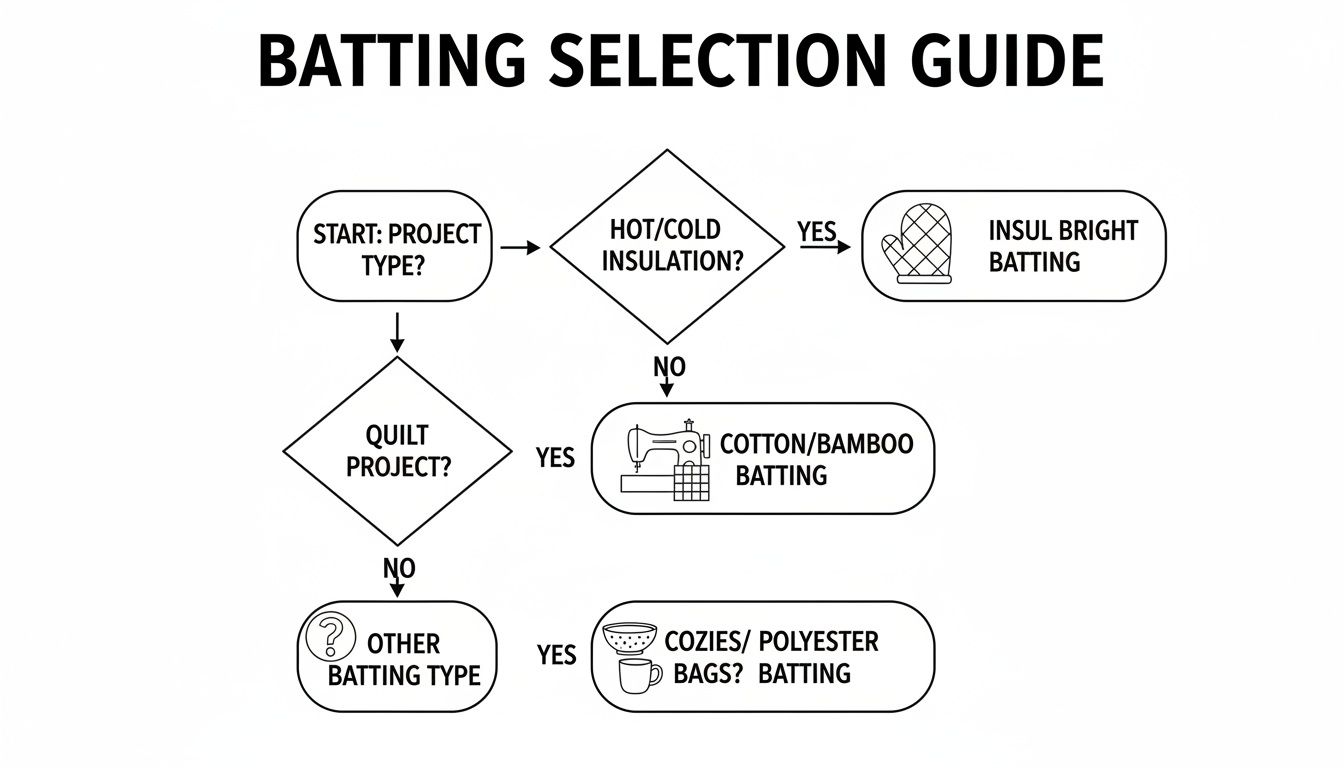
As you can see, for any project where you're trying to keep things hot or cold, Insul Bright is clearly the specialist's choice.
Insulated Apparel and Outerwear
Believe it or not, Insul Bright is also finding its way into handmade clothing. This mirrors a huge trend in the commercial activewear industry. The global market for what’s called "garment active insulation" was valued at USD 198.97 million in 2021 and is expected to hit USD 350.39 million by 2029.
People want warmth without the bulk, and that’s exactly what this material offers. You can add a surprisingly thin layer to a quilted jacket or vest and get a serious boost in warmth. It's an easy way to give your handmade outerwear a professional, high-performance edge.
Creative Spark: Don't box yourself in! Any project that could benefit from keeping something hot, cold, or just protected from big temperature swings is a perfect candidate for Insul Bright thermal batting.
By thinking outside the box, you can craft items that aren't just beautiful but are incredibly practical, too. And when you are ready to tackle those essential kitchen projects, you might want to check out our deep dive on the best batting for potholders, where we explore layering different materials for maximum safety.
Essential Tips for Sewing with Insul Bright
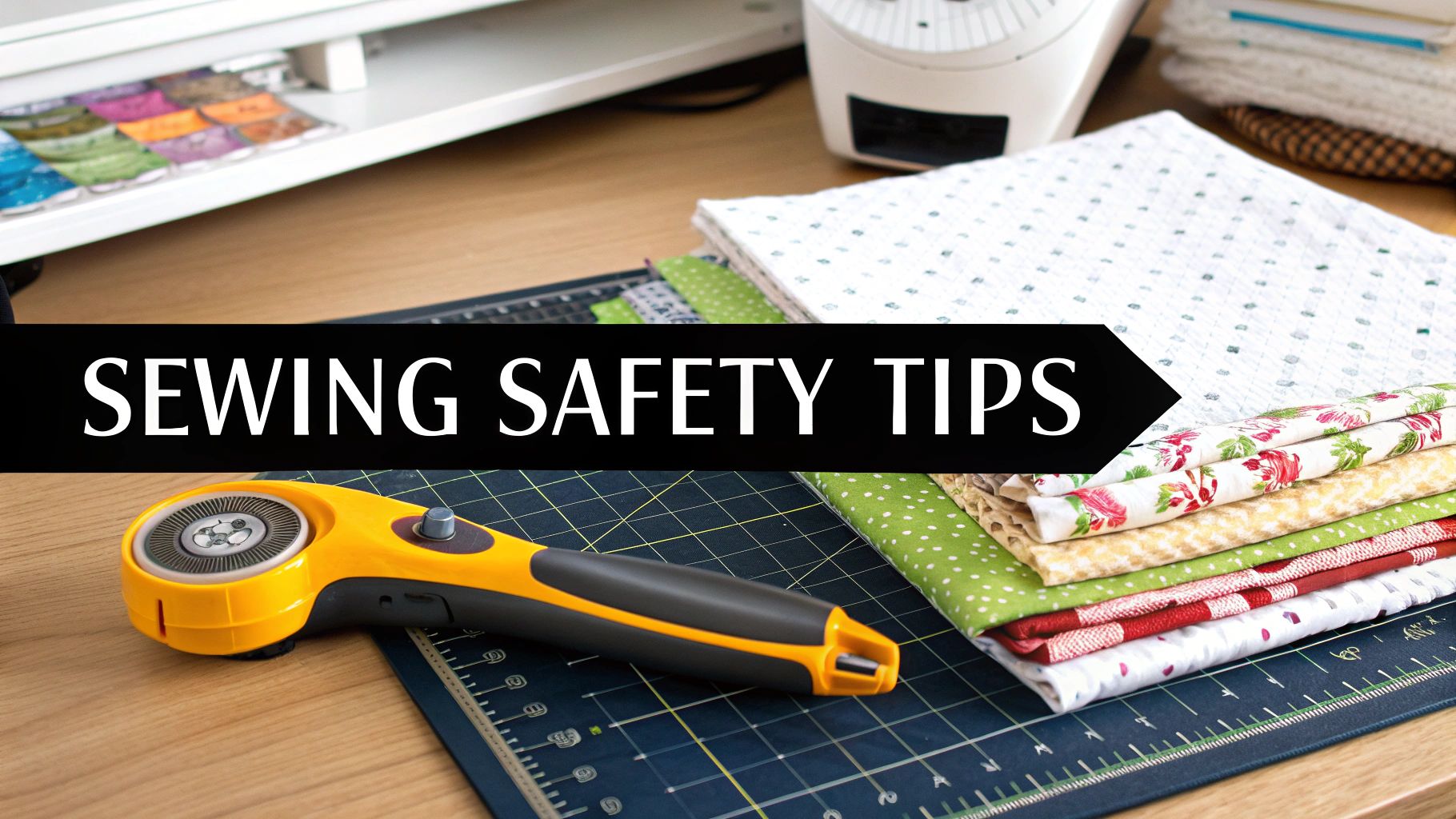
Working with Insul Bright thermal batting is a breeze once you get the hang of it, but its unique makeup calls for a slightly different approach than your standard batting. Nailing these little details will take your projects from homemade to handmade-professional, ensuring they look great and, more importantly, work safely.
Let’s start with the first cut. You can use sharp scissors, but if you have a rotary cutter and mat, now’s the time to use them. They’ll give you a clean, precise edge every time, preventing the batting from stretching or distorting, which makes piecing everything together so much easier.
When you sit down at your machine, there’s no need to hunt for a specialty needle. A standard universal needle in a 90/14 size has the perfect amount of punch to get through your fabric and the batting layers without a fight. No skipped stitches, no fuss.
Layering for Maximum Performance
This is where the real magic happens. How you stack your layers is everything—it’s what makes your project functional and safe. That metallic film inside Insul Bright is the insulation powerhouse, but you never want it to touch your skin, food, or a hot dish directly.
That brings us to what I call the golden rule for potholders: the "cotton sandwich."
The Cotton Sandwich Rule: For any project handling serious heat, like an oven mitt, always sandwich your Insul Bright between at least two layers of fabric. For the best protection, add a layer of 100% cotton batting in there, too.
A classic, super-effective layering recipe for an oven mitt looks like this:
- Outer Fabric: Your pretty, decorative layer.
- Cotton Batting: This adds a nice, plush feel and absorbs some of the initial heat.
- Insul Bright: The star player, reflecting that thermal energy right back where it came from.
- Lining Fabric: The soft interior that will be against your hand.
This combo creates a serious thermal barrier, letting each material do its job to keep you safe.
Critical Safety Reminders
Okay, this is the part we can't skip. Because Insul Bright thermal batting contains that metalized film, there are a few absolute, non-negotiable rules to keep in mind. Following them ensures your projects are used safely and prevent any nasty accidents.
- No Microwaves Ever: The metal film will spark and can easily start a fire in a microwave. Seriously, don’t do it. If you're making microwaveable bowl cozies, stick to 100% cotton for everything—fabric, batting, and thread.
- Avoid Direct Flame: Keep your Insul Bright projects away from open flames. The polyester fibers in the batting can melt when exposed to fire.
- Layer Up: Insul Bright is heat-resistant, not heat-proof. Never use it as a standalone layer for a potholder. It’s designed to work as part of a team, relying on the other fabric layers to provide complete protection.
Caring for Your Insulated Fabric Creations
You've spent your precious time and creative energy making something special with Insul-Bright, and you want it to last. The good news? Keeping your insulated projects in top shape is surprisingly easy, so they'll be ready for countless potlucks and picnics to come.
One of the biggest reliefs for any sewist is knowing your finished project won't warp in the wash. Unlike some fussy natural fiber battings, Insul-Bright is totally stable. That means it will not shrink, period. This is a game-changer for items that get a lot of use, like casserole carriers and grocery totes, because you can wash them without worrying they'll come out a different size.
Washing and Drying Best Practices
The secret to long-lasting insulation is simple: avoid high heat. The reflective film and polyester fibers inside Insul-Bright don't love extreme temperatures, which can slowly break them down and reduce how well they work.
For the best results, just stick to these guidelines:
- Machine wash on a gentle cycle with cold water. This is kind to your stitches and the batting.
- Choose a mild detergent. Harsh chemicals aren't necessary and can be tough on the fibers.
- Tumble dry on low heat. Even better, lay your project flat to air dry. It’s the gentlest way to go and guarantees your project a long, happy life.
One of the best things about working with Insul-Bright is how well it holds up. If you're selling your creations, you can give your customers simple, clear care instructions they can actually follow. That's a huge plus for ensuring they love their handmade purchase for years.
By keeping things cool during cleaning, you're protecting that delicate metallic film that does all the hard work of reflecting heat. A little gentle care is all it takes to make sure your oven mitts, lunch bags, and other thermal projects keep performing just as beautifully as they look.
Your Smart Guide to Buying Insul-Bright
Deciding how to buy Insul-Bright thermal batting isn't just about clicking "add to cart." It’s a real strategic choice that shapes your budget, your workflow, and even what you feel capable of creating. Whether you're a weekend crafter or running a bustling Etsy shop, buying smart is what separates a smooth process from a frustrating one. The two things that really matter are how often you sew and how big your projects are.
For the hobbyist making a few potholders for holiday gifts or the occasional lunch bag, those pre-cut packages are a perfect match. They're convenient, a breeze to store, and you won't end up with a giant roll taking over your craft closet for one small project. You get just what you need, right when you need it.
For Crafters and Small Businesses
But if you find yourself constantly running out of Insul-Bright, it's probably time to think bigger. For anyone running a small business, a quilt shop, or just sewing up a storm, buying by the roll is a game-changer. The cost per yard plummets when you buy in bulk, which goes straight to your bottom line on everything you sell.
Think of it this way: buying a roll is an investment in your own efficiency. It means no more last-minute dashes to the fabric store, and you’ll always have that consistent, high-quality material ready to go when an idea sparks.
This is more than just a gut feeling; it reflects a bigger trend. The US insulation market is on track to grow at a 4.53% CAGR and hit USD 20.14 billion. That growth isn't just from home construction—it includes the craft world, too. This shows just how valuable it is for creative entrepreneurs to have reliable materials like Insul-Bright on hand to meet that demand. You can dig deeper into these insulation market trends and their growth if you're curious.
The Real Perks of Buying by the Roll
Getting a full roll of Insul-Bright thermal batting is about more than just saving a few bucks. It brings a level of consistency that’s absolutely crucial if you’re selling your handmade goods.
- Total Uniformity: Every oven mitt or casserole carrier you make will have the exact same structure and performance because it came from the same dye lot.
- Uninterrupted Workflow: With plenty of material on hand, you can dive into a new project the second inspiration hits, no delays.
- Less Waste: You can cut exactly the size you need for any custom project, which means fewer awkward, unusable scraps left over from pre-packaged sizes.
Making the leap from buying small packages to investing in a full roll is a sign that you're ready to scale up your craft. It’s a practical step that opens the door to more ambitious projects and a much more professional workflow. You can get started by checking out our Insul-Bright insulating thermal lining available by the yard, a flexible option perfect for any project.
Answering Your Top Insul-Bright Questions
Even the most experienced sewers run into questions when working with a specialty material like Insul-Bright. Let's tackle some of the most common ones I hear, so you can start your next insulated project with absolute confidence.
Getting these little details right is what separates a good project from a great one—one that’s not just pretty, but truly functional and safe.
Is Insul-Bright Microwave Safe?
This is, without a doubt, the most important safety question, and the answer is a firm and absolute NO. Never, ever put Insul-Bright in a microwave.
It contains a metalized film, and metal in a microwave is a recipe for sparks, arcing, and even a fire.
For any item you're making for the microwave—think potato bags or soup bowl cozies—you need to stick with 100% cotton for everything. That means cotton fabric, cotton batting, and even cotton thread. No exceptions!
Which Side of Insul-Bright Faces Out?
Here's some good news: it doesn't matter! The reflective magic happens inside the material, so it insulates just as effectively no matter which way you orient it.
The real rule to remember is that Insul-Bright must always be sandwiched between at least two layers of fabric. It should never come into direct contact with a hot pan, a cold dish, or food.
A Handy Tip from My Sewing Room: While performance isn't affected, I often place the shiny side toward the expected heat source. It’s just a simple mental trick that helps me remember which layer is doing the heavy lifting during assembly.
Do I Need Another Batting with Insul-Bright?
For things that get really hot, like oven mitts or trivets, I strongly recommend it. Insul-Bright is fantastic at reflecting heat, but pairing it with a layer of cotton batting gives you a one-two punch of protection.
The best method is to create a "batting sandwich" like this:
- Outer Fabric Layer
- 100% Cotton Batting (This absorbs heat)
- Insul-Bright (This reflects heat)
- Lining Fabric Layer
This combination creates a powerful thermal barrier that makes your finished items significantly safer and more effective. It's a professional touch you won't regret.
Can I Quilt Through Insul-Bright?
You sure can! It was designed to be sewn through. It’s a soft, needle-punched material that’s surprisingly easy to handle on a machine or by hand.
The manufacturer recommends you can quilt your lines up to 10 inches apart, which gives you a lot of creative freedom. To make the process a breeze, I've found that a universal or denim needle (size 90/14) works perfectly, gliding through all the layers without a fight.
Ready to see what high-performance insulation can do for your projects? At Quilt Batting, we stock top-quality Insul-Bright along with a huge variety of other battings to help you bring your ideas to life.
Check out our full selection and find the perfect foundation for your next creation.