

Every quilt has a secret. Tucked between the beautiful top and the sturdy back is its heart and soul: the batting. This is what gives your quilt its warmth, its drape, and its personality. Deciding to buy quilt batting by the yard is one of the best moves a quilter can make. It frees you up for custom projects and, let's be honest, saves you a good bit of money compared to those pre-packaged batts.
The Hidden Heart of Your Quilt
Think of batting as the unsung hero of your quilt. It’s that essential middle layer that turns two flat pieces of fabric into a cozy, three-dimensional heirloom. Without it, you’ve got a lovely blanket. With it, you have a quilt—something with character, comfort, and real, lasting warmth.
When you start buying batting by the yard, you're making a shift. You're moving from just following a pattern to taking complete control over how your quilt will look and feel. It’s a truly empowering choice that opens up a world of creative possibilities.
Why Buy Batting by the Yard
For any quilter ready to break free from standard-sized kits, ordering batting by the yard is the natural next step. The benefits are real, and they impact everything from your wallet to the final quality of your work.
- Total Flexibility: Suddenly, custom-sized projects aren't a headache anymore. Whether you're making a small wall hanging or a massive king-sized bedspread, you can get the exact length you need. No more awkward seams or trying to make a pre-cut size work.
- Serious Cost Savings: Buying off the roll is almost always cheaper than buying pre-cut packages. The price per yard is lower, and you cut down on waste because you're only ordering what you actually need.
- Consistent Quality: Ever find a batting you absolutely love? Buying it by the yard means you can get a continuous piece from the same batch. This is a huge deal for large quilts or if you're making a series of matching items.
Buying batting by the yard is like a baker switching from small bags of flour to buying in bulk. It's more efficient, it costs less in the long run, and it shows you’re serious about your craft. You're not just dabbling anymore; you're setting up your studio for real creativity.
Think of this guide as a friendly chat with an experienced quilter. We're going to walk through everything—from decoding the different fiber types and understanding "loft" to figuring out exactly how much yardage to order. By the time we're done, you'll feel completely confident choosing and buying the perfect quilt batting for whatever you dream up.
Choosing the Right Batting Fiber
Picking the right batting fiber for your quilt is like casting the main character in a play. It sets the tone and determines the final feel, warmth, and drape of your finished project. Buying quilt batting by the yard opens up a world of options, each with its own personality. Let's get past the textbook definitions and talk about how these materials really behave.
The best place to start is with your project's destination. Are you crafting a light and airy baby quilt? A modern wall hanging that needs to lie perfectly flat? Or maybe a cozy, traditional bed quilt that will be passed down for generations? Each of these calls for a different kind of batting to truly bring your vision to life.
The Traditional Feel of 100% Cotton
When you imagine a classic, well-loved quilt with that soft, crinkled texture, you're thinking of 100% cotton batting. Cotton is a natural, breathable fiber that feels a lot like a thick, soft sheet of flannel inside your quilt. It's the undisputed champion for quilters chasing that timeless, heirloom aesthetic.
One of cotton's defining traits is its shrinkage. Most 100% cotton battings shrink just a little (about 3-5%) after the first wash. This is what creates that wonderful puckered, vintage look that so many of us adore. It also grabs onto quilting stitches beautifully, resulting in a flatter finish that really lets your piecing shine.
- Best For: Traditional quilts, baby quilts, wall hangings, and any project where you want that classic, antique vibe.
- Keep in Mind: It's a bit heavier than other options and needs quilting stitches placed fairly close together to keep everything secure, unless you choose one with a stabilizing scrim.
If you're curious to dive deeper into all the materials out there, check out our guide on the types of quilt batting to explore their unique qualities.
80/20 Blends: The Versatile Workhorse
The 80/20 cotton/polyester blend is hands-down the most popular choice for quilters today, and for very good reason. It’s the perfect marriage of two fantastic fibers. You get the soft, natural feel and breathability of cotton, beefed up with the strength, stability, and low-shrinkage qualities of polyester.
This blend is a true workhorse, ready to tackle just about any project you can throw at it. It has a little more loft than pure cotton but still drapes like a dream, making it a fantastic all-purpose batting to have on hand—especially if you buy by the roll. It hits that sweet spot for quilters who want a hint of that classic crinkle without a lot of shrinkage.
Deciding when to buy by the yard often comes down to your project's specific needs, your budget, or simply getting the exact amount you need without waste.
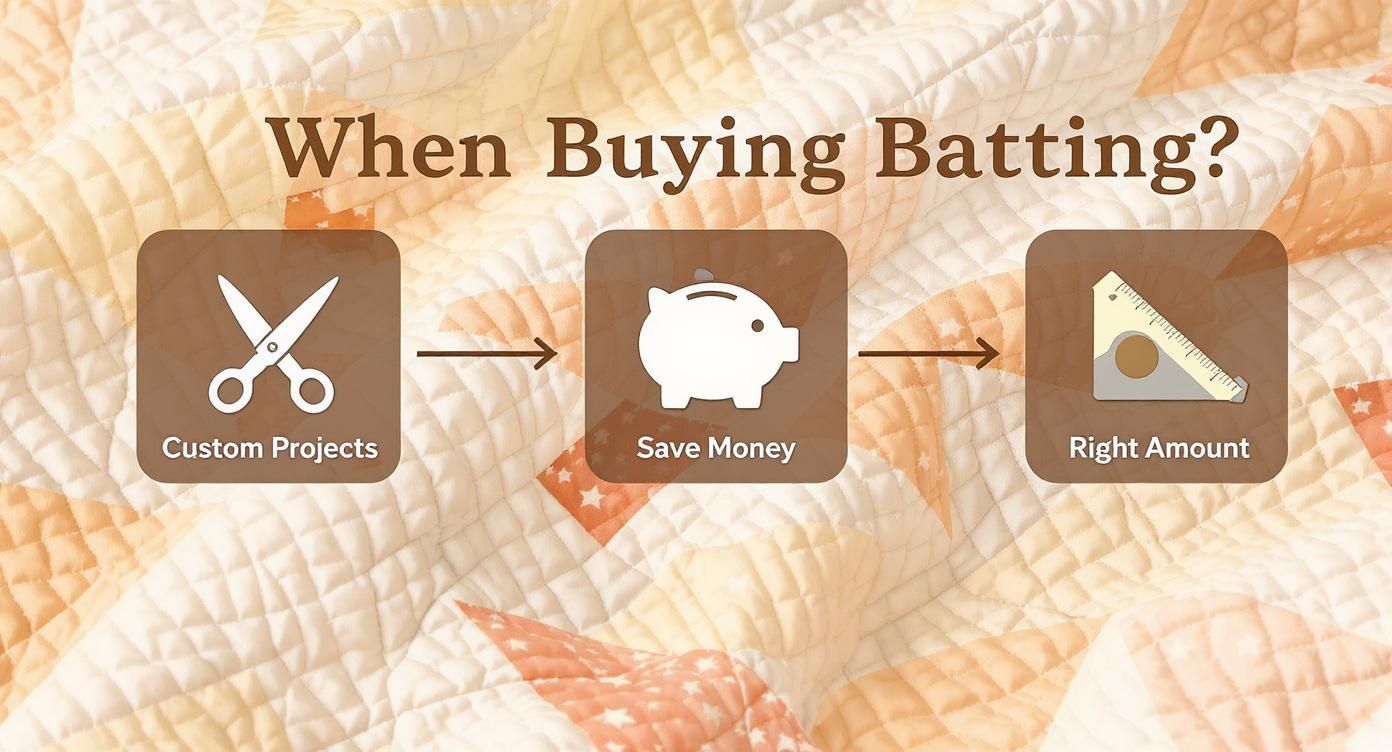
As you can see, buying your batting by the yard gives you the flexibility to prioritize what matters most for each quilt you make.
The Durability and Loft of Polyester
Polyester batting is your go-to for a lightweight, durable, and budget-friendly option that really shines in certain situations. It’s tough, resists creasing, and has virtually no shrinkage. Plus, you can place your quilting stitches much farther apart compared to cotton. This makes it a fantastic choice for beginners or for quilts destined for heavy use and frequent trips through the washing machine.
Its higher loft options are perfect for creating those puffy, comforter-style quilts where you want the quilting to create deep, dramatic texture. Polyester batting isn't just a niche product; it accounted for over 60% of all batting sales by the yard in recent years, proving its value with its unbeatable combination of affordability and ease of use.
The Luxurious Warmth of Wool
For a quilt that delivers exceptional warmth without the weight, wool is in a class of its own. This incredible natural fiber is remarkably breathable, keeping you comfortable in both cool and warm weather. Wool batting also has a magnificent loft that provides stunning stitch definition, which is why it's a top pick for show quilts where the quilting is the main event.
Wool batting has a unique "memory," allowing it to resist creases and spring back into shape. This gives quilts a resilient, lofty drape that's hard to achieve with other fibers. It’s the perfect choice for that special project you want to be both a work of art and a source of incredible comfort.
It’s also surprisingly easy to work with, whether you're quilting by hand or machine. While wool comes with a higher price tag, the luxurious feel, lightweight warmth, and gorgeous texture make it a worthy investment for those quilts that are meant to be treasured for a lifetime.
Batting Fiber Characteristics at a Glance
Choosing a batting can feel overwhelming, but this quick-reference table can help you compare the most common options side-by-side. Think of it as a cheat sheet for your next project.
| Batting Type | Fiber Content | Best For | Quilting Distance | Shrinkage |
|---|---|---|---|---|
| 100% Cotton | Natural Cotton | Traditional quilts, heirloom look | Up to 4" | 3-5% |
| 80/20 Blend | 80% Cotton, 20% Polyester | All-purpose, modern quilts | Up to 8" | 1-3% |
| Polyester | Synthetic Polyester | Puffy quilts, high-use items | Up to 10" | 0-1% |
| Wool | Natural Wool | Show quilts, warm & light quilts | Up to 4" | 1-3% |
Use this table to quickly narrow down your choices based on the final look and feel you're aiming for. It's a great starting point for matching the perfect batting to your creative vision.
Getting the Loft and Width Right
Once you've settled on a fiber type, the next big decision is figuring out the right loft and width for your project. These two specs are the real workhorses behind your quilt's final look and feel. Think of them as the difference between a quilt that just lies there and one that has presence and personality.
They really go hand-in-hand. Loft gives your quilt its puffiness and texture, while picking the right width when you buy quilt batting by the yard is your secret to a smooth, headache-free finish with less waste. Let's dig into how to nail both of these choices.
What is Batting Loft?
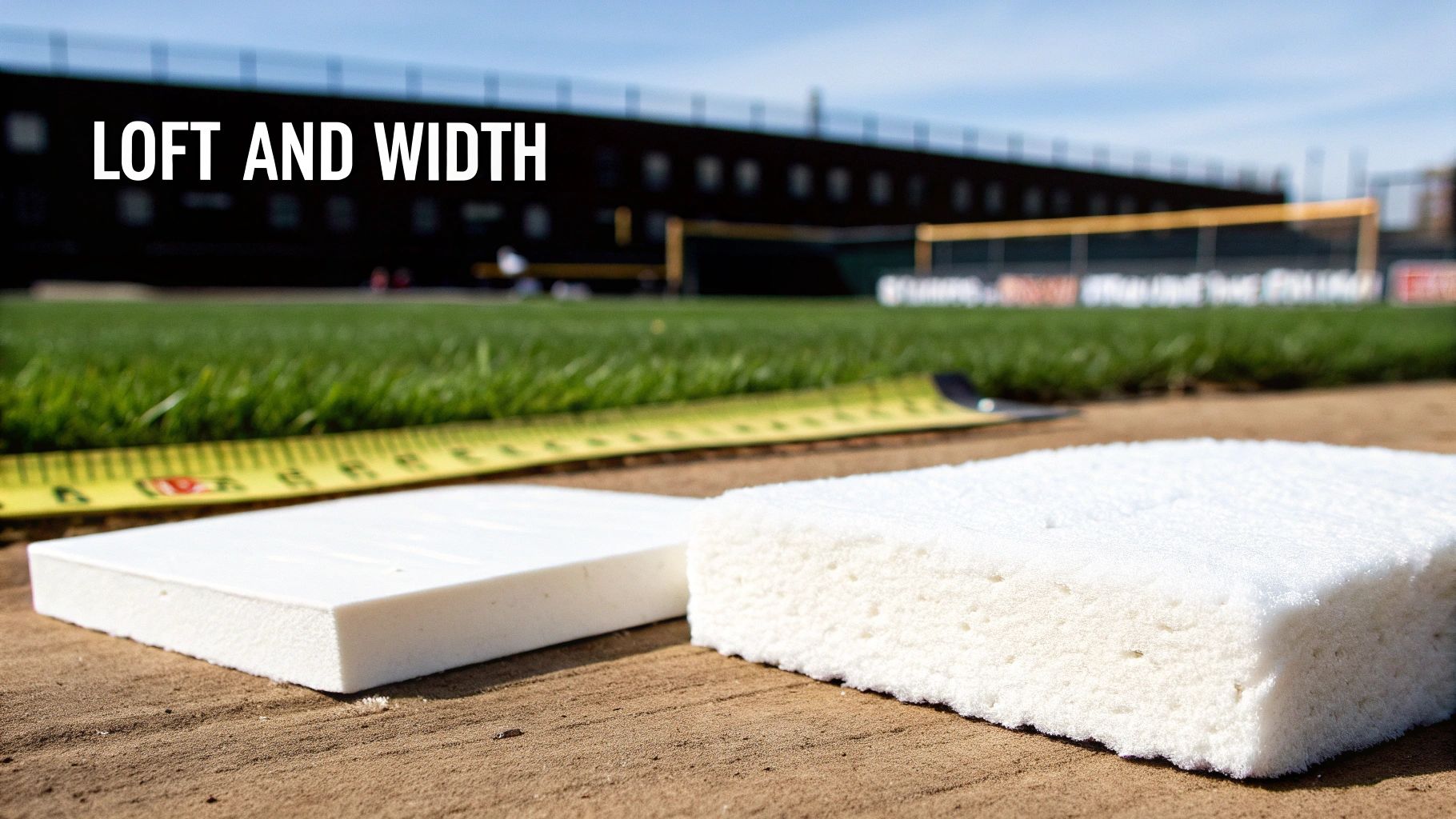
In simple terms, loft is just a quilter's word for thickness or "fluff." It’s what decides if your quilt will have that classic flat, vintage drape or a puffy, cloud-like coziness. It’s a lot like choosing a pillow—some people want something thin and firm, while others want a big, soft cushion to sink into.
You'll generally find batting falls into two main camps, and each one is perfect for a different kind of quilt.
-
Low Loft Batting: This is your thinner, denser choice, usually around 1/8 inch thick. It creates a wonderfully flat and lightweight quilt that drapes beautifully over a bed or couch. The real magic of low loft is how it lets your piecing and stitch work shine. The stitches nestle right into the fabric, giving you crisp, beautiful definition.
-
High Loft Batting: For those times you want a big, puffy quilt, this is your go-to. Often 1/2 inch thick or even more, it creates a plush, comforter-like quilt. High loft is fantastic when you want the quilting itself to be the star, creating deep shadows and making the stitch patterns pop right off the fabric.
The choice really comes down to what you want to show off. A low loft puts the spotlight on your fabric and piecing, while a high loft makes the quilting design the hero.
If you're curious about how a flatter profile can elevate your work, check out our guide on using low loft batting for quilts. It’s a favorite for modern quilts and intricate wall hangings where every stitch counts.
Picking the Perfect Batting Width
When you order quilt batting by the yard, you’re cutting a certain length from a giant roll with a set width. A little bit of planning here can save you a world of hurt later. Getting the width right from the start means you'll have one clean, continuous piece of batting—no frustrating patchwork of scraps needed.
Batting rolls come in a few standard widths, sized to match common bed dimensions and quilting projects.
Common Batting Widths:
- 90 Inches or 96 Inches: This is a super versatile size, perfect for throws, twin, and full-sized quilts. A 96-inch width, for example, is a quilter's best friend for a standard queen top (usually about 90 inches wide), giving you just the right amount of extra to work with.
- 108 Inches: The sweet spot for most queen and many king-sized quilts. It gives you plenty of extra batting on the sides without being wasteful, which is why it's a staple in so many longarm studios.
- 120 Inches: This one is for the giants! It's your go-to for California Kings and any other oversized quilt you can dream up. Keeping a 120-inch roll on hand means you're ready for pretty much any huge project that comes your way.
Here’s the golden rule: always choose a batting width that is at least 8 inches wider than your quilt top's shortest side. This gives you that crucial 4 inches of extra batting all the way around. This "overage" isn't just for show; it's absolutely essential for quilting, especially on a longarm machine. It gives you the wiggle room you need for clamping the quilt, squaring it up perfectly, and absorbing any little shifts or draws that happen as you stitch.
How to Calculate Your Yardage Accurately
Ordering quilt batting by the yard can feel a bit like a math test you didn't study for, but I promise, it's simpler than it looks. Getting your numbers right from the start is the single best way to save money and sidestep that classic quilter’s nightmare: running out of batting mid-project. With one simple formula, you can order with total confidence every single time.
The secret isn't just measuring your quilt top. It's about remembering to add a crucial buffer known as "overage." This extra batting is absolutely essential for the quilting process, whether you're wrestling it through your home machine or sending it off to a longarmer.

The Golden Rule of Overage
Before you even think about numbers, commit this to memory: your batting should be at least 8 inches longer and 8 inches wider than your finished quilt top. This gives you a safe 4-inch border on all four sides.
Why so much extra? This overage is your best friend for a few key reasons:
- Loading onto a Longarm: Longarm quilters need that extra fabric to clamp the quilt sandwich securely to the machine’s frame. Without it, they can't even get started.
- Shifting and Settling: As the layers are stitched together, things naturally move around a bit. This buffer ensures your quilt top never drifts off the edge of the batting.
- Squaring Up: After all the quilting is done, you’ll trim the edges to get a perfectly square finish before adding your binding. The overage is the stuff you trim away for those crisp, clean lines.
Think of overage as your quilting insurance policy. It's a small investment in extra material that protects you from the massive headache of a quilt that's too small to finish properly.
The Calculation Formula in Three Easy Steps
Alright, ready for the math? It’s much easier than piecing a drunkard's path block. Just grab a measuring tape, your phone's calculator, and follow along.
-
Measure Your Quilt Top: First, get the exact length and width of your finished quilt top. For this example, let's say we have a queen-size quilt that measures 90 inches wide by 100 inches long.
-
Add Your Overage: Now, add 8 inches to both of those measurements. This gives you the final dimensions your piece of batting needs to be.
- Width: 90" + 8" = 98 inches
- Length: 100" + 8" = 108 inches
-
Calculate the Yardage: So, you now know you need a single piece of batting that is 98" x 108". Since batting is sold by the yard (length) from a roll of a specific width (like 96", 108", or 120"), you just need to focus on your length measurement. To convert inches to yards, simply divide by 36.
- 108 inches ÷ 36 inches/yard = 3 yards
For this project, you would order 3 yards of batting from a roll that is at least 98 inches wide. In this case, a 108" or 120" wide roll would be perfect.
If you ever need a quick refresher on batting specs, this free Hobbs Batting recommendation chart is a fantastic resource to keep handy. Once you master this simple calculation, you’ll be able to buy just what you need, every single time.
Smart Strategies for Buying in Bulk
If you're serious about quilting, you'll eventually hit a point where buying batting in those small, pre-cut packages just doesn't cut it anymore. Making the leap to purchasing quilt batting by the yard right off the roll is a total game-changer. It's the moment your craft shifts from a casual hobby into a smooth, well-oiled operation. This isn't just about making things easier; it's a smart business move that pays off, especially for longarm quilters and small quilting businesses.
Think of it this way: a professional baker doesn't run to the grocery store for a two-pound bag of flour for every cake. They buy in bulk. This ensures every batch is consistent, keeps costs down, and means they never have to stop production mid-flow. Buying your batting by the roll is the exact same principle, just for your quilting studio.
The Financial Advantage of Buying by the Roll
The first thing you'll notice when buying batting in bulk is the serious cost savings. When you commit to a full roll, the price per yard drops like a rock compared to packaged batting or even custom cuts. That bulk discount goes straight to your bottom line, meaning higher profit margins if you quilt for others or a bigger fabric budget if you quilt for yourself.
Let's do some quick math. A busy longarmer might easily finish 30 to 50 client quilts in a year. If you can save just $10 to $15 on batting for each one, you’re suddenly looking at hundreds of dollars in extra cash annually. That’s money you can put right back into your business for a new machine, some fun marketing, or that luxury thread you’ve been eyeing.
This strategy is easier than ever to pull off, thanks to online specialty shops. The United States is still the biggest market for quilting supplies, and with over 50% of batting-by-the-yard sales now happening online, you can get a giant roll of batting delivered right to your front door. You can dig into more of these quilting market trends on openpr.com.
Choosing Your Studio's Workhorse Batting
When you're investing in a whole roll, you want to pick a versatile "workhorse" batting—something that will be perfect for the vast majority of your projects. For most of us, that's an 80/20 cotton/polyester blend. It really is the sweet spot, hitting that perfect balance of quality, affordability, and performance. It's a choice you can count on, whether you're working on a client's masterpiece or your own passion project.
Here’s why an 80/20 blend is such a solid investment:
- Broad Appeal: It gives you that soft, classic feel of cotton but with the added stability and lower shrinkage of polyester. It's a crowd-pleaser that works for a huge range of quilting styles.
- Reliable Performance: It drapes like a dream, quilts beautifully, and just plain works. You can trust it to deliver consistent, professional results every time.
- Cost-Effectiveness: You get a premium feel without the premium price tag of 100% wool or bamboo, which helps protect your profits.
A fantastic option to consider is something like the Quilters Select Blend Batting. It offers excellent quality and comes in a roll size that’s perfect for stocking a busy studio.
Best Practices for Storing Your Batting Roll
A roll of batting is a real investment, so you have to protect it! Storing it properly keeps it clean, fresh, and ready for your next quilt, making sure the quality is just as good on the last yard as it was on the first.
Think of your batting roll like a fine bolt of fabric—it needs protection from its enemies: dust, moisture, and pests. A little bit of care in how you store it goes a very long way.
Follow these simple tips to keep your batting in perfect shape:
- Keep it Wrapped: Leave the roll in the original plastic bag it came in. This is your number one defense against dust and humidity in the air.
- Get it Off the Floor: Never, ever store your batting roll directly on a concrete floor. Concrete can wick moisture and cold right into your beautiful batting. Use a small pallet, a sturdy shelf, or even just a couple of 2x4s to keep it elevated.
- Find a Dry, Dark Spot: A climate-controlled closet, a spare room, or a dry corner of your studio is perfect. Steer clear of attics, basements, and garages where temperature and humidity can go on a rollercoaster ride.
- Stand it Up: Storing the roll vertically on its end is the best way to prevent it from developing flat spots or getting distorted from its own weight over time.
By making these smart buying and storage habits part of your routine, you'll make your quilting life more efficient, more professional, and definitely more profitable.
Your Guide to Ordering Batting Online
Buying something as big and fluffy as quilt batting online might seem a little odd at first. But honestly, it's one of the best ways to get your hands on a huge variety and often find some fantastic deals. Once you get the hang of it, the process is simple—from figuring out shipping to knowing what to do the moment that giant box arrives on your porch.
It's no secret that shopping online has changed the game for quilters. In fact, more than 40% of batting sales now happen online, making it easier than ever to find exactly what you need. You can dig into more of those numbers in these batting market insights on datainsightsmarket.com.
This shift means you’re no longer limited to what your local shop can stock. Specialty options like black, fusible, or that extra-wide wool batting you’ve been dreaming of are now just a few clicks away.
Navigating Shipping and Delivery
The number one question I hear about ordering quilt batting by the yard online is always about shipping. It makes sense. Batting is lightweight but bulky, so shipping companies use something called dimensional weight to calculate the cost. Basically, they charge for the space the box takes up in the truck, not just its actual weight.
To keep those costs down, keep an eye out for retailers offering flat-rate shipping or free shipping deals when you spend a certain amount. It’s almost always cheaper to place one big order instead of several smaller ones. Once your package is on its way, you'll get a tracking number to follow its journey home.
What to Do When Your Batting Arrives
That moment of unboxing is pure quilter's joy! But before you grab your rotary cutter, take a few minutes to inspect your new arrival. Your batting has been squished and folded for its trip, so it needs a little time to breathe and fluff back up to its natural loft.
Here’s a quick checklist to make sure you start off on the right foot:
- Open with Care: Grab your scissors, but be careful when you slice through the box and plastic. The last thing you want is to accidentally slash your beautiful new batting before you even start.
- Let It Breathe: Find a clean, flat surface—a spare bed or a large table works great—and unroll the batting. Give it at least 24 hours to relax, decompress, and let go of any wrinkles from being cooped up in the box.
- Inspect It Thoroughly: Once it’s had time to rest, run your hands over the entire surface. Feel for any weird thin spots, little bumps (slubs), or any damage that might have happened in manufacturing or shipping.
Treat this step just like you would when inspecting a gorgeous piece of fabric. It’s so much easier to catch a problem now than to discover it halfway through quilting.
Understanding Returns and Getting Help
Any good online shop wants you to be thrilled with your purchase. But it’s important to remember that policies for custom-cut items like fabric and batting are usually a bit different from off-the-shelf products.
Since quilt batting by the yard is cut just for you, it typically can’t be returned unless it’s defective or you received the wrong item. This is exactly why that initial inspection is a non-negotiable step!
If you do find an issue, contact the seller right away. Don’t wait. Snap a few clear photos of the problem and have your order number handy. A great customer service team will be ready to help you sort things out quickly so you can get back to what you really love—quilting.
Got Questions About Batting? Let's Talk.
Stepping into the world of buying quilt batting by the yard always brings up a few questions. Even if you've been quilting for years, a new fiber or a different kind of project can make you second-guess what you know. Let's clear up some of the most common questions I hear so you can get back to your sewing machine with complete confidence.
Think of this as a quick chat with a quilting friend. We’ll get right into the practical stuff that can really make or break a project. From the great pre-washing debate to figuring out what on earth "scrim" is, you'll get clear, straightforward advice.
Should I Pre-Wash My Batting?
Ah, the great debate! Honestly, the answer boils down to one thing: the look you're going for. Most batting manufacturers, especially for cotton and cotton blends, say you don't need to pre-wash. In fact, they often advise against it.
Why? It’s all about that wonderful, crinkly, vintage look that so many of us adore. That slight shrinkage, usually around 3-5% for 100% cotton, is what creates it. When you quilt your project first and then wash the finished quilt, the batting and fabric shrink together, giving you that soft, puckered texture that feels like a well-loved heirloom.
If you’re aiming for a perfectly flat, modern quilt with zero shrinkage, then pre-washing is your best bet. To do it right, soak the batting in a tub of lukewarm water, gently squeeze out the excess (never, ever wring it!), and then either roll it in a few towels to absorb the moisture or lay it out to air dry.
But for most projects, skipping the pre-wash is the way to go. It saves you a ton of time and gives you that classic quilt look right from the first wash.
What Is Scrim and Why Should I Care?
You’ve probably seen the word "scrim" on a batting label and wondered what it is. Think of scrim as a super-thin, lightweight stabilizer that’s needle-punched right into the batting. It’s like a fine, hidden mesh that gives the batting a boost of strength and stability.
This little layer is a game-changer for machine quilters. It keeps the batting fibers from stretching, shifting, or worse, tearing while you’re quilting. The biggest payoff? It lets you place your quilting stitches much farther apart—sometimes up to 8-10 inches—without worrying about the batting bunching up or separating over time.
- Batting with Scrim: This is your go-to for machine quilting, especially on a longarm. It gives you the stability you need and allows for more open, less dense quilting designs.
- Batting without Scrim: The absolute best choice for hand quilters. It’s incredibly soft and a dream for your needle to glide through, making the whole experience so much more enjoyable.
Can I Piece My Batting Scraps Together?
Yes, absolutely! Please don't throw away those leftover batting pieces after trimming your quilts. Piecing scraps together is a brilliant way to save money and cut down on waste, and it's perfect for smaller projects like table runners, placemats, or baby quilts.
The trick is to create a seam that’s completely smooth and flat, so you don't end up with a bulky ridge inside your quilt. First, trim the edges of your batting scraps so they’re perfectly straight. Lay them flat on your sewing table and butt the two clean edges right up against each other—don’t overlap them.
Now, use a wide zig-zag or a three-step zig-zag stitch on your sewing machine to join the pieces. This stitch catches both sides and creates a strong but flexible seam that disappears inside your quilt sandwich. Just like that, you've turned scraps into a resource for your next masterpiece.
At Quilt Batting, we believe the right foundation makes all the difference. We're here to provide the high-quality, reliable batting you need to bring your vision to life. Explore our huge selection of Hobbs and Pellon batting by the yard and find the perfect match for your next project at https://quiltbatting.shop.