

Let's be honest, the batting is the soul of your quilt. It's that hidden middle layer that dictates how your quilt feels, how warm it is, and how it drapes over a bed. But when you're faced with a wall of options, picking the right one can feel overwhelming.
That's where a good quilt batting comparison chart becomes your best friend. It lets you see, at a glance, how a classic 100% cotton batting (perfect for that vintage, crinkly look) stacks up against something like a lightweight wool, which gives you incredible warmth without the bulk.
Choosing the Right Batting for Your Quilt
The batting you choose is the unsung hero of your project. It quietly influences the quilt's final look, its feel, and how well it holds up over years of snuggling. To really get the most out of a comparison chart, you first need to speak the language of batting.
Making a smart choice comes down to balancing three things: the fiber content, the loft, and the drape. Each one brings its own personality to the quilt, and understanding how they work together is what will take you from confused to confident in the fabric aisle.
Core Batting Concepts Defined
-
Fiber Content: This is simply what the batting is made of. Natural fibers like cotton shrink up a bit after washing to create that classic, puckered quilt texture we all love. Synthetics like polyester, on the other hand, are durable and barely shrink at all. Then you have blends, like the popular 80/20 cotton-poly, which try to give you the best of both.
-
Loft: Think of loft as fluffiness or thickness. A low-loft batting is thin and creates a flatter quilt, which is great for wall hangings, placemats, or a more modern-looking bed quilt. High-loft batting is much puffier, giving you that cushy, comforter-like feel and making your quilting stitches really pop with texture.
-
Drape: This is all about how the quilt hangs and moves. A batting with a lovely drape creates a soft, fluid quilt that just melts around you. A stiffer batting, often one with a fine stabilizer called a scrim, will result in a quilt that holds its shape more, which can be exactly what you want for a wall hanging that needs to lie flat.
Batting isn’t just filler; it's a critical design element. The interplay between loft and fiber directly shapes the texture and feel of your finished quilt, determining whether it drapes softly over a bed or hangs flat as a piece of art.
Once you get a handle on these key ideas, you're ready to tackle our detailed comparison chart. This bit of background knowledge will help you choose a batting that doesn't just work for your project, but truly brings your creative vision to life.
Your Go-To Quilt Batting Comparison Chart
Alright, let's get right to it. This is the heart of the guide—a detailed comparison chart I’ve put together to make choosing your next batting as easy as possible. Think of it as your cheat sheet for everything from classic 100% cotton and cozy wool to versatile poly-blends and handy fusible options.
I've laid it all out so you can see the critical details side-by-side: loft, warmth, how it drapes, shrinkage, and just how far apart you can get away with your quilting stitches. Whether you’re standing in a fabric shop trying to make a quick decision or planning your next big project at home, this chart is designed to cut through the confusion.
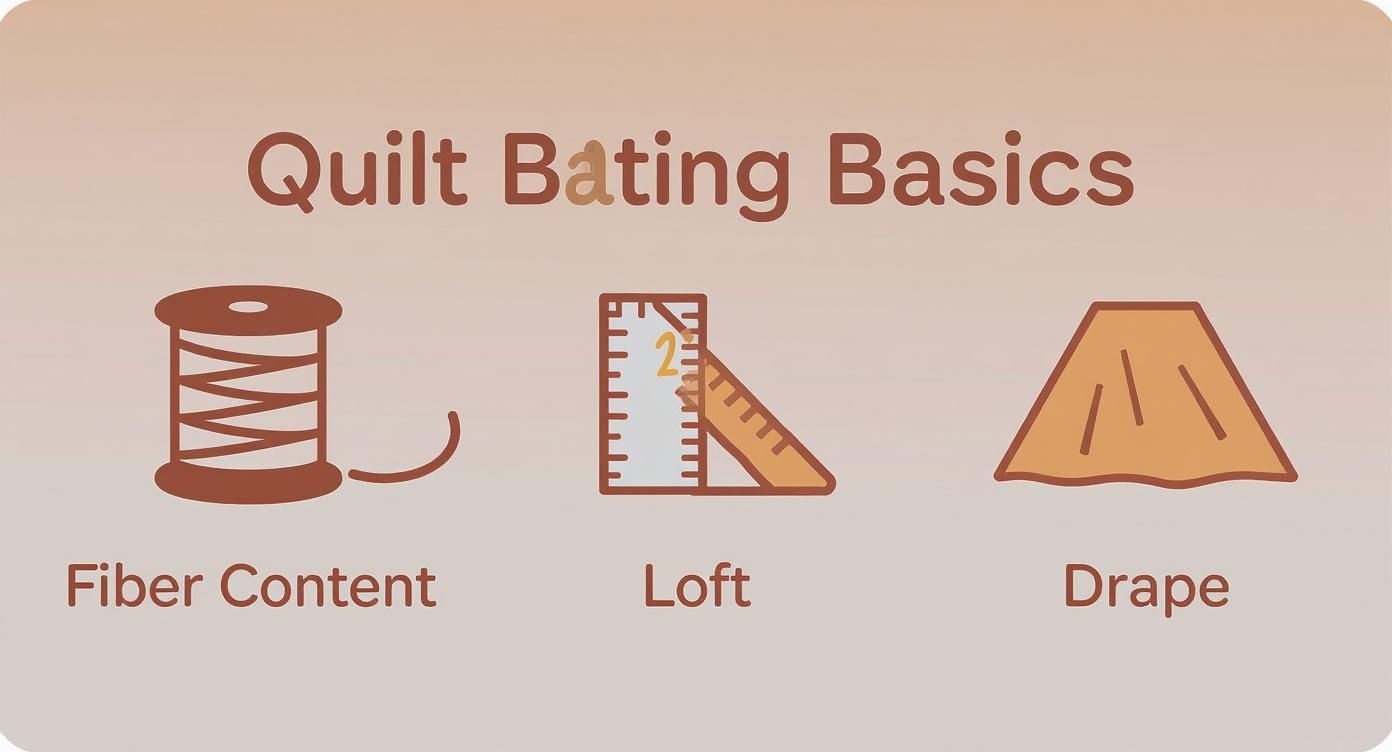
These three factors—fiber, loft, and drape—are the trifecta that truly defines how your finished quilt will look, feel, and hang.
How To Use This Comparison Chart
This chart is all about making your life easier. The best way to start is by finding your project type in the "Best For" column. Making a baby quilt? You’ll see a few great options pop up right away, like soft cottons or breathable bamboo blends.
From there, you can zero in on the details that really matter to you. If you’re dreaming of a flat, modern quilt with crisp lines, look for battings with a low-loft. But if you're after that soft, crinkly, well-loved look of a vintage quilt, you'll want to check the shrinkage column. A cotton batting that shrinks 3-5% is exactly what creates that beautiful, puckered texture after the first wash.
A quick but important reminder: Pay close attention to the quilting density. This number tells you the maximum distance you can have between your stitches. Pushing it too far, especially with a low-density batting, can lead to the fibers shifting and clumping up inside your quilt over time—and nobody wants that!
For those who love getting into the nitty-gritty details, I highly recommend this free downloadable Hobbs Batting spec chart. It gives you an even more detailed breakdown of their specific products.
Comprehensive Quilt Batting Comparison Chart
I've spent countless hours with all kinds of batting, and this table summarizes what I've learned. It's a quick-reference guide to help you match the right batting to your vision, ensuring the inside of your quilt is just as perfect as the outside.
| Batting Type | Fiber Content | Loft | Warmth | Drape | Shrinkage | Quilting Density | Best For | Care |
|---|---|---|---|---|---|---|---|---|
| 100% Cotton (with Scrim) | 100% Cotton | Low | Medium | Good | 3-5% | Up to 8" apart | Heirloom quilts, bed quilts, garments, modern designs | Machine wash & dry |
| 100% Cotton (No Scrim) | 100% Cotton | Low | Medium | Excellent | 3-5% | Up to 4" apart | Hand quilting, soft baby quilts, vintage-style quilts | Machine wash & dry |
| 80/20 Cotton-Poly Blend | 80% Cotton, 20% Polyester | Low-Medium | Medium | Very Good | 2-3% | Up to 10" apart | All-purpose, longarm quilting, bed quilts, throws | Machine wash & dry |
| 100% Polyester | 100% Polyester | Medium-High | High | Stiff | 0-1% | Up to 10" apart | Tied quilts, puffy comforters, high-definition quilting | Machine wash & dry |
| 100% Wool | 100% Wool | Medium | Very High | Excellent | 2-3% | Up to 4" apart | Warm bed quilts, show quilts, hand or machine quilting | Gentle wash, low dry |
| Bamboo Blend | 50% Bamboo, 50% Cotton | Low | Low | Excellent | 2-3% | Up to 8" apart | Summer quilts, breathable garments, baby quilts | Machine wash & dry |
| Fusible Batting | Cotton/Poly Blend | Low | Medium | Good | 2-3% | Up to 8" apart | Small projects, wall hangings, streamlined basting | Follow fiber care |
| Black Polyester Batting | 100% Polyester | Low | Medium | Good | 0-1% | Up to 10" apart | Quilts with dark or black fabrics | Machine wash & dry |
| Wrap-N-Zap (Microwave) | 100% Natural Cotton | Low | N/A | Flexible | 3-5% | N/A | Bowl cozies, potato bags, other microwavable items | Pre-wash before use |
Hopefully, seeing everything in one place helps you feel more confident in your next choice. Every batting has its moment to shine—it's just about finding the right one for the project at hand.
Comparing Batting Materials In Depth
While a comparison chart gives you the hard facts, the real magic happens when you get to know the personality of each batting. This is where we move beyond the numbers and talk about how the fiber itself shapes the look, feel, and soul of your finished quilt. Think of it as matchmaking—finding the perfect partner for your creative vision.
Every type of batting brings something different to the table. Choosing the right one isn't about finding a single "best" option. It's about understanding the unique character of each material and pairing it with the story you want your quilt to tell.
The Classic Crinkle of 100 Percent Cotton
If you're dreaming of a quilt with that timeless, well-loved feel, 100% cotton batting is your go-to. Its signature move is the gentle 3-5% shrinkage that happens after the first wash. Don't think of this as a flaw; it's a feature! This shrinkage is what creates that beautiful, crinkly texture you see in antique quilts.
That puckering effect softens the whole quilt, giving it a comforting drape that feels like it’s been part of the family for years. Cotton is also incredibly breathable, making it perfect for bed quilts you want to use all year long. It offers a nice, moderate warmth without ever feeling heavy or stifling.
- When to Use It: It’s the perfect choice for heirloom-style projects, cozy baby quilts, and even modern quilts where you want a soft, textured finish.
- A Quick Note on Scrim: Some cotton batting includes a scrim, which is a thin stabilizer woven into the fibers. This adds strength and lets you place your quilting stitches farther apart (up to 8 inches). Batting without a scrim is unbelievably soft and a favorite of hand quilters, but it needs denser quilting (usually up to 4 inches apart) to keep everything in place.
The Best of Both Worlds 80/20 Blends
There's a reason the 80/20 cotton-polyester blend is the workhorse of the quilting world. It beautifully marries the best qualities of both fibers, making it a reliable, jack-of-all-trades choice for a huge range of projects. You can learn more in our deep dive on the types of quilt batting.
The 80% cotton keeps things soft, breathable, and gives it that lovely drape you expect from cotton. At the same time, that 20% polyester adds strength and stability while cutting the shrinkage down to a minimal 2-3%. Longarm quilters absolutely love this blend because it resists stretching and lets them quilt up to 10 inches apart, giving them more creative freedom.
If you want just a hint of that vintage pucker without the full shrinkage of 100% cotton, the 80/20 blend is your sweet spot. It gives you the stability for machine quilting while still creating a soft, inviting quilt that can handle years of use and washing.
The Lightweight Warmth of Wool
When you need serious warmth without the weight, wool batting is in a league of its own. Wool fibers create thousands of tiny air pockets that trap body heat, making it a phenomenal insulator. But for all its warmth, it’s surprisingly light and has a springy loft that really makes your quilting stitches pop.
Another thing to love about wool? It naturally resists creases. Quilts made with it always seem to look smooth and pristine. It has a wonderful drape and softness, making it ideal for those luxurious bed quilts destined for chilly nights. It does shrink just a little (2-3%), which adds a soft texture without the pronounced crinkle of cotton.
Bold Definition With Polyester
Want your quilting stitches to be the star of the show? Reach for a high-loft 100% polyester. As a synthetic fiber, polyester doesn't shrink at all, which is perfect when you're aiming for a perfectly flat, modern finish. Its higher loft creates that puffy, comforter-like feel and gives your quilting designs a dramatic, three-dimensional look.
Because it's so strong and stable, polyester has long been the traditional choice for tied quilts. You can place the ties far apart without worrying about the batting shifting around inside. It’s also a budget-friendly and durable option that stands up to frequent washing like a champ.
Specialty Battings for Unique Projects
Beyond the everyday staples, a whole world of specialty battings exists to solve specific creative puzzles.
- Black Batting: This is a game-changer for quilts made with dark or black fabrics. Made from black polyester fibers, it ensures that no little white fibers can "beard" or poke through your quilt top, keeping your dark colors rich and true.
- Fusible Batting: This clever batting has a thin, heat-activated adhesive on both sides. A quick pass with an iron temporarily fuses your quilt sandwich together, meaning you can skip pinning or spray basting. It's a lifesaver for small, precise projects like wall hangings and placemats.
- Wrap-N-Zap Batting: This is a 100% natural cotton batting made specifically for projects you plan to put in the microwave, like bowl cozies or potato bags. It contains absolutely no synthetic materials, scrims, or binders that could spark or melt, making it a non-negotiable safety choice.
The growing variety of these materials shows just how much the quilting world is thriving. The quilt batting market has seen significant expansion, with market size estimates growing from $2,000 million USD in 2024 to $2,100 million USD in 2025—that's a 5% increase in just one year. Projections show the market reaching about $3,500 million USD by 2035, reflecting a Compound Annual Growth Rate of 5.4%. This growth means even more innovative options for us quilters in the years to come.
How to Match Batting to Your Quilting Project
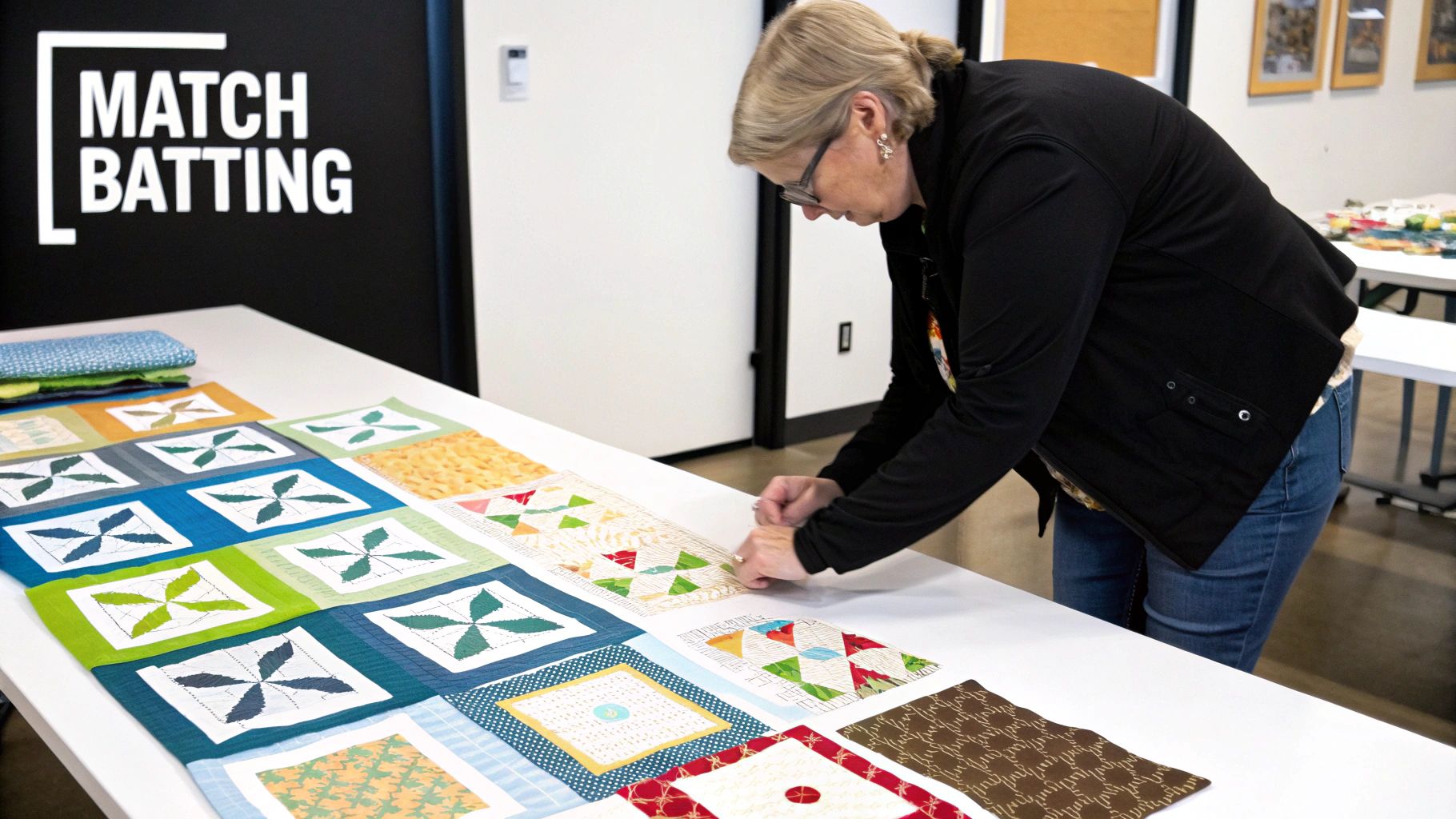
Choosing the perfect batting isn't about finding a one-size-fits-all solution; it's about making a strategic choice that brings your specific project to life. A seasoned quilter knows to ask, "What is the story this quilt will tell?" The answer to that question will guide you toward a batting that creates puffy definition, an heirloom crinkle, or lightweight breathability.
Instead of just running down a list of features, let's walk through a few real-world scenarios. This way, you can see how to prioritize what really matters—whether it's drape, warmth, or stitch definition—for the beautiful piece you're creating.
Choosing Batting for Bed Quilts and Throws
When you’re making a quilt for snuggling on a bed or sofa, the way it feels and hangs is everything. You want it to be soft, flexible, and utterly comforting. This is where the fiber content makes all the difference.
- For that classic, crinkly, vintage feel: Go with 100% cotton batting. It shrinks just a little after that first wash, creating that beloved puckered texture that makes a quilt feel like it’s been in the family for generations. It’s also breathable and provides a comfortable, moderate warmth perfect for year-round use.
- For durable, everyday use: An 80/20 cotton-poly blend is an absolute workhorse. You get the softness of cotton but with the added stability and reduced shrinkage from the polyester. This makes it a fantastic choice for quilts that will see a lot of use and washing, like one for a child's room or the family sofa.
- For maximum warmth without the weight: Wool batting is the undisputed champion here. It’s an incredible insulator but remains surprisingly light, creating a lofty quilt that drapes beautifully without feeling heavy. It's the perfect pick for colder climates or for anyone who loves a truly toasty bed.
The decision for a bed quilt often comes down to texture. If you're aiming for a smooth, modern aesthetic, pre-washing a cotton batting can minimize the shrinkage. But if you dream of that soft, antique look, embrace the crinkle and skip the pre-wash entirely.
Selecting Batting for Wall Hangings and Art Quilts
When your quilt is destined for the wall, the priorities flip completely. Drape becomes less of a concern, while stability and a flat finish become critical. You need a batting that will hold its shape and prevent any sagging over time.
A low-loft batting is almost always the right call. It adds just enough body to support the quilting stitches without making the piece puffy or bulky, ensuring your piecing and stitching remain the star of the show. For a deeper dive, check out our complete guide on selecting the best low-loft batting for quilts.
I highly recommend a batting with a scrim—a very thin, non-woven stabilizer—for wall hangings. This internal grid gives the batting fantastic strength, preventing it from stretching and ensuring the quilt hangs perfectly flat for years. Fusible batting can also be a lifesaver for smaller art quilts, as it helps keep all the layers perfectly in place while you work on intricate quilting.
The Right Choice for Baby Quilts and Garments
Projects for little ones require special thought. The batting absolutely must be soft, breathable, and tough enough to handle frequent, and sometimes intense, washing. Safety and comfort are completely non-negotiable.
Here are my top contenders for baby quilts:
- 100% Cotton (without scrim): It’s incredibly soft and natural, making it gentle on sensitive skin. The tighter quilting it requires (every 3-4 inches) helps it stay secure and intact through countless trips to the laundry room.
- Bamboo Blends: Bamboo is famous for its silky softness and amazing breathability. A cotton/bamboo blend has a luxurious feel and is a wonderfully lightweight option for baby quilts or even quilted jackets.
Batting for Functional and Specialty Items
Not every project is a standard quilt. For items that have a specific job to do, the batting choice is often dictated by safety and performance.
Take, for example, microwaveable soup bowl cozies. For this project, there is only one correct answer: Wrap-N-Zap batting. This is a 100% natural cotton product made without any synthetic fibers, scrims, or chemical binders that could melt or, even worse, catch fire in the microwave. Using any other batting, especially one containing polyester, is a major safety hazard.
Similarly, if you're working on a quilt made with mostly dark or black fabrics, a standard white or natural-colored batting can lead to "bearding"—where tiny white fibers poke through your dark fabric. The simple solution is a black polyester batting. It ensures your deep, rich colors stay pure and unblemished. Matching your batting to your project's unique needs is the key to creating something that is both beautiful and functional.
Getting the Most Out of Your Batting: A Few Tricks of the Trade
Picking the perfect material from a quilt batting comparison chart is just the start. How you handle that batting, from the moment you unroll it to the final stitch, is what really makes a quilt shine. Let’s talk about a few practical tips that will help you turn a good choice into a quilt you’ll be proud of for years.
First things first: think about roll width. Buying smart can save you a ton of hassle and money. Batting usually comes in standard widths like 96", 108", and 120". Before you click "buy," measure your biggest quilt top and get a roll that gives you a few inches of extra room on all sides. This one roll will cover your big projects and can easily be cut down for smaller ones, meaning you won't be stuck piecing scraps together later.
To Pre-Wash or Not to Pre-Wash
Ah, the age-old debate among quilters! The answer really comes down to the final look you're going for.
- For a Smooth, Modern Finish: If you envision a crisp, flat quilt, you'll want to pre-wash, especially with 100% cotton batting. This handles the initial 3-5% shrinkage before you start quilting, giving you that clean, contemporary look.
- For a Crinkled, Heirloom Look: If you love the soft, puckered texture of a vintage quilt, then don't pre-wash your cotton batting. That beautiful crinkle happens when the quilt is washed for the first time, as the batting and fabric shrink together. It’s pure magic.
Keep in mind, polyester and wool battings have very little to no shrinkage, so you can usually skip the pre-washing step with them.
Here's a quick pro-tip: Instead of a full wash, just toss your batting in the dryer on low heat for about 10 minutes. It won't shrink it, but it's fantastic for relaxing all those stubborn wrinkles and fold lines from the packaging. This makes getting a smooth quilt sandwich so much easier.
Creating a Pucker-Free Quilt Sandwich
A smooth quilt starts with a perfectly smooth foundation. To avoid those dreaded puckers and tucks, take your time layering. Start by laying your backing fabric wrong-side up on a large, flat surface—your floor works great! Use painter's tape to secure it so it’s taut but not stretched.
Next, center your batting on top and smooth it out from the middle to the edges. Finally, do the same with your quilt top. This careful, methodical layering is the absolute key to a professional-looking finish.
Respecting Quilting Density
Pay close attention to the recommended quilting distance on your batting's packaging. It’s not just a suggestion! This number tells you the maximum space you can leave between quilting lines to keep the fibers from shifting or bunching up over time, especially after washing.
For example, a batting with a scrim—a thin, built-in stabilizer—might let you quilt up to 10 inches apart, giving you tons of creative freedom. If you're curious, we have a whole article explaining what scrim is and why it matters.
Ignoring these guidelines can really affect how your quilt holds up. It's no surprise that as batting quality improves, its popularity grows. The global market was valued at around $500 million in 2025 and is expected to hit nearly $750 million by 2033. You can see more on this growing market on Data Insights Market. Following these best practices ensures your projects will stand the test of time.
Your Top Quilt Batting Questions, Answered
Once you’ve stared at a batting comparison chart long enough, a few common questions always seem to pop up. Getting straight answers to these tricky points can be the difference between a project you love and one that doesn't quite hit the mark. Think of it as turning that bit of uncertainty into pure quilting confidence.
Let's clear up some of the most common questions quilters ask about batting.
What’s the Difference Between Loft and Drape?
It’s so easy to mix up loft and drape. They both affect how a quilt feels in your hands, but they describe two totally different things. Getting this right is your secret to choosing a batting that gives you the exact look and feel you're dreaming of.
Loft is just a fancy word for thickness or puffiness.
- High-loft batting is thick and fluffy, giving you that puffy, comforter-like vibe. It’s perfect when you want your quilting stitches to really pop and create dramatic texture.
- Low-loft batting is thin and much denser. This creates a flatter, more modern-looking quilt, which is great for wall hangings that need to lie flat or for bed quilts where you want a lighter feel.
Drape, on the other hand, is all about how the batting hangs and bends. It’s the difference between a quilt that flows and one that feels a bit stiff. A batting with amazing drape, like wool or bamboo, creates a quilt that feels soft and supple, falling into gentle folds. A stiffer batting, maybe one with a scrim, has less drape and gives you a quilt that holds its shape more firmly.
Here's the key takeaway: Loft and drape are partners, but they aren't the same. You can absolutely have a thin, low-loft batting with a wonderfully soft drape (like a 100% cotton without scrim) or a puffy high-loft batting that’s a little stiff. Always think about both to get the result you want.
Should I Pre-Wash My Quilt Batting?
Ah, the great debate! Honestly, the answer depends entirely on the look you're going for. This is a creative choice, not a hard-and-fast rule, and it mostly comes down to battings made from natural fibers like cotton.
It all boils down to shrinkage. 100% cotton batting will shrink about 3-5% the first time you wash and dry it. You can make this work for you.
- Want a smooth, modern look? Then yes, pre-wash your cotton batting. This gets all the shrinkage out of the way before you quilt, so your finished project will stay flat and crisp after washing.
- Love that crinkly, vintage texture? Then absolutely do not pre-wash it. When you wash the finished quilt for the first time, the batting and fabric will shrink up together, creating that classic, puckered heirloom look that feels like it’s been loved for generations.
For other batting types, it’s a lot simpler. Polyester has pretty much zero shrinkage, so there’s no need to wash it first. Wool and bamboo blends only shrink a tiny bit (2-3%), so while you can pre-wash them, most quilters don't bother, as that little bit of shrinkage just adds to the soft, cuddly texture.
What Is Scrim and When Should I Use It?
You’ve probably seen the word "scrim" on batting packages and wondered what it is. Think of scrim as a super-thin, lightweight mesh that’s needle-punched right into the batting. It acts like a hidden skeleton, adding strength and stability to the fibers.
So, why does that matter? The biggest benefit is that scrim keeps the batting from pulling apart or shifting around. This means you can get away with quilting your stitches much farther apart—sometimes up to 8 or 10 inches—without the batting clumping up inside your quilt over time.
A batting with scrim is your best friend when:
- You’re making a large quilt, especially if you’re using a longarm. The stability makes the whole process much easier to manage.
- The quilt will be used and washed a lot. If it’s going on a bed or getting dragged around the house, scrim adds some serious long-term durability.
- You’re a beginner. Scrim is incredibly forgiving and won't stretch or get distorted as easily while you're quilting.
On the flip side, hand quilters often run in the other direction. They typically prefer batting without scrim because it's so much softer and easier to needle. The needle just glides through without that extra layer of resistance. You'll have to quilt more densely (usually every 3-4 inches) to keep it stable, but the result is an exceptionally soft and pliable quilt.
At Quilt Batting, we believe the right foundation is everything. From heirloom cottons to durable blends, we provide the high-quality batting you need to bring your creative vision to life. Explore our full selection of Hobbs, Pellon, and other premium battings by the roll today. https://quiltbatting.shop