

If you've ever wondered how modern quilts get that incredible softness and beautiful, fluid drape, I'll let you in on a little secret: bamboo batting. It’s like the difference between a standard cotton t-shirt and your favorite high-performance athletic wear. It just feels better. Using bamboo filling takes your quilt from a beautiful project to a truly unforgettable heirloom.
Why Modern Quilters Swear by Bamboo Batting
Walk into any modern quilting circle, and you'll hear the buzz about bamboo. It's quickly becoming the go-to for projects that need to feel as good as they look. The unique qualities of bamboo are changing the game, offering a blend of luxury and practicality that's hard to beat.
Forget stiff polyester or heavy, dense wool. Bamboo batting delivers a silky-smooth hand and a drape that lets your quilt hug you right back. It’s surprisingly lightweight but still does an amazing job of regulating temperature, keeping you comfortable without feeling smothered. This makes it perfect for just about everything, from a light summer throw to your go-to winter bedspread.
The Best of Both Worlds: Softness and Strength
The first thing everyone notices about bamboo batting is its incredible softness—we're talking silk or cashmere levels of soft. This makes it an obvious choice for anything meant to be snuggled, like baby quilts or lap throws you can't stop touching.
But don't let that delicate feel fool you. This softness doesn't mean it's fragile. In fact, many of the best options, like Quilter's Dream Bamboo Batting, are expertly blended with cotton. This adds just the right amount of stability and strength, so your finished quilt can stand up to real, everyday life.
It's this perfect combination that has quilters all over the world hooked. You can see its popularity soaring, especially in North America and Europe, where people are increasingly looking for sustainable and healthier options in their textiles. The natural antibacterial properties and breathability are a huge plus for bedding. If you're interested in the data behind this trend, you can explore the market research on bamboo fabric.
A Healthier, Greener Choice for Your Craft
Beyond its amazing feel and performance, bamboo batting really speaks to the heart of the mindful crafter. If you have sensitive skin or just want to use more earth-friendly materials, it's a fantastic choice.
Here’s why it stands out:
- Hypoallergenic: The fibers are naturally smooth and gentle, so they're far less likely to cause irritation. It's a worry-free choice for gifting.
- Antibacterial: Bamboo has a natural antimicrobial agent built right in, which helps keep your quilts feeling and smelling fresh.
- A Sustainable Pick: Bamboo is a powerhouse of a plant. It's a fast-growing grass that shoots up quickly, often without needing the pesticides or excessive water that conventional cotton demands.
When you choose bamboo, you’re doing more than just picking a filling. You’re making a deliberate choice to bring healthier, more sustainable textiles into your home and for your loved ones. It’s a beautiful way to align your creative passion with a commitment to living well.
Choosing the Right Batting for Your Quilt
Picking the batting—the heart of your quilt—is less about dry technical specs and more about the story you want your project to tell. Are you dreaming of a lightweight summer throw with a graceful, flowing drape? Or maybe a puffy, warm bedspread that makes every single stitch pop? The right batting makes all the difference, giving your quilt top its final personality.
While the classic options will always have their place, a bamboo batting quilt brings a special blend of luxury and performance that often outshines the old standbys. Let’s put it head-to-head with the traditional choices to see exactly why it’s become such a favorite among modern quilters.
Batting Showdown: Bamboo vs. Cotton vs. Wool vs. Polyester
I like to think of bamboo batting as the high-performance, all-season tire of the quilting world. It gives you the incredible softness you love from cotton, the lightweight warmth of wool, and a beautiful drape that stiff polyester just can't touch. It really strikes that perfect balance, delivering comfort and quality all in one.
To help you see it all at a glance, I've put together a little chart to break down how each material really performs when it comes to things like drape, warmth, and even its environmental footprint.
| Feature | Bamboo Batting | Cotton Batting | Wool Batting | Polyester Batting |
|---|---|---|---|---|
| Drape | Excellent, very fluid | Good, classic feel | Excellent, light | Stiff, less drape |
| Loft | Low to Medium | Low to Medium | High | High |
| Warmth | Breathable, all-season | Moderate warmth | Very warm, insulating | Warm, less breathable |
| Shrinkage | Minimal (2-3%) | Minimal (3-5%) | Varies, can be high | Almost none |
| Eco-Impact | Highly sustainable | Varies by farming | Natural, renewable | Petroleum-based |
| Best For | Soft drapes, baby quilts | Vintage look, durability | Showing off stitches | Puffy comforters, budget |
This quick comparison really makes it clear why a bamboo batting quilt is so appealing. It borrows the best traits from other fibers—that signature softness, warmth, and drape—while adding its own fantastic sustainable and hypoallergenic benefits.
If you're curious and want to go even deeper, you can explore all the different types of quilt batting and their specific uses in our more detailed guide.
Making Your Decision Simple
Sometimes, the easiest way to choose is to figure out your number one priority for the finished quilt. Is it being eco-friendly? Or is unparalleled softness the most important thing? This little decision tree can help you visualize which path to take.
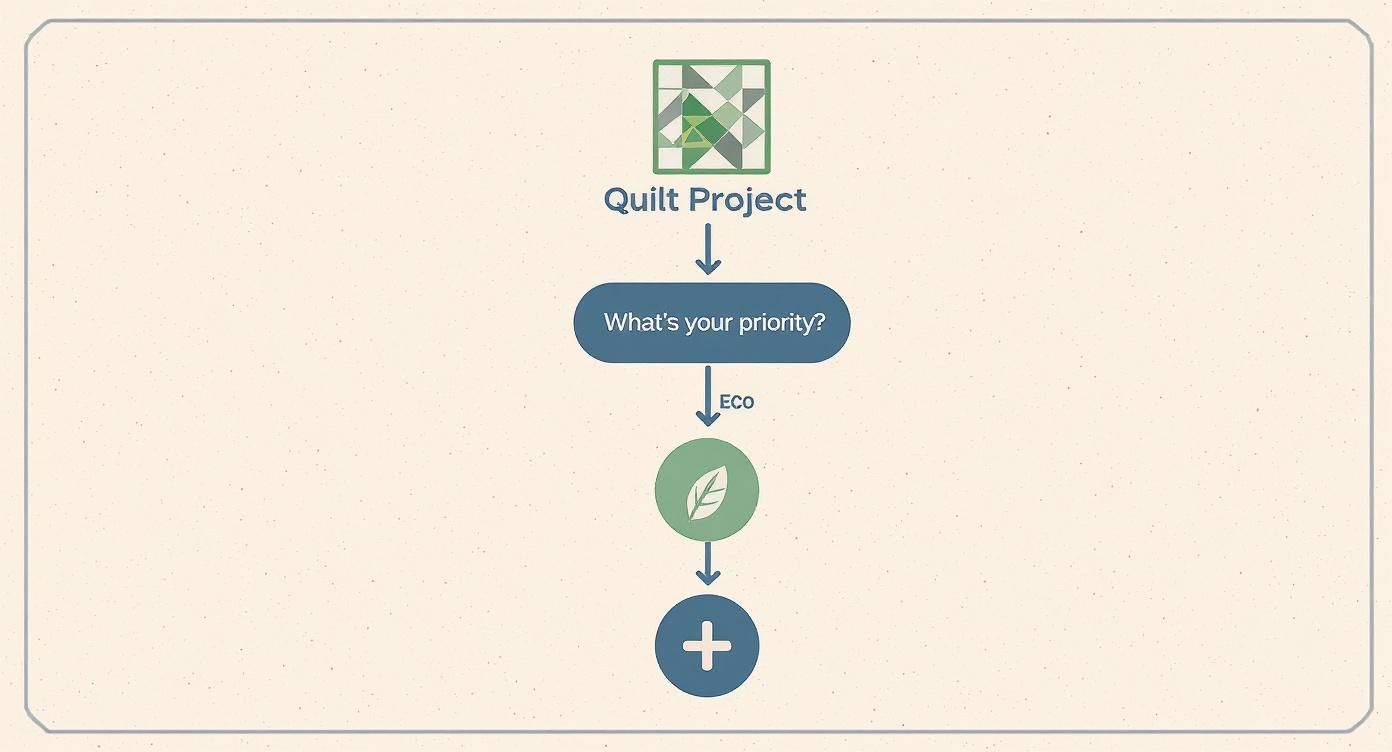
As you can see, if your goal is an eco-conscious, soft, and healthy quilt, all roads lead right to bamboo. It’s a refreshingly straightforward choice for any crafter who values both the quality of their work and the planet.
How to Quilt Beautifully with Bamboo Batting
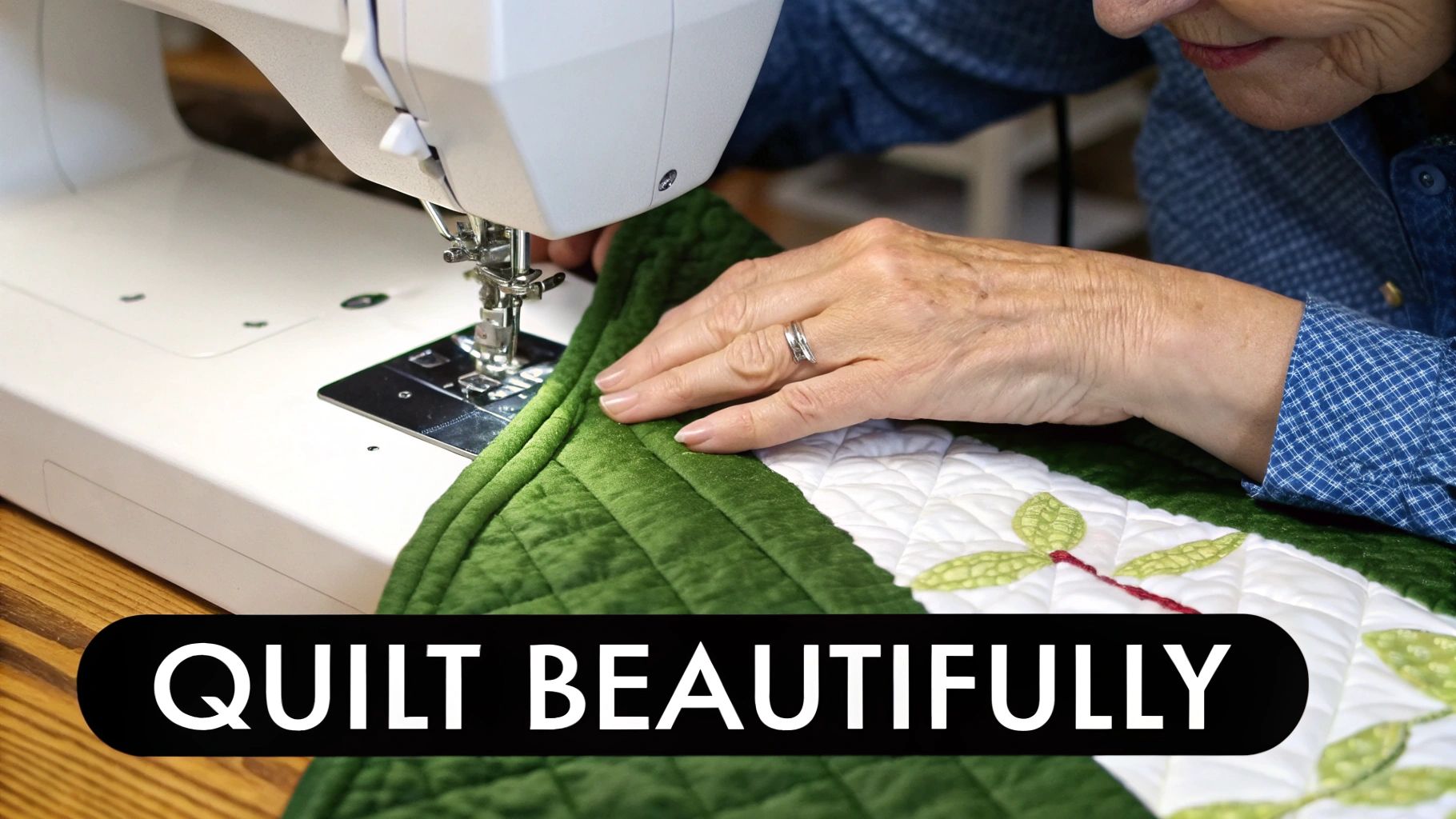
Working with bamboo batting is an absolute dream once you get a feel for its unique personality. It’s incredibly luxurious and soft to the touch, but that silky texture means it behaves a little differently than the cotton you might be used to. The real key is learning how to support its gorgeous drape while preventing any stretching or shifting while you quilt.
Think of it like handling a fine silk charmeuse versus a sturdy cotton canvas. You don't need to be intimidated by it, just approach it with a gentle, confident hand. A little extra care in the prep stage is all it takes to keep your quilt sandwich perfectly aligned for a flawless finish.
Securing Your Quilt Sandwich
Because bamboo batting is so fluid and drapey, your basting step is more important than ever. A secure quilt sandwich is completely non-negotiable. Whether you're a fan of pins or spray, the goal is the same: make sure nothing moves an inch.
- Pin Basting: If you're using pins, you'll want to place them closer together than you might with cotton. I'd recommend spacing them about every 3-4 inches. That extra support is crucial for taming the slinky bamboo and stopping it from wiggling out of place as you work.
- Spray Basting: Honestly, this is where spray baste really shines. A light, even coat of temporary adhesive works wonders with bamboo. Just be sure to work in small, manageable sections to get a smooth, wrinkle-free bond without making the batting stiff.
If you’re new to this stage or just want a refresher, our complete guide on how to baste a quilt walks you through both methods step-by-step.
Machine Quilting with Bamboo Batting
Once your quilt is basted, you’ll discover that bamboo is a joy to stitch on, whether you're using a domestic machine or a longarm. Its smooth, consistent surface lets the needle glide right through with hardly any resistance, helping you create beautiful, even stitches.
One of the best things about a bamboo batting quilt is how stable it is, which opens up a world of possibilities for your quilting designs. Most manufacturers say you can quilt up to 8 inches apart! This generous spacing is a game-changer for modern quilts with lots of negative space, as it lets the fabric and the batting's soft drape really take center stage. But don't worry, it also performs beautifully with dense, intricate quilting.
Pro Tip: A sharp, fresh needle is your best friend when quilting with bamboo. I usually start with a size 80/12 or 90/14 Universal or Quilting needle. If you start seeing any skipped stitches or fabric pulls, the first thing you should do is swap it out for a new one.
Taking a moment to fine-tune your machine settings will make the whole process even smoother. I often find I need to slightly lower my top tension to account for the batting's low loft and silky fibers. As always, test your settings on a small scrap sandwich first to get your stitch quality just right. With a few minor tweaks, you’ll be quilting your gorgeous bamboo project with total confidence.
The Sustainable Story of Bamboo Batting
When you choose bamboo batting, you’re doing more than just picking a filling for your next project. Beyond that silky drape and incredible softness, you’re weaving an environmental story into the very fibers of your quilt. It’s a conscious choice that connects your creative passion with a more thoughtful, sustainable practice.
This decision means the beautiful quilts you create for your home are not only cozy but also kinder to the planet and healthier for your family.
The story starts in the field with the bamboo plant itself. We’re all familiar with conventional cotton, which is notoriously thirsty and often demands a heavy dose of pesticides to grow. Bamboo is a different beast entirely. It’s a hardy, fast-growing grass that shoots up—sometimes several feet in a single day—making it a rapidly renewable resource.
This incredible growth happens with far less water and usually without any chemical coaxing. Right from the get-go, its environmental footprint is significantly lighter.
A Healthier Choice for Your Home
Those natural advantages carry right through to your finished quilt. Bamboo fibers are unbelievably gentle, which is why a bamboo batting quilt is my go-to recommendation for anyone with sensitive skin. If you’re making a baby blanket or a lap quilt for a loved one, you simply can't beat it for close, cuddly comfort.
Plus, bamboo contains a natural antimicrobial agent that helps keep bacteria at bay, meaning your quilt stays fresher for longer. It just creates a more hygienic final product you can feel genuinely good about wrapping around the people you care about.
The global market for bamboo textiles has seen a remarkable rise in recent years, driven largely by consumer demand for eco-friendly products. This growth highlights a collective shift toward materials that are not only versatile but also align with a more sustainable lifestyle.
This isn’t just some fleeting trend. It shows that quilters everywhere are actively looking for materials that deliver beautiful results without compromising their values. In fact, bamboo batting for quilts has seen a huge jump in market share over the last decade, and you can learn more about the bamboo fabric industry trends if you want to dive deeper into the numbers.
Weaving Sustainability into Every Stitch
At the end of the day, every material we choose as creators has an impact. When you reach for bamboo batting, you’re taking a small but meaningful step toward a more mindful way of crafting.
You’re choosing a material that:
- Grows Sustainably: Needs less water and no pesticides.
- Feels Healthier: Is naturally hypoallergenic and antibacterial.
- Performs Beautifully: Offers that unmatched softness and drape.
It’s a simple switch that infuses your work with purpose. It turns a beautiful quilt into a testament to thoughtful, responsible creativity.
Caring for Your Finished Bamboo Quilt
You’ve put the last stitch in your beautiful bamboo batting quilt. Now what? Keeping it soft, drapey, and treasured for years to come is surprisingly simple, but it all comes down to proper care. With the right touch, your quilt will only get more wonderful with time.
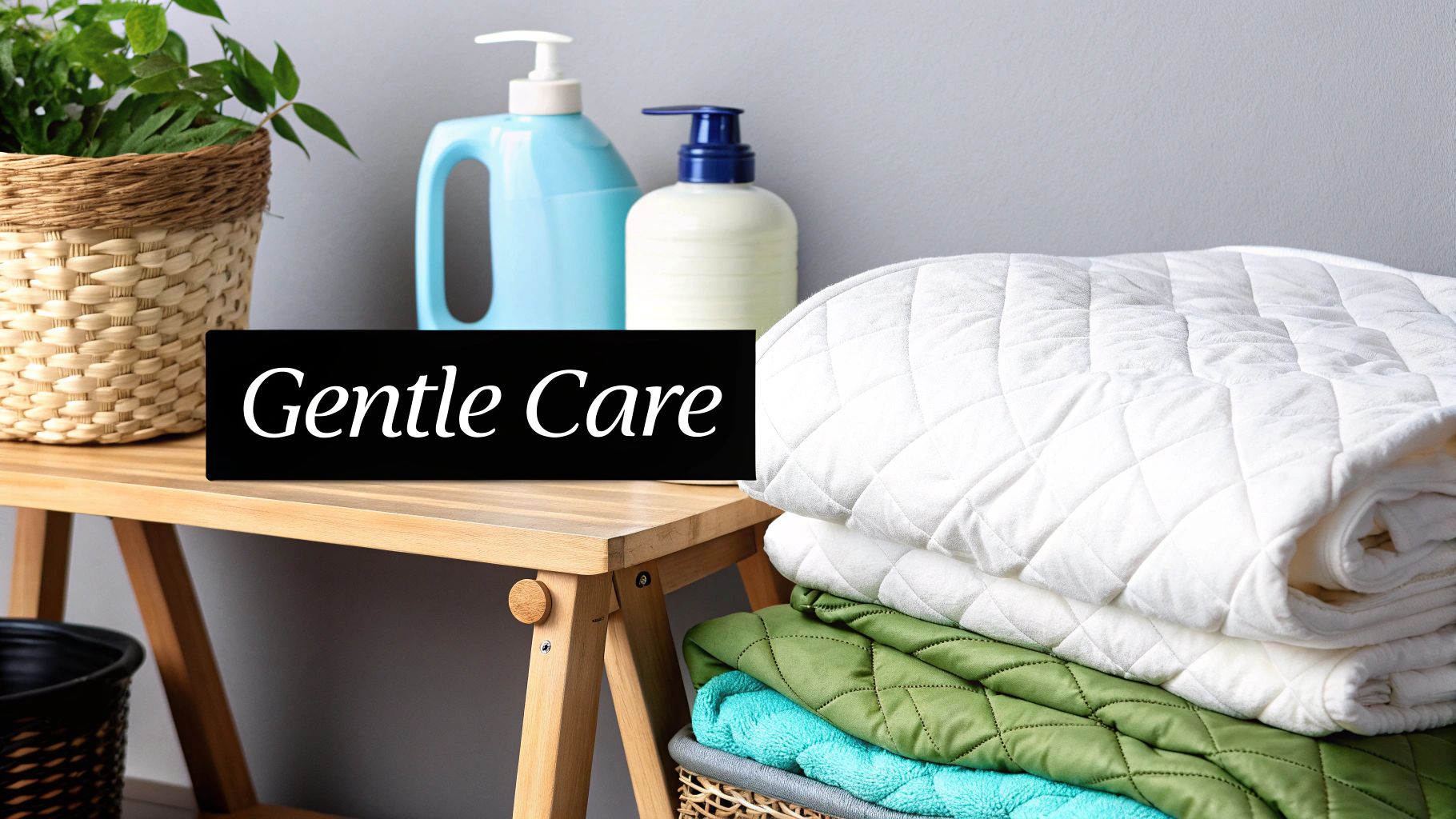
Treat your quilt like you would a favorite delicate garment. The best approach is to machine wash on a gentle cycle using cold water. Hot water is the enemy here! Pair it with a mild, pH-neutral detergent to be kind to both the bamboo fibers and your precious quilt top fabrics.
When it's time to dry, you have a couple of great options. The gentlest method, by far, is line drying. There’s nothing quite like the fresh smell of a naturally air-dried quilt. If you're using a machine, be sure to tumble dry on the lowest possible heat setting. I like to pull my quilts out while they're still just a little damp to prevent any chance of over-drying and keep them perfectly soft.
Handling Shrinkage and Achieving Your Desired Finish
One of the things I love most about working with natural fibers is how they settle in after that first wash. Bamboo batting has a minimal shrinkage rate of just 2-3%, which is right on par with cotton.
This tiny bit of shrinkage is what creates that classic, crinkly texture we all associate with a well-loved, heirloom quilt. It just makes it feel instantly cozy and timeless.
But what if you’re aiming for a sleek, modern look with no crinkles at all? No problem. Simply pre-wash your batting. Just soak it in a tub of cool water, gently squeeze out the excess (never wring it!), and lay it flat to air dry before you start basting.
In the end, it’s all about the look you’re going for. Understanding how different battings behave is part of the art of quilting, and you can dive deeper in our guide comparing cotton batting vs. polyester to see how different materials create their own unique finish. Whether you embrace the crinkle or go for a smooth surface, your bamboo quilt will be a treasure for years.
Answering Your Top Bamboo Batting Questions
We've covered a lot of ground, from how beautifully bamboo batting quilts to its eco-friendly origins. To finish things off, let's dive into the questions I hear most often from fellow quilters. Think of this as our final chat over the cutting table, clearing up those last-minute details so you can start your next project with confidence.
Does Bamboo Batting Shrink When Washed?
Yes, it does a little bit—but that’s actually part of its charm! You can expect about 2-3% shrinkage after the first wash, which is right on par with cotton.
Many quilters, myself included, absolutely love this subtle change. It's what creates that classic, slightly crinkled look that gives a new quilt an instant "heirloom" feel. It just makes it feel cozier.
However, if you're going for a perfectly flat, modern aesthetic, the fix is easy. Just pre-shrink your batting before you start. A simple soak in cool water, a gentle squeeze to remove the excess, and letting it air-dry flat will do the trick.
Is 100 Percent Bamboo Batting Better Than a Blend?
This is a great question, and the honest answer is: it depends entirely on your project. Neither one is "better," they just have different strengths.
A 100% bamboo batting is pure luxury. It delivers the absolute softest, most breathable result with that incredible, liquid-like drape we've been talking about. If you're making a special quilt where the feel against the skin is paramount, 100% bamboo is the way to go.
On the other hand, a bamboo-cotton blend is a wonderfully reliable workhorse. Adding cotton gives the batting a touch more stability and strength, which you might find makes it a bit easier to handle, especially when basting. This extra durability also makes blends a fantastic choice for quilts destined for heavy use and lots of snuggles.
What Is the Best Quilting Distance for Bamboo Batting?
Here’s where bamboo really shines and gives you so much creative freedom. Thanks to its stable fibers, most manufacturers say you can quilt up to 8 inches apart!
This is fantastic news for quilters who love modern designs with big, open areas of negative space. It means you can let your fabric and the batting's natural drape be the star of the show.
Of course, it also performs beautifully with dense, complex quilting, so you're never boxed in. The best rule of thumb is to always check the packaging for the specific brand's recommendation, but you can feel confident that bamboo can handle whatever design you throw at it.
Ready to feel the difference for yourself? You can explore a full selection of premium quilt batting at Quilt Batting, where you’ll find the perfect foundation for whatever masterpiece you're dreaming up next. Shop our bamboo and other natural fiber battings today.