

When you’re standing in the aisle staring at rolls of batting, the choice between cotton and polyester can feel huge. It really just boils down to the kind of quilt you want to create.
Are you picturing a classic, crinkly quilt with that soft, lived-in feel? Go with cotton. If you want a puffy, lightweight quilt that looks brand new even after washing, polyester is your best bet. The final look and feel of your project truly starts here.
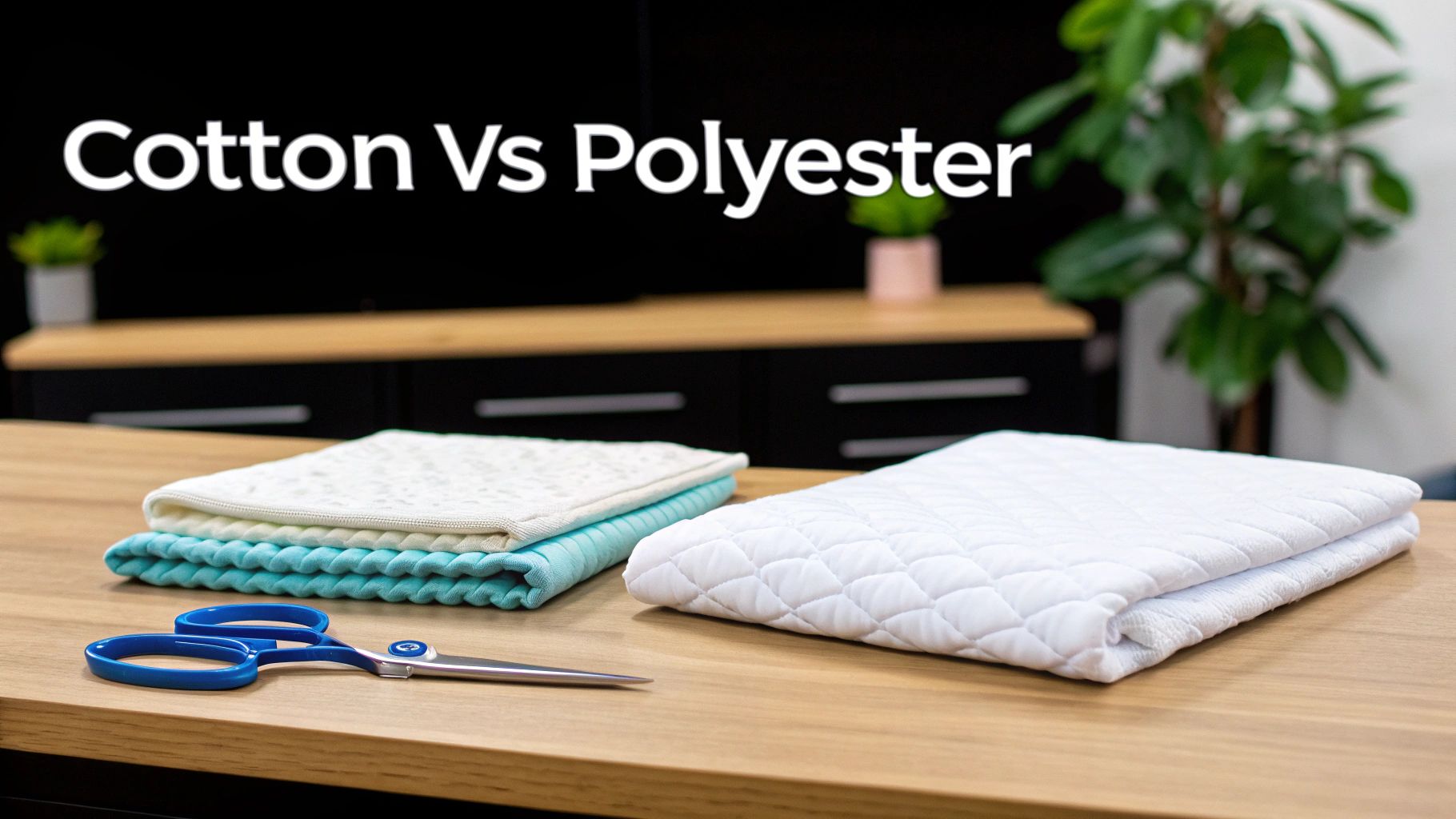
Making the Right Batting Choice for Your Quilt
The batting is the soul of your quilt. It's the unseen layer that determines everything from how it drapes over a bed to how warm it feels on a chilly night. Before we get into the nitty-gritty, let's start with the basics.
Cotton is a natural fiber, and polyester is synthetic. That fundamental difference is what creates two very distinct quilting experiences. It affects how far apart you can place your stitches, how the quilt wears over time, and that all-important "crinkle" factor.
Cotton vs Polyester Batting At a Glance
Sometimes you just need a quick cheat sheet. This table breaks down the core differences to help you make a fast, confident decision for your next project.
| Attribute | Cotton Batting | Polyester Batting |
|---|---|---|
| Loft & Drape | Low loft. Gives you that flat, traditional drape that gets softer with every wash. | Higher loft. Creates a puffy, airy look and makes your quilting stitches pop. |
| Warmth | Heavier than poly, but very breathable. It's a great choice for year-round comfort. | Surprisingly warm for its light weight. Perfect for cozy, comforter-style quilts. |
| Shrinkage & Finish | Expect a little shrinkage (3-5%), which creates that beloved antique, crinkled texture. | No shrinkage at all. Your quilt will stay smooth and flat, wash after wash. |
| Care & Durability | Extremely durable and softens beautifully over time. Easy to machine wash and dry. | Tough as nails. It stands up to frequent washing and dries in a flash. |
| Ideal Use Cases | Heirloom projects, traditional patterns, wall hangings, and breathable baby quilts. | Kids' quilts, tied comforters, show quilts needing great stitch definition, and projects on a budget. |
This gives you a great starting point for picking between the two most common options. But the world of batting is vast! If you want to explore even more materials, check out our comprehensive guide on all the different types of quilt batting.
So, What's the Real Difference Between These Fibers?
Choosing between cotton and polyester batting really comes down to understanding the personality of each fiber. How they behave, feel, and perform starts at a microscopic level, and that tiny difference influences everything—from your quilt's final look to how it feels wrapped around you.
Let's break down what really matters.
The whole story starts with where they come from. Cotton is a natural plant fiber, which gives it that soft, dense, and wonderfully breathable quality we all know. Polyester, on the other hand, is a synthetic polymer, basically engineered from the ground up to be lightweight, resilient, and springy.
This single fact—natural vs. synthetic—is the root of all their unique quirks and strengths.
The Great Loft and Drape Debate
When quilters talk about loft, they mean the batting's thickness and puffiness. Drape is all about how the finished quilt hangs and folds. Honestly, these two qualities are probably the most dramatic differences you'll see and feel when comparing cotton to polyester.
Cotton for That Classic, Flat Finish
Cotton batting is famous for its low loft. It creates a thin, flat profile that gives you a soft, pliable quilt. If you’ve ever snuggled under a vintage quilt that felt like a perfectly worn-in, heavy blanket, that’s the magic of cotton.
This low-loft quality also creates a beautiful, gentle drape that just melts over your body or lays smoothly on a bed. It’s the go-to choice for anyone chasing that traditional, heirloom look. Your quilting stitches will nestle right into the fabric, creating a subtle, all-over texture instead of shouting for attention.
Polyester for Puffy, Defined Quilting
Polyester is the complete opposite. It’s known for its high loft, which results in quilts that are visibly puffy and airy. This extra thickness is fantastic for showing off your quilting, as the stitches create deep shadows and highlights that really "pop" off the surface.
The final quilt feels more like a lightweight comforter. While it still has a nice drape, it’s not as fluid as cotton and holds its shape a bit more. If you want a quilt that looks plush but feels surprisingly light, polyester is your winner, hands down.
Key Takeaway: Go with cotton for a flat, traditional drape where the piecing is the star of the show. Pick polyester when you want the quilting stitches to be a bold design element, creating a puffy, modern texture.
Decoding Warmth and Breathability
A quilt is meant to keep you warm, of course, but how it does that is key. The showdown between cotton batting vs polyester here is really a choice between breathable weight and lightweight insulation.
- Cotton's Breathable Comfort: Cotton is a heavier fiber, but its natural structure lets air move right through it. This makes it incredibly breathable, wicking moisture away from your body so you don’t get clammy. A quilt with cotton batting provides a steady, comfortable warmth that’s great for year-round use—it keeps you warm in the winter without feeling stifling when the weather turns warmer.
- Polyester's Insulating Power: Polyester fibers are masters at trapping air, and trapped air is what insulation is all about. This means a high-loft polyester quilt can offer a ton of warmth with very little weight. It’s the perfect choice for making a super cozy, comforter-style quilt designed specifically for snuggling on the coldest nights.
Batting Construction and Why It Matters
How the batting is made has a huge impact on your quilting experience. You'll hear terms like needle-punching and quilting distance, and they're worth knowing because they determine how stable your batting is and how far apart you can place your stitches.
The Role of Needle-Punching and Scrim
A lot of battings, especially cotton and blends, are needle-punched. In this process, thousands of tiny needles tangle and interlock the fibers to create a dense, stable sheet. Often, a scrim is added—a very thin, grid-like stabilizer that gives the batting a surprising amount of strength.
A scrim is a quilter's best friend because it stops the batting from stretching or getting distorted while you work. Even better, it significantly increases the recommended quilting distance, which is the maximum space you can leave between your lines of stitching. A batting with a scrim might let you quilt up to 8-10 inches apart, whereas one without a scrim might need stitches every 2-4 inches to keep the fibers from shifting and clumping later on.
Preventing "Bearding" with Polyester
A common headache with polyester is bearding—those pesky little fibers that can migrate through the weave of your fabric, creating a fuzzy look on your quilt top or backing. This is usually a problem with lower-quality, loosely bonded polyester. Here’s how to avoid it:
- Choose Quality: Always go for a high-quality, bonded, or needle-punched polyester batting.
- Use a Tight Weave Fabric: Pick quilting cottons with a high thread count to create a stronger barrier.
- Start with a Sharp Needle: A fresh, sharp needle pierces the fabric cleanly instead of grabbing and pulling fibers through with it.
Cotton batting has been a cornerstone of quilting for generations, and for good reason. Its natural, breathable feel has made it a global favorite. In fact, cotton still makes up 19% of the total global fiber market share, second only to polyester. You can read the full report on Texdata.com if you're curious about market trends.
This long-standing popularity means there’s a huge variety of cotton battings out there for every project imaginable. In the end, each fiber has its place, and knowing these core differences helps you choose with confidence. To see all this at a glance, check out our handy quilt batting comparison chart.
How Batting Performs Under the Needle and In the Wash
A batting's true character doesn't show up on the bolt—it reveals itself under your sewing machine's needle and after that first trip through the laundry. A quilt is meant to be loved, used, and washed, and your batting choice is what determines how it will handle that journey. This is where the cotton batting vs polyester debate gets really interesting.
The way a quilt responds to being washed is what gives it a unique personality. Will it become a soft, crinkled heirloom, or will it keep its crisp, modern look? The batting you choose makes all the difference.
The Shrinkage Factor: Crafting a Vintage Finish
The single most famous (or infamous, depending on who you ask!) trait of 100% cotton batting is that it shrinks. While that sounds like a problem, for many quilters, it's the entire point. This shrinkage is precisely what creates the classic, puckered texture that gives a quilt that wonderful, time-worn feel.
When you wash a finished quilt with cotton batting, the batting typically shrinks by 3-5%. Your fabric and thread don’t shrink nearly as much. This difference pulls the fabric inward around the stitch lines, creating that beautiful crinkle. It's an instant heirloom effect.
My Pro Tip for an Heirloom Look: If you want that soft, antique vibe of a quilt that’s been passed down for generations, do not pre-wash your cotton batting. Let the magic happen in the washing machine after you’ve finished quilting. That post-quilting shrinkage is your secret weapon.
Of course, if you're aiming for a flatter, more modern quilt, you can absolutely pre-wash your cotton batting. Just give it a gentle soak in warm water, carefully squeeze out the excess, and let it air dry. This gets most of the shrinkage out of the way before you start sewing.
Polyester: The Champion of Stability
Polyester batting sits at the complete opposite end of the spectrum. As a synthetic fiber, it’s engineered for dimensional stability, which means it has virtually zero shrinkage. For certain quilts, this is a massive advantage.
Did you spend countless hours getting your points to meet perfectly? Is your free-motion quilting the star of the show? Polyester ensures your hard work stays front and center. The quilt will come out of the dryer looking almost identical to how it looked when you snipped the last thread—smooth, flat, and with every stitch clearly defined. This makes it my go-to choice for modern quilts, wall hangings, and competition pieces where precision is everything.
That stability is also a huge help during the quilting process itself. Polyester is far less likely to stretch or distort while you're wrestling the quilt sandwich through your machine, which is a blessing for beginners and anyone working on a massive, heavy project.
Durability and Long-Term Care
How a quilt holds up over the years is just as important as its first impression. Both cotton and polyester are tough, but they age and handle washing in completely different ways.
Cotton’s Graceful Aging
A quilt made with cotton batting just gets better with age. Every wash softens the fibers, making the quilt cozier and more inviting. It’s incredibly durable for daily use and wears gracefully, developing a soft, loved-in character. For care, just toss it in the machine on a gentle cycle with cold water and tumble dry on low. It’s a low-maintenance fiber that thrives on being used.
Polyester’s Unyielding Resilience
Polyester is the undisputed workhorse of the batting world. It can handle frequent, tough washings without breaking down, shifting, or losing its loft. This makes it the clear winner for quilts that are going to see some serious action—think kids' quilts, pet blankets, or picnic throws. It also dries much faster than cotton, which is a real-world perk for any busy household.
Sometimes, you might want to give your batting a bit more stability to prevent stretching, and that's where scrim comes in handy. You can learn more about what is scrim in batting and see how it might improve your projects.
Ultimately, the choice comes down to one question: Do you want a quilt that evolves and softens with time, or one that stays exactly as you made it for years to come?
Thinking About Your Quilt's Footprint and Your Budget
Choosing between cotton and polyester batting isn't just about the finished quilt. For a lot of us, it's also about what feels right for the planet and what makes sense for our wallets. Digging into the environmental side and the actual cost of each fiber shows a clear trade-off, helping you pick a batting that lines up with both your values and your budget.
Cotton gets a lot of love for being a natural, renewable fiber. It comes from a plant, and that means a 100% cotton quilt will eventually biodegrade, returning to the earth without leaving a trace. If you’re trying to keep your quilting projects eco-friendly, this is a huge plus.
But the story isn't quite that simple. Growing conventional cotton can be tough on the environment. It often demands a staggering amount of water and relies heavily on pesticides, which puts a damper on its otherwise green reputation.
Finding a Greener Path
Thankfully, if the thought of conventional farming bothers you, there’s a fantastic alternative: organic cotton batting. It’s grown without all the synthetic chemicals, which is better for the soil and the surrounding ecosystem. You still get all the things we love about cotton—the softness, the breathability, the way it creates that classic crinkled look—but with a much cleaner conscience. It does cost more, but for a true heirloom piece, it's an investment in sustainability.
On the other side of the aisle, you have polyester. It's a synthetic fiber derived from petroleum, a non-renewable resource. This is its biggest environmental drawback. Polyester doesn't biodegrade, so it can sit in a landfill for hundreds of years, a fact that weighs heavily on many quilters' minds.
But the industry has come up with a clever solution: recycled polyester batting. This stuff is often made from post-consumer plastics, like old water bottles, which get a second chance at life instead of polluting our oceans and landfills. It’s a durable, affordable, and much more sustainable option if you're leaning toward polyester.
A Quick Gut Check: When you choose recycled polyester or organic cotton, you're voting with your dollars. One choice helps reduce plastic waste, while the other supports healthier farming. Both are great ways to make your quilting practice a little greener.
Breaking Down the Cost
Let’s talk money. Budget is a real-world factor in almost every project we start, and this is where the difference between cotton and polyester becomes stark. Polyester batting is, hands down, the more budget-friendly choice. It’s perfect for charity quilts, practice pieces, or massive quilts where the cost of materials can really start to climb.
Why the price gap? It all comes down to the raw materials and how they’re made. The global fiber market tells the story: polyester makes up a whopping 59% of global fiber production, and its yarn price was recently sitting at $2.04/kg. Cotton, by comparison, was priced at $3.12/kg. That economic reality is why polyester is such a common and accessible choice for so many quilters. You can find more details about these trends in the quilting materials market on openpr.com.
This doesn’t mean cotton is out of reach, but it does require a slightly bigger investment. For that once-in-a-lifetime quilt meant to be passed down for generations, the extra cost for a beautiful, natural cotton batting is often an easy decision. Ultimately, the right choice for your wallet depends entirely on what the quilt means to you and who it's for.
Matching the Right Batting to Your Quilting Project
Knowing the theory is great, but the real test comes when you have to match a specific fiber to a real-life project. The choice between cotton and polyester batting isn't just about the technical specs; it’s about aligning the batting’s personality with your quilt's ultimate purpose. Nailing this is the secret to making a piece that not only looks stunning but actually works for its intended use.
Think of it like this: your choice often starts with one of two big priorities—sustainability or budget.
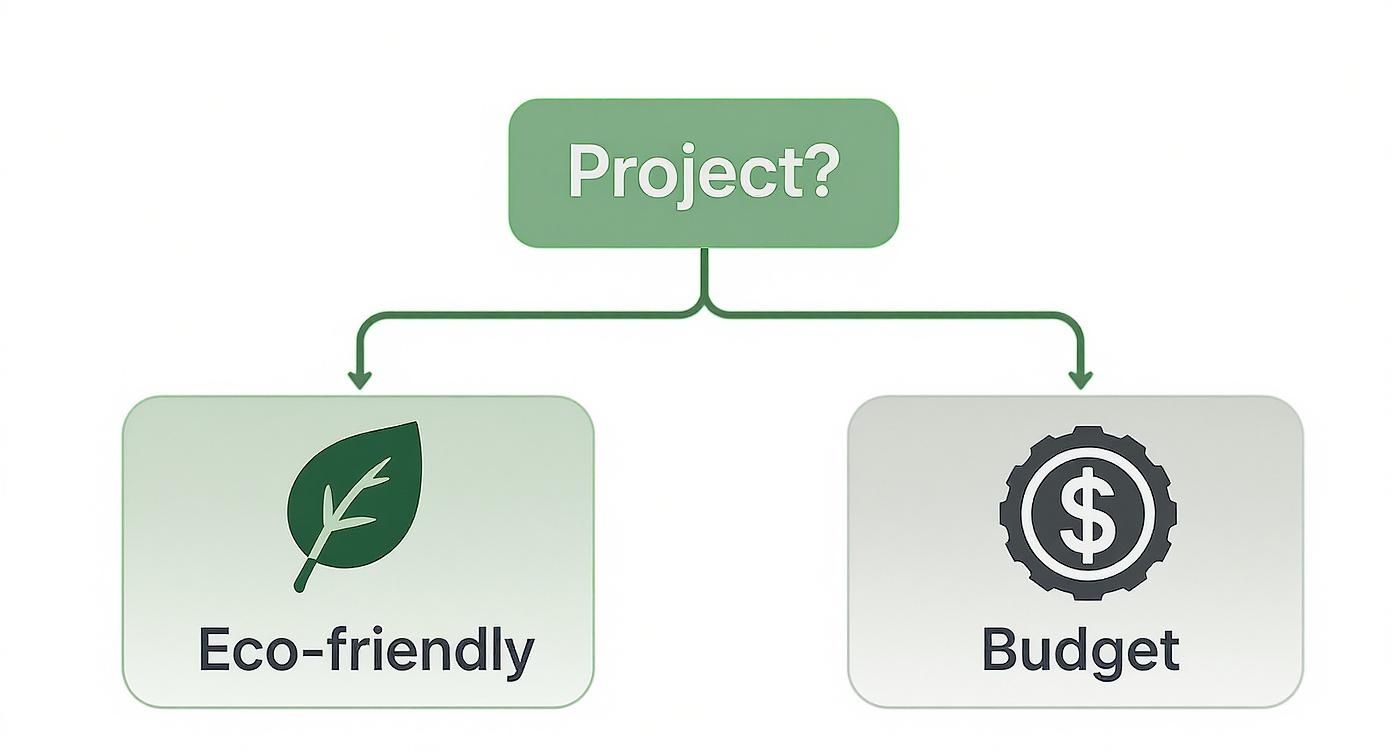
This little visual helps simplify that first fork in the road, pointing you toward a batting family that fits your main goal before you get lost in the finer details.
When to Choose 100% Cotton Batting
When you're chasing that timeless, traditional quilt feel, 100% cotton is your go-to. Its natural fibers offer a breathability and a soft, flat drape that synthetics just can’t mimic. This is the batting you reach for when you're making quilts meant to become treasured heirlooms.
Here are the projects where cotton truly shines:
- Heirloom and Traditional Quilts: If you dream of that classic, crinkly quilt, cotton is non-negotiable. Its predictable 3-5% shrinkage after the first wash is what creates that gentle, puckered texture that makes a quilt feel instantly loved and lived-in.
- Breathable Baby Quilts: Nothing is more important for a baby quilt than safety and comfort. Cotton’s natural fibers allow air to circulate, wicking moisture away to help regulate temperature. It keeps the little one cozy without overheating.
- Wall Hangings and Table Runners: Need something to lie perfectly flat? A thin, low-loft cotton is the answer. It gives your project just enough body without any puffiness, ensuring your piecing and quilting remain the stars of the show. If you want to dive deeper into how thickness affects your project, check out our guide on using low-loft batting for quilts.
A Quilter's Insight: For a quilt that needs to feel substantial and comforting, the heavier weight of cotton provides a gentle, reassuring pressure. It’s an amazing choice for those cozy lap quilts meant for snuggling on the sofa.
When Polyester Batting Is the Superior Choice
Polyester really comes into its own in projects that demand durability, high loft, and a friendly price tag. Its synthetic resilience makes it a practical workhorse for quilts that will see heavy use and frequent trips to the washing machine. Plus, its airy structure creates that distinctly modern, puffy look.
Consider polyester batting for these projects:
- Durable Children's Quilts: Let’s be honest, kids are tough on quilts. Polyester stands up to constant dragging, fort-building, and machine washing, all while drying quickly without shrinking or bunching up. The quilt stays bright and fluffy for years.
- High-Loft Tied Comforters: If you want a thick, plush comforter that feels like a cloud, a high-loft polyester batting is perfect. Its stability means you can get away with minimal quilting—or even just simple hand-tying—and still get incredible warmth and volume.
- Budget-Conscious Charity Quilts: When you’re making quilts for donation, cost is a real factor. Polyester delivers fantastic performance at a lower price point, allowing you to create warm, durable, and beautiful quilts without breaking the bank.
The Best of Both Worlds with an 80/20 Blend
But what if you want the softness of cotton and the stability of polyester? That’s where the incredibly popular 80/20 cotton/polyester blend comes in. This hybrid has become a quilter's darling for a reason—it’s wonderfully versatile and gives you a perfectly balanced performance.
An 80/20 blend truly captures the best qualities of both fibers. The 80% cotton gives it that soft, natural hand and beautiful drape, while the 20% polyester lends it strength, stability, and resistance to shrinkage. The result is a quilt with a gentle, vintage crinkle (less than 100% cotton) that holds its shape beautifully over time.
This blend is a fantastic all-purpose choice, making it perfect for:
- Bed quilts that need to be both soft and tough.
- Projects where you want a traditional feel with a bit more stitch definition.
- Gift quilts when you have no idea what the recipient’s washing habits are.
In the end, choosing the right batting means looking beyond the fiber itself and thinking about the future life of your quilt. By matching the material to the mission, you ensure your creation will be perfect for its purpose from the very first stitch.
Got Questions? Let's Talk Batting.
Even with all the facts laid out, sometimes you just have a few lingering questions before you can confidently cut into that precious fabric. Choosing between cotton and polyester batting feels like a big commitment, so let's clear up those last-minute uncertainties.
Here are straight answers to the questions I hear most often from fellow quilters. We'll cover everything from baby quilts to that dreaded "bearding" problem, so you can get back to quilting with total peace of mind.
Can I Use Polyester Batting for a Baby Quilt?
You absolutely can. Let's be practical: baby quilts go through the wringer. Polyester is a workhorse—it's durable, usually hypoallergenic, and stands up to the constant, heavy-duty washing that baby items demand. It also holds its shape and loft well, keeping the quilt looking puffy and new.
That said, many quilters (myself included) lean toward 100% cotton for baby quilts. It breathes beautifully, which is a huge plus for helping regulate a baby's temperature. It just feels softer and more natural against sensitive skin. For a lighter-weight quilt, cotton or a soft 80/20 blend is a fantastic choice. If you do go with polyester, make sure it’s a high-quality, soft version to keep things cozy.
What Is Batting Bearding and How Do I Stop It?
If you've ever seen tiny fibers poking through your quilt top, you've witnessed bearding. It's that frustrating fuzz that makes your masterpiece look a little untidy, and it happens when batting fibers migrate through the weave of your fabric. This is a classic polyester problem, as those synthetic fibers are much slicker than cotton fibers.
Fortunately, you can stop it before it starts:
- Buy Better Batting: High-quality, needle-punched, or bonded polyester batting is designed to lock fibers together and prevent this exact issue.
- Pick Tightly Woven Fabric: A good quilting cotton with a high thread count acts as a strong barrier, making it much harder for those pesky fibers to sneak through.
- Use a Sharp Needle: This is non-negotiable! A fresh, sharp needle pierces the fabric cleanly. A dull one punches through, creating bigger holes that practically invite the fibers to escape.
Should I Pre-Wash My Batting?
Ah, the great debate! Whether to pre-wash really comes down to the look you're going for. This is a hot topic in the cotton vs. polyester discussion, but it's simple once you know your desired outcome.
Only pre-wash 100% cotton batting if you want to prevent shrinkage and achieve a smooth, modern finish. If you adore that slightly crinkled, vintage look of an old family heirloom, then don't pre-wash it. Let the quilt shrink up a bit in its first wash—that's where the magic happens! Polyester and most blends have very little shrinkage, so you can usually skip washing them.
My Final Advice: Always, always check the manufacturer's label. The packaging is your best friend—it will give you the most accurate instructions on shrinkage and care for that specific product.
Which Batting Is Best for Hand Quilting?
For anyone quilting by hand, cotton batting is the hands-down winner. There’s a reason it’s the traditional choice! Its natural softness and lower density make it so much easier to pull a needle through compared to the dense, springy feel of many polyesters.
When you're shopping, look for cotton batting that specifically says it’s for hand quilting. This type is usually less dense and not as tightly bonded, making your stitching experience smooth and enjoyable. While a low-loft polyester can work in a pinch, nothing beats the feel and beautiful drape you get from hand quilting with natural cotton.
At Quilt Batting, we know that the right foundation is everything. We’ve curated a premium selection of cotton, polyester, and blended battings by the roll to help you find the perfect heart for your quilt. Shop our full collection today!