

If you've ever wondered what the secret is to those beautiful, heirloom-quality hand-quilted projects, it's not just the stitch work—it's what's inside. The best batting for hand quilting is almost always a low-loft, natural fiber like a buttery 100% cotton, a lofty wool, or a high-quality cotton blend. These materials are a dream to work with because they're soft, breathable, and let a needle glide through with ease.
This makes your stitching experience so much more enjoyable, and the final results are simply stunning.
Choosing the Perfect Foundation for Your Quilt
Think of batting as the soul of your quilt. It’s the hidden layer that determines the final drape, weight, and warmth of your finished piece. More importantly for us hand quilters, it dictates how easily (or frustratingly) your needle passes through all those layers. Getting this choice right is the first, and arguably most important, step toward creating a quilt that feels just as good as it looks.
This guide is here to walk you through everything that really matters. We'll decode confusing terms like 'loft' and 'scrim' and help you match the right material to your specific project. We’ll start with the basics and build up from there, giving you the confidence to pick a batting that will make your quilt soft, durable, and truly cherished.
Why Your Batting Choice Matters So Much
For hand quilters, batting isn't just filler; it's an active partner in the creative process. The wrong choice can lead to sore fingers, frustratingly broken threads, and stitches that disappear into a puffy mess. It’s a real struggle.
But the right choice? That's where the magic happens. It makes every stitch a pleasure and beautifully showcases your hard work.
A great batting choice transforms the quilting process from a challenging chore into a relaxing, creative art form. It works with you, not against you, allowing your needle to dance through the fabric.
It's no surprise that with the growing interest in handmade crafts, batting has become a big deal. The global quilt batting market was valued at around $2.1 billion and is on track to hit $3.5 billion, which just shows how much passion there is for quilting.
What to Expect in This Guide
We've designed this guide to build your knowledge one step at a time, so you don't need to be an expert to follow along. We will cover:
- Core Materials: We’ll put the top fiber choices—cotton, wool, and blends—head-to-head and explain what makes each one special for hand quilting.
- Key Characteristics: You'll finally understand what terms like loft and scrim mean and, more importantly, how they directly affect your stitch definition and needling ease.
- Project-Specific Advice: Get straightforward recommendations for common projects, from baby quilts that need to be soft and washable to wall hangings that require a flat, stable drape.
- Essential Prep and Care: We'll share the best practices for preparing your batting before you start and caring for your finished quilt so it can be loved for generations.
By the time you're done reading, you’ll have the practical know-how to walk into any fabric store or browse our shop and confidently select the absolute best batting for your next hand-quilting masterpiece.
To get you started, here is a quick overview of our top recommendations.
Quick Guide to Top Hand Quilting Batting
This table summarizes the top batting choices for hand quilting, highlighting their key features and ideal use cases to help you make a quick, informed decision.
| Batting Type | Best For | Needling Ease | Stitch Definition |
|---|---|---|---|
| 100% Cotton | Traditional quilts, baby quilts, breathable summer throws | Excellent | Very Good; creates a classic, crinkly look after washing. |
| 80/20 Cotton/Poly | All-purpose projects, bed quilts needing durability | Excellent | Good; soft feel with slightly more definition than 100% cotton. |
| Wool | Cozy winter quilts, show quilts, wall hangings | Superb | Excellent; highlights intricate stitches with beautiful puff. |
| Fusible Batting | Small projects, wall hangings, anything you want to baste quickly | Good | Good; the fusible adhesive can add a bit of resistance. |
| Black Batting | Quilts with dark or black top fabrics | Varies by Fiber | Varies by Fiber; chosen to prevent light fibers from showing through. |
Each of these options has its place, and the "best" one truly depends on the look and feel you're hoping to achieve. We'll dive much deeper into each of these in the sections to come.
Picking the Right Batting for Your Quilt
The batting you choose is really the soul of your quilt. It's the hidden layer that dictates how it feels, how it hangs, and how warm it will be. Picking the right one transforms a pretty quilt top into a cozy, treasured heirloom. Let's get into the nitty-gritty of the materials hand quilters reach for time and time again.
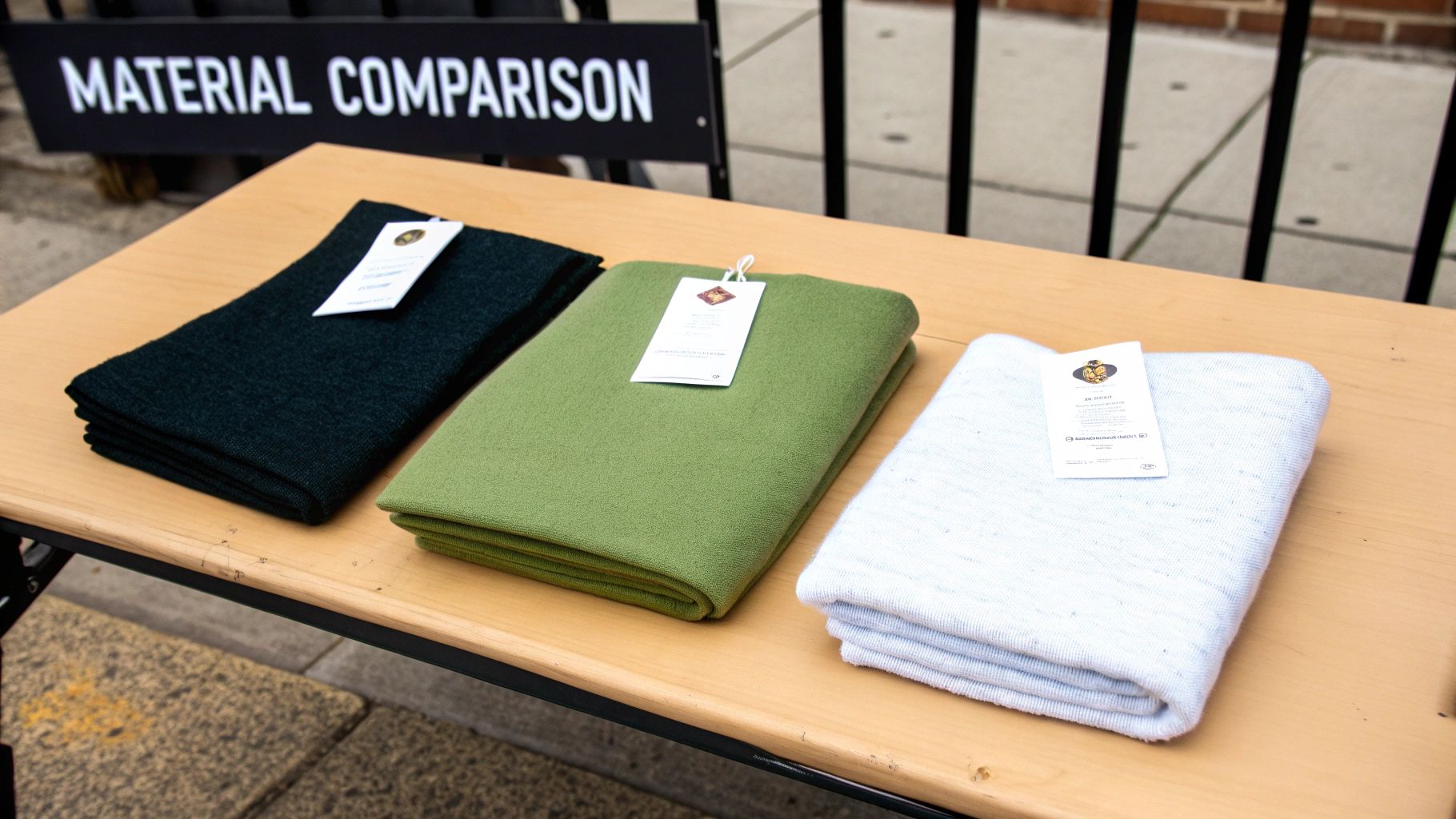
Think of it like choosing fabric for a dress—a silk charmeuse behaves very differently from a sturdy denim. The same is true for batting. Each fiber has its own personality, and finding the right one is key to bringing your vision to life.
The Timeless Classic: 100% Cotton
For generations, quilters have sworn by 100% cotton, and it's easy to see why. It's the comfortable, reliable old friend of the batting world—soft, breathable, and an absolute dream to work with. When you use a low-loft cotton, your needle glides through the layers almost effortlessly, which is a real blessing for your hands during those long quilting sessions.
The natural fibers give your finished quilt a lovely, soft drape that feels substantial without being heavy. There's a reason so many of us still prefer it; it just feels right.
One of the most charming things about 100% cotton is that signature crinkle it gets after the first wash. That gentle, all-over pucker gives a quilt an instant vintage look, like it’s been loved for years.
Why We Love 100% Cotton for Hand Quilting:
- Easy on the Hands: It’s incredibly soft and easy to needle, which means less hand fatigue for you.
- Breathable Comfort: The natural fibers let air circulate, making it perfect for anything from baby quilts to light summer throws.
- That Classic Crinkle: It shrinks just a little bit when washed, creating that traditional, puckered texture so many of us adore.
Just keep in mind, that shrinkage might not be what you want for a modern quilt or a wall hanging that needs to lie perfectly flat. Pure cotton can also get a bit heavy in very large quilts.
The Best of Both Worlds: 80/20 Cotton-Poly Blend
What if you could get the classic feel of cotton but with a little more durability and loft? That's where an 80/20 cotton/poly blend shines. This blend is a true workhorse, combining the best features of both fibers into one fantastic, all-purpose option.
The 80% cotton gives you that familiar softness and breathability we all love, while the 20% polyester adds stability, durability, and just a bit more puffiness than you'd get from pure cotton. It's a wonderful middle ground that gives your stitches some definition without making the hand quilting feel like a chore.
Because of the polyester, it also shrinks less than 100% cotton, giving you more control over the final look. It’s a great choice for bed quilts that will see a lot of use and washing. For a closer look, you can dig into our guide on all the different types of quilt batting.
Think of an 80/20 blend as your favorite pair of stretch jeans—it has the classic comfort of cotton, but that little bit of stretch makes it more durable and perfect for everyday life.
The Luxurious Warmth of Wool
When you need a quilt that delivers incredible warmth without the weight, wool is in a class of its own. It’s a truly luxurious fiber that hand quilters love for its amazing loft, lightweight feel, and how it makes your stitches pop.
Wool has a natural springiness that is an absolute joy to needle. The fibers seem to part for your needle and then puff up gently around your stitches, creating beautiful definition. This makes wool the perfect choice when you want to show off intricate quilting, especially for quilts headed to shows or competitions.
What Makes Wool So Special:
- Incredible Stitch Definition: The lofty fibers create a slight relief around your quilting, making your patterns stand out beautifully.
- Warmth Without Weight: Wool is a fantastic insulator, keeping you toasty warm without feeling heavy or bulky.
- Resists Creasing: It has a natural memory that shakes out wrinkles, helping your quilt maintain a smooth, beautiful drape.
While wool is more of a premium investment, its performance is second to none for certain projects. It’s the go-to for a cozy winter quilt or a special heirloom where every stitch is meant to be seen. Just be mindful of potential allergies, and it's always a good idea to check if it's been pre-shrunk to avoid any surprises down the road.
Getting Loft and Scrim Right for Your Stitches
When you're standing in front of a wall of batting, two little words on the packaging can make or break your hand-quilting experience: loft and scrim. These aren’t just industry buzzwords; they’re the secret ingredients that control your quilt's final texture and, just as importantly, how easy (or difficult!) it is to push your needle through.
Think of loft and scrim as the batting's personality. One dictates its puffiness, and the other determines its hidden strength. Getting this combination right is the key to a quilt that’s a joy to create and looks just like you imagined.
What Is Loft? Let's Talk Puffiness
Loft is simply the word for the batting’s thickness and fluff. Picture a flat, antique-style quilt next to a big, puffy comforter—that difference in dimension is all about loft.
For a hand quilter, this is a huge deal. Your needle has to travel through that thickness with every single stitch you make. The loft directly impacts how much effort you'll expend and how your finished quilting will look.
-
Low-Loft Batting: This is a hand quilter’s dream. It’s thin, dense, and usually measures around 1/8 inch thick. Because it’s so slim, your needle glides through with ease, letting you create those tiny, even stitches without straining your hands. Low loft also gives you that classic, flat drape that makes your intricate stitch patterns the star of the show.
-
High-Loft Batting: At 1/2 inch or more, high-loft batting is all about creating a billowy, cloud-like effect. It’s fantastic for tied comforters, but it’s a real beast for hand quilting. Trying to push a needle through that much fluff over and over is tough work, and it often swallows up your beautiful stitch definition.
When it comes to hand quilting, the takeaway is simple: low loft is almost always your best bet. It makes the whole process more enjoyable and ensures your hard work gets the spotlight it deserves.
What Is Scrim? The Unseen Stabilizer
Now, let's pull back the curtain on batting's secret weapon: scrim. Scrim is a very fine, non-woven layer that’s needle-punched into one side of the batting. Its entire job is to add strength and stability, holding the fibers together and stopping them from shifting, stretching, or pulling apart over time.
It’s a bit like the rebar in concrete—an internal grid that adds serious durability. This strength means you can space your quilting lines much farther apart (sometimes up to 8-10 inches!) without the batting clumping or bunching up after a wash.
But, as with most things, there’s a trade-off. That added layer of stability also adds a bit of density, which can make it slightly tougher to push a needle through. It’s certainly not impossible, but you’ll notice a little more resistance than you would with a batting that doesn't have a scrim. To get the full story, you can learn all about what scrim is in batting in our detailed guide.
So, do you want a scrim or not? It really comes down to your project.
Go for batting with a scrim if:
- You're planning a modern quilt with minimalist quilting lines spaced far apart.
- The quilt is destined for a lot of use and frequent washing.
- You're making a wall hanging and need it to hang perfectly flat without any distortion.
Go for batting without a scrim if:
- Your number one priority is the absolute easiest, smoothest needling experience.
- You're planning on dense, heirloom-style quilting with stitches packed closely together.
- You want the absolute softest, most supple drape you can get.
By understanding how to balance the puffiness of loft with the strength of scrim, you can dial in the perfect batting for your project. You'll not only love the final result but also enjoy every stitch along the way.
How To Match Batting To Your Project
Knowing the technical specs of batting is one thing, but the real art is picking the right one for the quilt you’re pouring your heart into. The "best" batting for hand quilting isn't a single product; it's a choice that depends entirely on what your quilt is going to do.
If you start by thinking about the quilt's final purpose, you're already halfway to a perfect finish. Is it a baby quilt destined for constant trips through the laundry? Or a showpiece that needs to hang perfectly flat for years? Each job calls for a different kind of batting.
For Soft And Washable Baby Quilts
When you're making a quilt for a little one, the priorities are simple: it has to be soft, breathable, and tough enough to be washed over and over again. This is where a high-quality, low-loft 100% cotton batting is the hands-down winner. Its natural fibers are gentle on sensitive skin and let air flow through, so the baby stays comfortable.
Since you know that quilt is going to see the inside of a washing machine—a lot—the durability of cotton is key. A needle-punched cotton gives it just enough stability, and its low loft makes hand quilting a dream.
For Stable Wall Hangings And Show Quilts
Wall hangings and show quilts have a totally different job. They exist to show off your incredible piecing and beautiful hand stitching with absolute precision. For these quilts, stability is everything. You need a batting that won't sag or stretch over time, keeping your masterpiece perfectly flat.
This is where a low-loft cotton batting with a scrim really proves its worth. That scrim acts like a hidden backbone, giving the quilt the structure it needs to maintain its shape for years on the wall. For a deeper dive into how loft impacts the final look, check out our guide on choosing low loft batting for quilts.
This simple diagram helps visualize how the "puff" you want in your quilt points you to the right batting.
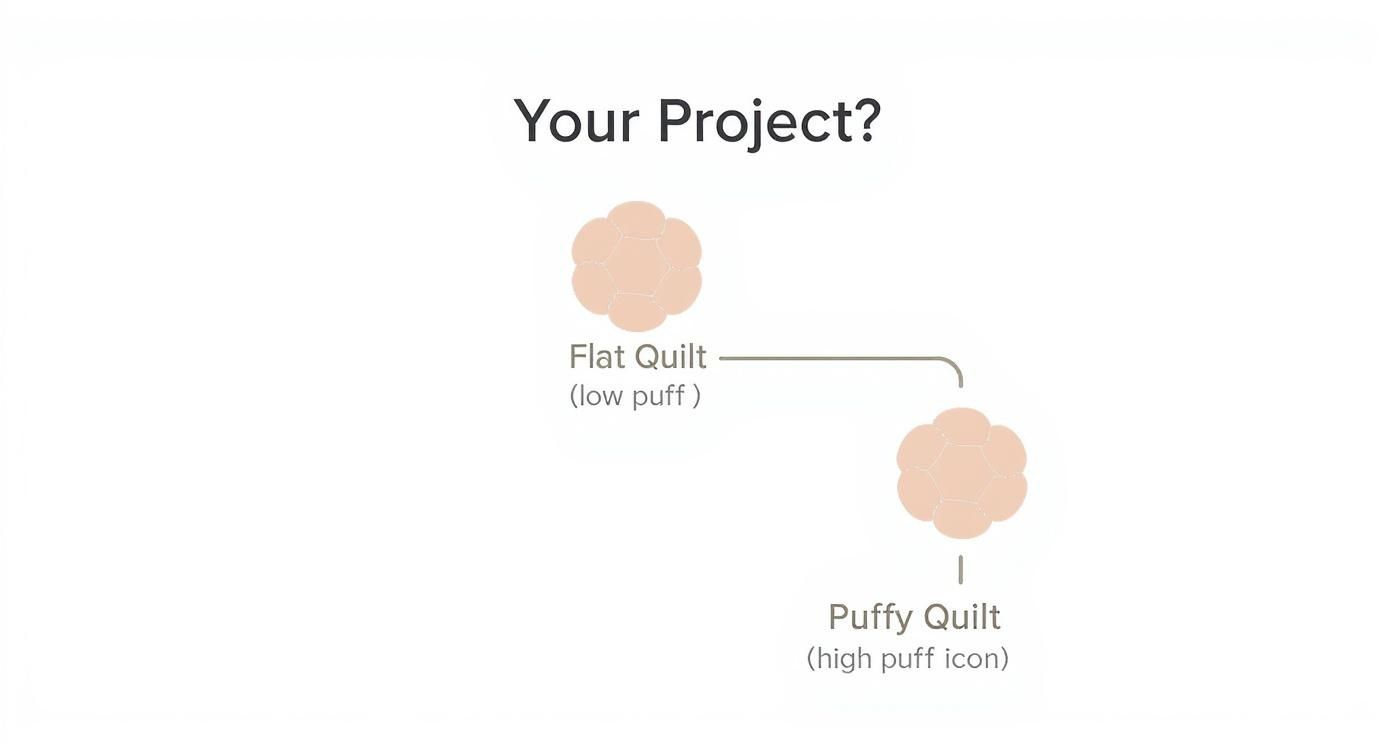
As you can see, flatter, more traditional quilts are best suited for low-loft options, while a super puffy comforter would call for a high-loft batting that’s usually tied, not quilted.
For Warm And Cozy Bed Quilts
A quilt for a bed should be warm, but not so heavy it feels like you're trapped. This is the perfect job for wool batting. Wool is nature's insulator, providing incredible warmth while feeling surprisingly light and airy. It’s perfect for snuggling under on a cold winter night.
Wool also has a natural springiness to it, which creates gorgeous definition for your stitches. Your quilting patterns will pop with a lovely, gentle puffiness. An 80/20 cotton/poly blend is another fantastic workhorse for bed quilts, giving you a great mix of warmth, durability, and a friendlier price tag.
For Specialty And Unique Projects
Every now and then, a project throws a curveball that requires a special solution. For example, have you ever hand-quilted on dark fabrics only to see little white fibers poking through the top? That frustrating problem is called "bearding."
The simplest fix is to use black batting. It ensures that any fibers that might sneak through the fabric will be completely invisible, keeping your dark quilt top looking crisp and clean.
Another handy tool for your quilting toolbox is fusible batting. It has a light, heat-activated adhesive on both sides, letting you baste your quilt sandwich together with just an iron. This is a huge time-saver for smaller projects like placemats or table runners where wrestling with pins can feel like more trouble than it's worth.
To make it even easier, here’s a quick guide to help you match your next project with the perfect batting.
Project-Based Batting Selection Guide
| Project Type | Recommended Batting | Key Considerations |
|---|---|---|
| Baby Quilt | 100% Cotton (Low Loft) | Needs to be soft, breathable, and stand up to frequent washing. |
| Wall Hanging | Cotton with Scrim (Low Loft) | Stability is crucial. It must hang flat without stretching over time. |
| Bed Quilt | Wool or 80/20 Cotton/Poly | Goal is warmth without weight. Stitch definition is a beautiful bonus. |
| Table Runner | Fusible (Low Loft) | Speed and ease. Fusible adhesive eliminates the need for pin basting. |
| Quilt with Dark Fabric | Black Cotton or Black 80/20 | Prevents "bearding" (white fibers showing through the dark quilt top). |
Ultimately, taking a moment to match the batting's features to your project’s specific needs is the secret to a beautiful result and a much more enjoyable hand-quilting journey.
Preparing and Caring for Your Batting
Your beautiful hand quilting is meant to last a lifetime, and that journey begins long before you thread your needle. The way you prepare your batting and care for the finished quilt makes all the difference in its final look and feel, turning a beautiful project into a treasured heirloom.
One of the first questions I always get is about pre-washing batting. Honestly, there's no single "right" answer. It all comes down to the look you're trying to create.
The Great Pre-Washing Debate
The decision to pre-wash or not really boils down to one simple question: do you want that classic, crinkly quilt texture, or do you want a modern, flat finish?
-
For a Crinkled, Vintage Look (Don't Pre-wash): If you love the soft, puckered texture of an old, well-loved quilt, then skip the pre-wash. This is my favorite trick for achieving that cozy, antique vibe. When you wash the finished quilt for the first time, the cotton batting will shrink just a little (usually 3-5%), gently pulling the stitches and fabric with it. The result is that beautiful, crinkled character we all adore.
-
For a Modern, Flat Finish (Pre-wash): On the other hand, if you're making a modern quilt, a piece for a competition, or a wall hanging that needs to lay perfectly flat, pre-washing is the way to go. Washing the batting first gets most of the shrinkage out of the way, ensuring your quilt top stays smooth and crisp even after it's washed.
Your choice here is a powerful creative tool. You get to decide whether your quilt will have a classic, time-worn feel or a sleek, contemporary look.
If you do decide to pre-wash, remember to be gentle. Wet batting is delicate and can easily stretch or tear. I suggest hand-washing it in a tub of lukewarm water. Just let it soak without much agitation, then carefully press the water out by rolling it between a couple of towels. Lay it flat to air dry, and you're good to go.
Handling and Basting Your Batting
Once your batting is ready, it's time to make your quilt sandwich. The key here is to handle it gently to avoid distorting the fibers. Always support the batting’s weight as you lay it out, and smooth it from the center outwards instead of pulling on the edges.
A well-basted quilt is your best friend in hand quilting. It keeps the layers from shifting around, which is absolutely essential for getting those lovely, even stitches. While pins have been the go-to for generations, many hand quilters (myself included) now prefer a good spray baste for a more secure, even hold across the entire quilt.
If you want a more detailed walkthrough, we've put together a complete guide on how to baste a quilt that covers everything you need to know.
Long-Term Care for Your Quilted Heirloom
Proper care ensures all your hard work stays beautiful for generations. After you've poured so much of yourself into a quilt, you want it to last! Follow these simple steps to protect your heirloom:
- Washing: Always use a gentle cycle with cold water and a mild, color-safe detergent. For very old or delicate quilts, hand-washing is always the safest bet.
- Drying: Tumble dry on the lowest possible heat setting, or better yet, lay the quilt flat to air dry. High heat is the enemy of batting fibers and can cause more shrinkage over time.
- Storing: Find a cool, dry spot away from direct sunlight to store your quilt. Fold it loosely, and try to refold it in different ways every so often to prevent setting permanent creases along the fold lines.
Answering Your Top Hand Quilting Batting Questions
Even quilters who have been at it for years run into questions about batting. It's totally normal. Getting those nagging questions answered is the key to jumping into your next project with confidence and sidestepping those little frustrations that can trip you up.
Let's break down some of the most common things hand quilters ask. We'll get straight to the point so you can get back to your quilting frame.
What’s the Best Loft for Hand Quilting?
For hand quilting, low-loft batting is your best friend, almost every time. It’s thin and lays flat—usually about 1/8-inch thick—which makes a world of difference when you’re pushing a needle through all three layers of your quilt sandwich.
Honestly, this one choice changes everything. It helps you create those beautiful, even stitches you’re aiming for and saves your hands from getting tired and sore during those long, wonderful quilting sessions. Low-loft batting also creates that classic, antique-style drape that lets your stitch work be the star of the show.
Now, high-loft batting has its place; it’s fantastic for those big, puffy tied comforters. But trying to hand quilt through it? That’s a workout. The fluffiness can swallow your beautiful stitches, and the sheer effort involved can suck the joy right out of the process. If you want a little more dimension without the struggle, a mid-loft wool or a high-quality cotton is a great middle-ground.
Can I Use Polyester Batting for Hand Quilting?
You absolutely can, but it’s rarely the first pick for seasoned hand quilters. Polyester is budget-friendly, light, and tough, but it comes with a few quirks you should know about.
For one, it doesn't breathe the way natural fibers like cotton or wool do, which can make the finished quilt feel a bit clammy. But the bigger issue for the quilting process itself is its "springiness." Many quilters find that the needle wants to bounce back instead of gliding smoothly through, which can be a real nuisance.
If you do go with polyester, hunt down a high-quality, needle-punched version. That construction process makes it denser and more stable, which definitely helps. But if you’re looking for a smoother, more enjoyable experience (especially if you're just starting out), a 100% cotton or an 80/20 cotton-poly blend will feel much better in your hands.
How Do I Stop Batting from Bearding?
Ah, "bearding"—the bane of every quilter's existence! It's that frustrating moment when tiny wisps of batting poke through your quilt top, and it’s especially noticeable on dark fabrics. Good news is, you can stop it from happening.
First, start with a high-quality, dense, needle-punched batting. The way it’s made helps lock the fibers together so they don't migrate. A batting with a scrim (a thin, non-woven stabilizer) is even better, acting like a safety net to keep every fiber right where it belongs.
Your tools and materials also make a huge difference:
- Use the Right Needle: A sharp quilting needle, often called a "Between," is designed to part the fabric threads cleanly. A dull needle, on the other hand, tears a hole, basically opening a door for those pesky fibers to sneak through.
- Match Your Batting Color: This is the easiest trick in the book. If you’re working with dark or black fabrics, just use a black or charcoal-colored batting. Any little fibers that might try to peek through will be virtually invisible, keeping your quilt top looking crisp and perfect.
How Far Apart Can My Quilting Stitches Be?
This is a big one, and the answer is always on the batting package. Every manufacturer specifies the maximum distance you can leave between quilting lines, and it can vary wildly from 2 to 10 inches.
It is absolutely critical that you follow this guideline. Stitching farther apart than recommended can lead to the batting shifting, bunching, or even separating inside your quilt over time, especially after a wash.
Ignoring this can compromise the whole structure of your quilt, and nobody wants that after pouring so much love into a project. As a general rule, battings that are needle-punched or have a scrim are more stable and allow for quilting lines to be further apart. Before you even start marking your design, double-check the packaging. It’s a simple step that ensures your beautiful work stays strong and lasts for generations.
At Quilt Batting, we're here to supply the materials that help you bring your vision to life. From buttery-soft cotton to luxurious wool, we have the perfect foundation for your next hand-quilting masterpiece. Explore our full collection of premium batting by the roll. Shop Our Batting Selection Now.