

The best batting for your quilt really comes down to one thing: what's the quilt for? If you're dreaming of a classic, cozy bed quilt, you can't go wrong with an 80/20 cotton-poly blend. It's the workhorse of the quilting world—breathable, drapes beautifully, and holds up wash after wash. But for something like a decorative wall hanging that needs to lay perfectly flat, a 100% cotton with scrim is a much better choice. It gives you that stability and won't shrink up on you.
Your Quick Guide to Choosing Quilt Batting
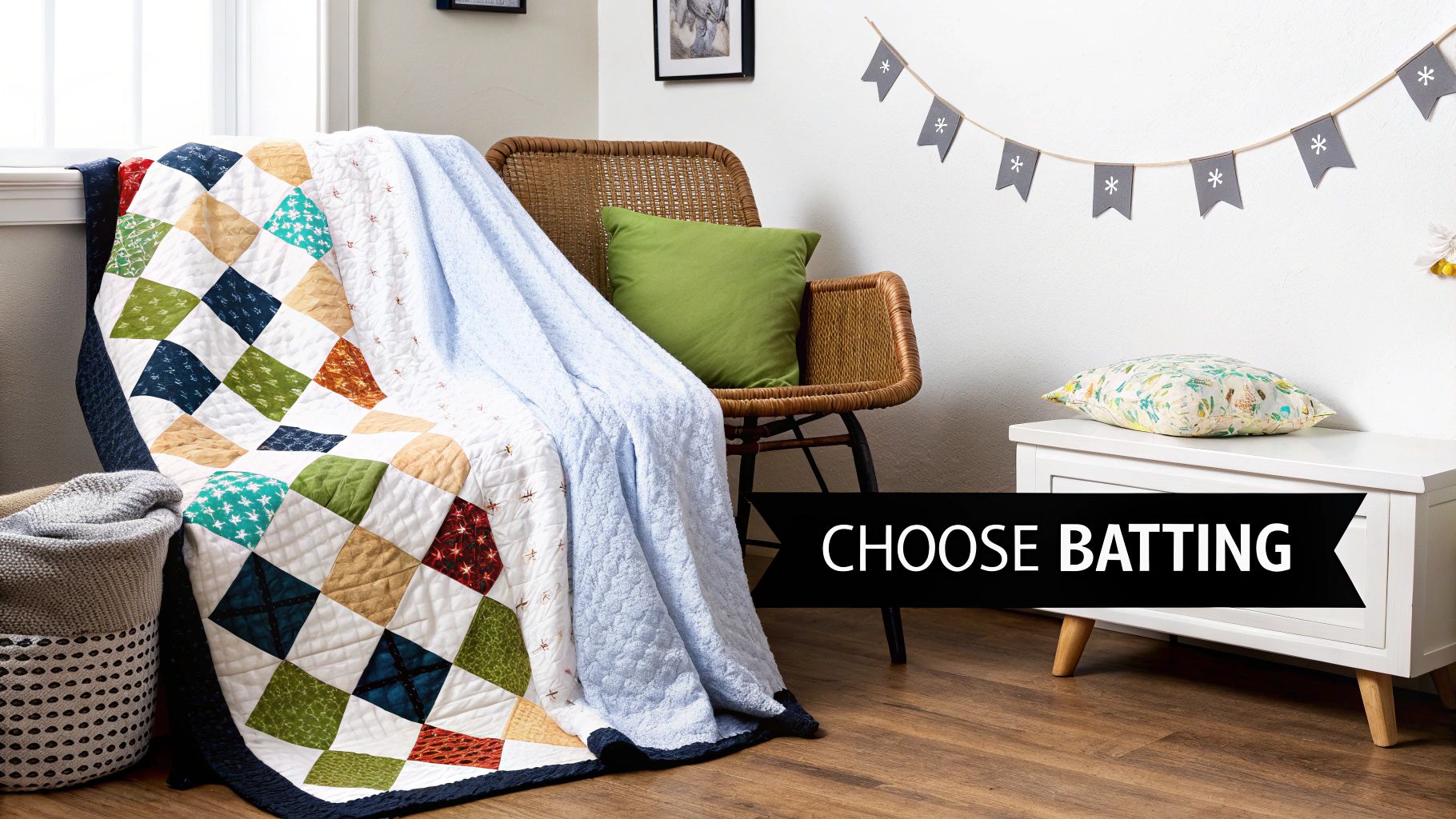
Let's be honest, picking the right batting is the secret ingredient to a quilt that feels just as good as it looks. This is the stuff in the middle, the "quilt sandwich" filling that dictates everything from how warm it is to how it drapes over the back of a couch. It's the soul of the quilt, and it's what makes the difference between a puffy, cloud-like comforter and a sleek, modern art piece.
The sheer number of options can feel a little intimidating, with all the talk of "loft" and "scrim." But don't let the terminology fool you. Matching the batting to your vision is actually pretty straightforward once you know what to look for. The key is to think about the quilt's final purpose before you even start.
Key Factors to Consider
Before you get lost in the different batting types, ask yourself these three simple questions:
- Warmth and Weight: Is this a light summer throw or a serious winter blanket? Wool is incredibly warm but surprisingly lightweight, whereas cotton has a bit more heft and breathes really well.
- Drape and Loft: Do you want the quilt to hang crisp and flat, or do you want it to be soft and squishy? Low-loft battings give a flatter finish, perfect for showing off intricate piecing. High-loft options create that puffy look and make your quilting stitches really pop.
- Final Appearance: Are you going for that crinkly, well-loved vintage look? A 100% cotton batting that shrinks just a little in the wash will give you that texture beautifully. If you want a smooth, modern finish, a polyester blend with minimal shrinkage is the way to go.
Thinking through these points first will make your decision so much easier. The quilting world is booming, with the market expected to grow by about 5.7% each year between 2025 and 2034, reaching nearly USD 9.26 billion. This just shows how much quilters are looking for quality materials that deliver specific, predictable results. You can read more about this trend on dataintelo.com.
Pro Tip: Don't be afraid to experiment! I always recommend buying small cuts of a few different battings to make "quilt sandwiches." It’s the best way to see how each one feels, quilts, and washes before you commit to a big project.
To get you started, I've put together a quick reference table to point you in the right direction. If you want to go even deeper, be sure to check out our complete quilt batting comparison chart.
Quick Batting Selection Guide
Here's a handy cheat sheet to help you quickly match the right batting to some of the most common quilting projects.
| Project Type | Recommended Batting | Key Benefit | Loft/Drape |
|---|---|---|---|
| Everyday Bed Quilt | 80/20 Cotton-Poly Blend | Durability & Softness | Low / Excellent Drape |
| Baby Quilt | 100% Cotton (No Scrim) | Breathable & Hypoallergenic | Low / Very Soft Drape |
| Wall Hanging | 100% Cotton with Scrim | Stability & Flat Finish | Low / Stiff Drape |
| Warm Winter Quilt | 100% Wool | Exceptional Warmth | Medium / Puffy Drape |
| Hand Quilting Project | 100% Cotton (No Scrim) | Easy to Needle | Low-Medium / Soft Drape |
| Longarm Quilting | Wool or 80/20 Blend | Shows Stitch Definition | Medium / Excellent Drape |
This table should give you a great starting point for your next quilt, ensuring the inside is just as thoughtfully chosen as your beautiful top and backing.
Let's Talk About What's Inside: Comparing Quilt Batting Materials
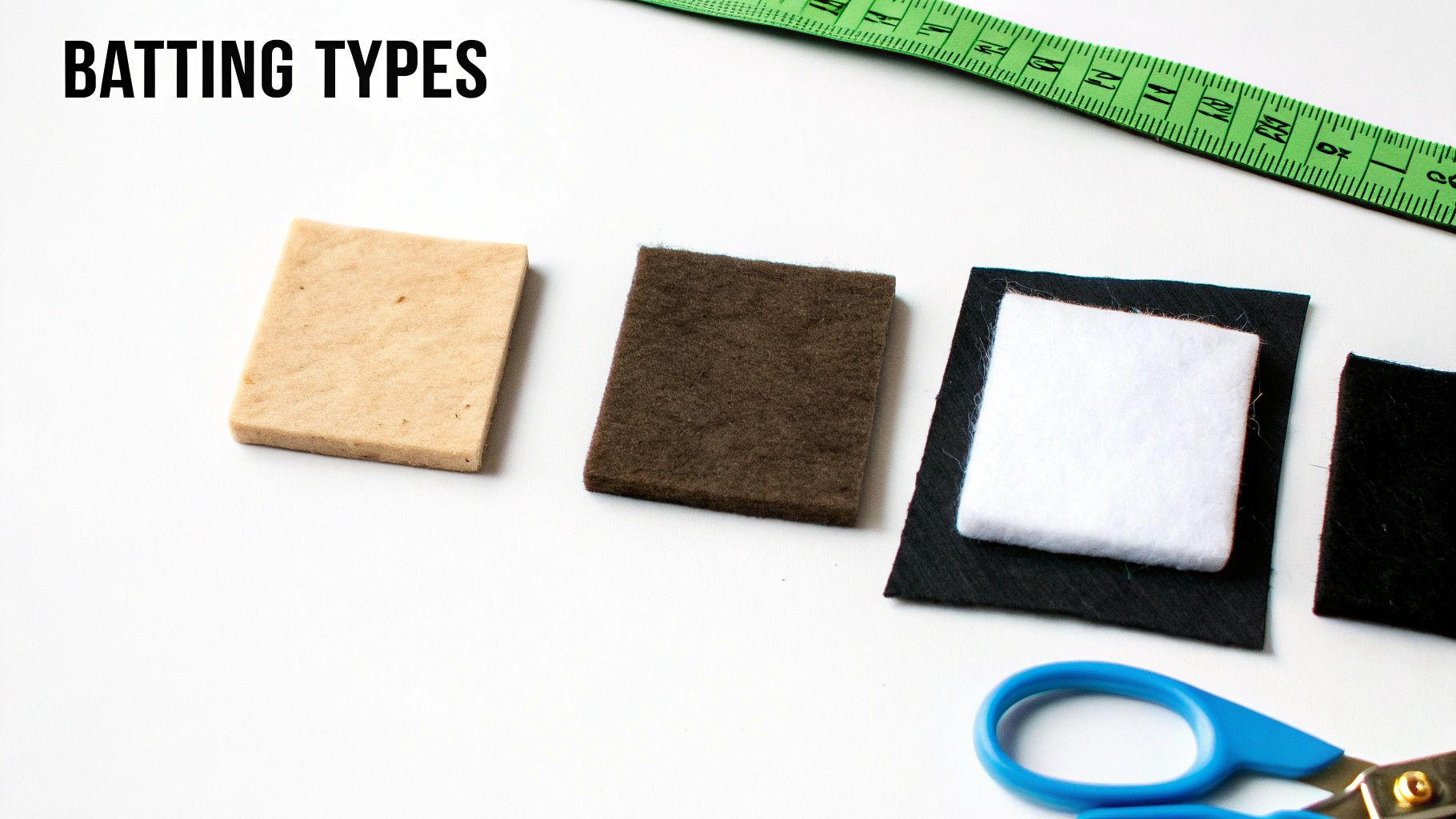
Choosing the right batting is about more than just filling; it’s about deciding the final personality of your quilt. The fiber you pick dictates everything from how it drapes on a bed to the way it crinkles after that first wash. Each material has its own quirks and strengths.
Instead of just a simple pros-and-cons list, let's get into the real-world differences. We'll look at why you might grab an 80/20 blend for a sturdy bed quilt but reach for pure cotton when you want that classic, antique vibe. My goal is to help you match the right batting to your project, so you can confidently find the best batting for quilts that brings your vision to life.
The All-Rounder: 80/20 Cotton-Poly Blend
There’s a reason you’ll find the 80/20 cotton-polyester blend in almost every quilter's stash—it’s the reliable workhorse of the batting world. It gives you the soft, natural feel of cotton but adds the stability and strength of polyester. Honestly, it’s one of the most forgiving battings you can work with, which is why it's a go-to for everyone from absolute beginners to longarm pros.
This blend drapes like a dream, making it perfect for quilts that are meant to be snuggled under. The polyester (20%) keeps the shrinkage low, so you get a flatter finish than you would with 100% cotton. You'll still see a gentle, soft crinkle after washing, giving it just enough character.
Where the 80/20 blend really shines is its stability. It doesn't stretch or pull out of shape while you're quilting, which is a lifesaver on a longarm machine. You can also space your quilting stitches further apart without worrying about the batting shifting or clumping over the years.
The Traditional Choice: 100% Cotton
If you're chasing that timeless, heirloom feel, you can't beat 100% cotton batting. It feels like a piece of thick, soft flannel right off the roll and gives a quilt a beautiful weight that just gets better with every wash. As a natural fiber, it’s wonderfully breathable, making it a fantastic choice for everything from crib quilts to bedspreads.
The signature trait of 100% cotton is its shrinkage—usually around 3-5%. Some quilters pre-wash it, but I say embrace the crinkle! Tossing a finished quilt with unwashed cotton batting into the wash is how you achieve that gorgeous, puckered texture we all associate with antique quilts.
You'll usually see cotton batting sold with or without a scrim, which is just a very thin stabilizer that's been needle-punched into the fibers.
- Cotton with Scrim: This version is stronger and a bit more stable, which is perfect for machine quilting where the quilt gets pulled and pushed around. The scrim lets you space your quilting lines much further apart, sometimes up to 8-10 inches.
- Cotton without Scrim: Incredibly soft and a pleasure to needle, this is what hand quilters dream of. It's much less dense, so you'll need to quilt it more closely—every 2-4 inches is a good rule of thumb—to keep the fibers from shifting.
The Luxury Option: 100% Wool
When you want serious warmth without the weight, wool batting is in a league of its own. It's incredibly insulating yet feels surprisingly light, so you can make a super-cozy winter quilt that doesn't feel like a lead blanket. Wool also has a natural springiness to it, which means it resists creasing and gives your quilt a lofty, pillowy look.
Wool batting tends to have a higher loft than cotton, and this is where it gets fun—it makes your quilting stitches pop. If you're doing custom quilting and want your stitching to be a major design element, wool will give you that stunning definition. It glides beautifully under the needle, whether you're quilting by hand or machine.
If you’re curious to learn even more about these fibers, our in-depth guide on the types of quilt batting breaks it down even further.
Specialty Batting for Unique Projects
Sometimes, a standard batting just won't do. That’s where specialty options come in, designed to solve specific problems and open up some fun creative doors.
Black Batting
This stuff is a lifesaver when you're working with dark or heavily saturated fabrics. You know how sometimes tiny white fibers can poke through the needle holes on a dark quilt, a frustrating thing we call "bearding"? It can make a black quilt look a little dusty. Black batting, usually an 80/20 blend, is dyed black so that if any bearding happens, it's completely invisible.
Fusible Batting
If you despise pin-basting, you'll love fusible batting. It comes with a light, heat-activated adhesive on both sides. You just lay out your quilt sandwich and press it with an iron to temporarily stick the layers together—no pins, no spray. It's a huge time-saver, especially for smaller projects like table runners, placemats, and wall hangings where even a tiny bit of shifting can ruin the whole piece. The bond is secure enough for quilting and washes out over time.
Understanding Loft, Drape, and Scrim
Picking the right batting is about more than just what it's made of. The real secret to a stunning quilt lies in the details on the package—the technical terms that dictate the final look, feel, and personality of your project. Once you get a handle on concepts like loft, drape, and scrim, you’re no longer just making a quilt; you're crafting a textile masterpiece.
Think of these three elements as the DNA of your quilt’s middle layer. They work in tandem to define its texture, its weight, and how it hangs. A small tweak in one of these can completely transform your quilt, turning a sleek wall hanging into a plush, cuddly bed cover.
What Is Quilt Batting Loft?
In the quilting world, loft is simply our word for thickness and puffiness. It's the most obvious trait of any batting and plays a huge role in whether your quilt ends up flat and traditional or thick and cloud-like. There’s also a direct link between the loft you choose and how much your quilting stitches stand out.
-
Low Loft: This is your thin, discreet batting, usually around 1/8 inch or less. It creates a wonderfully flat and dense finish, which is perfect when you want the intricate piecing of your quilt top to be the star. Low loft is my go-to for wall hangings, table runners, and quilts with that clean, modern aesthetic. It’s also much easier to wrangle through a domestic sewing machine.
-
High Loft: Thicker and fluffier, a high loft batting can be up to 1/2 inch thick. This is what you want when your goal is to make the quilting stitches pop with deep shadows and amazing texture. If you’re dreaming of a warm, puffy comforter or plan on hand-tying your quilt, a high loft polyester or wool is an excellent choice.
Key Insight: The higher the loft, the more dramatic your quilting stitches will look. For really detailed custom quilting, I find that a medium-to-high loft wool gives you incredible stitch definition, turning the thread work itself into a central design feature.
The Importance of Drape
Drape is all about how a quilt hangs, folds, and cuddles. It’s the softness and flexibility you feel when you pick it up. A quilt with beautiful drape will fall in soft, gentle folds, while one with poor drape will feel stiff and almost board-like.
The drape of your quilt is a combination of the batting's fiber, its loft, and how closely you quilt it. For example, a 100% cotton batting without a scrim will have a gorgeous, soft drape that just gets better with every wash—perfect for a well-loved baby quilt. On the flip side, a dense, needle-punched batting with a scrim will be stiffer, which is exactly what you need for a wall hanging that has to stay flat and stable for years.
Decoding Scrim in Batting
Ever seen "with scrim" on a batting package and wondered what it meant? It’s a thin, non-woven stabilizer that has been needle-punched right into the batting. This simple addition makes a massive difference in the batting's strength and durability.
Think of scrim as a lightweight internal grid that holds all the fibers together, preventing them from stretching, shifting, or tearing apart. This is a game-changer for machine quilters, since the quilt sandwich gets pulled and pushed around so much. Thanks to this added stability, batting with a scrim allows for much wider quilting distances—sometimes up to 8-10 inches apart! This gives you more creative freedom and is a lifesaver if you prefer a less dense quilting pattern. To get the full story, you can read our complete guide on what scrim is in batting.
But here’s the trade-off: that added density makes it tough to get a needle through by hand. For hand quilters, a batting without scrim is always the way to go for a smoother, more enjoyable experience. Knowing these little details is what empowers you to pick the perfect batting for your project and your technique.
Matching Batting to Your Quilting Method
Let's be honest, there's no single "best" batting. The right choice really comes down to how you plan to quilt your project and what you want it to do when it's finished. A batting that creates a wonderfully soft, drapey bed quilt is the completely wrong choice for a wall hanging that needs to hang crisp and flat.
This is where we get practical. Your quilting method—whether you're working by hand, on a home sewing machine, or with a longarm—places unique demands on the batting. Thinking through these needs beforehand saves a ton of frustration and ensures your quilt not only looks great but behaves the way you want it to.
This visual guide is a great starting point for connecting the final look you're aiming for with the right type of batting.
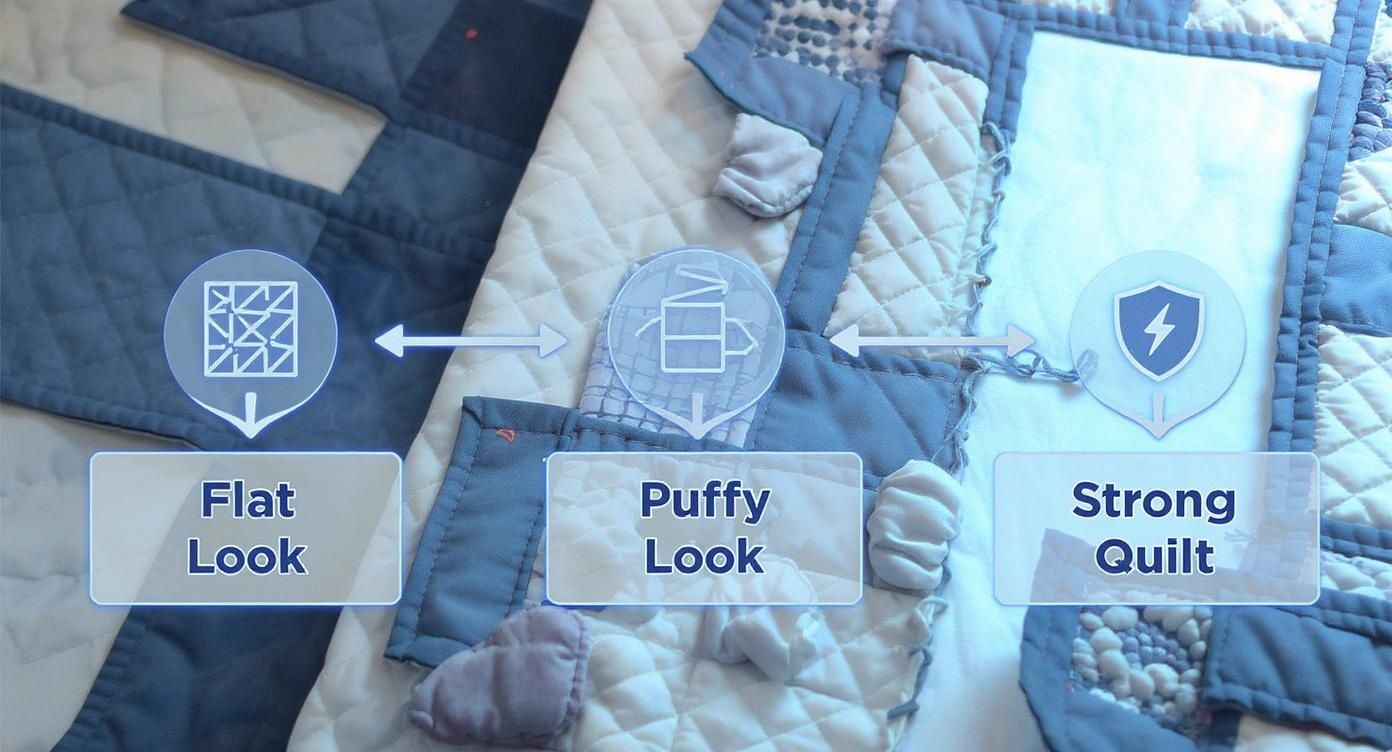
As you can see, your batting choice is the foundation for achieving everything from a sleek, modern finish to a cozy, traditional texture.
For the Hand Quilter
Hand quilting is all about the feel—the meditative process of needle and thread gliding through fabric. Your batting should be a partner in this, not an obstacle. The key is finding something soft and easy to needle, without any dense resistance.
- 100% Cotton (No Scrim): This is the hands-down favorite for most hand quilters, and for good reason. It’s incredibly soft, breathes beautifully, and lets your needle pass through like a hot knife through butter. Without a scrim, there's no tough internal layer to fight against.
- Wool: Another fantastic choice. Wool is unbelievably light and lofty, making it a dream to needle. Plus, that natural loft gives your handiwork a gorgeous, defined texture that really makes the stitches pop.
My Two Cents: If you're hand quilting, steer clear of anything with a scrim. That thin stabilizer is a lifesaver for machine quilting, but it will turn your peaceful hand-stitching session into a workout you didn't sign up for.
For the Domestic Machine Quilter
When you're quilting on a domestic machine, you’re wrestling the entire quilt sandwich through a pretty small space. You need a batting that's stable enough to handle all that pushing and pulling but not so thick that it feels like you're trying to stuff a sleeping bag through the machine's throat.
- 80/20 Cotton-Poly Blend: This is my go-to for most domestic machine quilting. You get the stability from the polyester and the soft, natural feel of cotton. Its lower loft makes it a breeze to manage under the needle.
- 100% Cotton with Scrim: That scrim is your best friend here. It provides crucial stability, preventing the batting from stretching or distorting while you maneuver the quilt. It also allows you to quilt further apart, which opens up more design possibilities.
- Fusible Batting: For smaller projects like placemats or table runners, fusible batting is a game-changer. It temporarily fuses all three layers together with an iron, completely eliminating the need for pinning or spray basting. Everything stays perfectly put.
For the Longarm Quilter
Longarm quilting is all about showing off the stitch work, so your batting choice is critical. You need something strong enough to be stretched onto the frame under tension without tearing, and it has to provide excellent stitch definition to make your patterns shine.
Wool is a perennial favorite for longarmers because its high loft creates deep shadows that make quilting motifs stand out dramatically. An 80/20 blend is another workhorse, offering great stability and a beautiful, even finish for all-over designs. This kind of versatility is a big reason the global Four Seasons quilt market is projected to grow from $3.71 billion in 2021 to $4.8 billion by 2025, as more people want bedding that performs year-round. You can find more details in this report on the growth of the seasonal quilt market.
Batting Comparison for Different Quilting Methods
To make it even clearer, here’s a quick-glance table comparing how different battings perform across the three main quilting methods.
| Batting Type | Hand Quilting Suitability | Domestic Machine Suitability | Longarm Machine Suitability | Key Consideration |
|---|---|---|---|---|
| 100% Cotton (no scrim) | Excellent | Good | Good | Easiest to needle by hand; can stretch on a longarm if not handled carefully. |
| 100% Cotton (with scrim) | Poor | Excellent | Excellent | The scrim provides stability for machines but is very difficult to pierce by hand. |
| 80/20 Cotton-Poly Blend | Good | Excellent | Excellent | A versatile workhorse that combines stability, low loft, and softness. |
| Wool | Excellent | Good | Excellent | Unmatched loft for stitch definition, but can be bulky on a domestic machine. |
| Fusible Batting | Not Recommended | Excellent | Not Recommended | Best for small projects on a domestic machine; eliminates the need for basting. |
Ultimately, choosing the right batting for your quilting style isn't just a technical decision—it's about setting yourself up for a smoother, more enjoyable creative process and a finished quilt you'll be proud of.
Making the Most of Your Batting: Buying and Care
You've navigated the different types of batting, but how you buy it and care for it is just as important. Getting this part right saves you money, cuts down on waste, and ensures your quilt will be loved for years to come.
The first big decision is whether to grab a pre-cut package or buy your batting by the yard, right off the roll. Pre-cuts are convenient, no doubt. They come in standard bed sizes—twin, queen, king—and they’re perfect if you’re making a single quilt. But if quilting is more than just a one-time project for you, buying off a roll is almost always the smarter move.
Pre-Cut Packages vs. By the Yard
For that one special project, pre-packaged batting is a solid choice. You get just what you need with minimal leftovers, which is ideal if you only make a quilt or two a year and don't have space to store bulky materials.
However, if you're an avid quilter, a longarmer, or you run a small business, buying from a roll is a total game-changer. The price per yard drops dramatically, giving you incredible flexibility. You can cut the exact size you need for any project, which means less waste and real savings over time. To dig deeper into this, check out our guide on quilt batting by the yard.
My Two Cents: While pre-cuts are convenient for a single project, buying by the roll is a savvy investment for anyone who quilts regularly. It feels like a bigger spend upfront, but it pays for itself in just a few projects.
The quilting world is bigger than ever. North America, for instance, leads the global market because so many of us value handmade comfort and are willing to invest in quality supplies like the right batting. This trend, explored in the global quilt market on htfmarketinsights.com, is exactly why having access to different batting options matters so much to modern quilters.
To Pre-Wash or Not to Pre-Wash?
Okay, you've got your batting home. Now what? The big question is whether to pre-wash it, and the answer comes down to the look you're going for.
- Want that crinkly, vintage charm? Then don't you dare pre-wash your batting, especially if it’s 100% cotton! That slight shrinkage—usually around 3-5%—is your best friend. It happens after the quilt is finished and washed for the first time, creating that beautiful, puckered texture that makes a quilt feel like it has a story.
- Aiming for a smooth, modern look? If you want your quilt to lie perfectly flat, pre-washing is the way to go. It gets the shrinking out of the way before you quilt, so the finished piece stays crisp and smooth.
If you do decide to pre-wash, it's easy. Just soak the batting in a tub of cool water for about 20 minutes. Gently squeeze the water out—never wring it!—and you can roll it up in a towel to absorb extra moisture before laying it flat to dry or tossing it in the dryer on a low, gentle setting.
Caring for Your Finished Masterpiece
A little bit of care will keep your quilt looking beautiful for generations. For most quilts made with cotton, wool, or blended battings, a machine wash on a gentle cycle with cold water and a mild detergent is perfect.
Tumble dry on low or, even better, lay it flat to air dry. The most important thing is to avoid high heat, which can cause the fibers to shrink more or even break down over time. Follow these simple rules, and your quilt will stay just as wonderful as the day you finished it.
Answering Your Top Quilt Batting Questions
Once you’ve got a handle on the different types of batting, the real-world questions start popping up. What about prepping it? What if I'm using dark fabrics? These practical details can make all the difference between a project you love and one that fights you every step of the way.
Think of this as your go-to FAQ, built from years of experience. We'll tackle everything from beginner-friendly picks to the nitty-gritty of pre-washing and piecing scraps.
What Is the Best Batting for a Beginner Quilter?
If you're just starting out, you want a batting that’s forgiving. Something stable, easy to handle, and that won't give you any grief. For that reason, I almost always point new quilters toward an 80/20 cotton-polyester blend or a 100% cotton batting with a scrim. These are the training wheels of the batting world—they help you build confidence without unnecessary headaches.
The 80/20 blend is a fantastic all-rounder. It has that lovely soft, natural feel of cotton, but the polyester gives it just enough stability to keep it from stretching or pulling out of shape while you quilt. It also has very little shrinkage, which means your finished quilt will have a nice, smooth, modern look.
A 100% cotton batting with a scrim is another excellent choice. That scrim is your secret weapon. It's a thin stabilizer needle-punched right into the batting, holding the fibers together. This means you can space your quilting stitches much farther apart (sometimes up to 8 inches!) without the batting shifting or bunching up. It gives you the freedom to practice your quilting without worrying that it has to be perfect right away.
Should I Pre-Wash My Quilt Batting?
Ah, the great pre-washing debate! Honestly, the answer comes down to one thing: the look you want for your finished quilt. There's no right or wrong here, just personal taste.
Do you dream of that classic, crinkly, well-loved look of a vintage quilt? If so, do not pre-wash your batting. That wonderful texture happens when you wash the finished quilt for the first time. The cotton batting shrinks by about 3-5%, gently pulling the fabric with it and creating that gorgeous, puckered effect that feels like home.
On the other hand, if you're making a sleek, modern quilt that needs to lie perfectly flat, pre-washing is your best friend. Washing the batting before you quilt gets all that shrinkage out of the way. Your quilt top will stay smooth and crisp after its first wash, with no puckering in sight.
A Quick Tip: Always glance at the manufacturer's instructions on the package. Most polyester and wool battings barely shrink at all, so they don't need to be pre-washed.
Can I Piece Together Batting Scraps?
Absolutely! Don't throw those leftover pieces away. Piecing batting scraps is a wonderfully frugal habit that cuts down on waste. The trick is to do it the right way so you don't end up with a lumpy, uneven quilt. The cardinal rule is this: never overlap the pieces.
Here’s the right way to do it:
- Trim Your Edges: Grab your rotary cutter and ruler and make sure the edges of your batting scraps are perfectly straight and clean.
- Butt Them Together: Lay the two pieces right next to each other, making sure their edges touch snugly but don't overlap at all.
- Join the Seam: Use a wide zig-zag stitch on your sewing machine to sew the two pieces together. The needle should catch both edges, creating a seam that is flat and secure.
For an even quicker method, you can use fusible batting tape. Just lay the tape over the seam where the two pieces meet and press it with a hot iron. It creates a strong, invisible bond with no sewing required. Just be sure all the scraps you’re piecing are the same type of batting and loft to get a consistent finish.
How Does the Color of My Batting Matter?
Batting color is one of those subtle details that can make a huge difference, especially when you're working with very light or very dark fabrics. Most batting comes in a natural or bleached white, which is perfect for the vast majority of quilts.
The problem comes in when you’re quilting with dark fabrics like black, navy, or a deep burgundy. Over time, little fibers from a white or natural-colored batting can migrate through the needle holes in your fabric and stitching. This is called "bearding," and it can leave your beautiful dark quilt looking like it's covered in a fine layer of lint.
The fix is simple: use a black batting. This specialty batting, usually an 80/20 blend dyed black, is made specifically for dark quilts. If any bearding happens, the black fibers will be completely invisible against your dark fabric. Your quilt's rich, saturated colors will stay looking sharp for years to come.
At Quilt Batting, we know the right foundation is everything. From forgiving 80/20 blends for beginners to specialty black batting for your boldest projects, we have the high-quality materials you need by the roll. Explore our collection today and find the perfect batting for your next masterpiece at https://quiltbatting.shop!