

For both newcomers and old pros, the search for the best cotton batting for quilts almost always leads to two fantastic options: a 100% natural cotton or a versatile 80/20 cotton-poly blend. Both hit that sweet spot of low-to-medium loft, giving you the perfect mix of softness, breathability, and stability.
This is how you get that classic, slightly crinkled texture we all love in a timeless quilt.
Choosing the Right Foundation for Your Quilt
Picking out batting is so much more than just a technical step—it’s the decision that truly defines your quilt’s warmth, its drape, and how it will be cherished for years to come. I always say batting is the heart of the quilt. It's the unseen layer that gives the entire project its soul.
When you choose the right cotton batting, you’re making sure your creation won’t just look beautiful, but will also feel incredibly comforting and stand the test of time.
This guide is here to walk you through the essentials every quilter should know. We'll demystify the jargon on the packaging so you can stop guessing and start choosing with confidence, perfectly matching the batting to your creative vision. For an even deeper look, you can always explore our detailed breakdown of the various types of quilt batting.
Key Batting Concepts to Know
Before you even add a roll to your cart, let's get you familiar with a few key terms. Understanding what they mean is the difference between a good quilt and a great one, as they directly impact your quilting process and the finished look.
-
Loft: This is just a simple way of describing the batting's thickness and fluffiness. A low-loft batting is thin, creating a flat, soft drape perfect for traditional quilts. A high-loft batting is much thicker, giving you that puffy, comforter-like finish.
-
Needle-Punching: This is a manufacturing process where thousands of tiny, barbed needles tangle and interlock the cotton fibers together. The result is a denser, more stable batting that resists shifting or bunching up inside your quilt—a real lifesaver!
-
Scrim: Think of scrim as a secret weapon. It’s a very thin, grid-like stabilizer that gets needle-punched onto one side of the batting. It adds a surprising amount of strength, which means you can space your quilting stitches further apart without ever worrying about the batting separating or migrating.
The right batting doesn't just fill your quilt; it completes it. It transforms two layers of fabric into a functional work of art that provides comfort for generations.
This focus on quality materials is a huge reason why quilting continues to be such a beloved hobby. It's a craft that's growing, too! The global quilt batting market is currently valued at around $500 million and is expected to climb to $750 million by 2033.
This isn't just a random number; it shows a real, growing passion for high-quality, comfortable materials as more and more people discover the joy of making something with their own hands. You can see more on the quilt batting market growth at Data Insights Market. By getting a handle on these basics, you’re already on your way to picking the perfect foundation for your next masterpiece.
Understanding Loft, Scrim, and Shrinkage
When you're trying to pick the best cotton batting for your next quilt, the packaging can feel like it's written in another language. You'll see words like loft, scrim, and shrinkage thrown around. Let's cut through the jargon and talk about what these things really mean for your quilt.
Think of these three factors as the DNA of your quilt's personality. They're what will determine its final look, feel, and how well it holds up over time. Getting a handle on them puts you in the driver's seat, turning a simple choice into a powerful creative tool.
Decoding Loft: The Quilt's Thickness
Loft is just the quilter's word for the thickness and puffiness of the batting. It’s the single biggest factor in how your finished quilt will look and feel.
You can think of loft on a simple spectrum:
- Low-Loft: This is thin, almost flat batting. It creates a quilt with a beautiful, soft drape, perfect for that classic, antique look. If you want a quilt that feels light and well-loved from day one, this is your go-to.
- High-Loft: This is the fluffy stuff. It’s much thicker and will give you a puffy, comforter-like quilt. High loft is fantastic for adding extra warmth and making your quilting stitches pop with dramatic definition.
For most projects, a low-to-medium loft cotton batting is the sweet spot. It gives you warmth and comfort without being too bulky, which makes it a dream to handle, especially on a home sewing machine.
The diagram below shows how these core concepts work together.
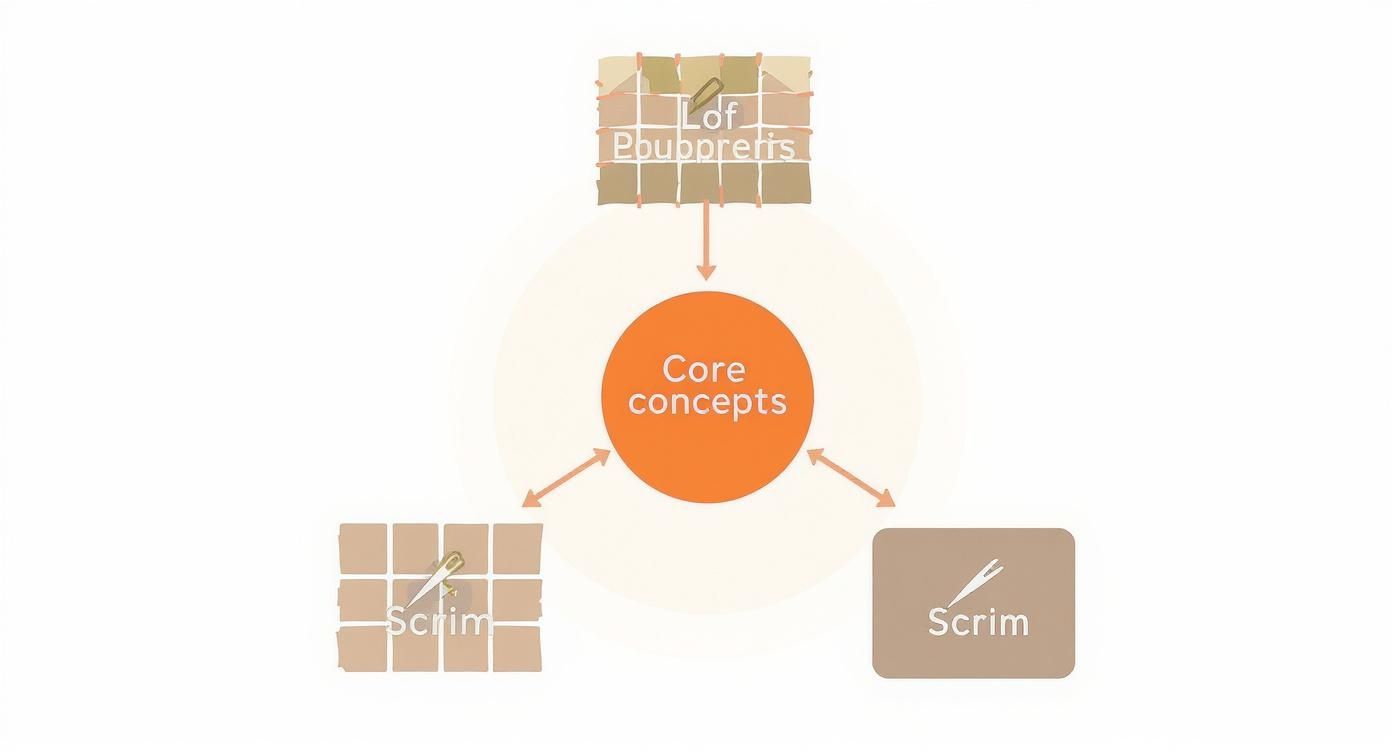
You can see how loft, scrim, and the way the batting is made are all connected, each playing a critical role in the final product.
Uncovering Scrim: The Hidden Stabilizer
Now, let's talk about scrim. Picture a very fine, almost invisible mesh net that's been fused to one side of the batting. That's scrim. It's a stabilizer that's needle-punched right into the cotton fibers, giving the whole thing incredible strength and stability.
This hidden layer is an absolute game-changer, especially for machine quilters.
Because batting with a scrim is so much stronger, you can place your quilting stitches much farther apart—sometimes as far as 8-10 inches—without ever worrying about the fibers shifting or bunching up in the wash.
Without scrim, you’d need to quilt far more densely, usually every 3-4 inches, just to keep everything from migrating. This is why batting with scrim is a favorite for long-arm quilters who want to create big, open, modern designs. That said, the extra density makes it tough for a needle to pass through, which is why we don't recommend it for hand quilting. If you're curious, you can learn more about what scrim in batting is and why it matters in our detailed guide.
Embracing Shrinkage for a Vintage Finish
Finally, there’s shrinkage. The word might sound a little scary, but in the quilting world, it’s often something we want! Most 100% cotton battings will shrink just a tiny bit (3-5%) the first time you wash them. This is the secret to that classic, charmingly crinkled look you see on heirloom quilts.
That gentle puckering is what gives a quilt its soft, lived-in texture. It’s that cozy, huggable feeling we all love.
If you’re aiming for a more modern, flat finish, you have a couple of options. You can pre-wash your batting to get the shrinking out of the way before you even start quilting. Or, you could opt for a cotton-poly blend, which typically has little to no shrinkage. By understanding how shrinkage works, you get to decide the final texture of your quilt—choosing between a vintage pucker or a sleek, contemporary look.
Finding the Right Batting for Your Quilting Style
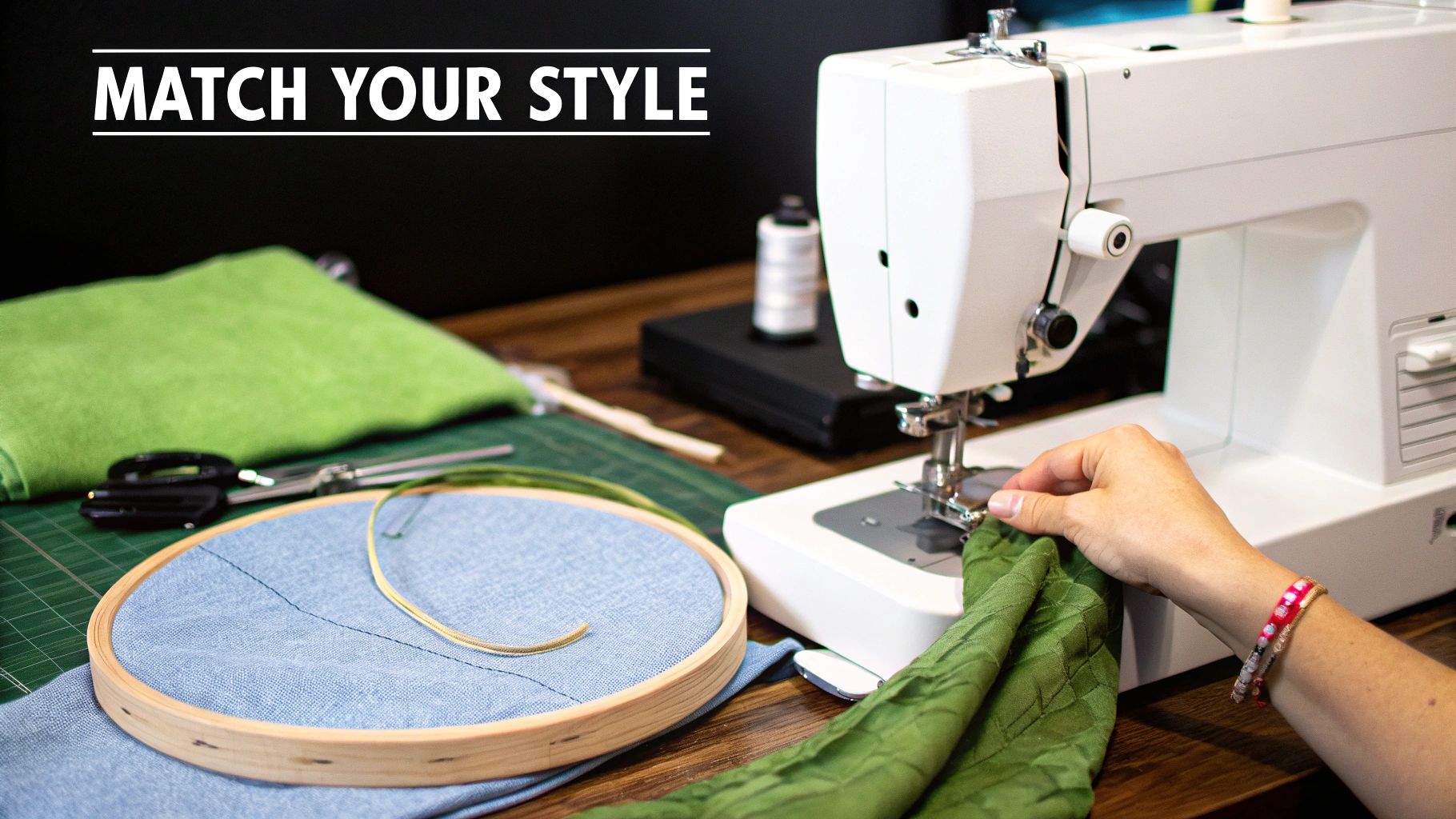
The best cotton batting isn't just a filling; it's a partner in your quilting process. Think of it like picking the right dance partner—you need one that moves with you, whether you're working by hand, on a domestic machine, or a long-arm. Choosing the right one is the secret to avoiding headaches and getting that beautiful finish you've been picturing.
A batting that a long-armer swears by could easily become a hand quilter's worst nightmare. So let's break down what works best for each quilting method to make sure your batting is helping you, not fighting you.
For the Hand Quilter: A Soft, Easy Touch
If you're a hand quilter, your needle is everything. You want its journey through the quilt sandwich to be as smooth and effortless as possible, stitch after stitch. The goal here is to find a batting that’s soft and consistent, not a dense layer you have to battle.
This is why 100% cotton batting without a scrim is your absolute best friend. A scrim is a thin stabilizer that adds strength, but it also adds a toughness that can make pushing a needle through by hand feel like a real chore. Without that scrim, the cotton fibers are lofty and forgiving, letting your needle glide right through.
For hand quilting, look for these features:
- Scrim-Free is a Must: Always, always choose a batting that specifically says it has no scrim. This is non-negotiable for a pleasant hand-quilting experience.
- Low Loft: A thinner, low-loft batting means you won’t be fighting extra fluff, making it much easier to create those beautiful, even stitches you're aiming for.
- All-Natural Fibers: A high-quality 100% cotton batting just feels right. It gives you that soft, traditional drape that perfectly complements the love and care you put into every stitch.
For the Domestic Machine Quilter: Balance and Control
Quilting on a home sewing machine is a wrestling match of its own. You're constantly maneuvering the entire quilt sandwich through a limited throat space. Your batting needs to be stable enough to handle all that pushing, pulling, and rolling without becoming an unmanageable monster.
The sweet spot is usually a low-to-mid loft cotton or an 80/20 blend, especially one with a scrim. That little bit of scrim adds just enough stability to prevent the batting from stretching or distorting as you guide the quilt under the needle—a real lifesaver when you're wrangling a larger project.
For quilting on a domestic machine, a stable, low-profile batting is key. It helps you keep control, prevents the fabric from bunching up, and makes sure your carefully pieced top stays flat for professional-looking stitches.
A lower loft also means less bulk to shove through your machine, which your shoulders will thank you for.
For the Long-Arm Quilter: Stability Is King
Long-arm quilting is a whole different ball game. It’s about speed, precision, and handling huge quilts with ease. The quilt is stretched taut on a frame while the machine head glides over the top. This process puts a unique kind of tension on the batting, making stability the number one priority.
This is where cotton batting with a scrim truly shines. The scrim provides the muscle needed to withstand the tension of the frame without tearing or stretching out of shape. It lets you create big, open quilting designs with stitches spaced as far as 8-10 inches apart, giving you incredible creative freedom.
Long-armers typically reach for battings with these traits:
- Scrim is Essential: It stops the batting from pulling apart as the machine moves across it, which is critical for getting those crisp, clean stitch patterns.
- Loft is Your Playground: While low loft is always a solid choice, a mid or even high-loft batting on a long-arm can create amazing texture and stitch definition, turning the quilting itself into a star feature.
- 80/20 Blends are a Favorite: Many long-arm quilters love 80/20 blends. They give you the stability of a scrim, the softness of cotton, and just enough polyester loft to really make your quilting patterns pop.
Exploring Cotton Blends And Organic Options
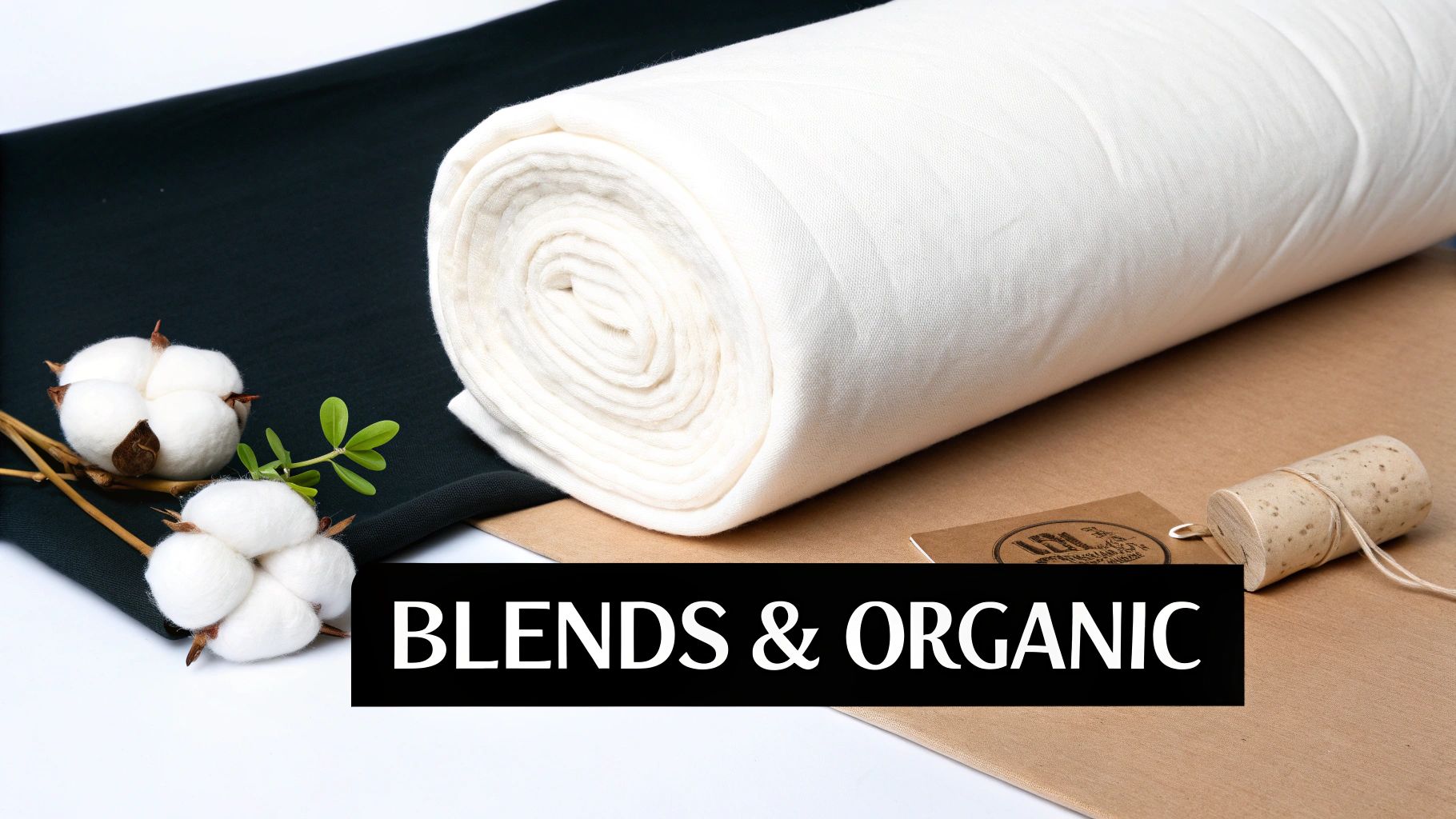
While 100% cotton batting is the tried-and-true classic, sometimes your quilt calls for something a little different. Stepping into the world of blends and organic options gives you the power to fine-tune your quilt’s performance, durability, and even its environmental story.
Think of it like being a chef. Sometimes a recipe calls for pure, simple ingredients. Other times, a blend of spices is what creates the perfect flavor profile. In quilting, adding another fiber to cotton can introduce fantastic new characteristics without sacrificing that classic cotton soul you love.
One of the most popular and versatile options out there is the 80/20 cotton/polyester blend. It's a true workhorse in the quilting world, combining the best of both fibers to create something both familiar and enhanced.
The Power of The 80/20 Blend
So, what happens when you add just a little bit of polyester (20%) to cotton batting? You get some seriously impressive benefits. Those polyester fibers add just a touch more loft than pure cotton, which helps your quilting stitches pop with beautiful definition.
This blend is also engineered for durability. The polyester component strengthens the batting, significantly reduces shrinkage, and helps the finished quilt resist creases. That makes it a fantastic choice for quilts destined for a lot of love and frequent washing, like a child’s bedspread or the family’s favorite sofa throw.
An 80/20 blend is the perfect compromise. You get the soft, breathable feel of cotton with the added stability, loft, and low-shrinkage performance of polyester. It's a hands-down favorite for both long-arm and domestic machine quilters for a reason.
Essentially, you get a quilt that holds up beautifully over time while being incredibly resilient.
Comparing Cotton vs Cotton Blend Batting
To really see the difference, let’s put them side-by-side. This table breaks down the key distinctions between 100% cotton and a common 80/20 blend, helping you decide which is the right fit for your next project.
| Feature | 100% Cotton Batting | 80/20 Cotton/Polyester Blend |
|---|---|---|
| Feel & Drape | Very soft, natural drape that gets softer with each wash. Creates a flat, traditional look. | Soft with slightly more body and loft. Drapes well while resisting wrinkles. |
| Shrinkage | Experiences noticeable shrinkage (3-5%), creating a classic puckered, "crinkled" look. | Minimal shrinkage (less than 2%), resulting in a smoother, more modern finish. |
| Durability | Naturally strong, but the blend is tougher for heavy-use items. | Excellent. Polyester fibers add strength, making it ideal for frequently washed quilts. |
| Stitch Definition | Good, but the flatter profile can make intricate stitching less pronounced. | Excellent. The added loft makes quilting stitches stand out beautifully. |
| Best For | Heirloom quilts, traditional designs, wall hangings, and projects where the crinkled look is desired. | Everyday quilts, children's quilts, modern designs, and projects needing extra durability. |
As you can see, the choice isn't about which one is "better" overall, but which one is better for your specific quilt and the look you want to achieve.
The Rise Of Organic Cotton Batting
For quilters who put natural materials and sustainability at the top of their list, organic cotton batting is a fantastic choice. This isn't just a marketing label—it represents a commitment to cleaner, healthier materials right from the farm.
Organic cotton is grown without synthetic pesticides or fertilizers. The result is a fiber that is exceptionally soft, pure, and gentle, making it the best cotton batting for quilts intended for babies or anyone with sensitive skin. It’s a choice you can feel good about, both for its quality and its eco-conscious origins.
Here’s how it stacks up against conventional cotton:
- Purity: It's free from harsh chemical residues, offering real peace of mind.
- Softness: Many quilters swear that organic cotton has a softer, more luxurious hand.
- Performance: It behaves just like its conventional counterpart, giving you the same breathability and beautiful antique crinkle after washing.
Thanks to a steady global supply, these high-quality options are readily available. With global cotton production forecasted at a massive 117.7 million bales annually, the industry can easily support both conventional and the growing organic sectors. You can dive deeper into the current cotton marketing statistics on amraandelma.com to see the sheer scale of this essential resource.
Whether you reach for a durable 80/20 blend for a well-loved quilt or pure organic cotton for a precious heirloom, exploring these options helps you make the perfect choice, every single time.
How to Buy and Prepare Your Batting
Getting the most out of your cotton batting starts long before you even thread your needle. A little smart shopping and prep work can be your secret weapon, saving you time, money, and a whole lot of headaches down the road. It’s all about making savvy choices that set your project up for success from the very beginning.
Whether you're trying to figure out how much batting to buy or wrestling with the age-old pre-washing debate, these practical tips will help you manage your supplies like a seasoned pro. Let’s make these first steps a seamless part of your creative process.
Choosing the Right Pre-Cut Size
One of the easiest ways to streamline your quilting is to just buy pre-cut batting. Manufacturers have made it simple by offering standard sizes that fit common bed dimensions. This is a fantastic way to minimize waste and skip the hassle of wrangling a massive piece of batting on your cutting floor.
You’ll find batting packaged and labeled for specific quilt sizes, which ensures you have just enough overhang for quilting without buying way too much material.
Common Pre-Cut Batting Sizes:
- Crib: Typically around 45" x 60"
- Twin: Approximately 72" x 90"
- Full/Double: Around 81" x 96"
- Queen: Generally 90" x 108"
- King: Often 120" x 120"
Before you buy, always measure your finished quilt top. You'll want about four extra inches of batting on all four sides. This little bit of "overage," as we call it, gives you crucial wiggle room for squaring up your quilt and handles any shifting that happens during the quilting process. Trust me, you’ll be glad you have it.
The Great Pre-Washing Debate
Ah, the big question: to pre-wash or not to pre-wash? This is one of the most talked-about topics in any quilting circle, but the answer is surprisingly simple. It all comes down to the final look you're going for.
The decision to pre-wash your cotton batting is a creative choice, not a technical requirement. It’s how you control whether your quilt has a flat, modern look or a classic, crinkled texture.
If you’re dreaming of that beloved, puckered, vintage vibe, then do not pre-wash your batting. The slight shrinkage (about 3-5%) of 100% cotton batting after that first wash is exactly what creates that beautiful, antique crinkle. The fabric and batting pull in together, giving the quilt that cozy, already-loved feeling.
On the other hand, if a perfectly flat, modern quilt is what you’re after, pre-washing is your best friend. Just soak the batting in cool water and let it air dry (or gently tumble it on low heat). This gets all the shrinkage out of the way before it goes into your quilt, ensuring your finished piece stays smooth and sleek, wash after wash.
Is Buying Batting by the Roll a Good Idea?
For those of us who are constantly starting a new project, buying batting by the roll is a total game-changer. Yes, the upfront cost is higher, but the price per yard drops significantly, which means real savings in the long run. This is especially true for longarm quilters and small studio owners.
So, when should you take the plunge and buy a roll?
- You Quilt Frequently: If you find yourself finishing more than three or four large quilts a year, a roll is probably a smart investment.
- You Have Storage Space: Let's be honest, rolls are bulky. You'll need a clean, dry spot to keep it, away from direct sunlight and curious pets.
- You Make Custom Sizes: A roll gives you the ultimate freedom to cut exactly what you need for any project—from a tiny wall hanging to a massive king-sized quilt—with minimal waste.
Buying in bulk not only saves money but also means you always have your favorite, trusted batting ready to go. If you're weighing the options, we have a helpful article that breaks down the benefits of buying quilt batting by the yard or by the roll. It can help you figure out when it’s the right time to make the switch.
Common Questions About Cotton Batting
Stepping into the world of cotton batting can sometimes feel like you're learning a whole new language. Just when you think you've got it all figured out, a new project throws a curveball your way. I've put together this little guide to answer the most common questions we hear from quilters every day.
Think of this as your go-to reference for those nagging "what if" and "how to" questions. Let's clear up the confusion so you can get back to quilting with confidence.
What Is the Best Cotton Batting for a Baby Quilt?
When you’re making a quilt for a precious little one, your priorities shift. It's all about softness, safety, and making sure it can survive a washing machine. The best cotton batting for a baby quilt is, without a doubt, a 100% natural or organic cotton batting with a low loft.
Why? Because natural cotton is incredibly breathable, which is so important for keeping a baby comfortable. It’s also naturally soft and gentle against sensitive skin. A low loft keeps the quilt from being too puffy or heavy, which is a key safety consideration for infants.
Here’s what to look for:
- Needle-Punched Without a Scrim: This gives you a batting that drapes beautifully and is a dream to quilt through, yet it’s still stable enough to handle being washed over and over again.
- Minimal Shrinkage: While that crinkly, vintage look is charming, a batting with controlled shrinkage helps the quilt keep its shape after countless trips through the laundry.
- Organic Option: For extra peace of mind, choosing an organic cotton batting means it was grown without synthetic pesticides or chemicals.
Can I Use Two Layers of Cotton Batting for Extra Warmth?
You absolutely can! Layering batting is a fantastic trick for creating an exceptionally warm and cozy quilt. It's my go-to method for quilts destined for chilly climates or for anyone who just loves the comforting weight of a heavier blanket.
The key is to get that warmth without creating a monster on your sewing machine. The best way to do this is by using two layers of a low-loft cotton batting. This gives you a quilt with a lovely, substantial feel and plenty of warmth, but it won’t be too bulky to handle.
When you're ready to baste, just treat the two layers as if they were one. Smooth both pieces of batting carefully over your backing fabric, making sure there are no wrinkles caught between them. Then, add your quilt top and baste as you normally would. As a bonus, this technique really makes your quilting stitches pop with gorgeous, deep texture.
How Far Apart Can I Quilt on Cotton Batting?
This is a big one. The answer directly affects how well your quilt will hold up over time. The recommended quilting distance is completely dependent on the specific batting you've chosen, and the golden rule is to always check the manufacturer’s instructions on the package.
Your quilting distance can be anywhere from 2 to 10 inches apart. What makes the difference? It all comes down to whether or not your batting has a scrim.
A scrim is a very thin, grid-like stabilizer that's needle-punched right into the batting. It’s a game-changer for strength, preventing the cotton fibers from shifting or bunching up over the years.
Here’s a simple way to think about it:
- Batting With a Scrim: This stuff is super stable, so you can get away with much wider quilting distances—often up to 8-10 inches apart. It’s a favorite for long-arm quilters doing modern, open designs.
- Batting Without a Scrim: This batting is softer and a dream for hand quilters, but it needs more help staying put. You'll need to quilt it much more closely, usually around 2-4 inches apart.
Don't be tempted to fudge these numbers! If you quilt too far apart on a scrimless batting, the fibers will eventually start to migrate and clump together, which can ruin the feel and look of your beautiful work.
Does Cotton Batting Have a Right or Wrong Side?
This is one of those subtle details that can actually make a big difference in how smoothly your quilting goes. For most basic 100% cotton battings, there’s no right or wrong side. You can lay it down either way without a problem.
However, there are a couple of times when you'll want to take a closer look.
If your batting is needle-punched, you might notice that one side has tiny dimples or holes from the needles. This side often feels a bit smoother. Many quilters (myself included!) prefer to place this smoother side against the quilt top for the cleanest finish.
The most important time to pay attention is when your batting has a scrim. The scrim is only on one side of the batting—you can usually feel it as a slightly rougher or more textured surface. The general rule of thumb is to place the scrim side facing up, toward your quilt top. This gives your quilt sandwich the best stability as you quilt.
When in doubt, your batting's packaging is your best friend. A quick check can save you a headache later and ensure you get the best performance from your batting every single time.
At Quilt Batting, we’re here to provide the high-quality materials you need to bring your creative vision to life. Explore our wide selection of premium cotton and cotton-blend battings, available by the roll for projects of any size. Find the perfect foundation for your next quilt today!