

That gorgeous potholder you’re dreaming up is more than just a pretty kitchen accessory—it’s a first line of defense. The secret to making it actually work is the heat resistant batting you tuck inside. This is the stuff that stands between your hand and a scorching hot pan.
Crafting Potholders That Truly Protect
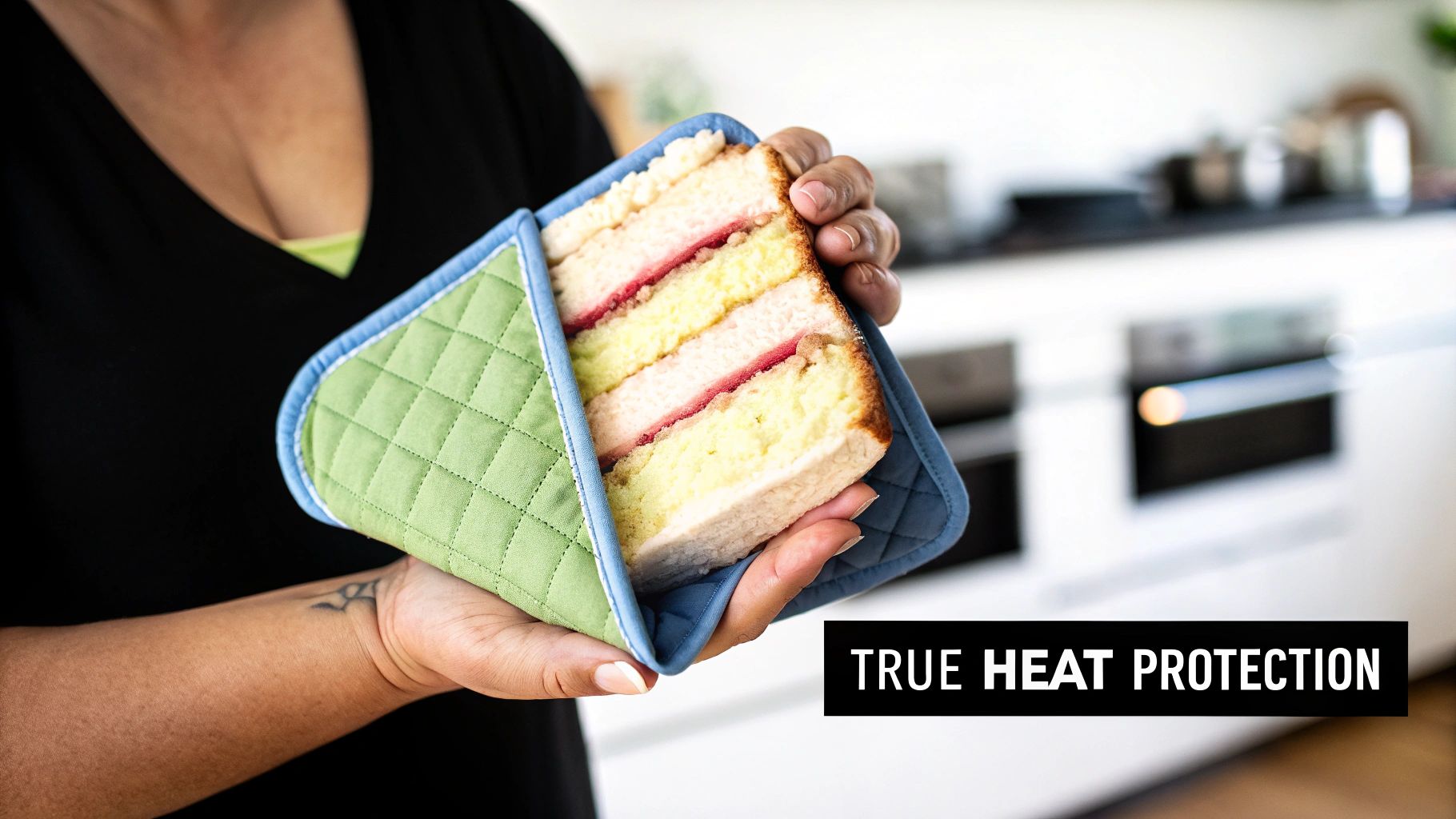
It's so easy to get caught up in picking the perfect fabrics and planning those beautiful quilting lines. And while that's the fun part, the real hero of a potholder is the material you can't even see. The batting is what makes it a functional tool, not just a decorative piece.
Without the right core, even the most stunningly stitched potholder will let you down when you need it most, leading to a nasty burn.
Think of it this way: a winter coat isn't warm because of its outer shell; it's the puffy insulation inside that traps heat. A potholder works on the same principle, but in reverse. It needs specialized batting designed to slow down heat transfer, buying you those crucial seconds to safely move a hot dish from the oven to the counter.
Understanding Your Material Options
When you walk into the batting aisle, you've got a few solid choices, and each one brings something different to the table. Knowing the pros and cons is key to making a potholder you can trust.
- 100% Cotton Batting: This is the classic, go-to choice for many quilters. It’s a natural fiber that offers decent insulation, breathes well, and is a breeze to sew. For serious heat, though, you’ll definitely want to double it up.
- Thermal Batting: Here's where the real magic happens. Materials like Insul-Bright are engineered specifically for heat. They have a special metallized film inside that reflects heat away from your hand. This gives you a much higher level of protection than cotton alone. You can see exactly how this insulating thermal lining works to get a better idea.
- Wool Batting: Don't forget about wool! This natural fiber is a fantastic insulator and is inherently flame-resistant, which is a huge plus for anything used near a stove. It’s a seriously strong contender for any heat-related project.
Choosing the right heat resistant batting for potholders is where your project goes from "handmade" to "genuinely safe." It's about building a reliable kitchen tool that you can count on, day in and day out.
How Heat Resistant Batting Actually Works
Ever wondered what's really going on inside your potholder when you grab a sizzling pan right out of the oven? It's not magic, but it's some pretty clever material science at play. The best heat-resistant batting works a lot like a high-quality thermos, creating a barrier that dramatically slows down how fast heat can travel from the pan to your hand.
Think about pouring hot coffee into a thermos. The space between the inner and outer walls is what keeps the outside from getting hot. Potholder batting does the same thing, but instead of a vacuum, it uses dense fibers to trap countless tiny pockets of air. Since air is a terrible conductor of heat, it acts as a fantastic insulator.
This simple but effective science is why quality kitchen safety gear is in such high demand. The market for pot holders and oven mitts has exploded, with products rated for up to 500°F leading the pack. It's a clear signal that home cooks are getting savvy—in fact, up to 80% of buyers now say high-performance heat resistance is a top priority. You can see this trend reflected in the top-selling pot holders on Accio.com.
The Three Types of Heat Transfer
To really get a feel for how your batting is protecting you, it helps to know the three ways heat tries to get to your hand. Your potholder is designed to fight all three at once.
-
Conduction: This is heat moving through direct touch. The second your hot pan makes contact, its energy starts transferring to the potholder's fabric. A dense cotton batting is a master at slowing this down because the heat has to navigate a tangled maze of fibers.
-
Convection: This is heat moving through the air. Those tiny air pockets trapped inside the batting are your secret weapon here. They break up the flow of heat, stopping it from creating a direct path to your skin.
-
Radiation: This is heat that travels as invisible waves, like the warmth you feel from a campfire even when you're not touching it. This is where thermal battings like Insul-Bright really shine. Their special metallized film acts like a mirror, reflecting those heat waves right back where they came from—away from your hand.
Why Material Structure Matters
The way the batting is constructed is just as crucial as what it's made of. A loose, airy batting might feel thick, but it will flatten like a pancake under a heavy cast iron skillet. When that happens, all those protective air pockets disappear, and so does your protection.
This is exactly why dense, needle-punched cotton, especially one with a scrim for reinforcement, is so much better for the job. It holds its shape and keeps those insulating air pockets intact.
A strong internal structure keeps the batting from bunching up or getting thin spots after a few washes. That means you get consistent, reliable protection every single time you use it. You can learn more about how this structure works by exploring our guide on what scrim is in batting.
Once you understand these basics, you're no longer just following a pattern—you're making smart, informed decisions. You can confidently pick and layer your materials to create potholders that aren't just pretty, but provide real, trustworthy protection from nasty kitchen burns.
Comparing The Top Batting Materials For Potholders
Choosing the right batting is the single most important decision you'll make for your potholder project. It’s what separates a charming kitchen decoration from a reliable safety tool that actually protects your hands. Let’s cut through the confusion and look at the top contenders side-by-side, focusing on how each one really performs when the heat is on.
The batting you choose all comes down to the job you need your potholder to do. Sometimes you need serious protection, and other times, well, you don't.
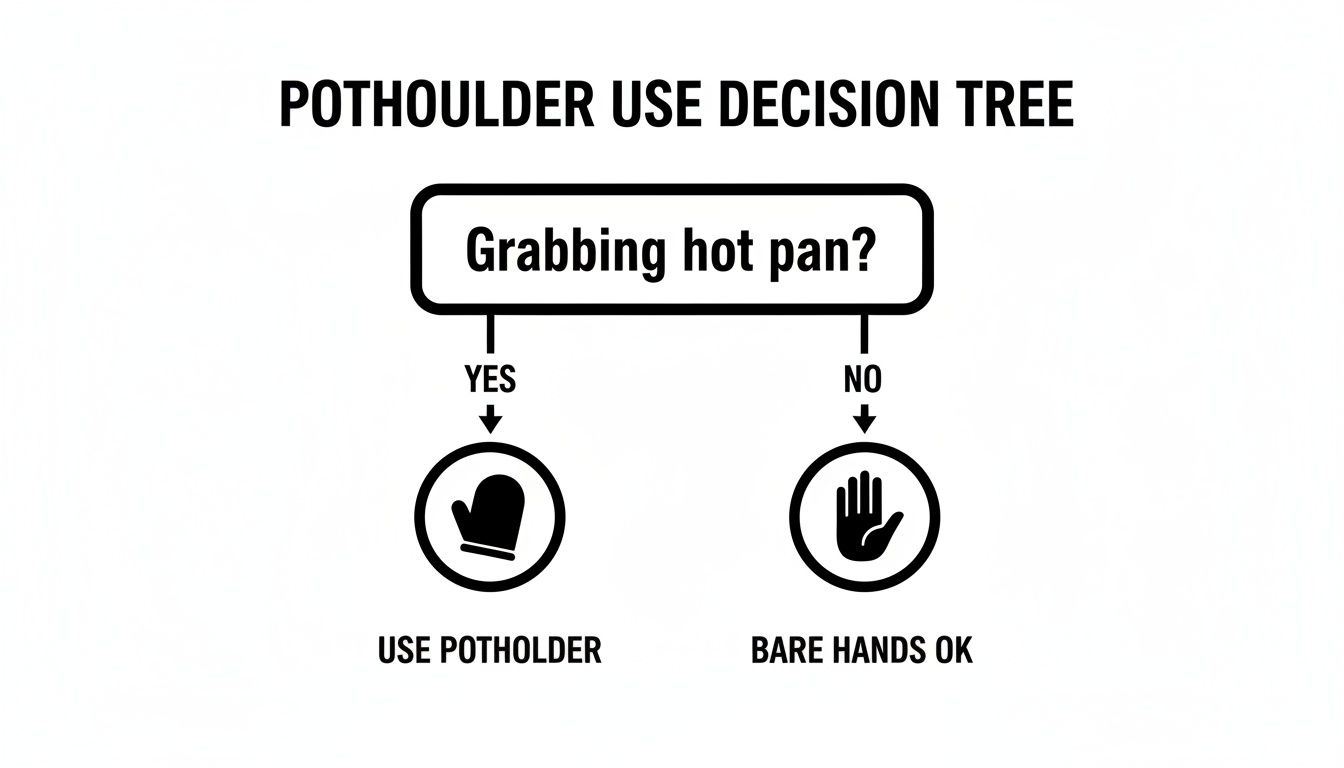
As you can see, anytime your hand gets near a hot surface, having the right gear is the only way to prevent a nasty burn.
Heat Resistant Batting Comparison Chart
To make things even clearer, here's a quick-reference chart. Think of it as your cheat sheet for picking the perfect batting for your next project.
| Batting Type | Primary Fiber | Heat Resistance | Best For | Microwave Safe? |
|---|---|---|---|---|
| 100% Cotton | Natural Cotton | Good | Everyday potholders, trivets | Yes |
| Thermal Batting | Metallized Polyester | Excellent | Heavy-duty oven mitts, casserole carriers | No |
| Wool | Natural Wool | Excellent | Premium oven mitts, trivets | Yes |
This chart gives you a great starting point, but let's dive a little deeper into what makes each of these materials tick.
The All-Natural Workhorse: 100% Cotton Batting
Pure cotton batting is a classic for a reason. It's a natural fiber that handles heat well, it’s a dream to sew with, and it holds up beautifully wash after wash. Think of it as the reliable foundation of your potholder—it absorbs heat slowly and creates a good, dense barrier between you and that hot pan.
But let's be realistic. For yanking a pan out of a 450°F oven, a single layer of cotton just won't cut it. Its real strength is in layering. For most of my potholders, I find that using two layers of 100% cotton batting gives a safe, flexible level of protection for everyday kitchen tasks.
The Specialized Protector: Thermal Batting
When you need serious, no-messing-around heat protection, you bring in the specialist. Thermal batting like Insul-Bright is the undisputed champion here. This stuff is engineered with a metallized polyester film that literally reflects heat away from your hand, working alongside insulating fibers. It's the secret ingredient for potholders meant to handle screaming-hot cast iron or pans pulled from under the broiler.
A key thing to remember is that thermal batting is heat-resistant, not heat-proof. The manufacturer strongly recommends always pairing it with at least one layer of cotton batting. The cotton absorbs heat while the thermal layer reflects it, creating a powerful one-two punch.
This combination truly gives you the best of both worlds. You get superior protection without creating a potholder so stiff and bulky that you can't get a good grip on a pan handle.
The Premium Insulator: Wool Batting
Don't sleep on wool! This powerhouse natural fiber is an exceptional insulator, trapping air far more effectively than cotton. It also has a secret weapon: it's naturally flame-resistant. That means it won’t easily melt or catch fire if it briefly touches a direct flame, adding a fantastic layer of safety to your kitchen.
Wool batting creates a wonderfully lofty, cushioned potholder that just feels substantial and secure in your hand. While it is a more premium option, its superior insulating power and built-in safety features make it a worthwhile investment, especially for heavy-duty oven mitts and trivets that will see a lot of action.
To see how these materials stack up against even more options, you can explore a detailed quilt batting comparison chart that breaks down fiber content, loft, and recommended uses. It's a great resource for visualizing where each material shines.
Ultimately, the best heat resistant batting for potholders often comes from mixing and matching these materials, letting you leverage their unique strengths for maximum safety and durability.
The Art of Layering for Maximum Heat Protection
When you’re pulling a sizzling pan from the oven, a single layer of batting just isn’t going to cut it. Think of a firefighter’s turnout gear—it’s not one thick material, but a system of layers working together to block intense heat. That’s the same principle we need to apply to our potholders.
Real protection comes from a smart combination of materials. We’re not just stacking layers for thickness; we’re building a powerful insulating barrier. The trick is to pair an absorbent material, like dense cotton batting, with a reflective one, like a thermal batting. The cotton slows heat down, while the thermal layer literally bounces radiant heat away. This one-two punch is dramatically more effective than relying on a single type of protection.
Of course, there’s a sweet spot. While skimping on layers is a recipe for a nasty burn, going overboard creates its own problems. A potholder that’s too thick and stiff is a safety hazard in itself, making it nearly impossible to get a firm grip on a heavy pot. The goal is to find that perfect balance: a potholder that’s protective enough for the job but flexible enough to use confidently.
Proven Layering Recipes for Safety
Let's take the guesswork out of it. Here are a couple of my favorite, time-tested layering combinations that you can trust for different jobs in the kitchen.
-
The Everyday Standard (For general use, up to 400°F): This is your perfect setup for grabbing cookie sheets from the oven or handling hot pot lids.
- One layer of 100% Cotton Batting
- One layer of Thermal Batting (like Insul-Bright)
-
The Heavy-Duty Hero (For cast iron and high heat): When you’re dealing with a cast iron skillet or a Dutch oven pulled from a 500°F oven, you need some serious stopping power.
- Two layers of 100% Cotton Batting
- One layer of Thermal Batting
A Quick Tip: Always sandwich your thermal batting between the outer fabric and a layer of cotton. You never want the shiny, metallic side facing out—it can scorch right through your pretty fabric when you press it with an iron.
Specialized heat resistant batting for potholders, particularly Insul-Bright, has become a go-to for a reason. It adds a measurable boost of protection, giving you a few extra, crucial seconds of handling time. For really intense heat—like a trivet that needs to handle a 500°F pan—many seasoned makers swear by a five-layer structure.
By learning to layer your materials thoughtfully, you’re doing more than just making a kitchen accessory. You’re engineering a serious piece of safety gear. For a deeper dive into what works best, check out this great resource on the best batting configurations for potholders.
From Homemade to Pro-Made: Construction Tips for Potholders That Last
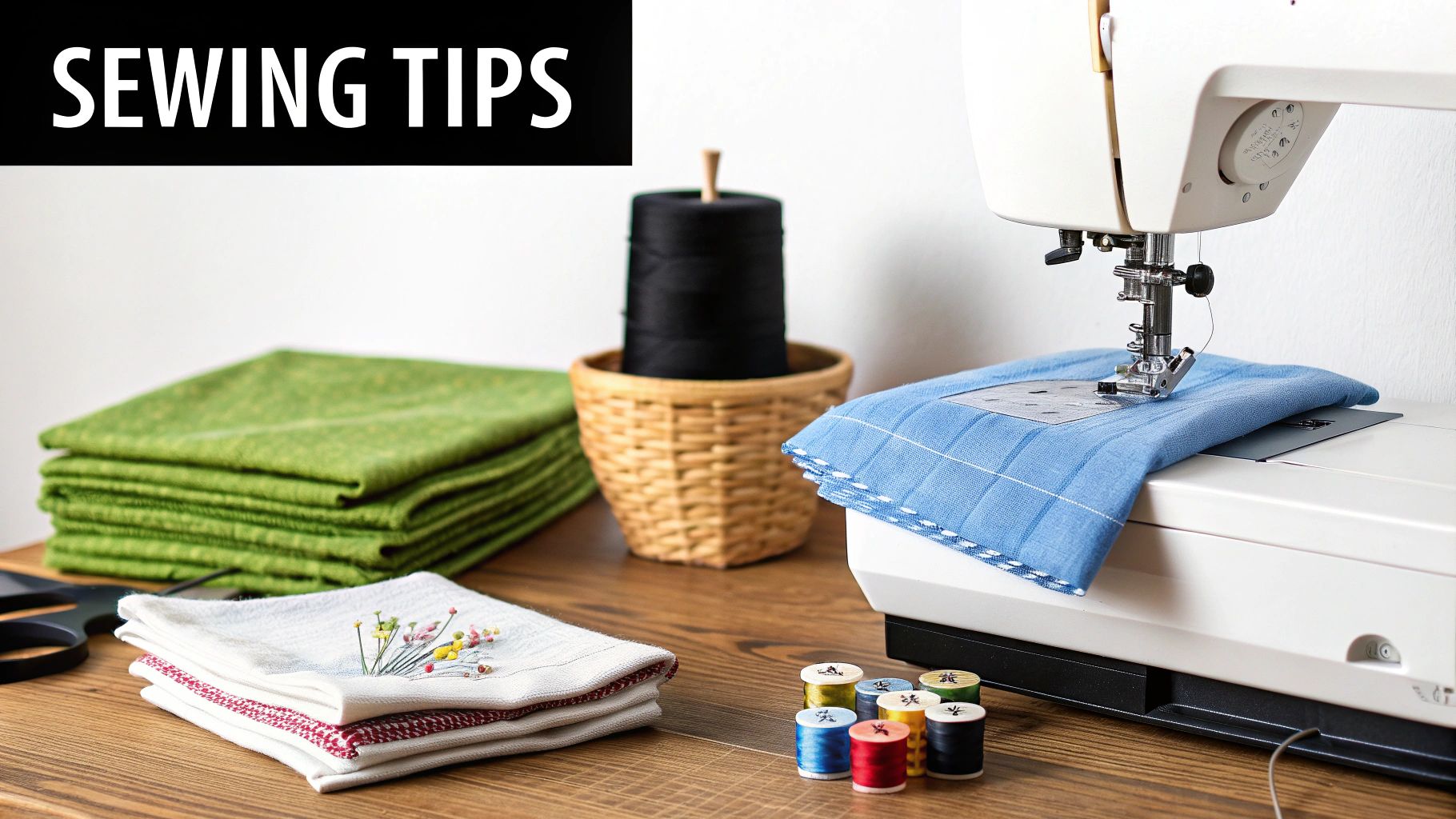
The difference between a potholder that's just "okay" and one that becomes a reliable kitchen workhorse lies in the small details. It’s easy to rush through a small project, but skipping a few key steps can leave you with a lumpy, misshapen potholder that gives up after a few washes. Let's walk through the techniques that will make your projects look and feel professional.
First things first: pre-washing. I know, I know, it's tempting to skip, but this is one of the most critical steps. Your cotton fabric and natural fiber batting are absolutely going to shrink, and that’s the one thing guaranteed to warp an otherwise perfect potholder after its first encounter with the washing machine.
Believe it or not, natural cotton batting can shrink anywhere from 3 to 5 percent. That might not sound like much, but on a small item, it's enough to pull everything out of shape. Pre-washing gets all that shrinkage out of the way before you sew a single stitch, so your hard work stays flat and square for years to come. If you want to see this in action, you can discover more insights about batting shrinkage and how different types react.
The Right Quilting and Thread Make All the Difference
With your materials prepped, it's time to think about quilting. This isn’t just for looks—it’s the functional skeleton of your potholder. Dense quilting lines are what keep the batting from shifting, bunching up, or separating over time. A good rule of thumb is to space your quilting lines about 1 to 2 inches apart; this provides plenty of stability without making the potholder too stiff.
And please, whatever you do, use the right thread! For anything that will get near a hot stove or oven, 100% cotton thread is non-negotiable. Polyester thread has a much lower melting point. One accidental touch to a hot pan, and that polyester thread can melt, causing your seams to literally fall apart at the worst possible moment.
Potholder Pitfalls: Simple Mistakes to Avoid
Even seasoned quilters can get tripped up by a few common potholder mistakes. Keep these in mind, and you'll save yourself a world of frustration.
- Never Iron Thermal Batting Directly: That shiny, metallic side on products like Insul-Bright will melt instantly if it touches a hot iron. It creates a sticky, gooey mess on your iron plate that’s a nightmare to clean. Always keep it safely sandwiched between your fabric layers.
- Don't Fight Your Machine with the Wrong Needle: You're asking a lot of your sewing machine to punch through multiple thick layers. A standard needle just won't cut it and will likely lead to skipped stitches. Swap it out for a heavy-duty denim or quilting needle, usually a size 90/14 or 100/16, for clean, strong stitches.
- Remember to Clip Your Curves: This tiny step makes a huge difference. Before turning your potholder right-side out, snip little notches into the curved seam allowances and trim the corners diagonally. This removes the extra bulk, allowing your seams to lay flat for a crisp, professional finish.
If you’re working on a project that needs a bit more structure but you don’t want to quilt it so densely, you might find our guide on how fusible batting for quilts can simplify construction really helpful.
Your Potholder Batting Questions, Answered
Even when you have a pattern in hand, diving into a new project can bring up a lot of questions. That’s perfectly normal. Getting the right answers from the start is what builds your confidence and helps you avoid those frustrating, project-ending mistakes.
Let's walk through some of the most common questions I hear about choosing the right heat resistant batting for potholders. Getting these details right will help you sew with total peace of mind, knowing your creations are as safe as they are beautiful.
Can I Just Use Regular Quilt Batting for My Potholders?
It’s a fair question, and a tempting shortcut, but using regular polyester quilt batting for a potholder is a serious safety no-go. Polyester has a really low melting point. If it touches something truly hot, it can actually melt, transferring that intense heat right through to your skin and causing a nasty burn. It’s just not built for that kind of direct heat.
Now, a 100% cotton batting is a much better starting point. Cotton has some natural heat resistance and is definitely a safer choice than polyester. The problem is, it often isn't enough on its own. It might not provide the insulation you need to confidently grab a cast iron skillet or a pan coming out of a 450°F oven.
The secret to truly effective potholders is layering. When you combine a layer of 100% cotton batting with a specialized thermal batting like Insul-Bright, you get the best of both worlds. The cotton absorbs heat, while the thermal batting’s metallic film reflects it away. It's a powerhouse combination that gives you protection neither one could offer alone.
What Is the Safest Batting for Microwaveable Bowl Cozies?
This is one area where there is absolutely no room for compromise. When you're making something that will go directly into the microwave, safety is everything. The wrong materials can literally start a fire.
First rule: never, ever use a thermal batting with a metallic film (like Insul-Bright) in a microwave project. Those tiny metal particles will arc and spark, and can easily set your fabric ablaze.
For anything you make for the microwave, every single component has to be 100% microwave-safe. Think from the inside out:
- Fabric: 100% Cotton
- Thread: 100% Cotton
- Batting: A product made specifically for the microwave, like Pellon's Wrap-N-Zap.
Wrap-N-Zap is the gold standard for a reason. It’s made from dense, 100% natural cotton fibers, which means there’s nothing in it that can spark or melt. It's what you need for safe and reliable microwave bowl cozies, baked potato bags, or tortilla warmers.
How Should I Care for My Handmade Potholders?
A little bit of care goes a long way in keeping your handmade potholders safe and functional. Over time and with use, any batting can start to compress or get thin spots, which become dangerous weak points where heat can sneak through.
You can machine wash most potholders made with cotton and thermal batting in cool or warm water on a gentle cycle. I personally prefer to tumble dry them on low or just lay them flat to air dry. This helps minimize any extra shrinkage and keeps the batting from getting too compacted.
Make it a habit to give your potholders a quick inspection now and then. Look for holes, overly compressed areas, or spots that feel thin. And remember, a potholder’s ability to protect you drops way down if it gets wet or greasy. Always make sure your potholder is clean and bone-dry before you grab that hot dish.
Is Buying Batting by the Roll a Good Idea for Potholders?
Honestly, if you find yourself making potholders on the regular—whether for gifts, craft fairs, or your own Etsy shop—buying your batting by the roll is one of the smartest moves you can make. The savings are huge. Your cost per project plummets compared to what you’d pay for those small, pre-cut bags at the big-box craft store.
Beyond the savings, it’s just so convenient. Having a roll on hand means you’ve always got consistent, high-quality material ready to go when inspiration strikes. It makes batching out a dozen potholders a breeze, letting you cut everything at once with very little waste. For any serious maker, it’s an investment that pays for itself in no time.
Ready to stock up on the best materials for your next project? At Quilt Batting, we offer a wide selection of premium batting by the roll, including 100% cotton and microwave-safe options perfect for all your crafting needs. Explore our full collection and find the perfect foundation for your potholders today at https://quiltbatting.shop.