

If you've ever admired a quilt that's both wonderfully puffy and surprisingly light, you've likely seen polyester batting in action. It's the synthetic, tough, and budget-friendly soul of countless quilts, giving them warmth and dimension without weighing them down. This workhorse material is a quilter’s favorite for good reason—it holds its shape beautifully and stubbornly resists shrinking, making it perfect for everything from cozy bedspreads to baby quilts that see the inside of a washing machine on a regular basis.
What Is Polyester Batting and Why Do Quilters Use It?
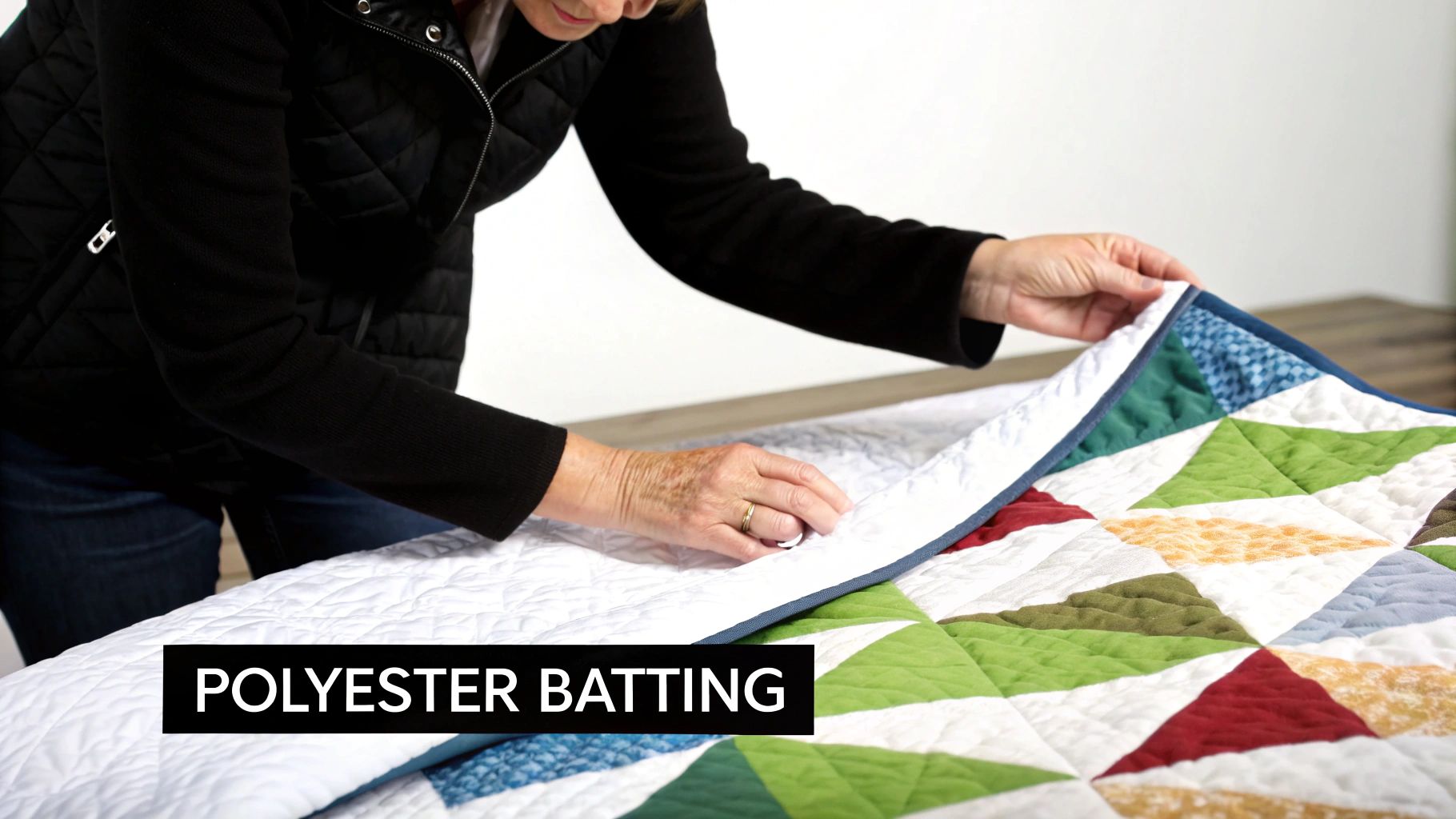
Think of batting as the heart of your quilt. It’s that all-important middle layer tucked between your pieced top and backing fabric. Its job is to provide the warmth, the structure, and that wonderfully tactile, puffy texture we all love. Polyester batting, specifically, is made from synthetic polyester fibers, creating a filling that’s known for being incredibly practical and versatile.
Unlike natural fibers like cotton or wool, polyester is engineered from the ground up for performance. It’s unbelievably resilient, meaning it springs right back into shape and says "no thanks" to creases and wrinkles. This bounce-back quality makes it a fantastic choice for quilts that get folded, stuffed in a closet, or used and abused on a daily basis.
Another huge plus? It's naturally resistant to mold and mildew. That's a game-changer if you live somewhere humid or for quilts that spend part of the year in storage.
The Rise of a Quilting Workhorse
Polyester batting isn't just another option on the shelf anymore—it has truly become a market leader. In fact, it's the fastest-growing segment in the entire quilt batting world, projected to hit an impressive CAGR of 9.2% through 2034.
This surge in popularity comes down to its killer combination of affordability and durability. It just makes sense for so many quilters. With the total quilt batting market valued at USD 1.2 billion in 2024 and expected to more than double, polyester's practical advantages have cemented its place as a top choice across the globe.
Modern manufacturing has also taken polyester batting to a whole new level. The best versions today are often made using techniques like needle-punching or thermal bonding.
- Needle-punching uses thousands of tiny needles to mechanically tangle and lock the fibers together. This creates a dense, stable sheet that won't shift or pull apart.
- Thermal bonding applies heat to gently melt and fuse some of the fibers, locking them in place. This dramatically reduces the chances of "bearding"—that annoying thing where tiny fibers poke through your quilt top.
These modern construction methods mean today's polyester is worlds away from the stuff our grandmothers used. You get incredible stability and a smooth finish, without any of the frustrating bunching that could once ruin a beautiful project.
Why It's a Go-To for Modern Quilters
For so many quilters, from those just starting out to seasoned pros, polyester batting is a brilliant problem-solver. If you're new to quilting, you'll appreciate how forgiving it is. It's easy to handle and doesn't demand super-dense quilting to stay put.
On the other hand, experienced quilters love its potential for high-loft drama. If you want your quilting stitches to really pop with texture and definition, a puffy polyester batting is the way to go.
So, if you're searching for a batting that's both dependable and easy on your wallet, polyester is the undisputed workhorse of the quilting world. To see exactly how it compares to other choices, check out our guide on the different types of quilt batting.
Choosing Your Fiber: Polyester vs. Cotton and Wool
Stepping into the batting aisle can feel overwhelming. You’ve got the familiar comfort of cotton, the luxurious warmth of wool, and the dependable, modern performance of polyester. So, which path do you take?
Honestly, there's no single "best" answer—only the best choice for your specific quilt.
The secret is to think about the quilt's future life. Is it a showpiece destined for a gallery wall, or is it going to be dragged around the house, built into forts, and loved to pieces by a toddler? That one simple question is your best guide to picking the perfect batting fiber.
A delicate, hand-quilted masterpiece might call for the soft, lofty drape of wool to really show off those stitches. But for a baby quilt that needs to survive weekly (or daily!) washes, polyester's resilience and hypoallergenic nature make it the undisputed champion. It’s all about matching the material to the mission.
Polyester: The Practical Powerhouse
When durability and easy care are at the top of your list, polyester batting is where you turn. It’s the true workhorse of the quilting world, engineered for a long and useful life.
Polyester really shines in a few key areas, which is why so many quilters love it for everyday projects:
- Superior Washability: You can machine wash and dry it over and over again without worrying about shrinking, bunching, or losing its loft.
- Hypoallergenic: Since it's a synthetic fiber, it’s a go-to choice for anyone with sensitivities to wool or other natural materials.
- Lightweight Warmth: It provides fantastic insulation without weighing the quilt down, making it perfect for cozy but manageable bed quilts.
This practical nature is a huge reason for its popularity. In fact, polyester batting consistently captures a market share of 35-40% alongside cotton, thanks in large part to its budget-friendly price point—often 25-50% lower than wool. When U.S. quilting participation surged by 22% after 2020, these new quilters needed durable, affordable materials for their projects, and polyester was ready.
Cotton: The Classic Traditionalist
Cotton batting offers a totally different experience, one that’s steeped in quilting tradition. It gives quilts that classic, flat appearance that just gets softer and crinklier with every single wash—that beloved antique look we all adore.
Think of cotton when you want to create an instant heirloom feel. It’s a bit heavier than polyester and drapes beautifully, hugging the body with a comforting weight. As a natural, breathable fiber, it's also an excellent choice for quilts in warmer climates or for anyone who sleeps hot.
The trade-off? Cotton usually needs your quilting lines to be a little closer together to prevent the fibers from shifting. It will also shrink just a touch after that first wash, but for quilters chasing that vintage, puckered texture, that’s a feature, not a flaw. You can dive deeper into these differences in our detailed comparison of cotton vs. polyester batting.
Wool: The Luxurious Insulator
Then there’s wool, the premium choice. It offers unparalleled warmth and a springy, resilient loft that has to be felt to be believed. Wool has a "memory" that helps it resist creases, so a quilt made with wool batting will bounce back beautifully even after being folded away for storage.
Wool is incredibly breathable and can absorb moisture without feeling damp, keeping you comfortable in a wide range of temperatures. It’s a fantastic choice for show quilts where you want your quilting stitches to have magnificent definition and puff.
The main considerations here are cost and care. Wool batting is the priciest of the three and often requires more delicate washing. For some, potential wool allergies can also be a factor.
Polyester vs Natural Fiber Batting At a Glance
To make the choice a little easier, here’s a quick side-by-side look at how these fibers stack up. Think of this as your cheat sheet for the batting aisle.
| Feature | Polyester Batting | Cotton Batting | Wool Batting | Poly-Cotton Blend |
|---|---|---|---|---|
| Feel & Drape | Lightweight, lofty, smooth drape | Flatter, gets softer with washing, comforting weight | Lofty, bouncy, springy, light | Combines softness of cotton with stability of poly |
| Shrinkage | Very low to none | 3-5% (creates puckered, vintage look) | Low to none | Low (about 1-3%) |
| Warmth | High warmth for its weight | Medium warmth, very breathable | Highest warmth, excellent insulator | Good warmth, breathable |
| Durability | Excellent, stands up to frequent washing | Good, but needs closer quilting | Very resilient, resists creases | Very durable, stable |
| Best For | Everyday quilts, kid's quilts, charity quilts | Traditional quilts, wall hangings, heirloom look | Show quilts, cold climates, luxury throws | Garments, quilts needing stability and softness |
| Allergies | Hypoallergenic | Natural fiber, generally low-allergen | Can be an allergen for some | Hypoallergenic due to poly content |
Ultimately, choosing between these fibers isn't about which one is "better" in a vacuum. It's about finding the perfect partner for your creative vision and the life your quilt is meant to live.
Understanding Polyester Loft and Construction
When you pick out a polyester batting for your next quilt, you’re doing more than just choosing a filling. You're actually deciding on the final texture, thickness, and stability of your project. Two little words make all the difference here: loft and construction. Once you get a feel for what these mean, you’ll stop guessing and start choosing your batting with complete confidence.
Think of loft as just a fancy word for thickness or puffiness. It's all about how much air is trapped between the fibers, and that directly controls the finished look of your quilt. A batting's loft is really the main thing that decides if your quilt will have that flat, traditional look or a puffy, comforter-like vibe.
Getting the loft right is simply about matching the batting to what you have in mind for your quilt. A low-loft batting is thin and lays flat, while a high-loft one is thick, airy, and full of dimension.
Decoding Polyester Loft Levels
Let's break down the three main loft levels you'll see on the shelf and what they actually mean for your quilting projects. Each one gives you a totally different result.
-
Low Loft: This is your best friend for creating a flat, modern look. Low-loft polyester batting is quite thin (usually around 1/8 to 1/4 inch thick), which lets your detailed piecing and stitching really shine. It’s perfect for things like wall hangings, placemats, and table runners where you want to avoid extra bulk.
-
Medium Loft: This is the versatile, do-it-all option. Medium loft gives you a gentle puffiness that adds texture without overpowering your quilt top. It provides great stitch definition and is a fantastic all-around choice for bed quilts, lap quilts, and cozy kids' blankets where you're aiming for that sweet spot between softness and structure.
-
High Loft: When you want your quilt to be as plush and cloud-like as possible, high loft is the only way to go. This batting is thick and full of air (often 1/2 inch or more), creating deep, dramatic shadows around your quilting lines that make them pop. It's the ideal pick for tied quilts, comforters, and any project where a super cozy, three-dimensional feel is the goal.
Your choice of loft directly shapes the quilt's final drape and how your quilting shows up. If you need it to lie perfectly flat, go with a low loft. If you want it to feel like a warm hug, grab a high loft.
How Batting Construction Affects Your Quilt
Besides thickness, the way a batting is put together—its construction—determines how stable and durable it is. This internal structure is what keeps the fibers from shifting around, bunching up, or poking through your fabric (the dreaded "bearding"). The two most common methods you'll run into are bonded and needle-punched.
Bonded Batting
With this method, the polyester fibers are held in place using either a heat treatment or a very light spray of adhesive resin. This creates a really consistent and stable sheet of batting that doesn't stretch or get distorted easily. Bonded battings are famous for being soft, a dream to work with, and less likely to beard.
Needle-Punched Batting
This process is a bit more mechanical. Thousands of tiny, barbed needles punch through the fibers, tangling and interlocking them together. The result is a much denser and stronger batting. Because the fibers are locked so tightly, needle-punched battings often let you get away with quilting your lines much farther apart. Many of them also include a scrim—a super thin, non-woven layer added to one side for even more strength. If you're curious, you can learn all about what scrim is in batting and how it can make a big difference in your work.
Getting a handle on both loft and construction gives you the power to choose a polyester batting that not only looks exactly how you imagined but will also hold up beautifully through years of snuggling and washing.
Finding the Perfect Polyester Batting for Your Project
Choosing the right polyester batting is a bit like casting a character in a play—you need the right fit for the role your quilt will perform. This is where we move past the technical specs and into the creative magic. By really understanding what polyester does best, you can make choices that are both inspired and practical.
So, before you even look at a roll of batting, ask yourself a simple question: What is this quilt's destiny? Is it a well-loved baby blanket? A decorative wall hanging? A cozy bedspread? Figuring out how it will be used, washed, and loved is the key to picking the perfect batting, ensuring your quilt doesn't just look amazing but holds up beautifully for years.
The Go-To Choice for Children’s Quilts
When it comes to quilts for kids, polyester batting is pretty much the MVP. Its incredible durability is a game-changer. It can go through the washer and dryer over and over again without bunching up, shrinking, or losing its soft, cuddly feel. For parents, that kind of resilience is priceless.
And there's more. Since polyester is a synthetic fiber, it's naturally hypoallergenic and resists mold and mildew. This makes it a wonderfully safe and healthy choice for baby quilts, playmats, and bedding for little ones who might have allergies or sensitive skin. I usually recommend a medium-loft polyester for these projects; it gives you that perfect puffy softness without being too heavy for a child.
Your Best Bet for Lightweight Bedspreads and Comforters
Do you love the look and warmth of a big, fluffy comforter but hate feeling weighed down by it? This is exactly where high-loft polyester batting works its magic. It’s an amazing insulator because its fibers trap a lot of air, giving you that toasty warmth without the bulk.
This makes it the perfect fill for creating those plush, cloud-like bedspreads that look so inviting. The quilt will drape beautifully over the bed and be easy to manage, giving you a cozy night's sleep without making you feel trapped under a heavy blanket.
The diagram below really breaks down how loft (the puffiness) and construction (how it's held together) are the two main things you'll need to consider.
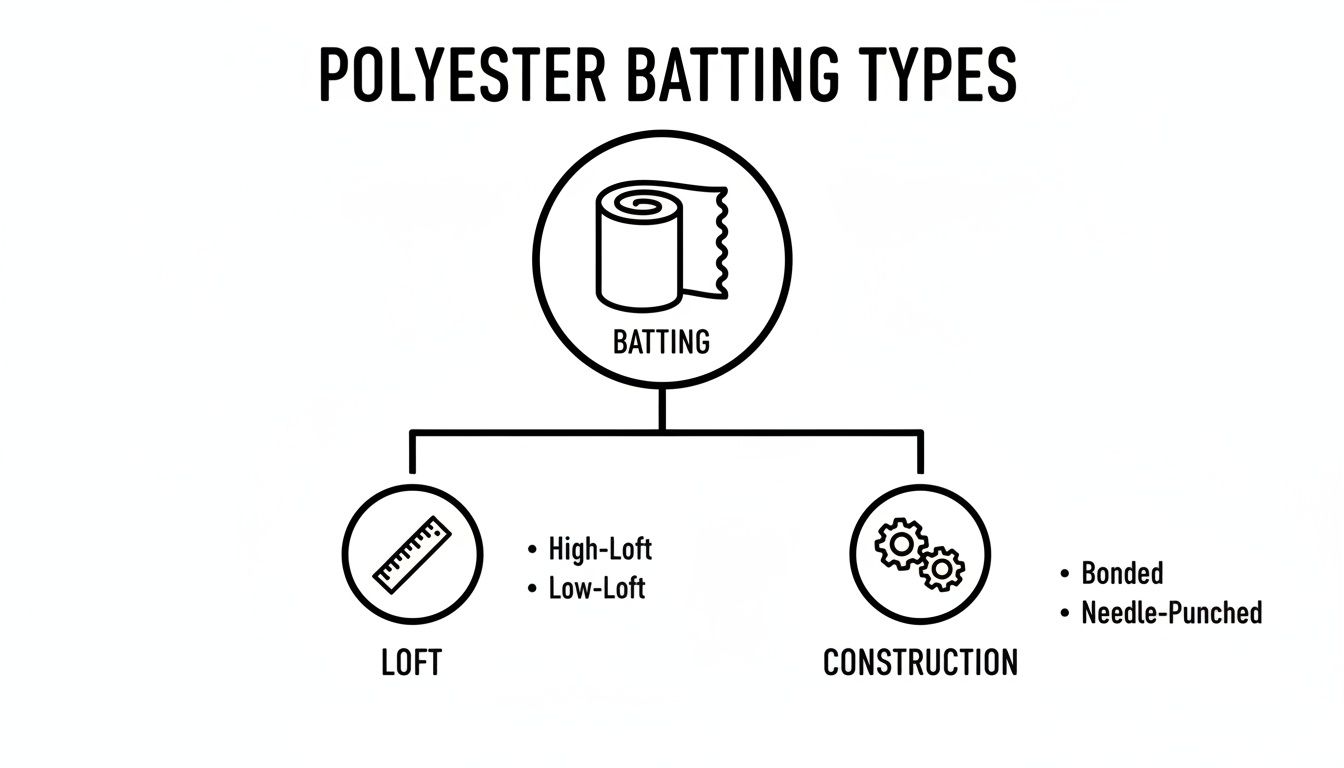
This visual is a great reminder that once you decide on the right loft and construction for your project, you're already halfway to a successful finish.
The Secret Weapon for 3D and Home Decor Projects
Polyester's talents don't stop at traditional quilts. Its unique characteristics make it a fantastic choice for all sorts of creative and decorative projects where you really need some structure and definition.
The ability of polyester batting to hold its shape is a secret weapon for crafting items that need structure and dimension. It provides a kind of stability that other battings just can't match.
Just think about all the possibilities:
- Wall Hangings: A low-to-medium loft poly makes your quilting stitches pop with crisp definition, turning your piece into true textile art.
- Tote Bags and Purses: A firm, needle-punched polyester gives bags the structure they need so they won't sag or lose their shape with use.
- Plush Toys: Fluffy, high-loft polyester is the ideal stuffing for soft, huggable toys that are, most importantly, completely washable.
- Table Runners and Placemats: A thin, bonded polyester lies nice and flat, providing just enough body without creating bulky seams that make glasses wobble.
Because it's so versatile and often comes in extra-wide widths, polyester can also be a really economical choice for makers. If you find yourself working on big quilts or a lot of smaller items, it's definitely worth looking into buying quilt batting by the yard to save some money in the long run.
Practical Tips for Quilting with Polyester
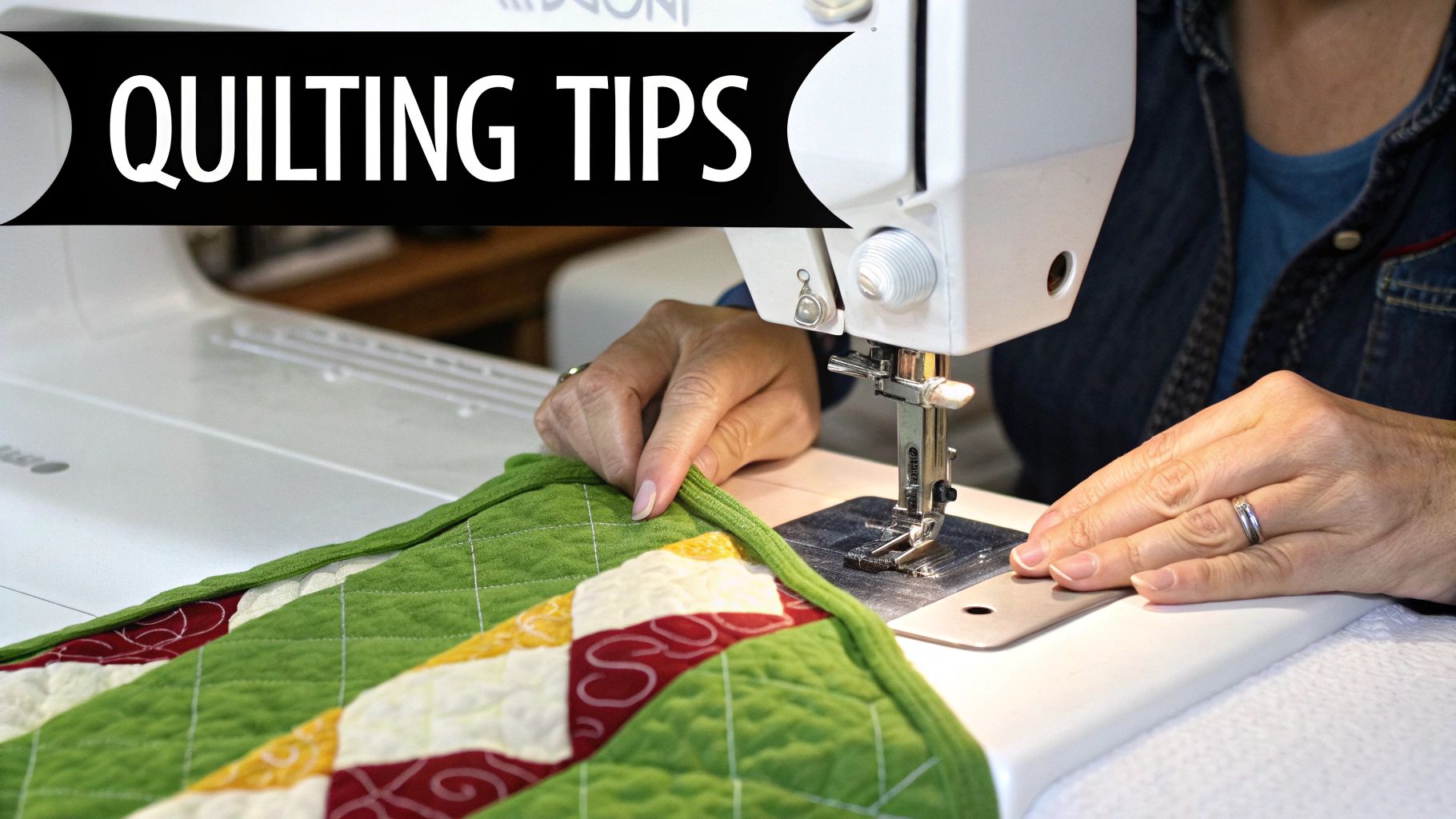
So, you’ve chosen polyester batting. Excellent choice! Getting a beautiful finish with it is surprisingly simple, especially once you know a few tricks of the trade. One of my favorite things about modern polyester is the incredible design freedom it gives you. It's so stable that you can get away with quilting lines as far as 10 inches apart, which is perfect for minimalist designs that really let the fabric shine.
Whether you're guiding your project through a domestic sewing machine or flying across it with a longarm, these pointers will help you get that flawless look every time. A little bit of prep work makes the whole process smoother, faster, and way more fun.
Prepping Your Quilt Sandwich
A perfect quilt starts with a perfectly prepared quilt sandwich. Polyester batting has a bit of natural spring and slickness to it, which can make it want to shift around when you’re layering your top, batting, and backing. No worries, though—it’s easy to tame.
A light mist of temporary spray adhesive is your best friend here. It gently tacks the layers together, stopping any of that pesky stretching or puckering while you work. If you're more of a pinner, just add a few more safety pins than you might with cotton to keep everything locked down.
The real goal here is to get all three layers behaving as one single unit before the needle ever touches it. A secure sandwich means that polyester's springy loft works for you, not against you, leading to a beautifully smooth finish.
Fine-Tuning Your Machine Settings
With your quilt sandwich basted and ready, a few tweaks at the machine will make all the difference. Polyester fibers are a bit slicker than natural fibers, so the right needle and settings are key to getting those crisp, even stitches you’re after.
Needle Selection and Tension Adjustments:
- Needle Choice: Always start with a fresh, sharp needle. I find a 90/14 universal or quilting needle works wonders. Its sharp point pierces the fibers cleanly instead of dragging or snagging them.
- Tension Balance: Polyester’s fluffiness can sometimes play games with your tension. Before you start on your actual quilt, run a quick test on a scrap piece of your sandwich. If you see little loops on the top or bottom, adjust your top tension slightly until the stitch locks neatly in the middle.
- Stitch Length: Try lengthening your stitch just a bit. A setting around 2.5 to 3.0 mm usually looks fantastic. This allows each stitch to sit proudly on the fabric surface instead of getting lost in the loft, giving you that gorgeous definition.
For those of you on a longarm, polyester is a dream. Because bonded and needle-punched versions are so stable and tear-resistant, you can quilt at higher speeds without worrying about the batting bunching up or pulling apart. It’s this rock-solid durability that makes it a go-to for so many professional quilters. Once you get the hang of these simple techniques, you’ll see just how versatile and reliable this batting can be.
How to Care for and Preserve Your Polyester Quilt
So, you’ve spent countless hours piecing, stitching, and quilting your latest masterpiece. The great news? Taking care of a quilt made with polyester batting for quilts is incredibly simple. That same durability that makes it a dream to work with also makes it a breeze to maintain. Your creation is meant to be used and loved, not locked away.
Let's bust a few myths right now. Modern polyester batting is made for real life. It can handle regular trips to the washing machine without turning into a lumpy, shrunken mess. With a few easy guidelines, your quilt will stay vibrant, fluffy, and cozy for generations.
Washing Your Quilt Without Worry
The secret to washing a polyester-filled quilt is just to be gentle. Even though the fibers themselves are tough as nails, your piecing and stitching will thank you for taking it easy. My mantra is always "cool and slow."
Here’s the simple routine I follow for perfect results:
- Go Gentle: Always pick the delicate or gentle cycle on your machine. This puts the least amount of stress on your seams.
- Keep it Cool: Hot water is the enemy of vibrant fabrics and can be tough on polyester fibers. Stick with cool or cold water—it’s the safest bet.
- Mild is Best: A gentle, color-safe detergent is all you need. Skip the fabric softeners, as they can build up on the fibers over time and flatten that beautiful loft.
For a quilt you're particularly proud of, popping it into a large mesh laundry bag can be a great move. It just adds an extra layer of protection against any potential snags or tangles in the machine.
Pro Tip: Got a small spot? Try spot-treating it first with a mild stain remover. You can often avoid a full wash, which helps your quilt last even longer.
The Right Way to Dry and Store
Getting the drying process right is just as crucial as the wash. The number one rule with polyester is to avoid high heat. Extreme temperatures can actually cause the synthetic fibers to melt or fuse together, ruining that soft, squishy texture for good.
Your best bet is to tumble dry on a low-heat or air-dry setting. Yes, it takes a little longer, but your patience pays off by preserving the batting’s fluffiness. I like to throw in a few wool dryer balls to help speed things up and keep the quilt from balling up.
When it's time to put your quilt away, polyester really shines. Because it's a synthetic material, it naturally resists mold and mildew, which is a huge plus compared to natural fibers. Just fold it loosely and tuck it into a breathable cotton storage bag or even an old pillowcase. Stay away from plastic bags or bins, as they can trap moisture and leave your quilt smelling musty. A little care goes a long way, ensuring your quilt is fresh and ready for cuddles whenever you are.
Common Questions About Polyester Batting
As you get into quilting, you start hearing all sorts of things about different materials. Polyester batting, in particular, seems to have a few persistent myths floating around. Let's clear the air and tackle some of the most common questions I hear from fellow quilters.
Think of this as a frank conversation, quilter to quilter. We'll get straight to the point on things like bearding, breathability, and just how far you can push your quilting lines. Getting these details right will give you the confidence to choose the perfect batting for your next project.
Will Polyester Batting Beard or Migrate Through My Quilt Fabric?
Ah, "bearding"—the quilter's nightmare of tiny fibers poking through the fabric. I'll be honest, this used to be a real problem with the polyester battings of yesterday. But the good news? It's pretty much a non-issue now.
Modern manufacturing has come a long way. Today's top-quality polyester battings are either thermally bonded or needle-punched. These processes lock the fibers together so they can't wiggle their way out and ruin your beautiful quilt top.
Of course, your fabric choice still matters. A high-quality, tightly woven quilting cotton is your best friend. If you're working with a looser weave, you run a higher risk of bearding no matter what's inside. But for most projects, you can put this worry to rest.
Is Polyester Batting Breathable Enough for Bed Quilts?
This is a great question. While polyester isn't going to breathe quite like cotton or wool, it's still an excellent choice for most bed quilts. Its real superpower is providing incredible warmth without the weight.
Think of it like a modern, lightweight puffy jacket. It's engineered to trap body heat and keep you toasty warm, which is fantastic for colder bedrooms or for anyone who’s always feeling a bit chilly.
Now, if you live in a really hot and humid climate or you're a notoriously "hot sleeper," you might prefer the feel of a cotton or bamboo blend. But for most people in most places, a quilt with polyester batting offers a perfectly cozy night's sleep.
How Far Apart Can I Quilt with Polyester Batting?
Here's where polyester really gets to show off and give you some amazing creative freedom. One of the single biggest perks of using poly is the generous distance you can leave between your quilting lines.
Because the fibers are so securely bonded, the batting doesn't need a ton of stitching to hold it together. This means you can often quilt your lines up to 10 inches apart without worrying about the batting shifting or bunching up inside your quilt down the road.
This opens up a world of design possibilities:
- Go minimalist: Embrace that modern aesthetic with lots of clean, negative space.
- Showcase large motifs: It’s perfect for those big, beautiful quilting designs that need room to make a statement.
- Still get detailed: Of course, if you love the look of dense quilting, you can absolutely still do that too!
Just be sure to glance at the manufacturer's packaging. It will always give you the specific recommended quilting distance for the batting you've chosen.
Can I Use an Iron on a Quilt with Polyester Batting?
Yes, you can—just with a little care. Polyester is a synthetic fiber, which means it can melt if it gets too hot. Don't let that scare you, though.
When you're pressing a finished quilt, just set your iron to a low-to-medium heat setting. I always recommend using a pressing cloth as an extra layer of protection between the iron and your quilt. Most importantly, keep the iron moving. A quick glide is all you need to smooth out any wrinkles.
Ready to find the perfect foundation for your next project? At Quilt Batting, we have a huge selection of premium polyester options in all the lofts and sizes you could need. Check out our collection and find the ideal batting for your quilt today.