

Staring at a wall of batting options can feel overwhelming.But for most quilters, the decision really boils down to the classic debate: cotton vs. polyester batting.
If you're dreaming of a breathable, heirloom-quality quilt with that classic flat drape that just gets softer and crinklier with every wash, cotton is your answer. But if you need something tough, puffy, and easy to care for—think kids' quilts or throws that see a lot of action—then polyester is the way to go.
Your Guide to Choosing the Right Quilt Batting
The batting is the secret soul of your quilt. It's the part no one sees, but it completely dictates the final look, feel, and purpose of your project. While your pieced top gets all the attention, the batting is what gives the quilt its warmth, its weight, and the way it hangs and cuddles.
Making the right choice here is what separates a good quilt from a great one. It ensures the vision you had in your head becomes the beautiful, functional piece you hold in your hands. This guide will walk you through the real-world differences so you can pick the perfect foundation for your masterpiece.
Key Factors at a Glance
Before we get into the nitty-gritty, let's look at the main things that set these two fibers apart. Honestly, thinking about how your quilt will be used is the fastest way to find your answer.
-
Breathability and Comfort: As a natural fiber, cotton is wonderfully breathable. This makes it perfect for bed quilts you want to use year-round without getting too hot. Polyester, on the other hand, is less breathable but is a fantastic insulator for its weight.
-
Loft and Definition: "Loft" is just the quilter's word for thickness and puffiness. Polyester batting typically has a higher loft, which really makes your quilting stitches pop and gives the whole quilt a puffier, more cloud-like appearance. Cotton batting has a lower loft, creating that flatter, more traditional, time-honored look.
-
Durability and Care: Polyester is a workhorse. It’s incredibly durable, resists mold and mildew, and you can wash and dry it over and over with almost no shrinkage. Cotton batting will shrink a bit—usually 3-5%—which is what creates that puckered, "crinkly" vintage look so many of us love after that first wash.
The story doesn't end there, of course. To see how these fibers compare to others like wool or silk, you can learn more about the different types of quilt batting available.
Quick Look Cotton vs Polyester Batting
Sometimes you just need a quick answer. This little cheat sheet breaks down the key differences to help you decide on the spot.
| Characteristic | Cotton Batting | Polyester Batting |
|---|---|---|
| Fiber Type | Natural (Plant-based) | Synthetic (Man-made) |
| Loft | Low to medium, creates a flat, traditional look | Low to high, creates a puffy, defined look |
| Warmth | Breathable warmth, good for all seasons | Insulating warmth without heavy weight |
| Drape | Soft and fluid, gets softer with each wash | Lighter and springier, holds its shape well |
| Shrinkage | 3-5% shrinkage creates a crinkled, vintage look | Minimal to no shrinkage, stays flat |
| Care | Machine washable, softens over time | Highly durable, machine wash & dry frequently |
| Best For | Heirloom quilts, bed quilts, wall hangings | Children's quilts, charity quilts, puffy throws |
Ultimately, both have their place in a quilter's stash. The fun part is matching the right batting to the perfect project.
Understanding the Core Fiber Properties
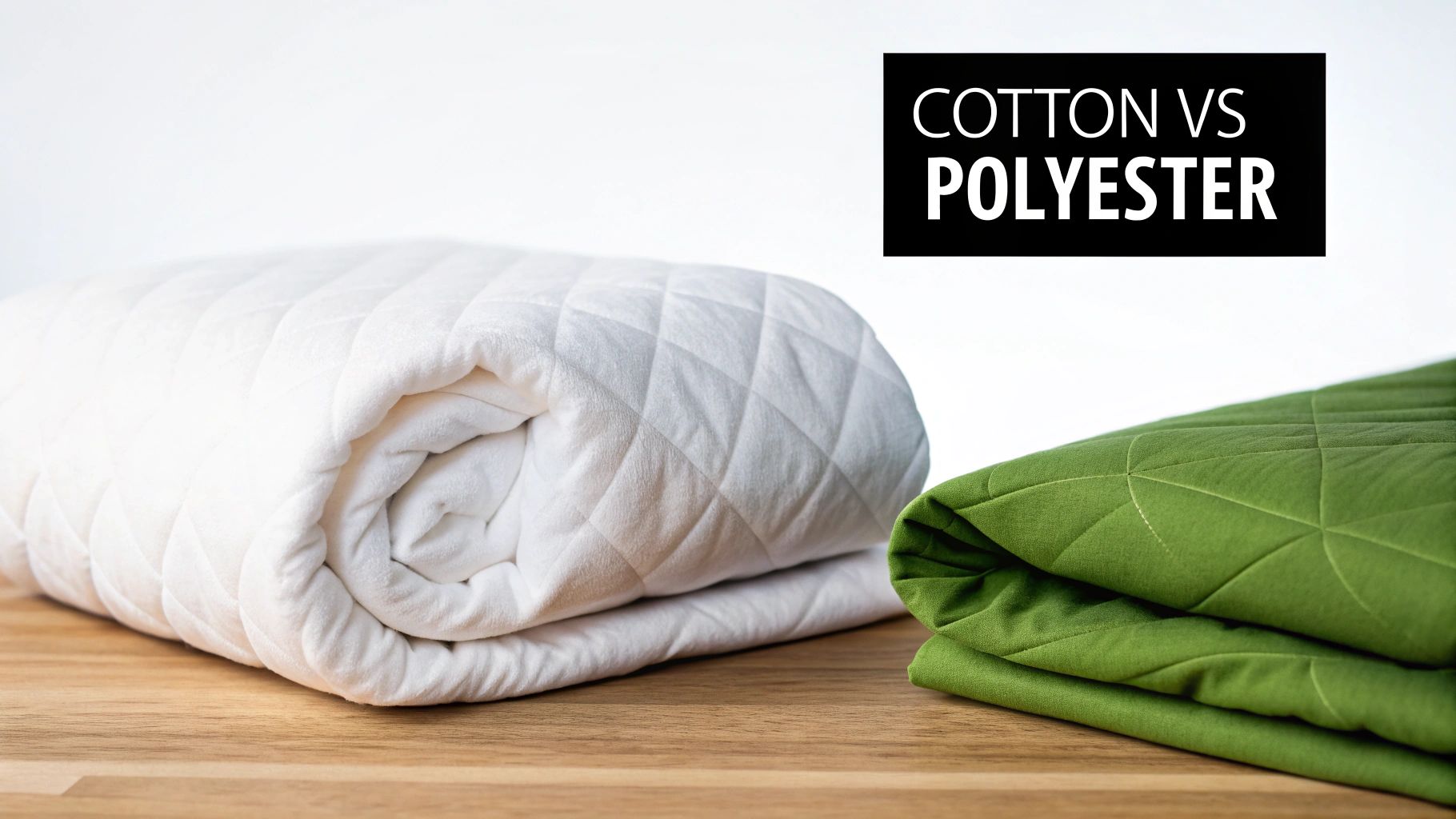
To make a confident choice between cotton and polyester batting, you have to get to know the fibers themselves. These two materials come from completely different worlds, and their origins dictate exactly how they’ll behave inside your quilt. Getting a feel for their core properties is the real secret to predicting how your finished quilt will look, feel, and last.
Cotton is a natural plant fiber. Think of it as a tiny, absorbent sponge—a quality that makes it incredibly breathable and great at wicking moisture. This is why it’s been the undisputed champion for bed quilts and baby items for generations, where comfort against the skin is everything.
Polyester, on the other hand, is a synthetic marvel born from a chemical process. It’s engineered for pure performance. The result is a fiber that’s incredibly resilient, lightweight, and resistant to things that can plague natural fibers, like mold and mildew.
Cotton: The Natural Choice for Breathability
If you've ever worked with it, you know cotton fiber has a slightly grippy texture. As you smooth out your quilt sandwich, you'll notice how the batting gently clings to your top and backing fabrics. This little detail makes the basting process so much easier, cutting down on those frustrating slips and shifts you get with slicker materials.
This natural grip, combined with its signature softness and breathability, explains why cotton dominates the market for comfort-focused projects. The numbers don't lie. The global quilt batting market, valued at USD 1.8 billion in 2024, sees cotton batting holding a commanding 40% share of total consumption. Its hypoallergenic nature also makes it the top choice in 60% of residential bedding, cementing its status as the go-to for quilts meant for snuggling.
Key Takeaway: Choose 100% cotton batting when breathability, a soft feel, and a classic, flat aesthetic are your top priorities. It's the ideal foundation for heirloom bed quilts meant to be used and loved for generations.
Polyester: Engineered for Durability and Loft
Polyester fibers are a whole different story—they’re smooth, springy, and non-absorbent. This structure is what gives polyester batting its lightweight feel and ability to bounce back from compression without losing its shape. It doesn’t hold onto moisture, which is a massive plus for quilts used in damp climates or for items that need to dry in a flash.
This engineered resilience is where polyester truly shines. Its durability is proven; in longevity tests, it maintains its loft 25% longer than pure cotton under repeated washing cycles. For you, that means a polyester-filled quilt will keep its puffy appearance and insulating warmth through years of heavy use and frequent trips to the laundry.
You can dive deeper into the science and application of this hardworking material in our complete guide to polyester fiber batting.
The Rise of the 80/20 Blend
Seeing the clear benefits of each fiber, manufacturers created the 80/20 cotton/polyester blend. This has become an incredibly popular option, offering a true "best of both worlds" solution for the modern quilter.
- You get the softness of cotton: The 80% cotton content ensures the batting is soft, breathable, and drapes beautifully.
- You gain the strength of polyester: The 20% polyester content adds durability, reduces shrinkage, and provides a bit more stability and loft than 100% cotton.
This blend is a fantastic all-purpose choice. It gives you the comfort and gentle crinkle of cotton with the easy-care resilience and crisp stitch definition of polyester, taking the guesswork out of the decision for many projects.
Let's Get Real: What Your Batting Choice Actually Does to Your Quilt
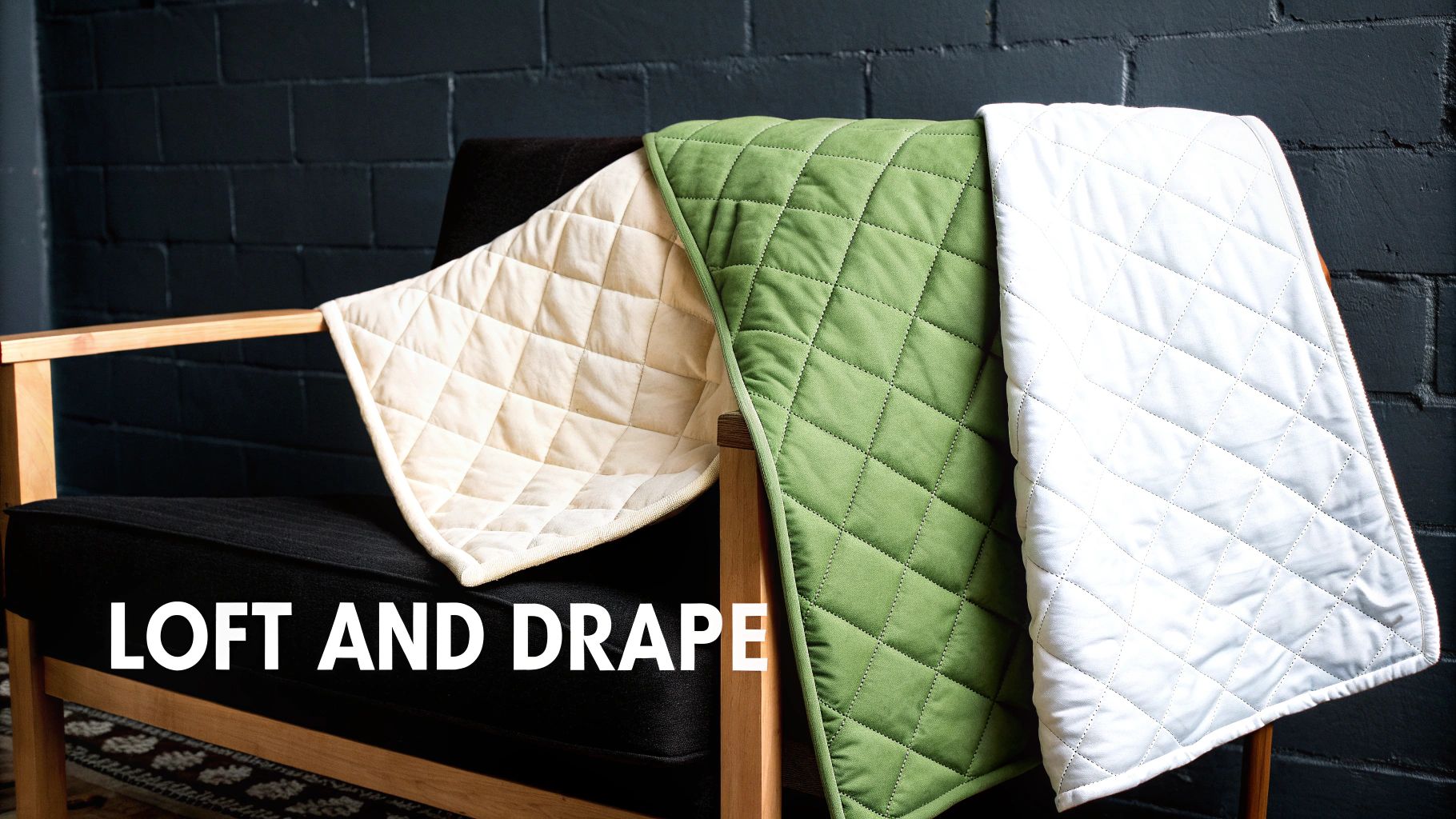
Knowing the difference between a plant fiber and a synthetic one is a good start, but what really matters is how that choice plays out in your finished quilt. The batting you pick is the heart of your project, and it dictates the final warmth, texture, and personality of your work.
This is where the real decision-making begins. We're moving past the basics to look at how these battings perform in the wild. We’ll dig into the key factors—loft, drape, shrinkage, and stability—so you can confidently choose the batting that brings your creative vision to life.
Loft and Warmth
When we talk about "loft," we're really talking about the batting's thickness and puff. This single characteristic has a huge impact on both how warm your quilt is and how the quilting itself looks.
Polyester is the undisputed king of high-loft batting. It creates those thick, puffy, cloud-like quilts that are incredibly warm because the lofty fibers are great at trapping air. The synthetic fibers resist compression, so they keep their volume and make your quilting stitches look deep and dramatic. If you want that plush, comforter-style quilt that you can really sink into, polyester is your go-to.
On the other hand, 100% cotton batting is known for its low loft. It produces a flatter, denser quilt that feels more like a traditional, old-fashioned blanket. Don't mistake "low loft" for "low warmth," though. Cotton provides a heavy, breathable warmth that’s comfortable all year. Your quilt will have a reassuring weight to it, without all the puffiness of polyester.
Quilter's Insight: For a quilt where your stitch work is the main event, a high-loft polyester will make every stitch pop. But if you want a classic, flat look that lets your piecing shine, low-loft cotton is the perfect partner.
Drape and Hand Feel
"Drape" is all about how a quilt hangs and folds, while "hand-feel" is exactly what it sounds like—how it feels in your hands. This is where you can instantly feel the difference between cotton and polyester.
A quilt with cotton batting has a beautifully soft, flexible drape that gets even better with every wash. It might feel a little stiff right off the quilting machine, but it breaks in over time, much like a favorite flannel shirt. This ability to soften and conform to your body makes it absolutely perfect for bed quilts made for serious snuggling.
Polyester batting, with its springy and resilient fibers, results in a quilt that feels lighter and almost buoyant. It doesn't have the same heavy, flowing drape as cotton. Instead, it holds its shape, giving the quilt a bit more structure. This makes it a great choice for wall hangings or decorative throws where you want the piece to look crisp and maintain its form.
Shrinkage and the Crinkle Factor
That wonderful, puckered texture you see in vintage quilts? That’s the "crinkle," and it’s one of the most sought-after features in quilting. It all comes down to shrinkage.
-
Cotton Batting: This is where the magic happens. Expect a shrinkage rate of 3-5%. When the cotton batting shrinks in the wash and your fabric and thread don't (or shrink less), it gently pulls the quilt top into that classic crinkled texture. Quilters use this to their advantage to give a brand-new project an instant heirloom feel.
-
Polyester Batting: As a synthetic, polyester is incredibly stable. It experiences little to no shrinkage. A quilt made with poly batting will come out of the wash looking almost exactly as it did going in—smooth, flat, and unpuckered. This is exactly what you want for a modern quilt with a clean, crisp finish.
For a side-by-side look at these and other battings, our quilt batting comparison chart is a fantastic resource for quick answers.
Bearding and Fiber Migration
Every quilter dreads "bearding"—those annoying little fibers that poke through the fabric of your quilt top or backing, creating a fuzzy mess. In the early days, this was a huge problem, especially with polyester battings.
Thankfully, batting manufacturing has come a long way. Today, most quality battings are needle-punched, a process that locks the fibers together into a stable sheet, dramatically reducing migration. Many cotton battings also include a "scrim," which is a very thin, grid-like stabilizer that adds strength and prevents fibers from shifting or stretching.
This is a big part of the story in the cotton versus polyester debate. The quilt market, valued at USD 5.32 billion in 2024, still sees cotton quilts making up a massive 42.7% of the pie. But polyester’s reputation improved immensely after the 1990s. As washing machines became commonplace, the demand for durable materials grew, and manufacturing breakthroughs cut down bearding in synthetics by an estimated 80%, making it a much more reliable choice for modern makers.
How Your Batting Choice Changes Everything About Your Quilting Process
Choosing your batting isn't just about the finished quilt—it dramatically changes the actual experience of making it. This is where the whole "cotton vs. polyester" debate gets real, right at your sewing machine or with a needle in hand. Your choice dictates how you baste, how close your stitches need to be, and how much effort it’s going to take.
Think of it this way: the fiber itself sets the rules. One of the most important rules is "quilting distance," which is simply the maximum space you can safely leave between your lines of stitching. Pushing this limit is asking for trouble. Get it wrong, and you’ll end up with batting that shifts, bunches up, or even falls apart inside your quilt after a few trips through the laundry.
Getting Quilting Distance Right
Cotton is made of short, natural fibers that need to be quilted together fairly closely to keep them from separating over time. That’s why most 100% cotton battings will tell you to keep your quilting lines no more than 3-4 inches apart. It means a bit more stitching, but it’s key to creating that durable, crinkly, classic quilt that stands the test of time.
Polyester, on the other hand, is made from long, continuous synthetic fibers, giving it built-in stability. It doesn't have the same risk of pulling apart, so you can get away with much wider quilting. It’s pretty common to see polyester batting that allows for quilting up to 10 inches apart! This gives you incredible freedom if you're planning a minimalist design or want to show off large-scale fabric prints.
- Go with Cotton: When your project calls for dense, detailed quilting, and the stitching itself is part of the art.
- Choose Polyester: Perfect for modern quilts with lots of open space, or when you want your pieced top to be the star without a lot of quilting distraction.
The Feel for Hand and Machine Quilters
The density and texture of the batting create a totally different feel depending on how you're quilting. What glides like a dream on a longarm might feel like you’re fighting a losing battle by hand.
For hand quilters, polyester is often a much friendlier partner. Its light, airy fibers are a breeze to needle, letting you create smooth, even stitches without straining your hands. Some cotton battings, especially the dense, needle-punched ones with a scrim, can be tough to get a needle through. You’ll definitely need a good thimble and some patience.
A Little Insider Tip: If you're a hand quilter with your heart set on cotton, seek out battings specifically made for hand quilting. They're usually less dense and made without a scrim, making them wonderfully soft and much easier to work with.
For machine quilters, especially those working on a longarm, stability is the name of the game. A high-loft polyester batting gives you a firm, puffy foundation that really makes your quilting pop with beautiful, deep definition. In contrast, a low-loft cotton provides that flat, traditional surface where the quilting texture blends right into the fabric for a subtle, antique look.
A Shortcut Through Basting: Specialty Batting
Let's be honest, basting—the part where you pin or spray the top, batting, and backing together—can be a real chore. This is where specialty battings, which you'll more often find in polyester or poly-blends, can be a lifesaver.
Fusible batting is a true game-changer. It has a light, heat-activated adhesive on both sides. Instead of crawling around on the floor with hundreds of pins, you just iron your layers together to create a secure quilt sandwich. This is a fantastic solution for smaller projects like table runners and wall hangings where you need everything to stay perfectly in place. While you can find some fusible cottons, the technology really shines in polyester and 80/20 blends, making it a major process-based perk for going with a synthetic or blend.
Matching the Right Batting to Your Project
Knowing the technical specs of cotton versus polyester is one thing, but the real magic happens when you match the right batting to your specific project. This decision is where the soul of your quilt—its drape, its warmth, its very purpose—is born. Let's move beyond the theory and talk about what this choice actually looks like for the quilts you’re making right now.
The best place to start is by thinking about the quilt's future. Is it destined for a cozy life on a bed, a rough-and-tumble existence as a playmat, or a quiet role as a piece of hanging art? Once you know its destiny, the cotton vs. polyester debate gets a whole lot clearer.
This decision tree can help you visualize the best path to take from your initial idea to the perfect batting.

As you can see, your quilting method and the type of project you're tackling are the two biggest factors in making the right choice.
For Heirloom Bed Quilts
When you're pouring your heart into a quilt meant to be treasured for generations, 100% cotton is the only way to go. It’s the classic choice for a reason. Its natural fibers are wonderfully breathable, so you get warmth without that stuffy, overheating feeling.
But the real beauty of cotton is how it ages. With every wash, it softens and shrinks just a little, creating that gorgeous, crinkly texture that defines a vintage quilt. That gentle puckering is the hallmark of a traditional heirloom, and it’s something only cotton can truly deliver.
For Children's Quilts and Playmats
Durability is everything when it comes to kids. These quilts are going to see it all—spills, fort-building, and countless trips through the laundry. This is where polyester or a top-notch 80/20 cotton/poly blend really proves its worth.
Polyester's synthetic strength means it can handle the toughest wash cycles without bunching up or losing its shape. It dries quickly and naturally resists mildew, which is a huge plus for anything in a kid's room. An 80/20 blend is a fantastic middle ground, giving you a lot of cotton’s softness with the added muscle and stability of polyester.
Expert Recommendation: For a quilt that needs to survive heavy use and frequent washing, durability and easy care are non-negotiable. A polyester or 80/20 blend will keep the quilt looking fantastic and feeling cozy for years, making it the practical choice for real life.
For Wall Hangings and Art Quilts
With a wall hanging, the goal is a perfectly flat, crisp finish that stays that way. Any sagging or stretching will completely undermine the visual impact of your hard work. Stability is the name of the game here.
A low-loft, needle-punched cotton batting with a scrim is an excellent choice for providing structure and preventing any distortion over time. I’m also a big fan of fusible polyester or blend batting for these projects. The adhesive makes basting a breeze and locks all three layers together perfectly, giving you a smooth, professional drape that hangs beautifully on the wall.
For Charity Quilts and Budget Projects
When you’re quilting for charity or just keeping an eye on your budget, you need a batting that balances cost, durability, and easy care. In these cases, polyester batting is often the most practical solution. It's significantly more affordable than cotton, which means your dollars can stretch further to make even more quilts for a good cause.
Plus, its simple care instructions—just toss it in the washer and dryer—mean the recipient can easily look after it. Many quilters I know buy their batting by the roll to keep costs down for ongoing charity work. You can find some very economical cotton batting rolls that are also great for group projects.
To help you decide at a glance, this table breaks down some common projects and my go-to batting recommendations.
Batting Recommendations by Quilt Project
| Project Type | Primary Recommendation | Secondary Option | Key Consideration |
|---|---|---|---|
| Heirloom Bed Quilt | 100% Cotton | Wool | Breathability and that classic crinkled look. |
| Baby/Child's Quilt | 80/20 Cotton/Poly Blend | 100% Polyester | Must withstand frequent, heavy washing. |
| Wall Hanging/Art Quilt | Fusible Polyester/Blend | Needle-punched Cotton w/ Scrim | Stability is critical; it must hang flat. |
| T-Shirt Quilt | 80/20 Cotton/Poly Blend | Low-loft Cotton | Needs to support stretchy fabric without adding bulk. |
| Lightweight Lap Quilt | Low-loft Cotton | Bamboo Blend | Soft drape and light warmth are the priority. |
| Heavy Winter Quilt | High-loft Polyester | Wool | Maximum insulation and loft for serious warmth. |
Ultimately, choosing the right batting comes down to understanding the story you want your quilt to tell—whether it's one of cozy tradition, rugged durability, or artistic expression.
The Practical Side: Cost, Care, and Conscience
When you're choosing between cotton and polyester batting, the conversation goes beyond just how it feels under the needle. We need to talk about the real-world stuff: your wallet, the wash cycle, and the environmental story behind the fiber. These are the details that can make or break your long-term satisfaction with a quilt.
Getting the Best Value for Your Buck
Let’s be honest, quilting isn't a cheap hobby. If you're watching your budget, polyester is almost always the lighter lift upfront. Because it’s a synthetic material, the manufacturing is streamlined, which keeps the price per yard down. This is especially true when you compare it to premium or organic cottons.
That cost difference is a big reason why polyester is so popular for things like charity quilts or for quilters who are constantly finishing new projects. But the value doesn't stop at the initial price tag. Polyester is tough as nails. It can cut production costs for large-scale makers by up to 35%, and it holds up beautifully over time. In longevity tests, it keeps 90% of its loft after 50 washes, while cotton drops to around 70%. That’s long-term resilience you can count on. For more on the latest trends in the quilt batting market, check out this report on openpr.com.
How to Wash Without Worry
The batting you choose dictates how you'll care for your finished quilt. Each fiber reacts differently to a trip through the washer and dryer, so it's good to know what to expect.
-
Cotton Batting: You can absolutely machine wash it on a gentle cycle. Just know that cotton is famous for its 3-5% shrinkage on the first wash. Don’t panic! This is what gives quilts that wonderful, crinkly, well-loved look that so many of us are after.
-
Polyester Batting: This is your low-maintenance option. Polyester can be machine washed and dried with little to no fuss. It resists shrinking and holds its shape and loft, looking pretty much the same after every cleaning.
Quilter's Takeaway: If you want that classic, crinkled heirloom texture that gets better with age, go for cotton. If you need a quilt that can take a beating and come out of the dryer looking brand new—think kids' blankets or high-traffic throws—polyester is your best friend.
A Look at the Environmental and Health Picture
For many of us, where our materials come from matters. As a natural plant fiber, cotton has some big advantages here. It's biodegradable and hypoallergenic, which is a huge plus for anyone with sensitive skin or who is making a baby quilt. You can also find certified organic cotton, which guarantees it was grown without synthetic pesticides.
Polyester, on the other hand, is derived from petroleum, and it’s fair to have questions about its synthetic origins. The good news is that the industry is stepping up. You can now find batting made from recycled polyester (rPET), which is created from plastic bottles. While it’s not as common yet, choosing recycled poly gives a second life to plastic waste and delivers that durability you want in a more eco-friendly package.
A Few Common Questions I Get Asked
When you're standing in front of a wall of batting rolls, it's easy to get stuck on a few key questions. Here are the straight-up answers to a couple of the most common ones I hear from fellow quilters.
Can I Mix Cotton and Polyester Batting in One Quilt?
My advice? Don't do it. While it might sound like a creative experiment, you're setting yourself up for a potential quilting headache.
The big problem is shrinkage. Cotton is going to shrink a little after the first wash (that's what gives it that lovely, crinkly antique look), but polyester won't shrink at all. When you mix them, they'll fight each other inside your quilt, which can lead to some weird bunching and distortion. It's just not worth the risk. For a quilt that behaves predictably and ages gracefully, stick with one type of batting all the way through.
Is Polyester Batting a Safe Choice for Baby Quilts?
Absolutely, and it's often my top recommendation for exactly that reason. Modern polyester batting is hypoallergenic and naturally resists mold and mildew, which is a huge plus.
But the real win for any new parent is how incredibly durable it is. Baby quilts live a hard life—they need to be washed constantly. Polyester can handle that high-heat, frequent laundering cycle like a champ, keeping the quilt fresh, clean, and safe for the little one.
Ready to feel the difference and find the perfect core for your next quilt? Take a look through our entire collection of high-quality battings at Quilt Batting, where we carry the best from brands like Hobbs and Pellon.