

If you're a quilter looking to take your craft to the next level, you've come to the right place. This is your ultimate guide to buying cotton batting by the roll—a move that serious hobbyists, longarm quilting studios, and small business owners swear by. Buying in bulk is more than just a purchase; it’s a smart decision that brings consistency to your work, saves you a surprising amount of money, and ensures you never run out of batting mid-project again.
Why Buying Cotton Batting by the Roll Is a Game Changer
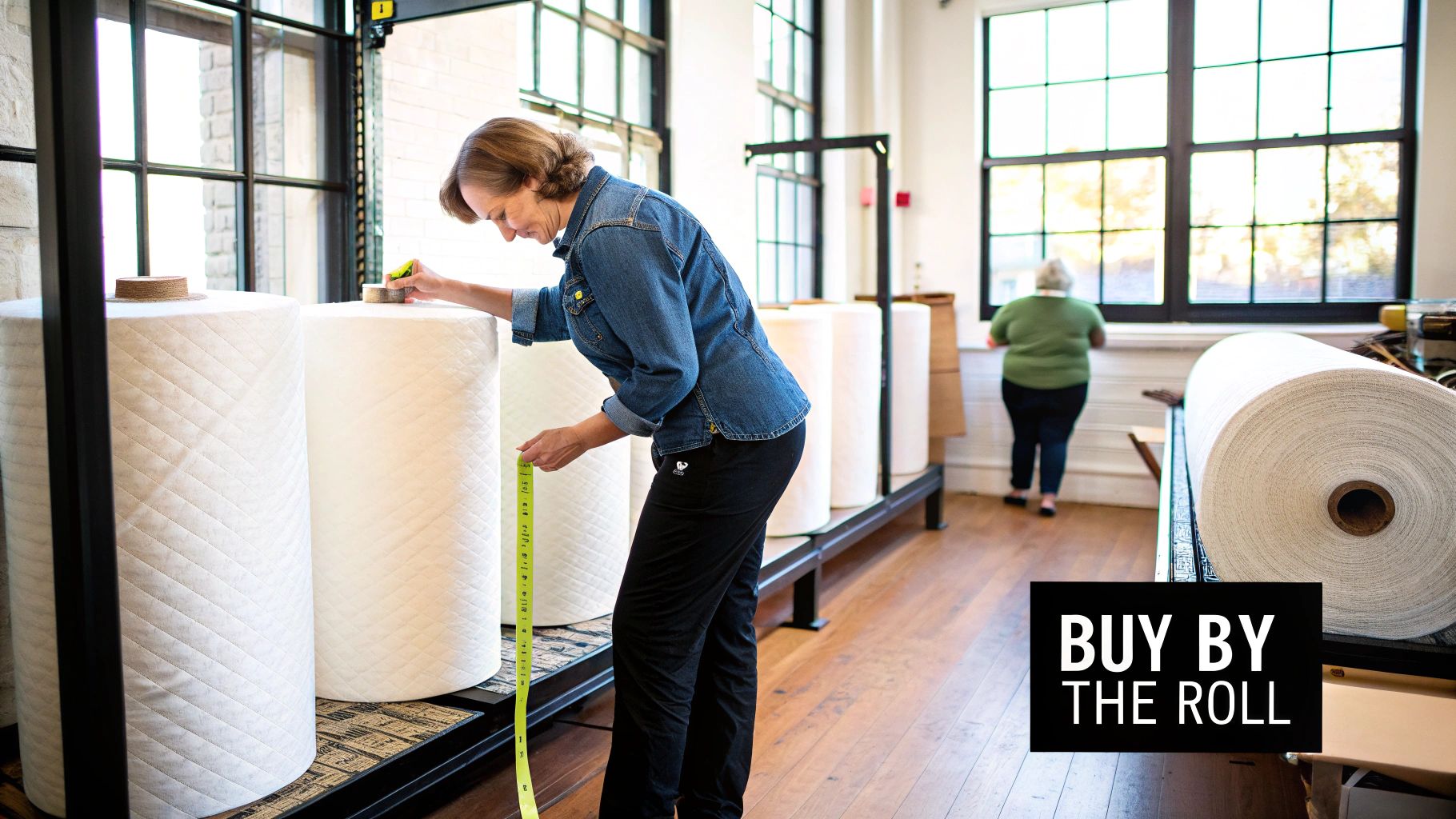
Making the leap from buying those individual, pre-packaged bags of batting to purchasing full rolls of cotton batting might feel like a huge commitment, but it’s one of the most practical decisions a quilter who means business can make.
Think about it this way: it’s the difference between buying just enough ingredients for tonight's dinner versus stocking your pantry with staples. The second approach is just plain more efficient, way more economical, and lets you cook up a storm whenever inspiration hits.
This guide is here to walk you through the whole process, taking you from just being curious to feeling completely confident about your purchase. Let’s dive into what makes buying by the roll such a smart investment.
Unlock Major Cost Savings
The first and most obvious win is for your wallet. Buying in bulk dramatically cuts down the price per yard compared to what you’d pay for those single packages.
If you’re finishing several quilts a year, those savings add up fast. We're talking about freeing up a significant chunk of your budget for what you really love—more gorgeous fabrics and threads. Over a year, the difference can easily be hundreds of dollars.
Ensure Unmatched Project Consistency
When you’re working from a single, continuous roll, you’re giving every quilt you make the exact same foundation. That kind of consistency is a non-negotiable for professionals and anyone who wants their work to have a signature look and feel.
You can finally stop worrying about those subtle (and sometimes not-so-subtle) variations in loft, drape, or even color that can pop up between different batting packages. The result? A flawless, uniform finish, every single time.
A single, high-quality roll of batting is your secret weapon for achieving professional-grade consistency. It removes the guesswork and variability, allowing the quality of your piecing and quilting to take center stage.
Boost Your Creative Efficiency
Just picture it: no more last-minute, project-halting dashes to the quilt shop because you ran out of batting. Having a roll ready to go means your creative flow is never broken. This is a massive advantage for:
- Longarm Quilters: Keep that machine humming and your client projects moving forward without any frustrating inventory gaps.
- Small Business Owners: Fulfill your orders on time and manage your production schedule with confidence.
- Prolific Hobbyists: Glide seamlessly from one project to the next without waiting for supplies.
When you invest in a roll, you’re buying more than just material; you're buying yourself time and creative freedom. You can find the perfect match for your studio by exploring top-tier options, like the fantastic selection of Hobbs batting boards and rolls.
Getting to Know Your Cotton Batting
Before you commit to a full roll, let's talk about what makes one batting different from another. It's a bit like being a chef and knowing your ingredients—understanding the fundamentals is what separates a good quilt from a great one. Getting a handle on terms like fiber content, scrim, and loft will give you the confidence to pick the perfect roll for the vision you have in mind.
It’s a great time to be a quilter, too. The quilting world is booming, with the global market for batting valued at around $3.03 billion and expected to hit $4.19 billion by 2032. That growth means more options and better quality for all of us.
Fiber Content: The Heart of Your Quilt
The first big decision you'll make is about the fiber. This single choice affects everything from how your quilt drapes and feels to its warmth and that wonderful crinkly texture that appears after washing. The two main players you’ll see are 100% cotton and an 80/20 cotton-polyester blend.
-
100% Cotton Batting: This is the classic choice, cherished for its soft, natural feel and lovely drape. It’s breathable and has a comforting weight. When you wash it for the first time, it shrinks just a little, creating that puckered, vintage look we all love.
-
80/20 Cotton-Poly Blend: This is the modern quilter's workhorse. It blends the softness of cotton with the resilience of polyester. That 20% polyester adds a surprising amount of durability, reduces shrinkage, and gives the batting a little extra poof without adding weight. It's a huge favorite among longarm quilters because it stands up to the machine's tension without stretching or tearing.
If you want to go a little deeper, our full guide breaks down exactly what quilt batting is and how these fiber choices shape your finished quilt.
Scrim: Your Batting's Secret Weapon
You'll often see the word "scrim" mentioned when looking at rolls of cotton batting. So, what is it? A scrim is a super-thin, lightweight stabilizer that's needle-punched right into the batting. Think of it as a fine internal mesh that adds incredible strength and stability.
What does this mean for you? A batting with a scrim lets you place your quilting stitches much farther apart—sometimes up to 8-10 inches—without worrying about the fibers shifting or bunching up inside your quilt over time.
This makes it a fantastic choice for any kind of machine quilting, especially on a longarm. The trade-off? That added strength makes it tougher to needle by hand. If you're a hand-quilter, you'll probably want to stick with a batting without a scrim for a much smoother, softer experience.
Loft: How Puffy Do You Want to Go?
"Loft" is simply the word we use to describe the thickness and puffiness of the batting. This is where you really get to decide the final texture and look of your project.
-
Low Loft: This batting is thin and flat, perfect when you want your patchwork to be the star of the show. It creates a traditional, flatter quilt with a beautiful drape and is a breeze to work with on a home sewing machine.
-
Medium Loft: The versatile, just-right option. It offers a little bit of puff to help your quilting stitches stand out, but not so much that it becomes bulky. Our 80/20 blend is a perfect example of a popular medium-loft choice.
-
High Loft: Think thick, fluffy, and cozy. High-loft batting is all about creating dramatic texture and making your quilting stitches pop. It produces a warm, puffy quilt, almost like a comforter, and it's ideal for tied quilts where you want maximum coziness.
To help you see these differences at a glance, we've put together a simple comparison table.
Comparing Cotton Batting Types
Here's a quick-reference table to help you match the right batting to your next project.
| Batting Type | Fiber Content | Key Characteristics | Best For |
|---|---|---|---|
| 100% Cotton (Low Loft) | 100% Cotton | Natural, breathable, creates a classic crinkle, drapes beautifully. | Traditional quilts, wall hangings, table runners, detailed piecing. |
| 80/20 Cotton-Poly Blend | 80% Cotton / 20% Polyester | Durable, stable, less shrinkage, versatile medium loft. | Longarm quilting, everyday use quilts, projects needing extra strength. |
| 100% Cotton w/ Scrim | 100% Cotton with a poly scrim | Strong, allows for wider quilting stitch spacing (up to 10"). | Large machine-quilted projects, quilts that will see heavy use. |
| Fusible Cotton Batting | Cotton or Cotton Blend | Features a heat-activated adhesive on one or both sides. | Small projects, art quilts, bags, wall hangings that require no pinning. |
Choosing the right batting is a personal decision, but understanding these core components ensures you'll always have the perfect foundation for your beautiful quilts.
Choosing the Right Roll Size for Your Studio
Picking the right size for your rolls of cotton batting is where the practical side of quilting really kicks in. It’s a bit like buying fabric—get it right from the start, and you save yourself a world of headaches, waste, and patchwork later. Making a smart choice here means you’ll use every last inch you pay for and spend more time quilting, not piecing together batting scraps.
Think of this as your roadmap to the most common widths and lengths out there. We’ll make sure the roll you bring into your studio fits your projects, your space, and your budget perfectly. The goal is simple: buy smarter, not bigger.
Mastering Common Batting Widths
Batting rolls come in a few standard widths that, thankfully, line up pretty well with common bed quilt sizes. Getting these dimensions down is your first step to completely avoiding that dreaded task of joining batting for a big quilt. You'll typically find widths like 90", 96", and 120".
Here’s a quick rundown of what these widths are best for:
- 90-Inch or 96-Inch Widths: These are the true workhorses of the quilting world. They’re incredibly versatile and perfect for a huge range of projects, from generous throw blankets and twin quilts all the way up to full and queen sizes. A 96" roll, in particular, will comfortably cover most queen-sized quilts with plenty of room to breathe.
- 120-Inch Widths: Hello, king-size quilts! If you ever tackle king or California king projects, a 120" wide roll is your new best friend. It lets you use a single, seamless piece of batting, which is an absolute game-changer for longarm quilters who need that flawless, professional finish for their clients.
Here's a little secret from the pros: always choose a batting width that’s at least 8-10 inches wider than your quilt top. This gives you that crucial overage for loading it on a longarm or dealing with any shifting on your home machine. Trust me, it prevents a lot of frustration at the edges.
This visual guide can help you narrow down your choice based on the look and feel you're after.
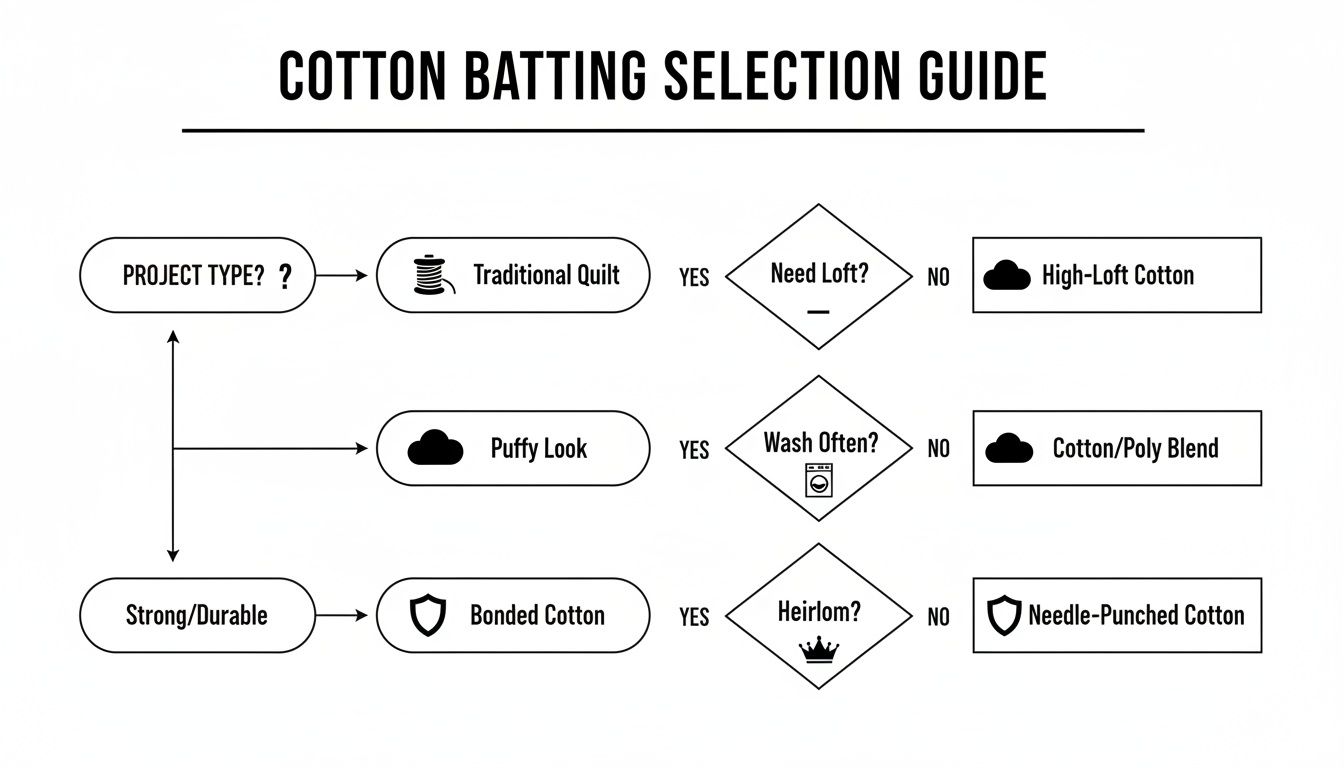
The flowchart is a great way to match your project’s needs—whether you want a flat, traditional look, a puffy texture, or something super durable—to the perfect type of batting.
Calculating Your Yield and Long-Term Value
Okay, so you've nailed down the width. Now, how much length do you need? Rolls often come in 15, 30, or even 40-yard lengths. A bigger roll is obviously a bigger investment upfront and needs more space, but the savings over time can be huge.
Let’s quickly break down the yield. A 30-yard roll, for example, gives you 1,080 inches of batting to work with (30 yards x 36 inches). If your average queen quilt needs about 108 inches of length, you can get 10 queen-sized quilts out of that one roll. Simple as that.
When you start thinking this way, a roll of batting stops being just a supply and starts feeling like a smart business decision. You can plan out your projects, schedule your quilting, and know exactly when you'll need to reorder. For a deeper dive into sizing, check out our complete guide to quilt batting sizes to make sure you've always got the right numbers.
Weighing the Pros and Cons of a Large Roll
So, is a big 30-yard roll the right move for you? It really comes down to how often you quilt, your storage situation, and your budget.
Why a Big Roll Might Be Perfect:
- Lower Cost Per Yard: The math is simple—the more you buy, the less you pay per yard. It’s the best long-term value.
- No More Project Interruptions: There’s nothing worse than running out of batting mid-project. A big roll keeps your creative flow going.
- Total Consistency: Every quilt you make from that roll will have the exact same loft, drape, and feel. For professionals, that kind of consistency is priceless.
What to Consider Before You Commit:
- The Upfront Cost: You’ll spend more initially than you would on a single pre-cut package.
- Storage Space: A full roll is a hefty thing. It needs a clean, dry spot away from sunlight and any curious pets or pests.
Ultimately, choosing your roll size is a strategic move. Once you have a handle on your go-to project sizes and how much quilting you do, you can invest with confidence, knowing you've got the reliable foundation for dozens of beautiful quilts ready and waiting.
Matching Batting to Your Project and Machine
Choosing the right batting is less about rules and more about finding a great partner for your quilt. It's not just a filler layer; it's a critical component that has to work with your project's goals and your quilting machine. When you get this match right, everything just clicks. You'll avoid a ton of frustration and end up with a finish you can be proud of.
Think of it this way: your batting should complement your machine, not fight against it. That simple shift in perspective can make your entire quilting process smoother and way more fun. Let's dig into how to find that perfect harmony.
For Home Machine Quilters
If you’re quilting on a domestic sewing machine, you know the struggle is real. You're physically wrangling a bulky quilt sandwich through that small throat space under the machine's arm. This is where your batting choice can be a game-changer.
A low-to-medium loft batting is almost always going to be your best friend. Thinner battings are simply easier to maneuver. They glide more smoothly and put less strain on you, which means more precise stitches and fewer skipped stitches or broken needles.
For your home machine, you can't go wrong with these:
- 100% Cotton (Low Loft): Gives you that classic, flat, crinkly look and is a dream to handle.
- 80/20 Blend with Scrim: The touch of polyester and the scrim add durability and stability, which is a lifesaver when you're pushing and pulling the quilt around. It helps prevent stretching and distortion.
When quilting on a home machine, think "less is more." A lower loft means less bulk to wrestle with, giving you more control and precision—especially when you’re doing detailed stitch work.
For Longarm Machine Quilters
Longarmers have a totally different set of concerns. You’re not moving the quilt—you’re flying a high-speed machine head over the fabric. For you, the most important qualities in a batting are consistency and durability.
When you buy rolls of cotton batting for your longarm, you're really investing in a smooth, uninterrupted workflow. A good, consistent roll means no thin spots, no thick clumps, and no weird imperfections that could cause your needle to snag or create tension nightmares at high speeds. An 80/20 blend with a scrim is practically a longarmer’s secret weapon because it’s incredibly stable and resists stretching as it’s loaded onto the frame. This is how you get those beautiful, even stitches from one edge to the other.
It's no secret the quilting world is booming. The quilting cotton market was valued at $3.5 billion and is expected to hit $5.8 billion by 2034. This just goes to show how vital reliable, high-quality supplies are for both hobbyists and professionals who rely on getting consistent results every time.
Batting for Specialty Projects
Of course, not every project is a bed quilt. Some projects have very specific needs, and using the wrong batting can lead to a disappointing result—or even be a safety hazard.
-
Microwaveable Items: For things like potato bags or bowl cozies, you must use 100% cotton batting, like Wrap-N-Zap. Polyester fibers can melt or even catch fire in a microwave. Don't forget to pair it with 100% cotton fabric and thread, too!
-
Art Quilts and Wall Hangings: These smaller, more detailed pieces often benefit from fusible batting. The heat-activated adhesive lets you secure the quilt sandwich without a single pin, which is perfect for intricate work. It adds just the right amount of stability and keeps all those tiny fabric pieces exactly where you want them.
-
Table Runners and Placemats: A low-loft cotton or an 80/20 blend is perfect here. You need these items to lie flat and stand up to frequent washing, so a durable, low-shrinkage batting is key to keeping them looking great.
Thinking through these little details ensures you’re not just buying batting, but choosing the right tool for the job. To see all your options in one place, check out our guide on the different types of quilt batting. Taking a moment to pick the right foundation will make every project a success, from the inside out.
How to Properly Store and Handle Your Batting Roll
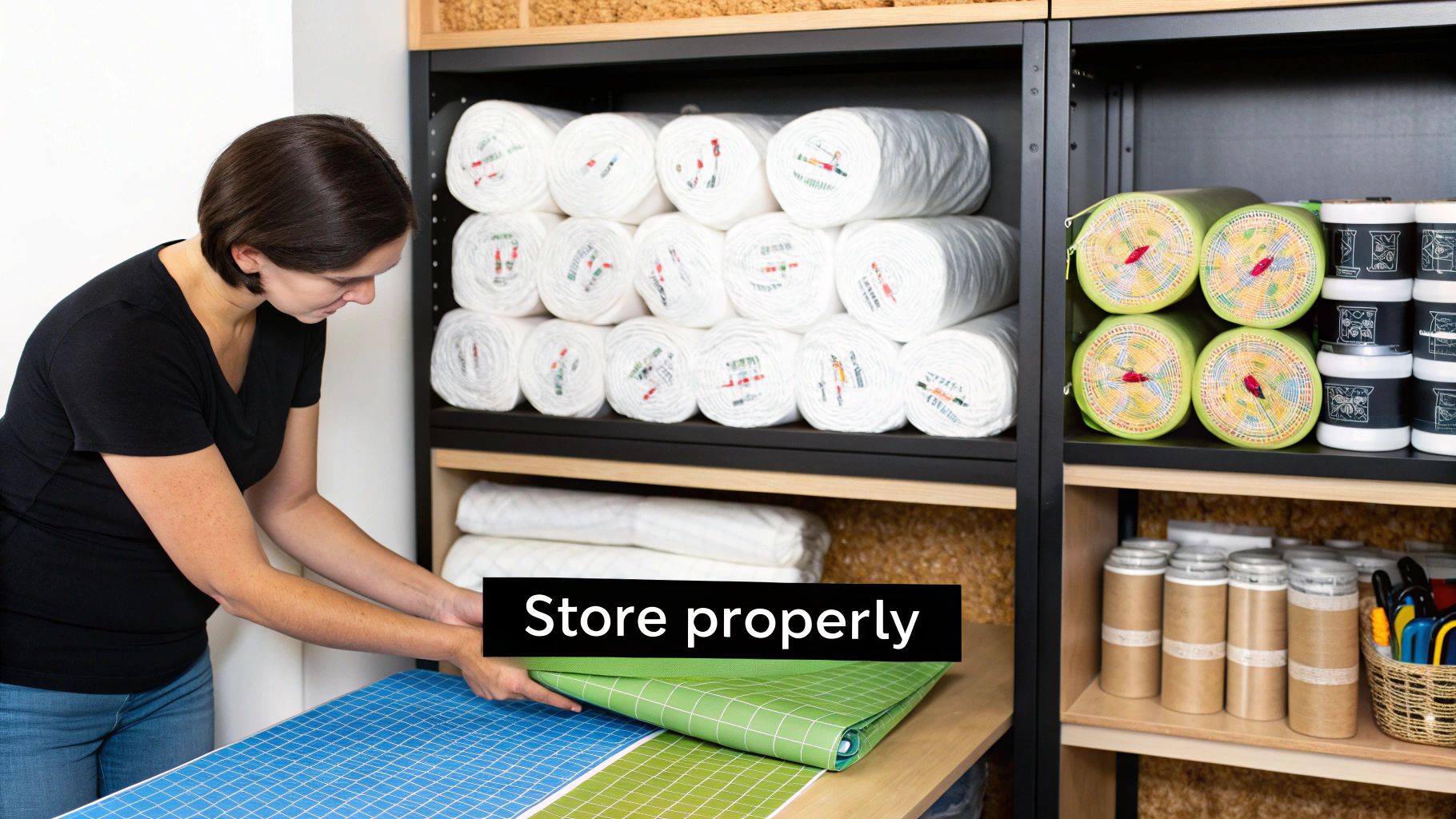
So, your brand-new roll of cotton batting has arrived—that's a whole lot of creative potential right there! To make sure every inch of it turns into a beautiful quilt, you’ll want to protect that investment from the get-go. Taking good care of your batting isn't just about keeping your sewing room tidy; it's about preserving the loft, integrity, and cleanliness that your quilts deserve.
Think of your batting roll like a prized bolt of fabric. A little bit of care goes a long way. If you handle it roughly, you can end up with stretched, distorted, or thin spots that are impossible to fix later. A few simple habits will ensure every project starts on the right foot with a flawless foundation.
First Steps After Unrolling
When it's time to cut a piece, fight the urge to just yank the batting off the roll. That's the fastest way to stretch it out and create uneven patches. Instead, gently unroll what you need onto a large, clean surface—a cutting table or even a clean floor works great.
Once it's unrolled, give your batting some time to relax and breathe. It’s been tightly wound and compressed for its journey to you, so it needs a moment to bounce back to its natural loft.
A little patience pays off here. Let your freshly cut piece of batting rest flat for at least a few hours, or even overnight if you can. This simple step helps all those shipping creases and compression marks fade away, giving you an even thickness for your quilt sandwich.
Smart Storage Solutions
Storing your rolls of cotton batting the right way is key to keeping it in prime condition. The main goals are simple: keep it clean, dry, and safe from anything that could damage the fibers. Storing the roll vertically on its end is a great space-saver, but laying it horizontally on a sturdy shelf works just as well.
Here are a few essential tips for protecting your roll:
- Keep It Covered: The plastic bag your batting came in is its best friend. Keep the roll in the bag to shield it from dust, curious pets, and any moisture in the air.
- Avoid Direct Sunlight: Just like your favorite fabrics, batting isn't a fan of the sun. UV rays can weaken and discolor cotton fibers over time, so store it away from windows in a closet or under a table.
- Prevent Compression: Whatever you do, don't stack heavy boxes or other items on top of your batting roll. That constant pressure can permanently crush the loft, leaving you with flat, unusable sections.
You can quilt with confidence knowing you're supported by a massive textile industry. The global cotton processing market was valued at an incredible $76.43 billion in 2021 and is only expected to grow. This robust supply chain helps ensure that amazing materials like your batting are always available. You can learn more about the global cotton processing market and its scale. By following these simple handling and storage tips, you'll ensure your batting is in perfect shape for every beautiful quilt you dream up.
We Answer Your Top Questions About Buying Batting by the Roll
Taking the leap from buying batting by the bag to buying it by the roll is a game-changer, but it definitely brings up some questions. It’s a real investment in your craft, and you want to get it right. We get it! We've heard all the questions from quilters just like you, so we’ve gathered the most common ones here to help you buy with total confidence.
Think of this as your final sanity check before you hit "buy." Getting these details right from the start means your new roll of batting will be the best thing to happen to your sewing room, not a source of frustration.
How Do I Figure Out How Many Quilts I Can Get From One Roll?
This is the big one, right? Knowing your yield is key to smart planning and budgeting. Let's make it simple. Say you're looking at a standard 30-yard roll of 96-inch wide batting. That roll gives you a total of 1,080 inches in length to work with (that's just 30 yards x 36 inches).
If you’re making a queen-size quilt that needs a piece of batting around 96" x 108", you could get exactly ten queen-sized quilts from that one roll. A 120-inch wide roll is even better for king-sized projects, cutting down on waste and saving you from the headache of piecing batting scraps together.
Pro Tip: Don't forget to account for overage! I always add an extra 4 to 6 inches of batting on all four sides of my quilt top. So, if your quilt top is 90" x 100", you'll want to cut a piece of batting that's at least 98" x 108" just to be safe.
Is 100 Percent Cotton Batting Always Better Than a Blend?
Honestly, one isn't "better"—they just have different personalities. Think of them as two different tools in your quilting toolkit, each one perfect for a specific kind of job.
-
100% Cotton Batting: This is your classic choice for that timeless, traditional quilt. It gives you that wonderful, crinkly, vintage look after the first wash and has a soft drape that just gets better with age. It’s breathable, all-natural, and really lets your patchwork be the star.
-
80/20 Cotton-Poly Blend: This blend is a modern workhorse, plain and simple. You get the softness and breathability from the 80% cotton, but that 20% polyester adds some serious durability, strength, and a little extra loft. Longarm quilters often swear by it because it resists stretching and tearing on the frame, making it fantastic for quilts that are going to be loved, used, and washed a lot.
What Is the Biggest Mistake When Buying Batting by the Roll?
Without a doubt, the most common—and most costly—mistake is buying the wrong width. It can be tempting to grab a narrower roll because the upfront cost is lower, but this can really come back to bite you. If you buy a 90-inch roll but you mostly make queen and king quilts, you'll be stuck piecing batting for almost every project.
Piecing isn't just a time-suck; it can create bulky, uneven seams inside your quilt sandwich that are a pain to quilt over.
Before you add anything to your cart, stop and measure the quilts you find yourself making over and over again. Always pick a roll width that will comfortably cover your biggest typical project, including that crucial 4-6 inch overage. A wider roll might feel like a bigger investment at first, but trust me, it pays for itself in saved time, less waste, and much better results.
With these answers in hand, you’re ready to choose the perfect rolls of cotton batting for your studio. Explore our complete collection at Quilt Batting and find the ideal foundation for your next masterpiece. Start shopping now.