

Ever wonder what makes a quilt so wonderfully warm and cozy? It’s not just the beautiful top or the soft backing—it’s the hidden layer in the middle. That magic ingredient is quilt batting.
Quilt batting is the heart of your quilt. It’s the soft, fluffy filling sandwiched between your quilt top and back, and it's responsible for giving a quilt its warmth, weight, and that classic puffy texture we all love. Without it, you’d just have a two-sided blanket.
The Cozy Heart of Every Quilt
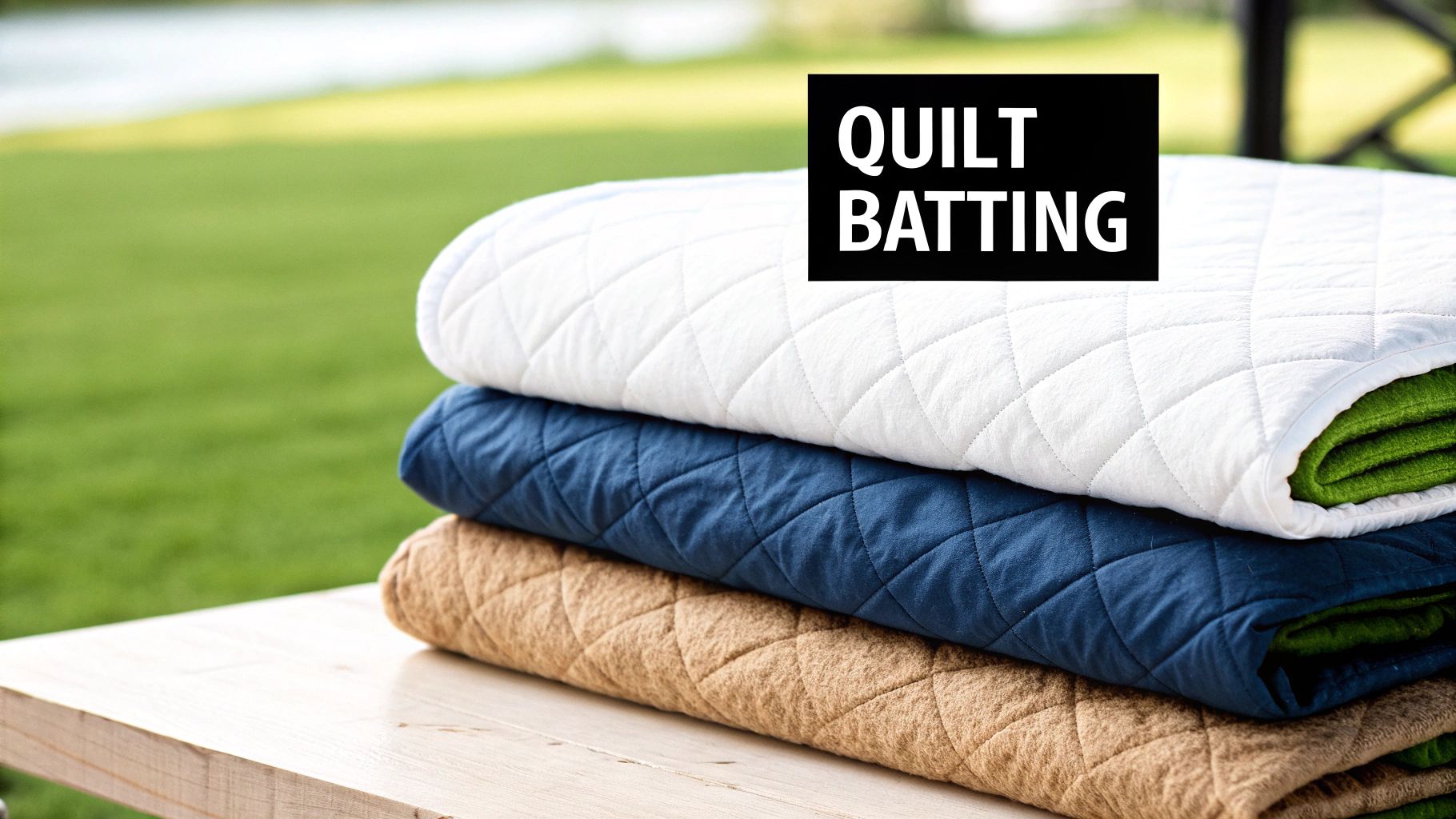
Think of batting as the insulation in your winter coat. It works by trapping air within its fibers, creating a barrier that holds in warmth. The kind of batting you choose has a huge impact on the final look, feel, and even the drape of your quilt.
This single component is a surprisingly big decision in the quilting process. It influences everything from how defined your stitches look to whether your quilt feels light and airy or dense and heavy. Its importance is clear when you look at the numbers. The global quilt batting market is valued at an estimated $500 million, a figure that just keeps growing as more people discover the joy of quilting.
Understanding Batting Basics
Before we get into all the different types, let’s break down the two main things you need to know about any batting:
- Fiber Content: This is simply what the batting is made of. Common choices include cotton, polyester, wool, or blends of different fibers. Each one brings something different to the table in terms of breathability, weight, and how you care for it.
- Loft: This is just a quilter’s term for thickness. A low-loft batting is thin and gives a flatter, more traditional look. A high-loft batting is thick and fluffy, creating a puffy, comforter-style quilt.
The right batting doesn't just add warmth; it complements your fabric choices and quilting style. It can make intricate stitch work pop on a modern wall hanging or create a crinkled, vintage feel for a beloved heirloom.
Choosing the perfect batting is all about matching its characteristics to your project's needs. A lightweight baby quilt requires something different than a heavy-duty bedspread or a decorative art piece.
Quick Guide to Common Quilt Batting Types
To help you get a quick sense of the options, here's a simple table breaking down the most popular batting materials.
| Batting Type | Key Feature | Best For |
|---|---|---|
| Cotton | Soft, breathable, traditional | Heirloom quilts, bed quilts, baby quilts, wall hangings |
| Cotton/Poly | Blends stability with softness | Everyday-use quilts, machine quilting, projects needing drape |
| Wool | Exceptionally warm, lightweight | Warm bed quilts, puffy comforters, show quilts |
| Fusible | Adhesive on both sides | Wall hangings, small projects, no-baste quilting |
| Black | Dark color | Quilts made with dark or black fabrics to prevent white fibers |
| Wrap-N-Zap | 100% cotton, microwave-safe | Microwaveable items like potato bags and bowl cozies |
This is just a starting point, of course. For a much more detailed side-by-side analysis, be sure to check out our quilt batting comparison chart. It’s a great resource for really digging into the differences.
Choosing Your Batting Material
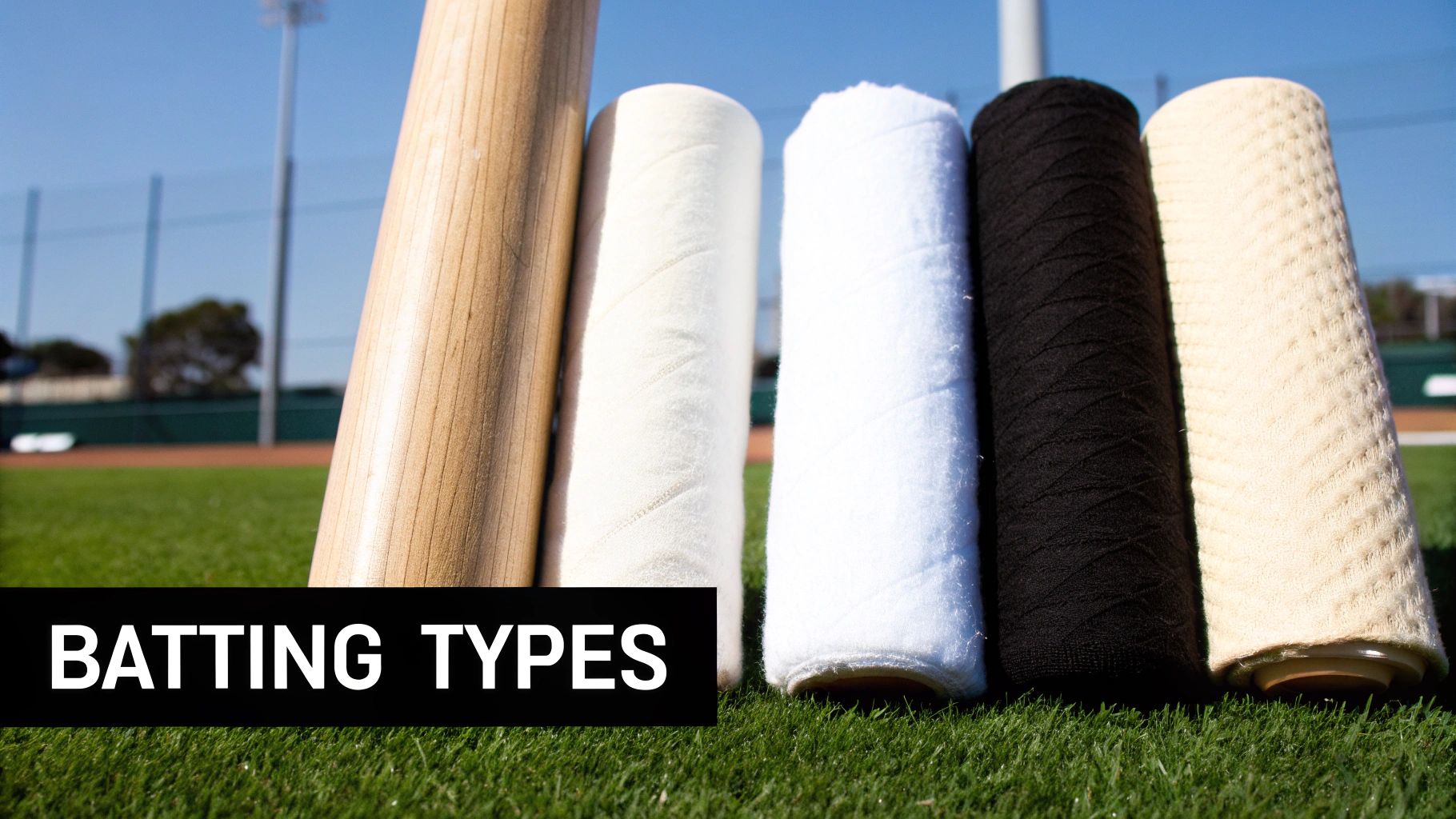
The material you choose for your batting is single-handedly the biggest decision you'll make for the feel, warmth, and drape of your finished quilt. Think of it like picking the right flour for a recipe—the one you choose will completely change the final result.
Let's walk through the most common batting types so you can find the perfect match for your next project. From the classic, old-fashioned feel of 100% cotton to budget-friendly workhorses, each material has its own personality. Understanding them is the secret to making a quilt that doesn't just look amazing but feels and behaves exactly the way you want it to.
Classic Cotton: The Traditional Choice
For quilters who dream of that classic, heirloom look, 100% cotton batting is the undisputed champion. It’s a natural, breathable fiber that feels a bit like a thick sheet of flannel, giving your quilt a lovely, soft weight that just feels right. This is the stuff that creates that gorgeous, slightly crinkled texture after its first trip through the wash.
That slight shrinkage is a feature, not a bug! The gentle puckering it creates is what gives quilts that coveted antique character. Just remember, cotton needs a bit more attention; you’ll need to place your quilting stitches closer together, usually 3-4 inches apart, to keep the fibers from bunching up over time.
Durable Polyester: An Affordable Workhorse
Polyester batting is a synthetic powerhouse known for being tough, easy on the wallet, and capable of creating some serious loft. It's much lighter than cotton but can pack a surprising amount of warmth, making it a fantastic choice for big, cozy bed quilts that you don't want weighing you down.
One of polyester’s biggest selling points is its refusal to shrink or wrinkle. Your quilt will lay flat and smooth right out of the dryer. The only potential downside used to be "bearding," where tiny fibers could poke through the fabric, but modern high-quality polys have largely solved this. In fact, its stability makes it a great canvas for showing off intricate quilting stitches.
Cotton/Polyester Blends: The Best of Both Worlds
Can't decide between the natural feel of cotton and the practical perks of polyester? You don't have to. Cotton/poly blends, typically an 80/20 mix (80% cotton, 20% polyester), are wildly popular for a reason—they offer a brilliant compromise.
This blend gives you the soft breathability of cotton, but with the added strength, stability, and lower shrinkage of polyester. It still gives you that gentle, classic crinkle after washing, just a little more subtly than 100% cotton. It's a fantastic, all-around choice for machine quilting and for quilts that are going to be used and loved every day.
Many quilters land on an 80/20 blend as their go-to for just about everything. It perfectly marries the traditional aesthetic of cotton with the durability you need for quilts that are destined for the couch, the washing machine, and a lifetime of memories.
Luxurious Wool and Specialty Fibers
When you want to create something truly special with unmatched warmth, wool is an incredible choice. It's surprisingly lightweight for the insulation it provides and naturally resists creasing, which helps your quilt drape beautifully without wrinkles. Wool batting has a springy loft that really makes quilting stitches pop, making it a long-time favorite for show quilts.
Beyond the big three, you'll also find some other fantastic specialty options worth exploring:
- Bamboo Batting: Often blended with cotton, bamboo is an eco-friendly choice that is incredibly soft and breathable. It gives quilts a silky, fluid drape that’s hard to beat.
- Fusible Batting: This is a game-changer for small projects. It has a light, heat-activated adhesive on both sides. You just iron your quilt sandwich, and the layers fuse together—no pins or spray basting needed! It’s perfect for table runners, placemats, and wall hangings.
Ultimately, choosing the right material is all about matching its personality to your project's purpose. Whether you need the rugged durability of a blend for a child’s quilt or the luxurious warmth of wool for a special gift, there’s a perfect batting waiting for your creation.
Getting the Right "Puff": How Loft Shapes Your Quilt
Once you've picked a material, the next big decision is loft. It's just a quilter's term for thickness or "fluffiness," and it’s the single biggest factor that will decide your quilt's personality. Is it going to be a sleek, modern piece or a big, puffy comforter? That all comes down to loft.
I like to think of it like picking a pillow. Low-loft batting is like a firm, thin pillow—it gives you a clean, flat profile. High-loft batting is your overstuffed, down-filled pillow—incredibly plush, soft, and just begging to be snuggled. Neither one is "better," they just do different jobs. Your choice here will define everything from the quilt's texture and warmth to how much your quilting stitches pop.
The Different Loft Levels Explained
You'll generally run into three main loft levels, and each one is meant to create a totally different look and feel.
- Low Loft: This is the thinnest you can get, usually under 1/4 inch thick. It creates a lightweight quilt that drapes beautifully over a bed or hangs flat against a wall. Since it’s so sleek, it’s the perfect choice when you want to show off dense, intricate quilting. The stitches won't get lost in any puff.
- Medium Loft: The go-to, all-purpose choice. At about 1/3 inch thick, it hits that sweet spot between softness and stitch definition. You get a little bit of puffiness without it taking over your design. It's a fantastic, reliable option for everything from bed quilts to lap throws.
- High Loft: The big one! High loft batting can be 1/2 inch thick or even more, and this is what you grab when you want that classic, cloud-like comforter. It gives you maximum warmth and a deeply cushioned feel, but it’s best for simpler quilting designs or even hand-tying.
Here's a pro-tip: Loft has a huge impact on your quilting distance—that's the maximum space you can safely leave between your lines of stitching. Fluffy high-loft battings need to be quilted more closely together (think 2-4 inches apart) to keep the fibers from shifting and bunching up inside. On the other hand, a stable low-loft batting lets you quilt much farther apart.
Picking the Right Loft for Your Project
So, how do you choose? It all comes back to what you're making.
If you’re creating a wall hanging where every single stitch is part of the art, low loft batting is your best friend. It'll let that detailed work shine. We've got a whole guide that dives deeper into low loft batting for quilts if you want to master it.
Making a durable, cozy bed quilt that needs to stand up to daily use and a few trips through the washing machine? A medium loft cotton/poly blend is a workhorse. And for that ultra-plush comforter you can sink into on a cold night, high loft polyester or wool will give you that luxurious, puffy texture you’re dreaming of.
It’s no surprise that quilters want all these options. The global quilt batting market was valued at an incredible $1.2 billion in 2024 and is expected to more than double by 2034. That growth is fueled by passionate crafters like us all over the world. You can discover more insights about the quilting market trends on reportsanddata.com if you're curious.
Matching the Right Batting to Your Project
Knowing the different types of batting is the first step, but the real magic happens when you confidently pick the perfect one for the quilt you have in your mind. This is where you put theory into practice, matching the unique personality of each batting to the project you've poured your heart into. Get it right, and you'll not only bring out the beauty of your piecing but also make sure the quilt functions exactly as you need it to.
It’s a bit like a chef picking out ingredients. The final dish—your quilt—is a direct result of the components you choose. A delicate, artistic wall hanging needs a completely different foundation than a rugged, cozy quilt destined for family movie nights on the couch.
The Durable Choice for Everyday Heirlooms
Are you making a baby quilt that needs to survive countless trips through the washing machine? Or maybe a throw blanket for the living room that will see daily snuggles and spills? For these workhorse projects, durability is the name of the game.
You need a batting that can take the heat—literally. It has to handle frequent washing without bunching, stretching, or falling apart. This is where a high-quality cotton/poly blend, like a trusty 80/20 mix, really shines. The cotton gives you that classic softness and breathability, while the polyester adds strength and stability, fighting off shrinkage and helping the quilt keep its shape for years.
Many of these blends also have a scrim, which is a very thin stabilizer that gives the batting incredible strength. To see how it works, you can dive deeper into our guide on what is scrim in batting. For any quilt that needs to be truly life-proof, a cotton blend with scrim is a quilter’s best friend.
Crafting Luxurious Quilts and Show Pieces
When your goal is to create a truly luxurious, heirloom-quality quilt—something to be treasured for generations—your choice of batting has to match that ambition. These special projects call for something with exceptional drape, warmth, and a premium feel from the moment you touch it.
This is the perfect time to go for wool or a high-end silk blend. Wool offers incredible warmth without being heavy, creating a light, lofty quilt that drapes beautifully over a bed. It also has a natural springiness that makes quilting stitches stand out with gorgeous definition, a quality that show quilters absolutely prize.
For a quilt that is destined to be a showstopper or a cherished gift, the batting is just as important as the fabric. Choosing a premium fiber like wool elevates the entire piece, giving it a feel of unparalleled quality and comfort.
Modern Designs and Artistic Wall Hangings
Not every quilt is meant for a bed. Modern wall hangings, table runners, and other decorative pieces often feature dense, intricate quilting where the stitch work itself is the star of the show. For these projects, you need a batting that will step back and let your artistry take center stage.
A low-loft cotton or a fusible batting is exactly what you need here.
- Low-Loft Cotton: This provides a flat, stable canvas that keeps your dense quilting from getting puffy or bulky. Your stitches stay crisp and defined, just as you planned.
- Fusible Batting: This is a fantastic time-saver, especially for smaller art quilts. The built-in adhesive lets you skip the pinning, creating a smooth, unwrinkled foundation that's perfect for detailed work.
This handy decision tree can help you visualize how to choose a loft based on your project's final look.
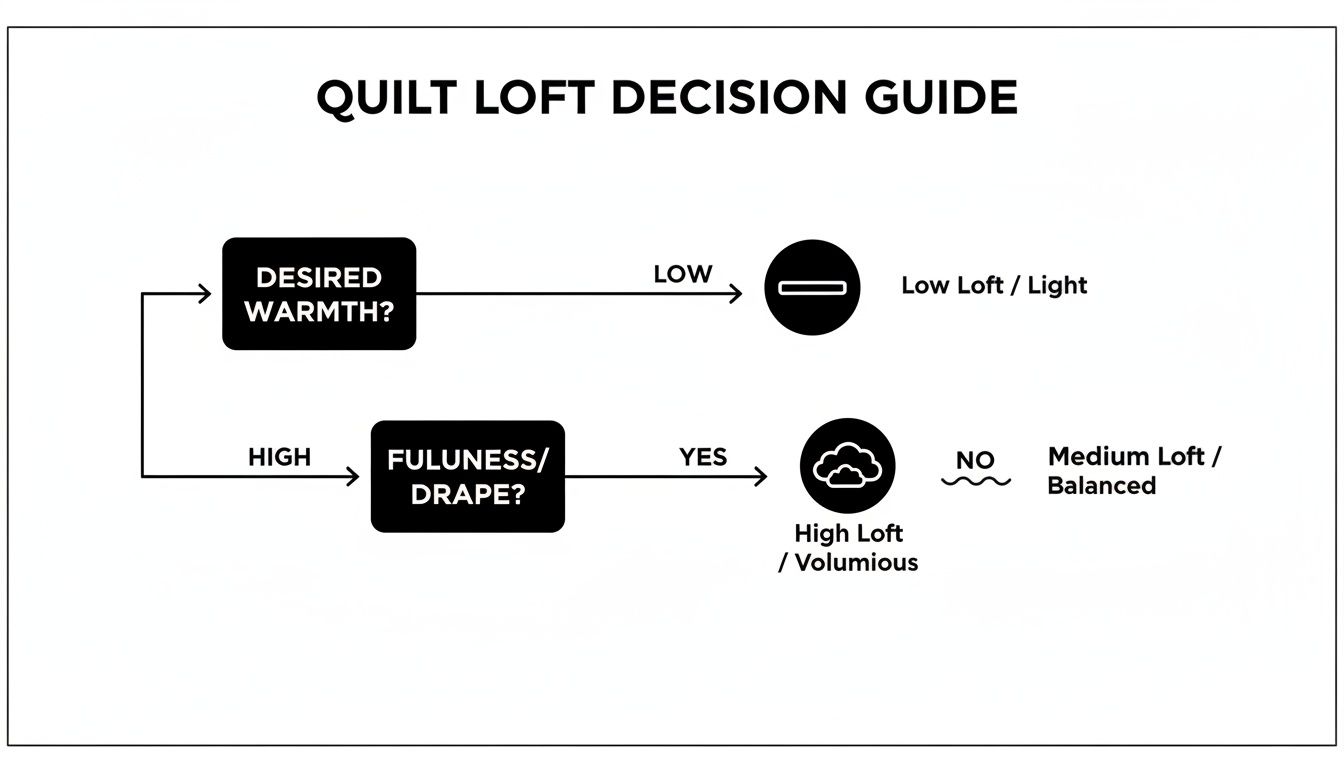
As you can see, a flat, modern aesthetic calls for a low loft, while a plush, traditional quilt really benefits from a higher loft. This choice fundamentally shapes your quilt's final texture and profile. And it's a choice quilters are making more than ever; the quilt batting market is projected to reach $1.8 billion by 2031. You can read more about what's driving this growth at openpr.com.
Sizing, Buying, and Caring for Your Batting
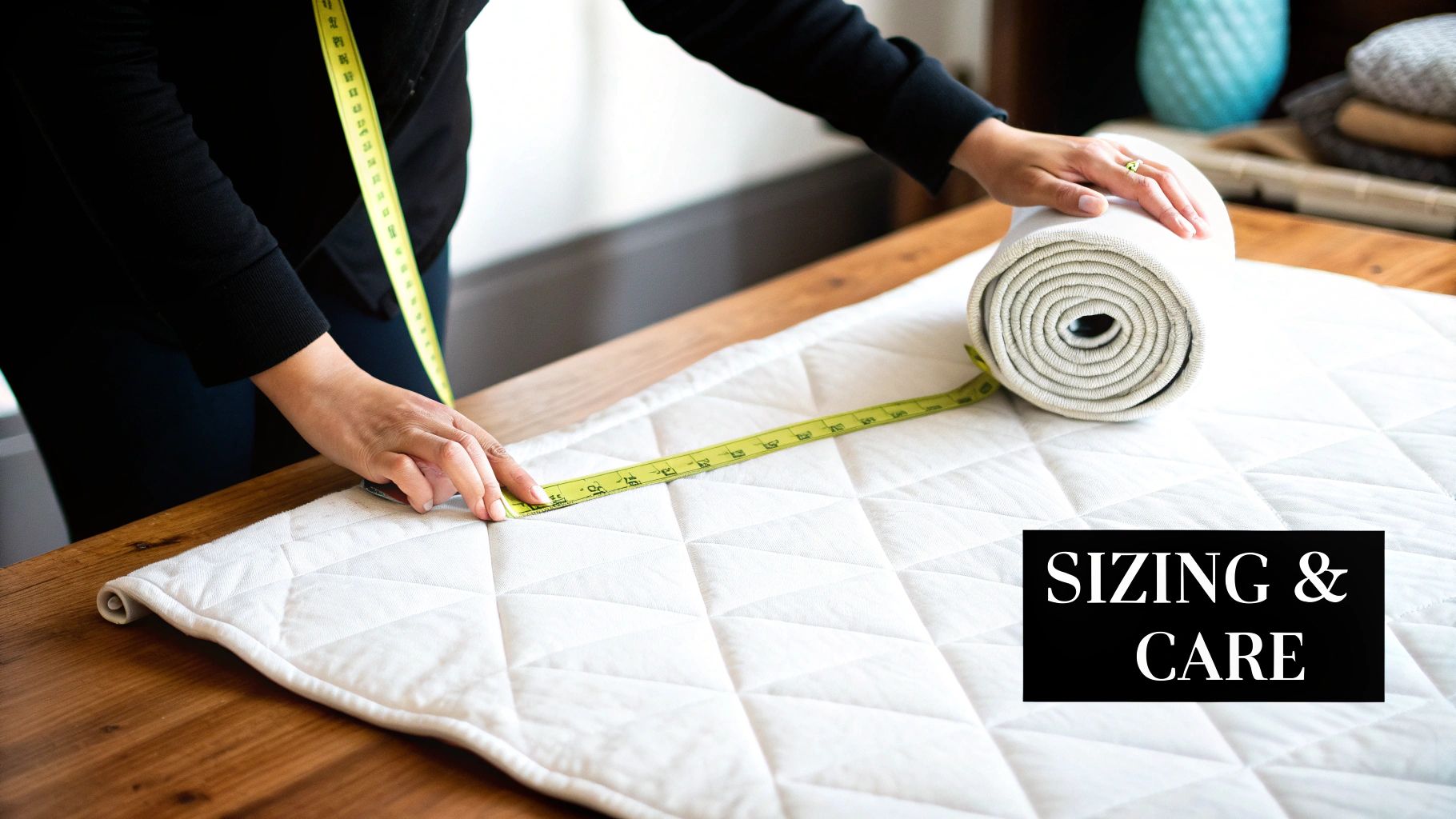
Alright, let's talk logistics. Figuring out how to buy, size, and care for your batting is just as important as choosing the right material. A little bit of planning here will save you from a world of frustration—like running out of batting mid-project or accidentally shrinking your finished quilt.
You'll generally find batting in two forms: pre-cut packages or by the yard from a giant roll. Those pre-cut packages are super convenient, already sized for standard beds like Crib, Twin, Queen, and King. For custom-sized quilts or if you're a prolific quilter, buying by the yard off a roll is often the more flexible and budget-friendly way to go.
Getting the Right Dimensions
Here's the golden rule every quilter lives by: always buy your batting larger than your quilt top. You need that extra margin on all four sides to handle any shifting while you're quilting and to account for a bit of shrinkage in the wash.
Aim for your batting to be 4 to 8 inches wider and longer than your quilt top. This extra material, often called "overage," is your safety net. It gives you (or your longarmer) plenty of room to maneuver without any stressful moments.
Whatever you do, don’t trim your batting and backing to the exact size of your quilt top before you quilt! That extra margin is your insurance policy, guaranteeing that even with a little movement, your quilt back won't suddenly become smaller than your front.
If you're ever stuck on the math, we've got you covered. Our in-depth guide to quilt batting sizes has all the charts and tips you need to buy the right amount the first time, every time.
Proper Care and Handling
Once you bring your batting home, how you treat it matters. The number one question I get is about pre-washing. Here's my take: if you're using 100% cotton batting and want a flat, modern look, go ahead and pre-wash it to get the shrinkage out of the way. But if you adore that crinkly, well-loved vintage vibe, just skip the pre-wash! The magic will happen after the first laundering.
Storage is another big one. To avoid stubborn creases, it's always best to store batting rolled up, not folded. If you absolutely have to fold it, try to refold it in different spots every so often to keep deep creases from setting in.
And finally, be gentle with it. Batting can be delicate. Try not to pull or stretch it, which can distort the fibers and lead to thin, wonky spots inside your beautiful quilt.
Got Questions About Batting? We’ve Got Answers.
Even after you've picked your material and loft, a few little questions always seem to pop up, don't they? It happens to all of us. This is where we tackle those common head-scratchers that can make the difference between a good quilt and a great one.
Think of this as a chat with a seasoned quilter. We'll get into the nitty-gritty details, from pre-washing debates to what to do with all those leftover scraps. Let's clear things up so you can get back to quilting with confidence.
Do I Really Need to Pre-Wash My Batting?
This is probably the most-asked question, and the answer truly depends on the look you’re going for. If you're using 100% cotton batting, it's going to shrink a bit. Pre-washing gets that shrinkage out of the way before you quilt, giving you a final product that lays perfectly flat and smooth. It’s ideal for a crisp, modern finish.
On the other hand, maybe you adore that classic, crinkly, lived-in texture that makes a quilt feel like it has a story. To get that look, you should absolutely skip the pre-wash. The magic happens when the cotton batting shrinks up just a touch after the first wash, creating that beautifully puckered, vintage vibe. For polyester or wool, you can skip this step entirely—they generally don’t shrink.
What Is Scrim and Should I Use It?
Scrim is a super-thin stabilizing layer that's needle-punched right into the batting. Its whole job is to add a bit of muscle, preventing the fibers from stretching, shifting, or pulling apart while you're quilting. For machine quilters, it's a game-changer.
The real beauty of scrim is how much freedom it gives you. It lets you space your quilting lines much farther apart—often up to 8-12 inches—without the batting shifting. The only trade-off? That extra stability can make it a little tougher for hand quilters to push a needle through.
Can I Piece Together Batting Scraps?
Yes, you absolutely can, and you should! Saving and piecing together your leftover batting is a brilliant way to be less wasteful and stretch your quilting budget. The trick is to join the pieces without creating a lumpy, uneven seam in the middle of your quilt.
- Trim Your Scraps: First, cut the edges of your leftover pieces so they're perfectly straight and clean.
- Butt the Edges: Lay them flat, side-by-side, making sure the straight edges touch perfectly. Do not overlap them—that’s what causes lumps!
- Join the Seam: Use a wide zig-zag stitch on your sewing machine to sew them together. If you're not in the mood to sew, a fusible batting tape is a fantastic alternative that you can just iron on.
Why Does Batting Come in White and Black?
Think of your batting color as a supporting actor—it's there to make your main fabrics look their best. Choosing the right color ensures no distracting little fibers poke through and dull your quilt top.
- White or Natural Batting: This is your go-to for quilts made with light, white, or medium-colored fabrics. It keeps your colors pure and bright.
- Black Batting: This is specifically made for quilts using dark or black fabrics. It's the secret to preventing "bearding"—those pesky little white fibers that can poke through dark material—and keeps your quilt looking sharp and professional.
Ready to find the perfect foundation for your next masterpiece? At Quilt Batting, we offer a premium selection of Hobbs and Pellon batting by the roll, ensuring you have the high-quality materials you need for any project. Explore our collection and get started today at https://quiltbatting.shop.