

Think of quilt batting as the soul of your quilt. It’s the soft, fluffy layer tucked between your beautiful quilt top and the sturdy backing. This is what turns two pieces of fabric into something truly special—a cozy, warm, and textured blanket.
The Heart of Your Quilt
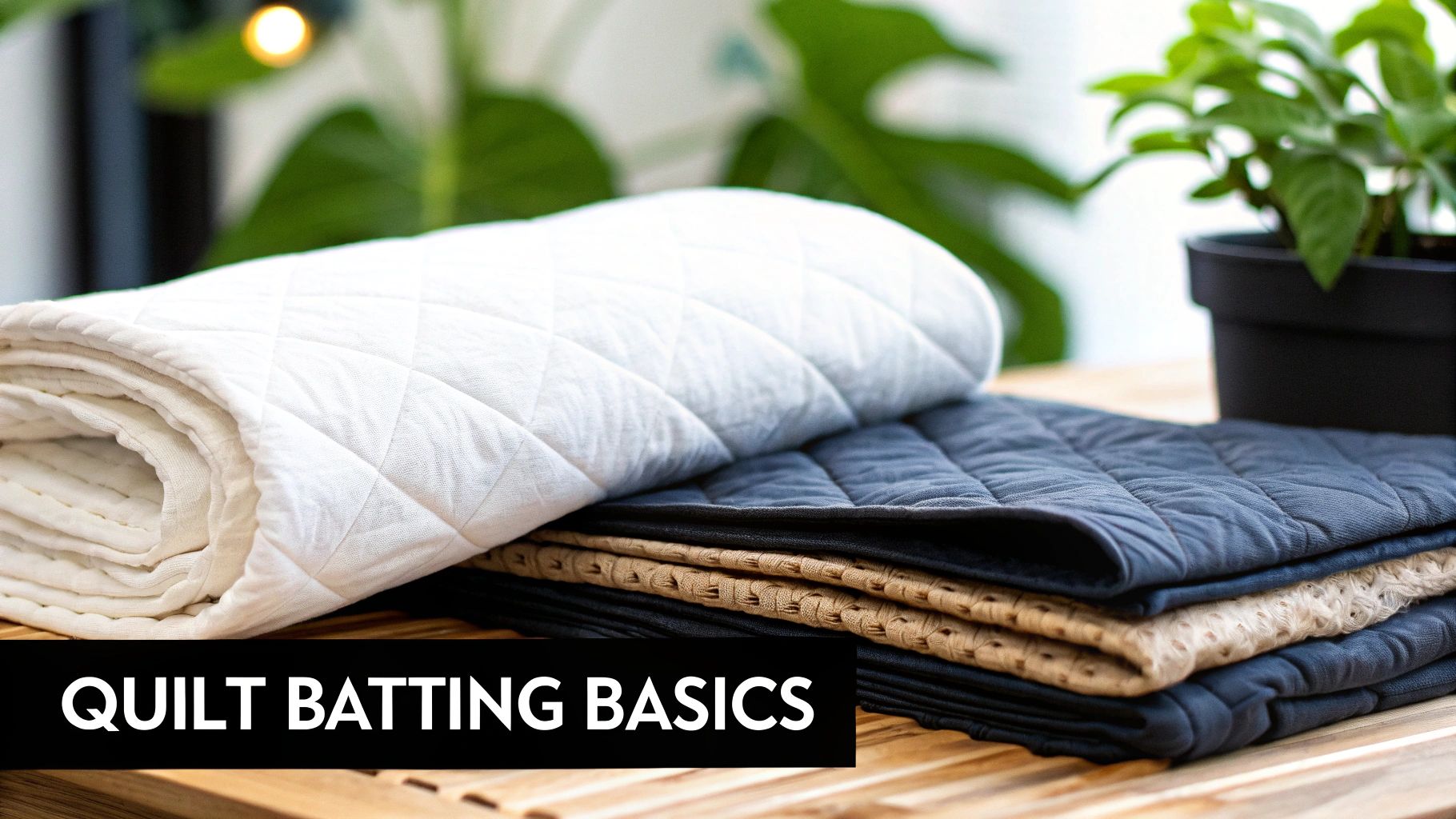
Let’s put it this way: if your quilt top is the personality and the backing is the backbone, the batting is the heart. It’s the unseen hero that gives a quilt its warmth, its drape, and its very character. Without batting, you’ve just got a fancy bedspread. With it, you’re creating an heirloom.
This middle layer does more than just fill space. It’s an active participant in the final look and feel of your project, and understanding its role is key to making a quilt you'll love for years.
The Three Jobs of Quilt Batting
Even though you’ll never see it, the batting's influence is everywhere. From the material you choose to how thick it is, every decision shapes the finished quilt.
-
Warmth and Coziness: First and foremost, batting is an insulator. Its fibers trap air, creating a thermal layer that keeps you warm. A thick, fluffy wool batting is perfect for a heavy winter quilt, while a thin cotton batting gives you a light, breathable throw for a cool summer evening.
-
Puff and Texture (Loft): In the quilting world, we call the thickness and puffiness of batting its "loft." High-loft batting creates deep, dramatic shadows around your quilting stitches, making your designs really stand out. On the other hand, a low-loft batting results in a flatter, more traditional quilt where the fabric and piecing are the main event.
-
A Foundation for Your Stitches: Batting provides a stable, forgiving middle for your needle to glide through. It secures the quilt top and backing, preventing them from shifting and puckering while you stitch. The right batting makes the whole quilting process smoother, whether by hand or machine, and gives your stitches a beautiful, even finish.
Picking your batting is more than just a technical detail—it’s a huge creative choice. It determines how your quilt will hang over the side of a bed, how it feels when you snuggle under it, and how it will hold up after countless washes. This guide is here to walk you through all the options so you can choose with confidence.
Exploring the Most Popular Batting Materials
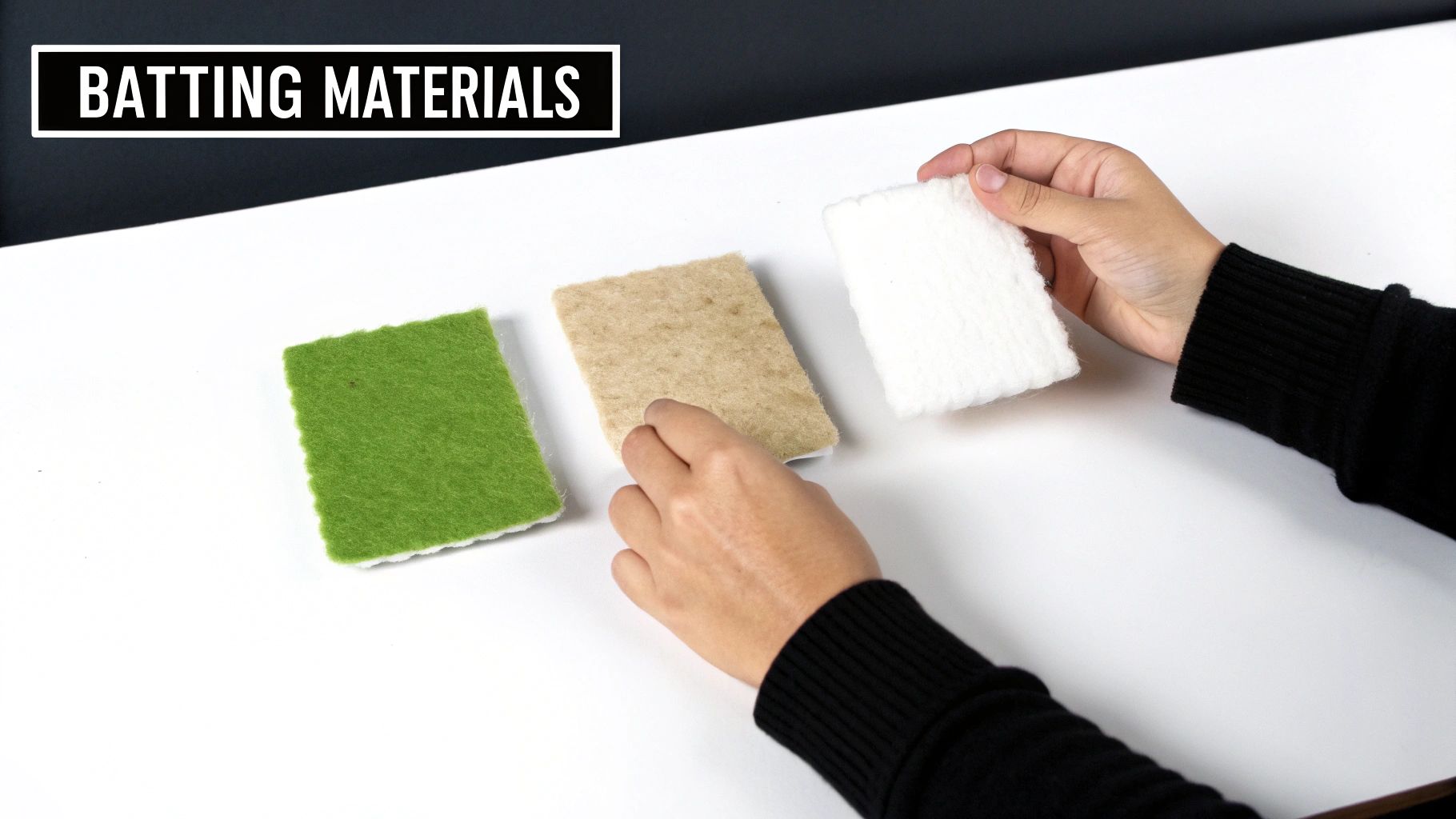
This is where the magic really happens. Choosing the right batting is how you give your quilt its personality. It’s less about finding one "best" option and more about matching the fiber's unique feel and function to your specific project.
Think of it like picking the right kind of flour for a recipe. All-purpose flour is great for most things, but sometimes you need cake flour for a lighter texture or bread flour for a chewier crust. Batting works the same way. Let’s break down the most common materials you'll find, so you can see what makes each one special.
80/20 Cotton-Polyester Blend: The Versatile Workhorse
Walk into any quilt shop, and you'll find an 80/20 blend. This mix of 80% cotton and 20% polyester is hands-down the most popular batting on the market, and for good reason. It truly gives you the best of both worlds: the soft, natural feel of cotton and the durable, lightweight stability of polyester.
This is the go-to choice for everyday projects—the bed quilts, cozy throws, and baby blankets that are meant to be loved and used. The cotton gives you that traditional, slightly crinkled look after washing that we all adore, while the polyester helps reduce shrinkage and adds just a bit of loft without feeling puffy. Learning about different cotton blend fabrics can give you a deeper appreciation for how these smart combinations lead to beautiful, long-lasting results.
100% Cotton with Scrim: The Traditional Choice
If you're chasing that classic, heirloom vibe, then 100% cotton batting with a scrim is your perfect partner. This is the stuff that creates that flat, traditional drape that lets your intricate piecing and beautiful quilting stitches take center stage.
So, what’s a "scrim"? It’s a very thin, lightweight stabilizer that's needle-punched right into the cotton fibers. You can't see it, but it adds incredible strength. This hidden layer of support means you can place your quilting stitches much farther apart—up to 8-10 inches—without worrying about the batting shifting or separating over time. It’s an absolute game-changer for machine quilting, especially on a longarm.
What is Batting’s “Crinkle Factor”? That coveted, puckered texture of a vintage quilt comes from the batting shrinking just a little after its first trip through the wash. A 100% cotton batting typically shrinks about 3-5%, gently pulling the fabric with it to create that soft, well-loved look we all know and cherish.
Wool Batting: The King of Coziness
When warmth and a luxurious loft are at the top of your list, nothing compares to wool. Wool batting is unbelievably lightweight yet packs a serious punch when it comes to insulation. It’s the perfect choice for bed quilts meant to keep you toasty on the coldest nights.
The natural resilience of wool fiber means it resists creases and bounces back beautifully, which makes your quilting stitches pop with gorgeous definition. It’s an absolute dream to quilt with, whether by hand or machine, because your needle glides right through it.
- Key Benefit: An amazing warmth-to-weight ratio.
- Best For: Bed quilts, show quilts, and any project where you want your stitch work to shine.
- Consideration: As a premium fiber, wool typically comes with a higher price tag than cotton or blends.
Specialty Battings for Unique Projects
Beyond the big three, there’s a whole world of specialty battings designed to solve specific creative puzzles. Each one offers a unique feature that can make your quilting process smoother or give your final project that extra special touch. You can dive deeper into these options right here: https://quiltbatting.shop/blogs/blog/types-of-quilt-batting
Black Batting
This is your secret weapon when working with dark or richly saturated fabrics. Using black batting ensures that no pesky white fibers will "beard" (poke through) your dark quilt top. Your colors stay pure, deep, and vibrant, just as you intended.
Fusible Batting
Talk about a time-saver! This batting has a super-thin layer of heat-activated adhesive on both sides. A quick pass with an iron lets you fuse your quilt top, batting, and backing together into a stable quilt sandwich. This completely eliminates the need for pins or spray basting. It's incredibly handy for smaller projects like table runners, placemats, and wall hangings where precision is key.
To make picking the perfect batting even easier, here’s a quick-glance table comparing our most popular types. Use it to match the right material to your next project's needs.
Batting Material Quick Reference Guide
| Material Type | Best For | Key Benefit | Consideration |
|---|---|---|---|
| 80/20 Cotton-Poly Blend | Everyday quilts, throws, baby blankets—a true all-purpose choice. | Soft, breathable, low shrinkage, and durable. | Less loft than wool or high-loft poly. |
| 100% Cotton with Scrim | Traditional quilts, heirloom projects, and longarm quilting. | Creates a classic flat drape and allows for wider quilting. | Shrinks 3-5% for a vintage "crinkle" effect. |
| Wool Batting | Cozy bed quilts, show quilts, and projects needing stitch definition. | Exceptionally warm, lightweight, and resilient. | A premium option with a higher price point. |
| Black Batting | Quilts with dark, jewel-toned, or black fabrics. | Prevents white fiber "bearding" through dark fabric. | Only necessary for projects with dark-colored tops. |
| Fusible Batting | Small projects like placemats, wall hangings, and bags. | Eliminates the need for pinning or spray basting. | Can feel a bit stiffer until washed. |
Ultimately, the best way to learn is to experiment! Don't be afraid to try different materials to see how they feel under your needle and how they change the final look and feel of your work.
Understanding Loft and Scrim for a Better Finish
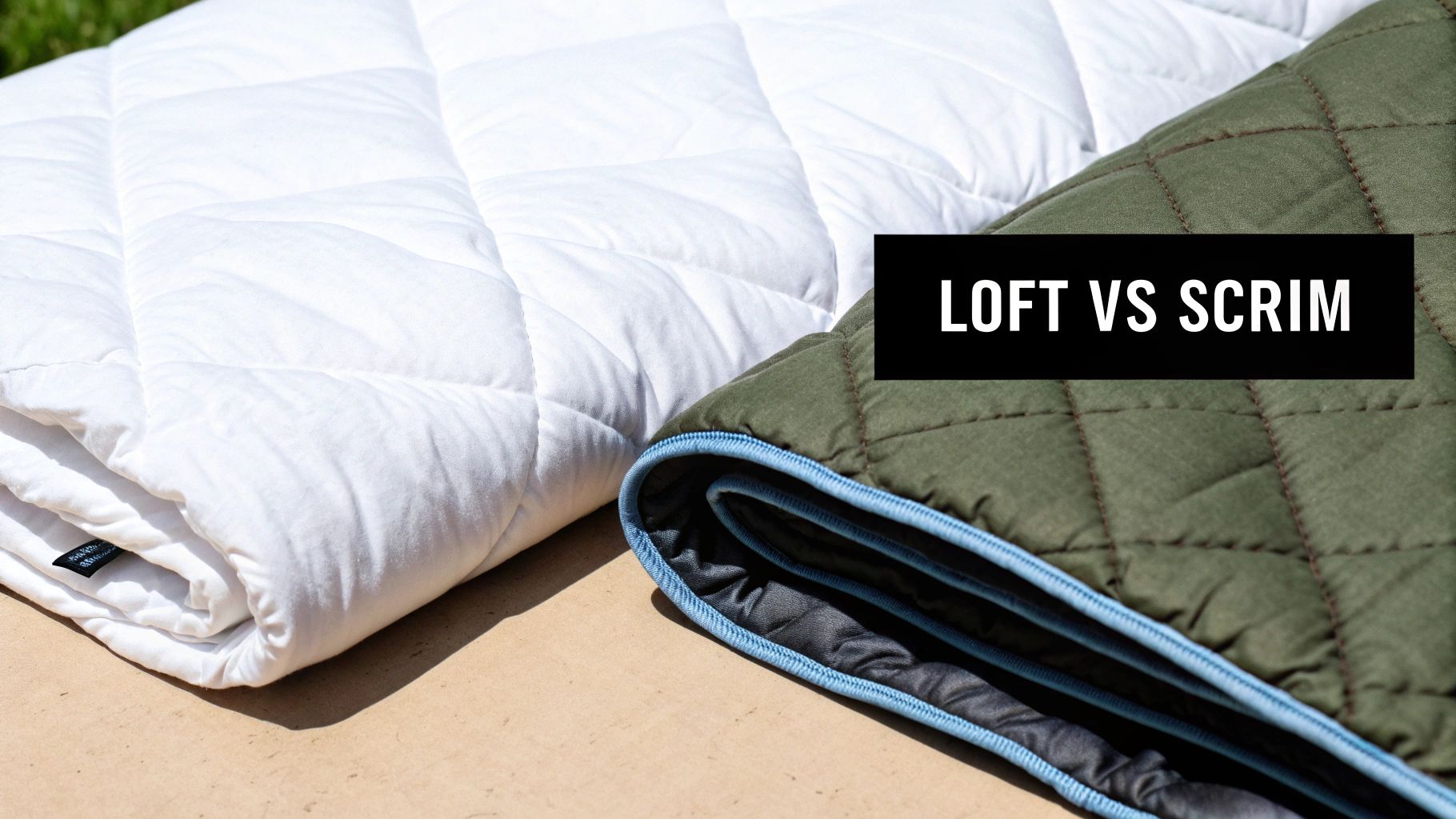
Alright, once you've picked a material for your batting, there are two little words you'll hear over and over that make all the difference: loft and scrim. They might sound like technical jargon, but trust me, they’re simple concepts that totally shape how your quilt looks, feels, and holds up over time. Getting a handle on these is what separates a good quilt from a truly great one.
Think of loft as the batting’s "puffiness." It’s all about thickness. Are you going for a sleek, modern look or a big, fluffy cloud of a quilt? The loft is what gets you there.
The Role of Loft in Your Quilt Design
The loft you choose really needs to match your vision for the quilt. Do you want your intricate stitch work to be the star, or do you want the quilt itself to feel like a warm hug?
-
Low-Loft Batting: This is your thin and flat option, usually coming in at less than ¼-inch thick. It creates a drape that’s more like a classic, old-fashioned quilt. Because it’s so sleek, your piecing and the quilting stitches themselves really pop. It’s my go-to for wall hangings, table runners, and any modern quilt where I want crisp, defined lines from my machine quilting.
-
High-Loft Batting: Now we’re talking puffy. High-loft batting is much thicker, often ½-inch or more, and it’s what gives a quilt that plush, comforter-like feel. The quilting stitches sink into the fluff, creating deep shadows and a wonderfully sculptural texture. This is perfect for hand quilting, tied quilts, or any project where you want the quilt to have a dramatic, cozy presence.
What Is Scrim and Why Does It Matter?
Now for the secret weapon inside many battings: scrim. Picture an incredibly fine, lightweight mesh that’s bonded to the batting fibers. You can't see it or feel it, but it’s a total workhorse. Essentially, scrim is a stabilizer that gives the batting its strength and integrity.
This thin layer is what stops the batting from stretching, pulling apart, or getting distorted while you’re quilting. For longarm quilters, it's a lifesaver because it keeps the batting from misbehaving on the frame. If you want to dive deeper, we have a whole guide explaining https://quiltbatting.shop/blogs/blog/what-is-scrim-in-batting.
Here’s the real magic of scrim: it lets you get away with much wider quilting distances. Since the scrim holds all the fibers together, you can place your stitches as far apart as 8 or 10 inches without worrying about the batting bunching up or shifting inside the quilt later on. This makes it an incredibly durable and forgiving choice, especially for quilts that are going to see a lot of love and washing.
Choosing the Right Batting Size for Your Project
Getting the size right is a simple step that saves you from a world of frustration later on. Imagine pouring hours into a beautiful quilt top, laying it out to baste, and discovering your batting is just a little too small. It’s a gut-wrenching moment that’s completely avoidable.
The golden rule here is simple: your batting needs to be at least 4-6 inches larger than your quilt top on all four sides. This extra margin isn't just a "nice-to-have"—it's a critical part of the quilting process.
Why That Extra Fabric Is So Important
Whether you’re wrestling your quilt through a domestic machine or have it loaded up on a longarm, that extra space is your best friend. It gives you plenty of room to pin or clamp the quilt sandwich without worrying about catching the actual edge of your quilt top.
For longarm quilters, this overage is non-negotiable. You need that extra batting to properly attach the quilt to the frame's rollers. Without it, the edges can get stretched and distorted, and nobody wants a wonky quilt.
Here’s a pro tip: Always measure your finished quilt top before you even think about buying batting. Don't just go by the pattern's estimate. Tiny variations in your seam allowances can add up and change the final dimensions. A quick check with a tape measure guarantees a perfect fit.
Starting with the right size also saves you from the dreaded task of piecing batting scraps together. Sure, you can do it, but joining batting often creates bulky seams that can show through your finished quilt. It’s so much easier to just start with one solid piece.
The Smart Way to Buy: Batting by the Roll
If you’re a quilter who always has a project (or three) in the works, buying batting by the roll is a total game-changer. The same goes for longarm studio owners. Standard widths like 96 inches or 120 inches are incredibly versatile, letting you tackle everything from a small baby quilt to a massive king-sized bedspread.
Not only does buying in bulk save you a ton of money in the long run, but it also saves you time. You can learn more about standard dimensions in our complete guide to quilt batting sizes.
This kind of professional-level prep isn't just for quilting. Think about other industries where consistency is key. For instance, the cricket equipment market is projected to hit USD 1.3 billion by 2035. Just like professional batsmen need a consistent supply of high-quality willow for their bats, professional quilters stockpile 96-inch or 120-inch rolls so they can handle a steady stream of customer quilts without a hitch. You can read more about the booming cricket equipment market on futuremarketinsights.com.
Having a roll of your favorite batting on hand means you’re always ready when inspiration strikes. It’s the perfect foundation for whatever quilt you dream up next.
Matching Batting to Your Quilting Method
The best batting for your quilt isn't just about the fiber; it’s about how you plan to stitch it all together. Your quilting method—whether by hand, on a home machine, or with a longarm—completely changes what you should look for in that fluffy middle layer. Getting this match right is the secret to a headache-free process and a quilt you'll be proud of.
Think of it like a chef picking the right knife for the job. You wouldn't use a cleaver for delicate paring. In the same way, a hand quilter needs something entirely different from a longarm quilter. Making the right choice upfront saves a world of frustration later.
Best Batting for Hand Quilting
Hand quilting is a delicate art, a dance of patience and precision. Your batting should feel like a partner in that dance, not a stubborn opponent. The goal is a batting so soft and needle-friendly that your stitches glide through effortlessly.
For this gentle craft, 100% cotton without a scrim is a fantastic choice. The natural fibers are soft and easy to work with. Wool is another top contender, loved by hand quilters for being incredibly lightweight and a dream to needle. You can dive deeper in our guide to the best batting for hand quilting.
Batting for Domestic Machine Quilting
When you're quilting on a home sewing machine, you're wrestling your project through that small throat space. Manageability is everything. You need a batting that’s stable enough to prevent shifting and puckering but not so bulky that it’s a nightmare to handle.
A low-to-mid loft 80/20 cotton-poly blend often hits that sweet spot. It gives you great stability without being too thick, making it much easier to guide the quilt under your machine's needle. This blend offers a beautiful drape and just enough loft to make your quilting stitches pop.
Expert Tip: To keep your quilt sandwich flat and secure on a domestic machine, consider a batting with a scrim. It adds just enough stability to prevent stretching as you pivot and push the quilt, leading to a much smoother quilting experience.
Ideal Batting for Longarm Quilters
Longarm quilting is all about working on a large frame where the quilt layers are stretched taut. Stability isn't just nice to have—it's non-negotiable. This is why battings with a scrim are the undisputed champions for longarmers.
That scrim provides the strength needed to prevent any distortion or stretching while the machine glides across the surface. This built-in durability also allows for wider quilting distances, giving you much more creative freedom in your designs. Longarm quilters also save a ton of time and effort by using extra-wide rolls, like our 108-inch 80/20 rolls, which get rid of the need to piece batting for bigger projects.
This focus on precision mirrors other crafts and sports. At its core, batting defines cricket's drama, and the market for cricket bats is valued at USD 210 million in 2025. Just as a player chooses a bat for its specific profile, quilters select batting to match their project and machine, ensuring a masterful final result. Find out more about the growth of the cricket bat market on fortunebusinessinsights.com.
Essential Care for Batting and Finished Quilts
You've poured so much love and effort into your quilt, so let's make sure it lasts a lifetime. Great quilt care actually starts before you even make your first stitch, and it brings us to one of the biggest debates in the quilting world: should you pre-wash your batting?
The answer really comes down to the final look you're going for. There's no right or wrong here, only creative preference.
To Pre-Wash or Not to Pre-Wash
If you're dreaming of a quilt with a flat, crisp, modern aesthetic, then pre-washing is your friend. Washing the batting first gets all the shrinkage out of the way, so when you eventually wash the finished quilt, it will stay perfectly smooth and flat.
But what if you love that classic, crinkly, well-loved vintage look? Simple—don't pre-wash! The batting will shrink up just a little bit in that first wash (about 3-5%), pulling the fabric with it and creating that gorgeous, puckered texture we all adore. Just be gentle, as some delicate battings can stretch or get a bit wonky if handled too roughly during washing.
Key Takeaway: Pre-wash for a modern, flat quilt. Skip pre-washing for a vintage, crinkled quilt. There is no wrong answer—it's a creative choice!
Once your masterpiece is finished, storing it correctly is crucial. You can find some fantastic tips on the best way to store blankets that apply perfectly to your quilts, protecting them from damage for years to come.
When it's time for a cleaning, treat your quilt with care. Always use a gentle cycle with cold water and a mild detergent. If you used wool batting, lay it flat to air-dry to prevent it from felting. For sturdy cottons and blends, you can tumble dry on the lowest heat setting.
Sometimes, the simplest decisions are the hardest. This little flowchart can help clear things up.
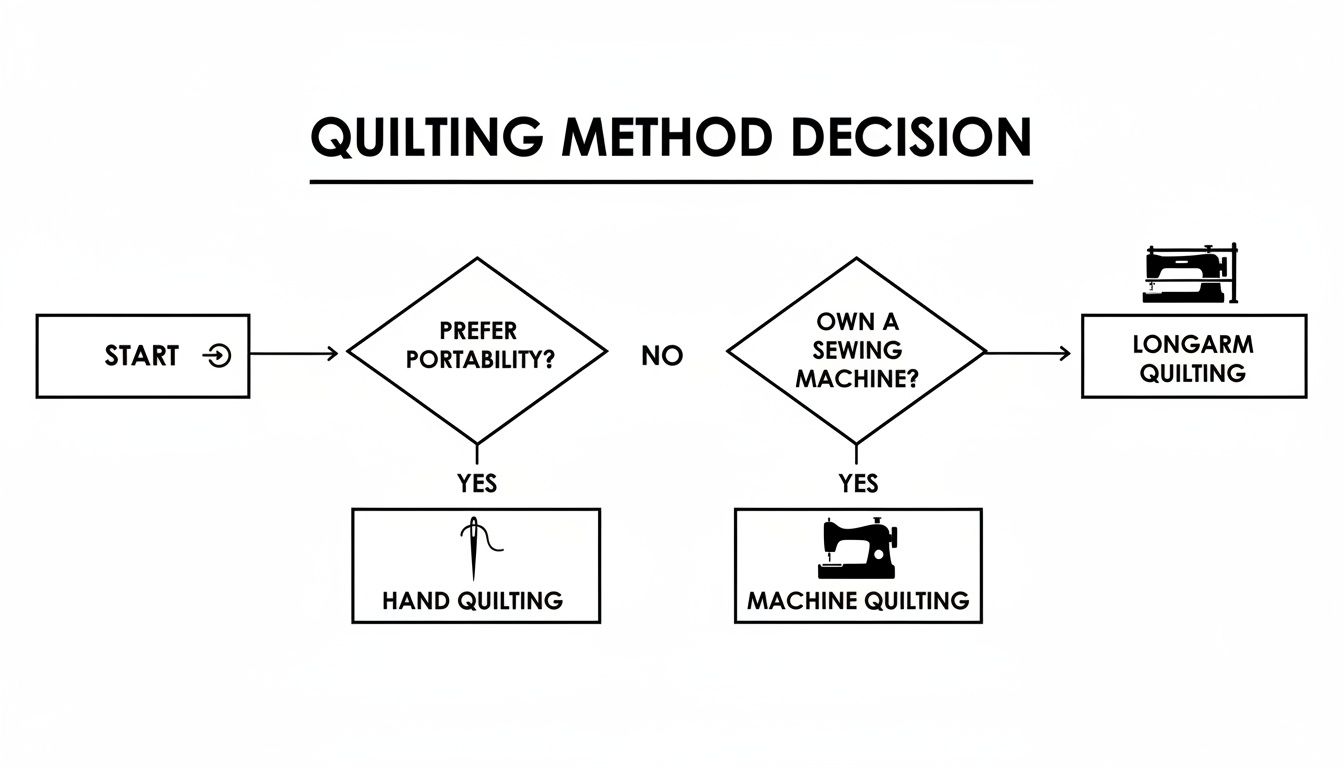
As you can see, your quilting journey is often shaped by the tools you have right in front of you.
Got Questions About Quilt Batting? We've Got Answers.
Even after you've chosen your fabric and batting, a few questions always seem to pop up once you start a project. Let's walk through some of the most common ones I hear from quilters to get you quilting with confidence.
How Far Apart Can My Quilting Stitches Be?
This is probably the most critical question, and thankfully, the answer is always on the batting package. Look for a phrase like "quilt up to X inches apart." This tells you the absolute maximum space you can leave between your quilting lines before the batting starts to shift or bunch up, especially after a wash.
For instance, batting with a scrim is super stable, so you can often get away with quilting as far apart as 8 to 10 inches. This is great for modern quilts with lots of open space. On the other hand, batting without a scrim needs a bit more help staying in place, so you’ll need to quilt it much more densely—usually every 3 to 4 inches. When in doubt, trust the manufacturer's recommendation; they know their batting best.
Can I Use Two Layers of Batting?
You sure can! Doubling up on batting is a fantastic trick quilters use to get some really cool effects. If you want a quilt that's incredibly warm and puffy, stacking two layers of a high-loft batting will give you that gorgeous, cloud-like texture.
This is also the secret behind trapunto, a beautiful technique where you make certain parts of your design pop. You use extra batting in specific spots to create a stunning, three-dimensional look. Just be prepared: quilting through two layers is tough work. You'll need to use a longer stitch length and a strong, sharp needle to get through all that thickness.
What Is "Bearding" and How Do I Stop It?
Ugh, bearding. It’s that frustrating moment when you see tiny fibers from your batting poking through your quilt top or backing, making it look fuzzy. It's especially obvious when you have a light-colored batting under dark fabric.
The best way to prevent bearding is to start with good quality materials. A batting with a scrim is your best friend here, as the fibers are bonded together and far less likely to escape through the weave of your fabric.
Another culprit can be your needle. If it’s too big for your thread, it can punch holes that are just large enough for those pesky batting fibers to sneak through. Always start a new project with a fresh needle that’s the right size for the job—it makes a world of difference.
Ready to find the perfect foundation for your next project? At Quilt Batting, we offer a curated selection of premium batting from trusted brands like Hobbs and Pellon, available by the roll for maximum value and convenience. Explore our collection and get the quality you deserve.