

Ever been deep in the zone on a passion project, only to realize you're completely out of batting? We've all been there. Buying wholesale quilt batting rolls is the smartest way to put an end to that frustration for good, making sure you always have consistent, high-quality material ready for your next masterpiece. Think of it as an investment in your workflow, your creativity, and your wallet.
Why Buying Batting by the Roll Is a Game-Changer
For dedicated quilters, longarm studio owners, and fabric retailers, batting isn't just another supply—it's the heart of your work. Graduating from buying small packages to investing in full rolls is a major step up. It's like a baker going from buying 5-pound bags of flour to ordering it by the 50-pound sack; it shows you're serious about consistency, efficiency, and scale.
This simple switch eliminates those frantic, last-minute trips to the store. More importantly, it gets rid of the subtle but maddening variations you find between different manufacturing runs. When you have a roll on hand, you know the quilt you start today will have the exact same feel, drape, and loft as the one you finish next month.
The Real-World Benefits of Buying in Bulk
Switching to rolls isn't just about convenience; it delivers tangible benefits that directly impact both your creative process and your bottom line. It's why so many professionals and serious hobbyists consider it an essential part of their setup.
Here’s what you really gain:
- Serious Cost Savings: The price per yard on a wholesale roll is dramatically lower than pre-packaged batting. It’s a direct and immediate reduction in your project costs.
- Rock-Solid Consistency: A single roll gives you perfectly uniform material from start to finish. This is non-negotiable for large quilts or a series of matching projects where every piece has to be identical.
- Total Creative Freedom: Having plenty of batting on hand encourages you to take on bigger projects and experiment without that nagging fear of running out halfway through.
- More Time for Quilting: You get back countless hours you would have spent on shopping trips, which means more time for doing what you actually love.
This isn't just a small-scale trend. The global quilt batting industry is valued at over $3 billion, proving just how much quilters value reliable, high-quality materials. It's a massive market, and you can see the growth projections for yourself over at Verified Market Research.
At the end of the day, buying wholesale quilt batting rolls is about taking control. You control your inventory, you control your costs, and you control your creative momentum. Nothing will stand between you and that beautifully finished quilt. If you want to dive deeper into the specifics, check out our detailed guide on rolls of cotton batting to see how different options compare.
Choosing the Right Batting for Your Project
The batting is the heart and soul of your quilt. It’s that invisible middle layer, but it’s what gives a quilt its drape, its warmth, and its unique personality. When you’re looking at a huge wholesale roll, picking the right material can feel like a massive commitment, but it doesn't have to be. Once you get to know the character of each fiber, the choice becomes clear—and even fun.
Think of batting like the fabric for your clothes. You wouldn't wear a thick wool coat on a hot summer day, right? It's the same idea here. A high-loft, fluffy polyester that’s perfect for a cozy bed quilt would completely overwhelm a sleek, modern wall hanging.
Let's demystify the most common materials you'll find on wholesale quilt batting rolls. My goal is to help you confidently match the perfect batting to your creative vision, every single time.
Comparing the Core Batting Materials
Every batting fiber brings something different to the table. Let’s break down the workhorses of the quilting world—the ones you’ll encounter most when buying in bulk.
To make things even easier, here’s a quick-reference chart that lays it all out. It's a great way to see the key differences at a glance and find the perfect match for what you're making.
Quilt Batting Material Comparison
| Material Type | Key Characteristics | Best For | Shrinkage |
|---|---|---|---|
| 100% Cotton | Soft, breathable, traditional flat drape. Great for showing off stitch work. | Heirloom quilts, wall hangings, table runners, traditional patchwork. | 3-5% (creates a vintage, crinkled look) |
| 80/20 Blend | Durable, stable, and soft with less shrinkage. An excellent all-rounder. | Everyday quilts, charity quilts, kids' quilts that need frequent washing. | ~1-3% (more stable than 100% cotton) |
| Wool | Lightweight yet exceptionally warm. Higher loft gives stitches a beautiful puff. | Cozy bed quilts, comforters for cold climates, projects needing textural definition. | ~2-3% |
| Polyester | High loft, lightweight, non-allergenic, and budget-friendly. Resists shrinking. | Tied quilts, puffy comforters, craft projects, quilts needing no shrinkage. | 0-1% (virtually none) |
As you can see, the right choice really boils down to how the finished quilt will be used. A durable blend is a no-brainer for a kid's quilt, while pure cotton might be the perfect canvas for an art piece.
The decision-making process can be simple. This flowchart breaks down whether you should prioritize saving money or getting consistent results, which is often the first big question for both hobbyists and businesses.
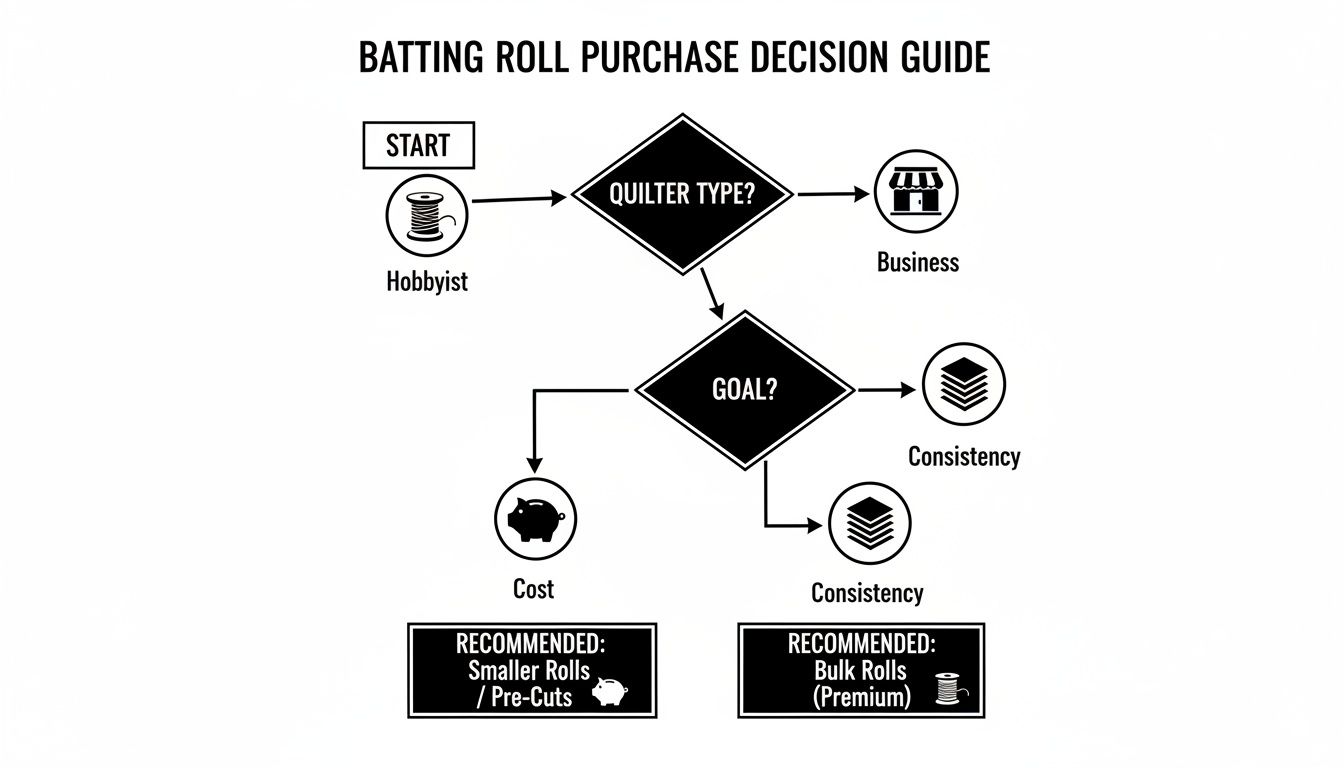
Whether you're making quilts for fun or for sale, this is the fundamental choice that guides you toward the right wholesale roll.
Understanding Loft and Scrim
Beyond the fiber itself, you'll constantly hear two words: loft and scrim. Getting these straight is key.
Loft is just a fancy word for thickness or puffiness. Low-loft batting is thin, creating a flatter quilt where your detailed quilting stitches can really shine. High-loft is the opposite—it’s thick and puffy, creating a quilt that feels more like a plush comforter.
What is Scrim? Scrim is a game-changer for machine quilters. It’s a super-thin, non-woven layer that gets needle-punched into one side of the batting. This adds a ton of strength, stops the batting from stretching or distorting while you work, and lets you quilt up to 8-10 inches apart.
Batting with scrim is a dream for longarmers and anyone using a machine. Just remember, it’s a bit too dense for hand quilting—your needle will not thank you! For a deeper look into all these details, check out our guide on the different types of quilt batting.
Specialty Batting Options
While cotton, blends, and wool are your go-to options, sometimes a project needs something a little different. Many of these are also available on wholesale rolls if your business serves a specific niche.
-
Fusible Batting: This stuff is magic. It has a light, heat-activated adhesive on both sides. A quick pass with an iron and your quilt sandwich is fused together—no pins or spray basting needed! It’s a massive time-saver for smaller projects like table runners and wall hangings.
-
Bamboo Blends: If you want luxury, this is it. Bamboo batting is known for its silky-smooth drape and incredible softness. It's also breathable and lightweight, making it a premium choice for those truly special quilts.
In the end, it all comes back to your project. A sturdy 80/20 blend is perfect for a child's quilt that’s going to live a hard life in the washing machine. For that heirloom art quilt you’ve poured your heart into, the crisp stitch definition from 100% cotton might be exactly what you need. When you understand these differences, you can invest in a wholesale roll knowing it will be the perfect foundation for dozens of beautiful quilts to come.
Understanding Roll Widths and Yardage
Let's talk numbers. I know, it's not always the most exciting part of quilting, but when it comes to buying batting by the roll, getting the numbers right is the secret to saving a ton of money and avoiding some major headaches. Choosing the right width for your wholesale quilt batting rolls is just as important as picking the perfect fiber. It's a strategic move that directly impacts your efficiency, whether you're a longarmer cranking out client projects or a dedicated quilter stocking your home studio for the year.
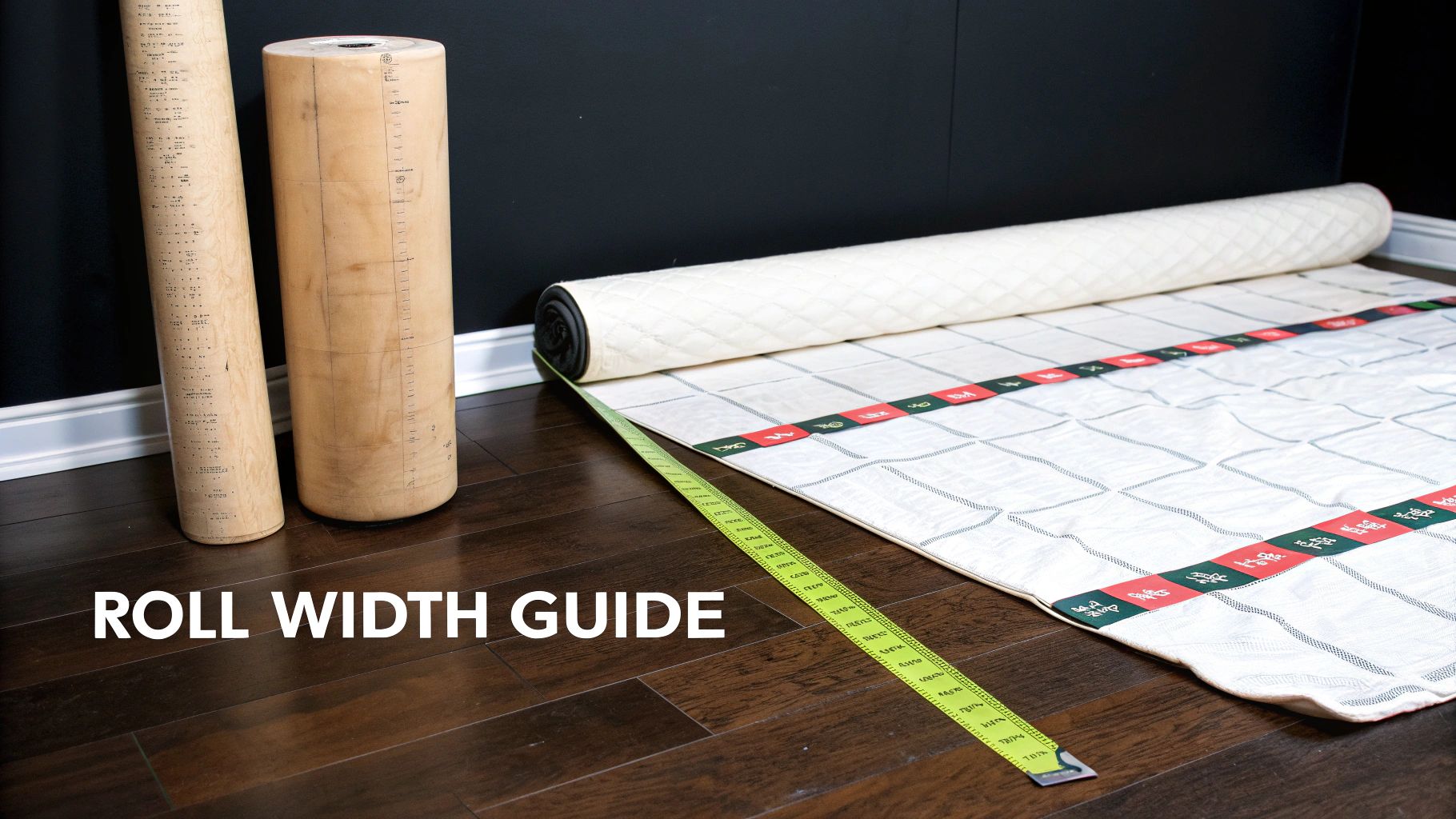
Think of it this way: you wouldn't buy wallpaper without measuring your walls first, right? You'd figure out exactly what you need to minimize seams and avoid wasting half a roll. It’s the exact same principle here. A roll that's too narrow will force you to piece batting together for bigger quilts (a pain nobody wants). On the flip side, a roll that's way too wide just means you're literally cutting off your profits and tossing them in the scrap bin.
Matching Roll Width to Common Quilt Sizes
The good news is that wholesale batting widths are designed with standard bed sizes in mind, giving you just enough overage for quilting without a ton of waste. As a rule of thumb, you want your batting to extend at least 4-6 inches beyond your quilt top on all four sides. This little bit of extra room is your insurance policy against shifting while you're quilting.
Here’s a quick-and-dirty guide to matching roll widths to your projects:
- 90-inch or 96-inch Rolls: These are the absolute workhorses of the quilting world. They're perfect for Twin, Twin XL, and Full/Double quilts, and they're also great for most Lap and Throw sizes with minimal leftover scraps.
- 108-inch Rolls: This is your go-to for Queen size quilts. It gives you that ideal buffer around the edges without being so wide that you feel guilty about the off-cuts.
- 120-inch Rolls: When you’re dreaming big, this is the roll you need. It’s made specifically for King and California King quilts, so you get one beautiful, seamless piece of batting to work with.
By buying the roll that matches the quilts you make most often, you make your whole process smoother and stop wasting material. If you want to get really granular, check out our guide on quilt batting sizes for a super detailed chart.
Calculating Your Break-Even Point
Width is only half the equation. Wholesale rolls also come in different lengths, usually 15-yard boards and the bigger 30-yard rolls. A 15-yard board can be a fantastic way for a serious home quilter to dip their toes into bulk buying. The 30-yard roll, however, is the standard for busy studios and quilt shops.
So, when does buying a whole roll actually start saving you money?
To find your break-even point, just do a little math. Calculate the cost per yard of the roll and stack it up against what you’d pay for it by the yard at retail. For example, if a 30-yard roll costs you $270, your price is just $9.00 per yard. If the retail price is $14 per yard, you start saving cash after using just over 19 yards. The full roll becomes a no-brainer.
This simple calculation takes the guesswork out of it. If you typically make about five queen-size quilts a year (and each one uses around 3 yards), that 15-yard board is your sweet spot. If you're quilting more than that, the 30-yard roll is where the real savings kick in.
Practical Tips for Inventory Management
Once you’ve made the investment, a little bit of planning goes a long way. A prolific quilter at home might work through a 30-yard roll in a year or two, making it a solid purchase. A longarm studio, on the other hand, could burn through that much in just a couple of months.
Before you buy, ask yourself these three questions:
- Estimate Your Annual Usage: How many quilts did you finish last year? Tally up the yardage. This gives you a realistic baseline for what you'll actually need.
- Analyze Project Sizes: Are you the baby quilt queen or a king-size connoisseur? The answer will point you to the most economical roll width for your style.
- Factor in Storage Space: A giant roll of batting needs a home. Make sure you have a clean, dry spot where you can store it safely—ideally standing on end or on a rack to prevent stubborn creases.
When you think through these details, buying batting becomes more than just a supply run; it's a smart business decision. You'll not only save money but also have the peace of mind that comes from knowing you're always ready for the next creative spark.
The Financial Benefits of Buying in Bulk
Let's get right to it. Beyond the perks of convenience and consistency, the biggest reason to switch to wholesale quilt batting rolls is simple: it saves you a ton of money. Whether you’re a passionate home quilter, run a busy longarm studio, or own a fabric shop, keeping costs down is key. Buying your batting in bulk is one of the smartest, most direct ways to slash your overhead on every quilt you make.
Think about it this way. When you grab a small, pre-packaged batting from the craft store, you're not just paying for the batting itself. You're also paying for the fancy plastic bag, the branding, and the cost of it moving through several different hands before it gets to the shelf. A wholesale roll strips away all those extras, getting you much closer to the source price. It’s a game-changing shift in how you buy your supplies.
The Clear Math of Cost Per Yard
The numbers really tell the story here. Let's walk through a real-world example to see just how much cash you can keep in your pocket.
Imagine a high-quality, 30-yard roll of an 80/20 cotton blend costs you $300. That breaks down to just $10 per yard. Easy math.
Now, think about what you’d pay for that exact same batting off the bolt at a retail store, which could easily be $15 per yard.
- Savings per yard: $5.00
- Total savings on the roll: $5.00/yard x 30 yards = $150
You just saved a whopping 33% on a core quilting supply, simply by buying it smarter. That $150 is real money you can put toward that fabric collection you’ve been eyeing, a new ruler, or just padding your business’s bottom line. The savings aren't just theoretical; they're immediate. To see how this plays out across different materials, take a look at the various Hobbs batting rolls and boards available.
Navigating MOQs for Business Owners
If you run a quilting business, the term "Minimum Order Quantity" (or MOQ) is your ticket to the best pricing. Suppliers offer these deep discounts because it helps them run their own operations more efficiently. Don't let an MOQ scare you off—think of it as a strategic goal.
For sewing entrepreneurs and fabric retailers, the appeal of bulk buying is undeniable. This is a cornerstone for a quilting market that, in the US alone, generated an annualized revenue of $4.5 billion. The ability to stock up on 30-yard rolls of essential materials like wool or fusible batting is what minimizes downtime and maximizes profit margins. Learn more about these powerful industry trends from the Craft Industry Alliance's survey.
A brilliant way to meet an MOQ without tying up all your cash is to run a pre-order sale. Offer a special discount to your customers or longarm clients if they pre-pay for their batting. This gives you the capital to place the large order, locks in fantastic pricing for your business, and passes a little of that savings on to your loyal community. It’s a win-win.
Is a Full Roll Right for a Home Quilter?
Absolutely! You don't need a business license to think like a pro. For quilters who are always working on the next project, buying a roll is often a no-brainer. If you feel like you’re constantly making "batting runs" to the fabric store, it’s probably time to consider buying a roll.
Here’s a quick gut-check to see if it makes sense for you:
- Estimate Your Annual Projects: How many large quilts (throw-sized or bigger) do you typically finish in a year?
- Calculate Your Yardage: A generous throw quilt takes about 2 yards, and a queen needs around 3. Multiply your project count by the average yardage.
- Compare the Costs: If you're using 10 yards or more a year, a 15-yard board or a full 30-yard roll will almost certainly save you money.
Think about it: if you make just four queen-sized quilts a year, you’re already at 12 yards of batting. At that pace, a 30-yard roll is an amazing investment that will fuel your creativity for more than two years while saving you hundreds of dollars.
Storing and Handling Your Batting Roll
So, the delivery truck pulls away, and you’re staring at a giant, glorious roll of quilt batting. It’s an awesome moment for any quilter, but let's be honest, it can also be a little intimidating. Where on earth do you put this thing? And how do you handle it without messing up your investment?
Don't sweat it. Managing your wholesale quilt batting rolls is actually pretty straightforward once you know a few tricks of the trade.
First things first: your batting will probably show up tightly compressed in a thick plastic bag. Once you carefully slice open the packaging, it’s going to expand. The most important thing is to find it a home that's clean, dry, and climate-controlled. Keep it far away from direct sunlight, which is notorious for weakening and discoloring fibers over time.
Smart Storage Solutions for Any Space
You absolutely don't need a huge warehouse to store your batting roll. The main goal is just to get it up off the floor, where it can fall victim to moisture, dust, and even pests. A little bit of creativity is all you need to find a setup that works for your studio or sewing room.
Here are a few popular methods I've seen work wonders:
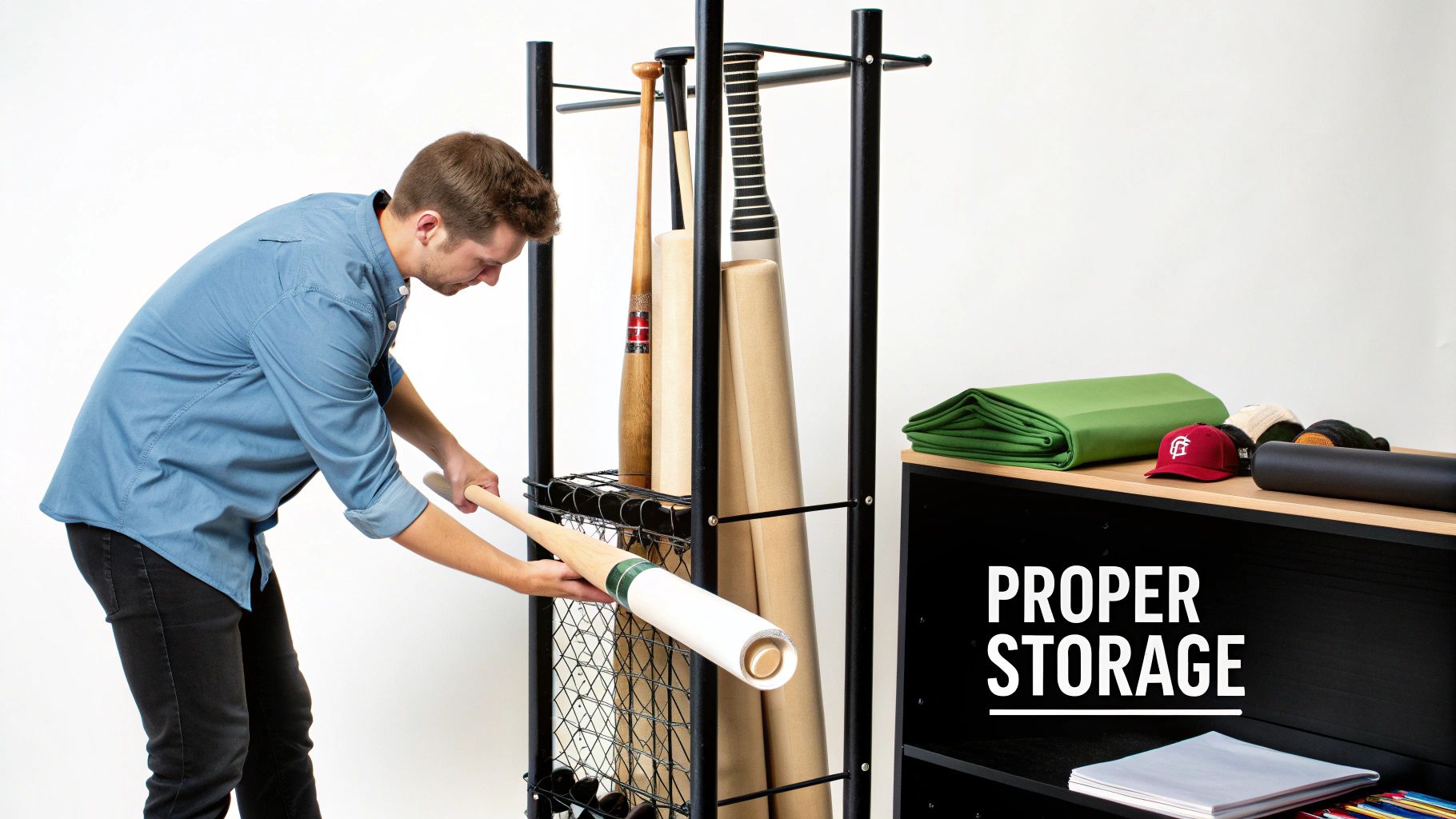
- Vertical Storage: The easiest approach is to simply stand the roll on its end in a clean corner. This works great, just make sure to rotate it every few weeks so the bottom edge doesn’t get permanently squashed.
- Horizontal Racks: A simple lumber rack from the hardware store or even a heavy-duty sports equipment holder can be mounted right on the wall. This cradles the roll horizontally, keeping it safe and making it a breeze to unroll what you need.
- Suspended Dowel System: If you’re really tight on space, this is the ultimate hack. You can hang two sturdy brackets from the ceiling, slide a thick dowel or pipe through the roll's center, and store your batting completely overhead and out of the way.
Best Practices for Handling and Preparation
How you handle the batting is just as critical as how you store it. The last thing you want are permanent creases or a distorted loft, which will show up in your finished quilts. Treat your batting roll with a little TLC, and it will pay you back over dozens of projects.
Let It Rest: After your batting arrives, and especially after you unroll a piece for a new project, give it at least 24 hours to just "rest." Lay it out flat on a clean surface. This gives the fibers time to relax and decompress, which is the secret to getting that perfectly smooth, even loft when you sandwich your quilt.
When you’re ready to cut, always grab a sharp rotary cutter and a big cutting mat. Try your best not to pull or stretch the batting, as that’s how you get dreaded thin spots. Instead, gently smooth it out and let your rulers do the work of holding it in place as you cut.
Following these simple steps will protect your bulk batting purchase and guarantee that every quilt you make starts with a flawless foundation. Trust me, your future self will thank you for taking a few extra moments to store and handle your batting like a pro.
Creative Projects Using Bulk Batting
Having a big roll of batting on hand is like having a blank canvas—it's permission to get creative. While it’s the heart and soul of traditional quilts, that giant supply lets you think way beyond the quilt top. It’s an invitation to explore projects that can bulk up your product line or just fill your home with more handmade goodness.
This is your chance to really get the most out of every single square inch. Don't just see it as quilt filler; see it as the raw material for a whole world of profitable and personal items. You can finally say "yes" to those big, ambitious ideas without that nagging fear of running out halfway through.
Beyond the Quilt Top
That roll of batting is your ticket to making all sorts of functional and three-dimensional art. When you're not worried about your supply dwindling, you can confidently branch out into new creative territory, making things that are as practical as they are beautiful.
Here are a few ideas to get you started:
- Plush Upholstered Headboards: Imagine layering up high-loft batting to create a ridiculously luxurious custom headboard. It’s a project that adds a soft, high-end feel to any bedroom.
- Insulated Lunch Bags and Totes: A dense cotton or blend batting is perfect for giving bags real structure and insulation. They’re great for keeping lunch fresh or a farmer's market haul cool.
- Structured Jackets and Vests: A thin, low-loft batting can add just the right amount of warmth and body to outerwear without making it bulky, giving your handmade garments a truly professional finish.
- Soft Sculptures and Toys: You can cut and shape batting to build the core of adorable stuffed animals or even abstract fabric art. It provides the form and that essential squishy factor.
This is exactly the kind of creative freedom that keeps the quilting world buzzing. The North American market alone, valued at $0.9 billion, is built on a community of quilters who rely on wide wholesale quilt batting rolls for everything from king-size heirlooms to inventive new crafts. You can discover more insights about this dynamic market right here.
Matching Batting to the Project
Just like with quilting, picking the right batting is the secret to getting a great result. Your go-to wholesale roll will be a workhorse, but for certain projects, having the perfect specialty material on hand changes everything.
Here’s a quick guide to pairing batting with specific creative ventures:
- Fusible Batting: This stuff is a total game-changer for detailed wall hangings, placemats, or anything with appliqué. It fuses right to the fabric, so you can ditch the pins and be sure your pieces won't shift.
- Microwave-Safe Batting: If you're making hot-ticket items like bowl cozies or baked potato bags, using 100% cotton microwave-safe batting is an absolute must. It’s a non-negotiable for safety.
- Polyester or Wool Batting: The high, springy loft of these materials is what you want for decorative pillows and plush floor cushions. They give that extra puff and hold their shape beautifully over time.
Got a Few More Questions?
Alright, even after diving into all the details, you might still be mulling over a few things before taking the plunge on your first big roll. That’s completely normal. Buying wholesale quilt batting rolls is a big step up, and you want to be sure you're making the right call for your studio or your craft.
Let's clear up some of the most common questions I hear from quilters. Think of this as our final chat over a cup of coffee before you make a smart investment that will pay off for years to come.
How Do I Choose the Right Loft for My Project?
Picking the right loft—the official term for batting thickness—is everything. It's the single biggest factor that dictates the final look, feel, and drape of your quilt. It’s not about finding the "best" one, but the right one for the story your quilt is telling.
Think of it this way: low-loft batting is like a smooth canvas. It's thin, dense, and designed to show off your quilting. Every single stitch pops. This is why you'll see it used for:
- Intricate, detailed machine quilting where the thread work is the main event.
- Modern quilts that need those clean lines and a flat, crisp hang.
- Wall hangings, placemats, and table runners that absolutely have to lay flat.
High-loft batting, on the other hand, is all about texture and warmth. It’s thick, fluffy, and gives you that traditional, puffy comforter feel. Your stitches will nestle into it, creating a softer, more blended look. It's the go-to when you're aiming for that extra-cozy, sink-into-it warmth.
Can I Wash and Dry Quilts with Any Type of Batting?
Absolutely, but you have to know what to expect. The fiber your batting is made from determines how it behaves in the wash. Get this wrong, and you might end up with a little surprise shrinkage.
Natural fibers like 100% cotton are famous for shrinking a bit—usually around 3-5%—after that first wash and dry. Seasoned quilters often plan for this, because it’s what creates that classic, crinkly, lived-in texture we all love. If that's not the look you're going for, you can pre-wash the batting. Just soak it in cool water, gently squeeze the excess out (never, ever wring it!), and lay it flat to air dry.
Polyester and most cotton/poly blends are a different story. They’re incredibly stable and have next to no shrinkage, which makes them a fantastic, worry-free choice for quilts destined for a lot of use and washing—think baby quilts, kids' quilts, or charity projects. No matter what, always glance at the manufacturer's care instructions on the roll itself.
Is a 30-Yard Roll Too Much for a Home Quilter?
I get this question all the time. It sounds like a massive amount, but for an active quilter, a 30-yard roll is often the most practical and budget-friendly move you can make. The yardage just disappears faster than you'd imagine.
Let's break it down. A decent-sized queen quilt will take about 3 yards of batting. That means a single 30-yard roll gives you enough for 10 queen-size quilts.
If you're finishing more than four or five large quilts a year, a 30-yard roll is a no-brainer. It'll probably last you a couple of years, but in that time, it will save you hundreds of dollars and so many last-minute trips to the fabric store.
For so many dedicated home quilters, that big roll isn't overkill—it’s just a smarter way to stock your studio and fuel your passion.
Ready to stop buying batting in little bags and start saving with a roll? At Quilt Batting, we've curated a selection of the best Hobbs and Pellon batting out there, perfect for whatever you're dreaming up next.