

Picture a quilt for a moment. What makes it so comforting? It's not just the fabric top or the backing; it’s that soft, puffy layer sandwiched in the middle. That’s the batting, and it’s truly the heart of the quilt, giving it warmth, body, and that unmistakable quilted texture.
The Hidden Heart of Every Great Quilt
I like to think of batting as the unsung hero of the quilting world. It's the internal architecture of your project. Just like the framing of a house provides its structure, the batting you choose shapes the final look, feel, and drape of your quilt. It’s a decision just as crucial as picking your fabrics and thread, but honestly, it's often the last thing we think about.
Let’s change that. This guide is all about pulling back the curtain on cotton batting rolls. We'll stop seeing them as just "filler" and start treating them as the critical creative choice they are. The right batting makes your quilting stitches pop and gives your quilt a beautiful, soft drape. The wrong one? It can leave you with a quilt that feels stiff, doesn't wear well, or just doesn't live up to the vision in your head.
Why Your Batting Choice Matters
The batting you choose has a ripple effect through your entire project, from the moment you start quilting to how the finished piece feels in your hands.
Here’s really what’s at stake:
- Final Texture: Batting is what decides if your quilt will have a flat, modern look or a puffy, traditional one.
- Warmth and Weight: How dense the cotton fibers are directly translates to how cozy and heavy the finished quilt will be.
- Durability: Good batting is what makes a quilt last. It ensures your creation can stand up to years of snuggles and washes, turning it into a genuine heirloom.
Batting is the soul of the quilt. It's the unseen element that provides comfort, defines the quilting stitches, and ultimately brings the pieced top and backing together into a cohesive, functional piece of art.
Getting a handle on these basics is the first real step. It's easy to feel overwhelmed with all the choices out there—from 100% cotton to fancy blends. Knowing what you're looking for makes all the difference.
To get a clearer picture of how different types compare, our quilt batting comparison chart is a great place to start. Once you understand these core ideas, you'll be able to walk into any shop (or browse online) and pick the perfect roll for your next project with total confidence.
Navigating the Types of Cotton Batting
Choosing the right cotton batting roll feels a lot like picking the perfect spice for a favorite recipe. Each type has its own distinct personality, bringing a unique texture and feel to your final quilt. Getting to know these personalities is the secret to matching the batting to your quilt's true purpose and the look you're going for. The good news? You only really need to understand a few key players to start making choices like a pro.
Think of batting as the heart of your quilt—it’s the central ingredient that influences the fabric's drape, the warmth, and the overall character of the finished piece.
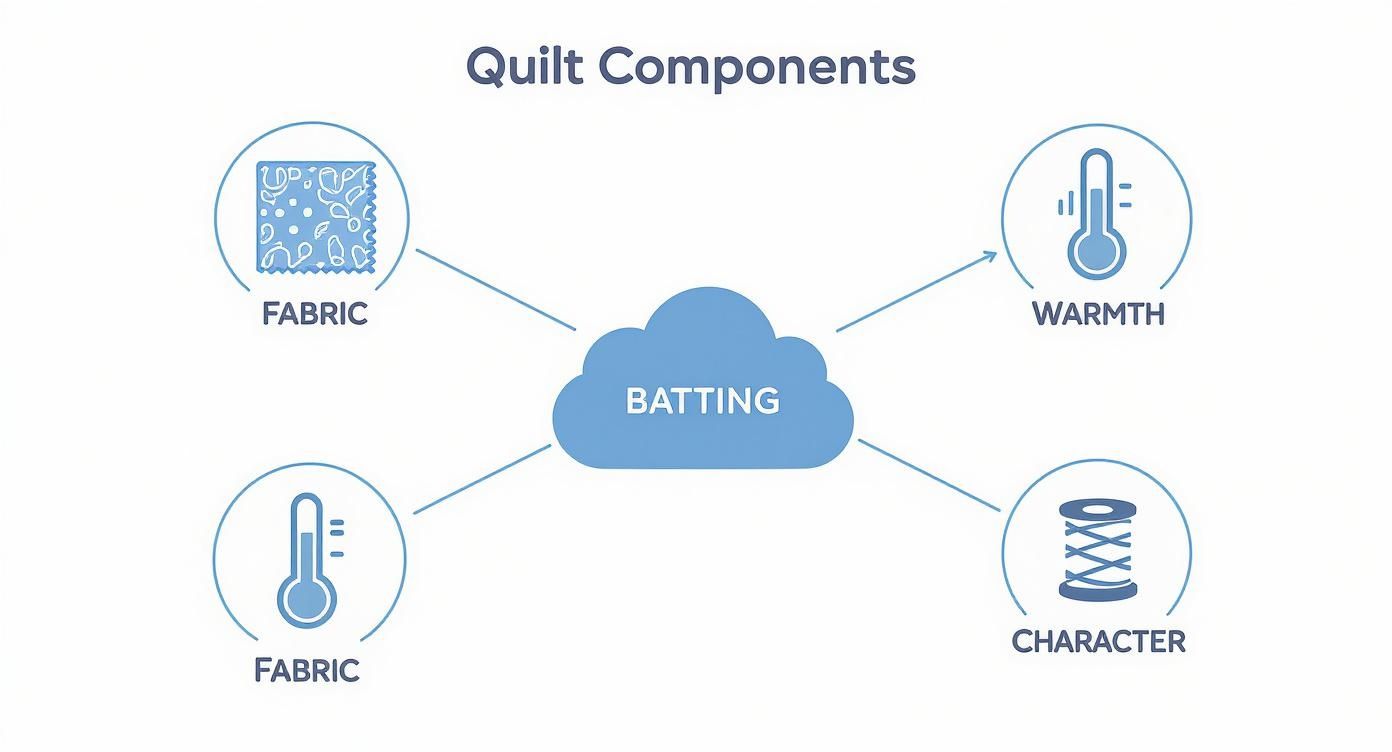
As you can see, your batting choice ripples through every other aspect of the project, making it a foundational decision. This growing appreciation for natural fibers is a big reason why the global cotton batting market is expected to be worth $8.2 billion by 2028.
The Classic Choice: 100% Cotton
If you're looking for that traditional, timeless feel, look no further than 100% cotton batting. It's beloved for its incredibly soft, natural hand and fantastic breathability, making it a perfect fit for everything from delicate baby quilts to cozy bedspreads. It behaves a lot like a thick flannel, giving you a comfortable weight without adding too much bulk.
One of its most cherished quirks is how it ages. Pure cotton batting typically shrinks just a bit, around 3-5%, after its first wash. That might sound like a flaw, but this slight shrinkage is exactly what creates that gentle, crinkly texture we all associate with vintage and heirloom quilts. For that classic, well-loved look, 100% cotton is the undisputed champion.
The Durable Workhorse: Cotton-Poly Blends
Next up is the incredibly popular cotton-poly blend, which you'll most often find in an 80/20 mix (that’s 80% cotton and 20% polyester). This blend is the practical workhorse of the batting world, masterfully combining the best traits of both fibers. You get the wonderful softness and breathability of cotton, but with the added strength, stability, and friendlier price point of polyester.
These blends shrink less than pure cotton and are exceptionally durable. This makes them a fantastic choice for quilts that are destined for a life of heavy use and frequent washing, like a child’s bed quilt or a family-room throw. They offer that perfect middle-ground, giving you total reliability without sacrificing that soft, quilted feel. Our detailed guide on the different types of quilt batting can help you explore these options even further.
The Stabilizer: Scrim and Other Specialties
Some cotton and blend battings come with a secret weapon: scrim. Scrim is a very thin, lightweight layer of stabilizer that is needle-punched right into the batting fibers. Picture it as a fine internal grid holding everything together. This adds remarkable strength and prevents the batting from stretching or distorting while you work.
Scrim is an absolute game-changer for machine quilting, especially on a longarm. It provides the stability needed to handle the high tension of the machine and allows you to place your quilting stitches much farther apart—sometimes up to 8-10 inches—without the batting ever shifting or separating.
Beyond these mainstays, you'll also run into a few specialty options. Fusible batting, for instance, has a heat-activated adhesive that lets you temporarily stick your quilt layers together, making the basting process a breeze. For a touch of real luxury, wool batting offers exceptional warmth with very little weight, creating a lofty, beautiful drape that truly makes your quilting stitches pop.
Here's a quick comparison of the most common cotton batting types to help you choose the best fit for your project's needs.
Cotton Batting Types at a Glance
| Batting Type | Composition | Best For | Key Characteristic |
|---|---|---|---|
| 100% Cotton | 100% Natural Cotton Fibers | Heirloom quilts, baby quilts, traditional projects | Soft, breathable, creates a classic crinkled look |
| Cotton-Poly Blend | Typically 80% Cotton, 20% Polyester | Everyday quilts, kid's bedding, frequently washed items | Durable, low shrinkage, budget-friendly |
| Cotton with Scrim | Cotton or Cotton-Blend with a Stabilizer | Longarm quilting, quilts with wide-spaced stitching | Strong, stable, prevents stretching |
| Fusible Cotton | Cotton or Blend with a Heat-Activated Adhesive | Quick projects, wall hangings, small quilts | Simplifies the basting process |
Ultimately, the right batting depends entirely on the story you want your quilt to tell. Whether it's the vintage charm of 100% cotton or the modern durability of a blend, the perfect choice is waiting.
Making Sense of Loft, Weight, and Dimensions
When you first glance at a batting roll label, all the numbers and terms—loft, weight, width—can feel a bit overwhelming. But trust me, learning to read these specs is the secret to getting your quilts to look and feel exactly how you envision them. Think of it less like technical jargon and more like the recipe for your quilt's final personality.
This is the stuff that separates a good quilt from a truly great one. It’s how you move from just hoping for the best to making deliberate, creative choices that bring your vision to life.
What Loft Really Means for Your Quilt's Look
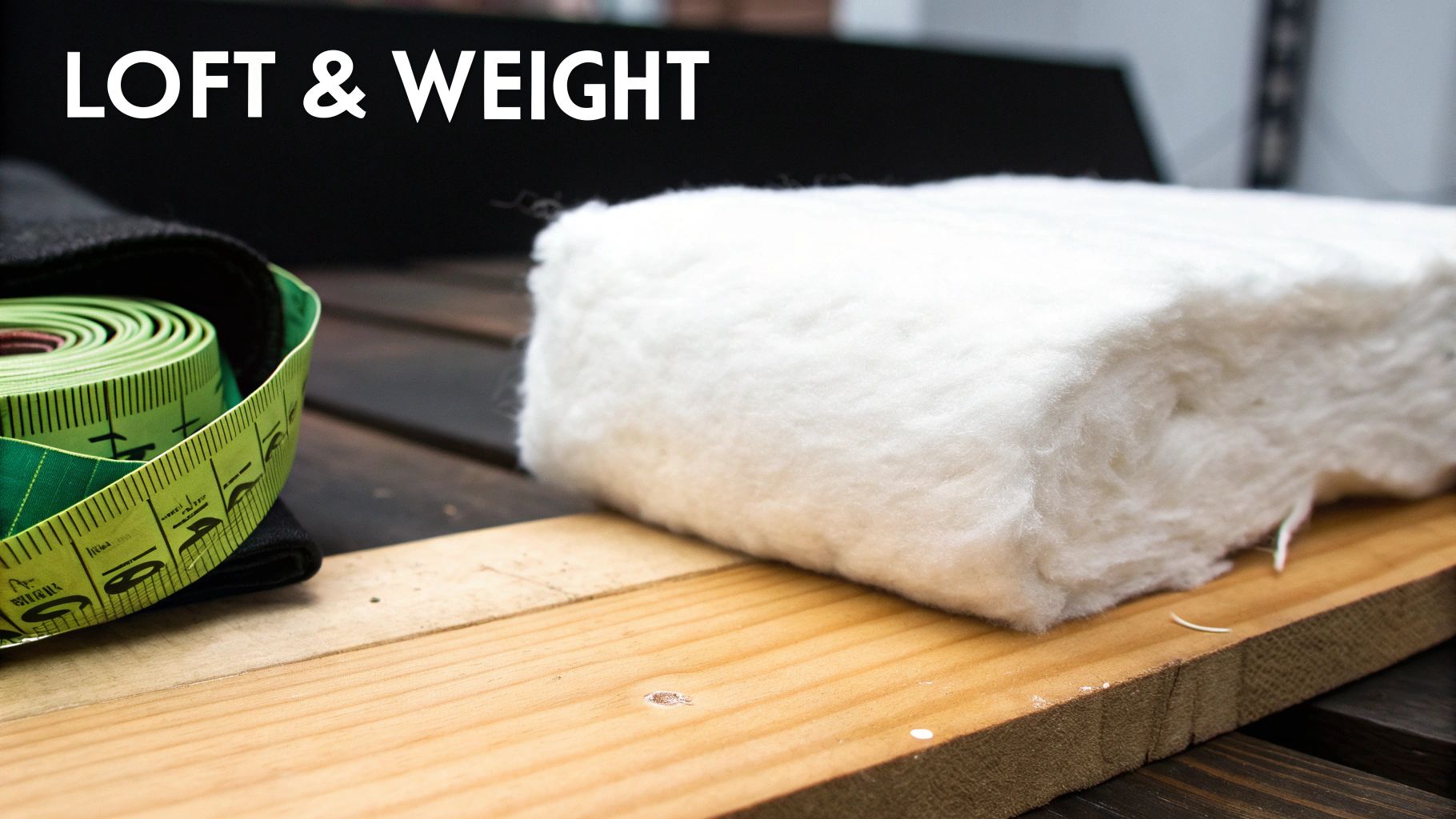
The first, and maybe most important, detail is loft. It’s just a fancy word for thickness or "fluffiness." Loft is what determines the visual texture of your finished quilting stitches.
- Low Loft: Thin, dense, and flat. This is your go-to when you want your intricate piecing or detailed quilting stitches to be the star. It gives quilts a crisp, modern look.
- High Loft: Thick, airy, and puffy. This creates that classic, comforter-like feel. It's perfect for tied quilts or when you want the quilting to create deep, cozy shadows and texture.
For a sleek, contemporary look that’s perfect for wall hangings or modern bed quilts, a low loft batting is the way to go. You can learn more about how to use low loft batting for quilts to get that beautifully flat finish.
How Weight Translates to Warmth and Drape
While loft is about how thick the batting is, weight is all about its density. A heavier cotton batting packs more fibers in, which means more warmth and a quilt that feels more substantial. It's ideal for those quilts you want to curl up under on a cold winter night.
On the flip side, a lighter-weight batting is perfect for a breathable summer quilt or a decorative throw that doesn't need to provide serious insulation. It’s a simple trade-off: more weight almost always means more warmth. Just think about how the quilt will be used.
Why Roll Size Is a Bigger Deal Than You Think
Finally, you have the roll's dimensions—its width and length. This is where a little bit of planning can save you a world of frustration. Common widths like 96", 108", or 120" dictate the biggest quilt you can tackle without the headache of piecing your batting.
Here's a non-negotiable rule of thumb: always get batting that is at least 4 inches wider and longer than your quilt top. This extra margin is your safety net. It gives you room for the fabric to shift and shrink during quilting, preventing that awful moment when you realize your batting is too short.
The demand for these precisely sized rolls is huge. China, for example, is a major player, with reports showing nearly 2,000 export shipments from its hundreds of manufacturers in 2024 alone. It just goes to show how critical getting these dimensions right is for quilters all over the world.
Matching Batting to Your Quilting Method
Picking the right batting is about more than just how the finished quilt will look and feel. It's about making the actual quilting process a dream instead of a nightmare. Your quilting style—whether you're working on a domestic machine, a longarm, or by hand—has its own unique demands.
Think of it like this: you wouldn't use the same tires for a Formula 1 race car as you would for an off-road truck. The "road" you're quilting on dictates the kind of "tire" you need. Let's break down how to match your batting to your method.
https://www.youtube.com/embed/E5C5u8EBvlI
For Domestic Machine Quilters
If you're quilting at home on a standard sewing machine, your biggest battle is often with the quilt itself. You're constantly pushing, pulling, and rotating a bulky quilt sandwich through a small space. The last thing you need is a batting that fights you every step of the way.
What you're looking for is something cooperative and easy to handle.
- Low Loft is Your Friend: An 80/20 cotton-poly blend is a fantastic go-to. It's relatively thin, which makes it much easier to guide under your presser foot, and it drapes beautifully without adding a ton of unmanageable puffiness.
- Scrim Adds Stability: A batting with a scrim binder provides an extra layer of stability. This is a huge help because it keeps the batting from stretching or getting distorted as you maneuver the quilt—a common frustration on a domestic machine.
- Buy the Right Amount: Unless you're churning out quilts every week, a giant 30-yard roll might be more than you need. A smaller roll or even pre-cut batting packages can save you both storage space and the headache of wrangling a massive piece of material.
The key is to find a batting that works with you, not against you. A flexible, stable choice lets you focus on your beautiful stitches instead of wrestling with the bulk.
For Longarm Quilters
Longarm quilters are playing a completely different game. The machine is stationary, and the quilt is stretched taut on a frame, often moving at high speeds. This high-tension environment requires a batting that is tough, stable, and can take the stress.
For longarm quilting, stability is everything. The constant tension and high-speed stitching can easily stretch or tear a delicate batting. This is where a high-quality cotton batting roll with a strong scrim isn’t just a nice-to-have—it’s a necessity for professional-grade results.
A batting with a strong, dense scrim is non-negotiable. It prevents the batting from tearing under tension and gives you the freedom to space your quilting lines much farther apart, sometimes up to 8-10 inches, without worrying about the fibers shifting or bearding later on.
Since longarmers use a massive amount of batting, buying cotton batting rolls in bulk is almost always the smartest and most cost-effective approach. It guarantees you have consistent, reliable material on hand and saves you a lot of money in the long run.
For Hand Quilters
Hand quilting is a much more intimate, tactile process. It’s all about patience, rhythm, and the feel of the needle passing through the layers. For this beautiful art form, the perfect batting is one that welcomes your needle, rather than resisting it.
A natural, soft batting like 100% cotton or even wool is typically the top choice. These fibers are a joy to needle. You'll want to look for options without a scrim, as that stabilizing layer can make it noticeably tougher to push a needle through by hand, leading to sore fingers and fatigue.
Your goal here is a soft, breathable batting that allows your hand stitches to sink in and create those gorgeous, gentle puffs that are the hallmark of a hand-quilted treasure.
Buying and Preparing Your Batting for Success
You’ve done the research and picked out the perfect cotton batting. Now comes the fun part—turning that roll of fluff into a finished quilt. This is where a little bit of planning makes all the difference, separating a joyful quilting experience from a frustrating one filled with last-minute scrambles.
Honestly, success starts before you even click "buy." Getting your measurements right from the get-go saves headaches, money, and precious fabric.
Calculating Your Batting Needs
If there's one piece of advice I can give you, it's this: always buy more than you think you need. I can't tell you how many quilters have been caught out by this. Your batting and backing simply must be larger than your quilt top to handle any shifting or pulling that happens on the machine.
A good rule of thumb is to add at least 4 inches of overage to every single side. That gives you a solid 8-inch safety net on both the length and the width. It feels like a lot, but you'll be glad you have it.
For example, if your quilt top measures 60 inches by 70 inches, your batting should be at least 68 inches by 78 inches. This extra margin is your insurance policy against a quilting disaster.
It's a small calculation that prevents that sinking feeling of realizing your batting is too small after you've already started.
To make things even easier, here’s a quick reference guide.
Batting Coverage Calculation Guide
Use this table to quickly estimate the cotton batting roll size needed for standard quilt dimensions, including a recommended 4-inch overage on all sides.
| Quilt Size | Typical Dimensions (inches) | Required Batting Size (inches) | Recommended Roll Size |
|---|---|---|---|
| Crib | 36" x 52" | 44" x 60" | Packaged Crib or Throw |
| Throw | 50" x 65" | 58" x 73" | Packaged Throw or Twin |
| Twin | 70" x 90" | 78" x 98" | Packaged Twin or Full |
| Full/Double | 85" x 108" | 93" x 116" | Packaged Queen or King |
| Queen | 90" x 108" | 98" x 116" | Packaged Queen or King |
| King | 120" x 120" | 128" x 128" | Packaged King |
This chart takes the guesswork out of the equation, so you can confidently choose the right size for your project.
Preparing Your Batting for Quilting
So, you have your beautiful roll of cotton batting. What now? A few simple prep steps will set you up for flawless results. First, store it properly. Keep the roll in its original bag in a cool, dry spot, away from dust and moisture. If you can, stand it on its end or lay it flat without stacking anything heavy on top—this prevents permanent creases from setting in.
Next up is the age-old debate among quilters: to pre-wash or not to pre-wash?
- Do Not Pre-Wash: Love that classic, crinkly, well-loved look? Then don't wash your batting. That gentle 3-5% shrinkage after the first wash is what creates that gorgeous, puckered texture that makes a quilt feel like home.
- Do Pre-Wash: If you’re aiming for a sleek, modern aesthetic with a perfectly flat finish, then pre-washing is for you. A gentle hand wash and letting it air-dry will get the shrinkage out of the way beforehand.
It's no surprise that quilting is booming. In 2024, the global quilt batting market was valued at around $2 billion, with cotton's share sitting at a hefty $840 million. Experts predict the total market will hit nearly $3.5 billion by 2035, which just goes to show how many people are falling in love with this craft. You can read more about the quilting market's impressive growth if you're curious about the numbers.
Creating the Perfect Quilt Sandwich
The final prep step is building your quilt sandwich. Getting this right is absolutely crucial for avoiding puckers and tucks later on. Take your time here.
- Lay Out Your Backing: Find a large, flat surface (a clean floor works great!) and spread your backing fabric wrong-side-up. Use painter's tape to secure the edges, pulling it taut but not stretching the fabric out of shape.
- Add the Batting: Gently unroll your cotton batting over the backing. Use your hands to smooth it out from the center, getting rid of any wrinkles.
- Position the Top: Now, lay your finished quilt top, right-side-up, over the batting. Carefully center it and, just like with the batting, smooth it out from the middle towards the edges.
Once all three layers are perfectly aligned and smooth as glass, it’s time to baste them together. Whether you prefer pins, spray, or hand-stitching, this step locks everything in place. For a detailed guide on this essential skill, check out our tutorial on how to properly baste a quilt. It’s the foundation that lets you quilt with complete confidence.
Common Questions About Cotton Batting Rolls
Even with all the specs and details, some questions always pop up when you're standing in front of a big roll of batting. Getting these sorted out can save you a world of frustration and help you create the exact quilt you've been dreaming of. Let’s dive into some of the most common things quilters ask.
Should I Pre-Wash My Cotton Batting?
This is the great debate in quilting circles, isn't it? The answer really comes down to the final look you’re going for. Do you adore that crinkly, vintage texture that makes a quilt feel like a treasured heirloom? If so, do not pre-wash your batting.
That gentle shrinkage that happens in the first wash—usually around 3-5% for good cotton—is what creates that beautiful, puckered effect we all love. On the other hand, if you're making a modern wall hanging or a perfectly flat, contemporary bedspread, pre-washing is your best friend. It gets that initial shrinkage out of the way before you even start quilting.
A Quick Tip: Always, always check the manufacturer's instructions on the roll's packaging. While most 100% cotton and 80/20 blends behave this way, specialty batting like fusible types can have very specific care needs you won't want to ignore.
What Is Scrim and Do I Really Need It?
Think of scrim as a hidden superpower for your batting. It’s a super-thin, lightweight stabilizer that gets needle-punched right into the cotton fibers, creating a fine internal mesh that makes the batting surprisingly strong.
So, do you need it? Well, that depends entirely on how you quilt.
- For Longarm Quilters: Yes, absolutely. Scrim is a lifesaver. It keeps the batting from stretching, tearing, or getting distorted under the high tension and speed of a longarm machine. It also means you can space your quilting stitches farther apart without worry.
- For Home Machine Quilters: It’s a fantastic choice, though not an absolute must. The extra stability makes wrestling with a large quilt sandwich a bit easier and adds serious durability for quilts that will see a lot of use and washing.
- For Hand Quilters: Steer clear of scrim. That tough, stabilizing layer can be a real struggle to get a needle through by hand, which leads to sore fingers and a lot of frustration.
What Is the Best Way to Store a Large Batting Roll?
When you invest in a big roll of batting, you want to protect it. The goal is simple: keep it clean, dry, and free from annoying creases until you're ready to use it.
Your best bet is to leave the batting right in its original plastic bag, which is the perfect shield against dust, moisture, and even pests. Find a cool, dry spot away from direct sunlight and store the roll either standing up on its end or lying flat on a sturdy shelf. The most important rule? Never stack heavy things on top of it. That can crush the fibers and create permanent flat spots that are nearly impossible to fluff back out.
Can I Use Cotton Batting for Other Projects?
Of course! Cotton batting is one of the most versatile supplies in a sewing room, and its usefulness goes way beyond quilts. Its natural softness and breathability make it a wonderful choice for all sorts of creative projects.
You can use it to add a soft, padded layer to:
- Table runners and placemats
- Pot holders (just make sure it’s 100% cotton for heat safety!)
- Plush decorative pillows and cushions
- Cozy wearable items like jackets and vests
- Upholstery for smaller projects like padded chair seats
With all the different lofts and weights available in cotton batting rolls, you can find the perfect amount of padding and structure for just about any sewing project you can dream up.
Ready to find the perfect heart for your next quilt? At Quilt Batting, we've curated a premium selection of high-quality batting rolls from brands we trust, like Hobbs and Pellon, available in the widths and lengths you need. Explore our collection of quilt batting rolls and get the perfect foundation for your masterpiece.