

Let's be honest, in the quilting world, polyester quilt batting is the unsung hero. Think of it as the dependable, ready-for-anything workhorse in your sewing room. It's a synthetic material, built from tough polyester fibers, and it’s become a favorite for both newcomers and seasoned quilters for two simple reasons: it's incredibly resilient and easy on the wallet.
The Modern Workhorse of Quilting
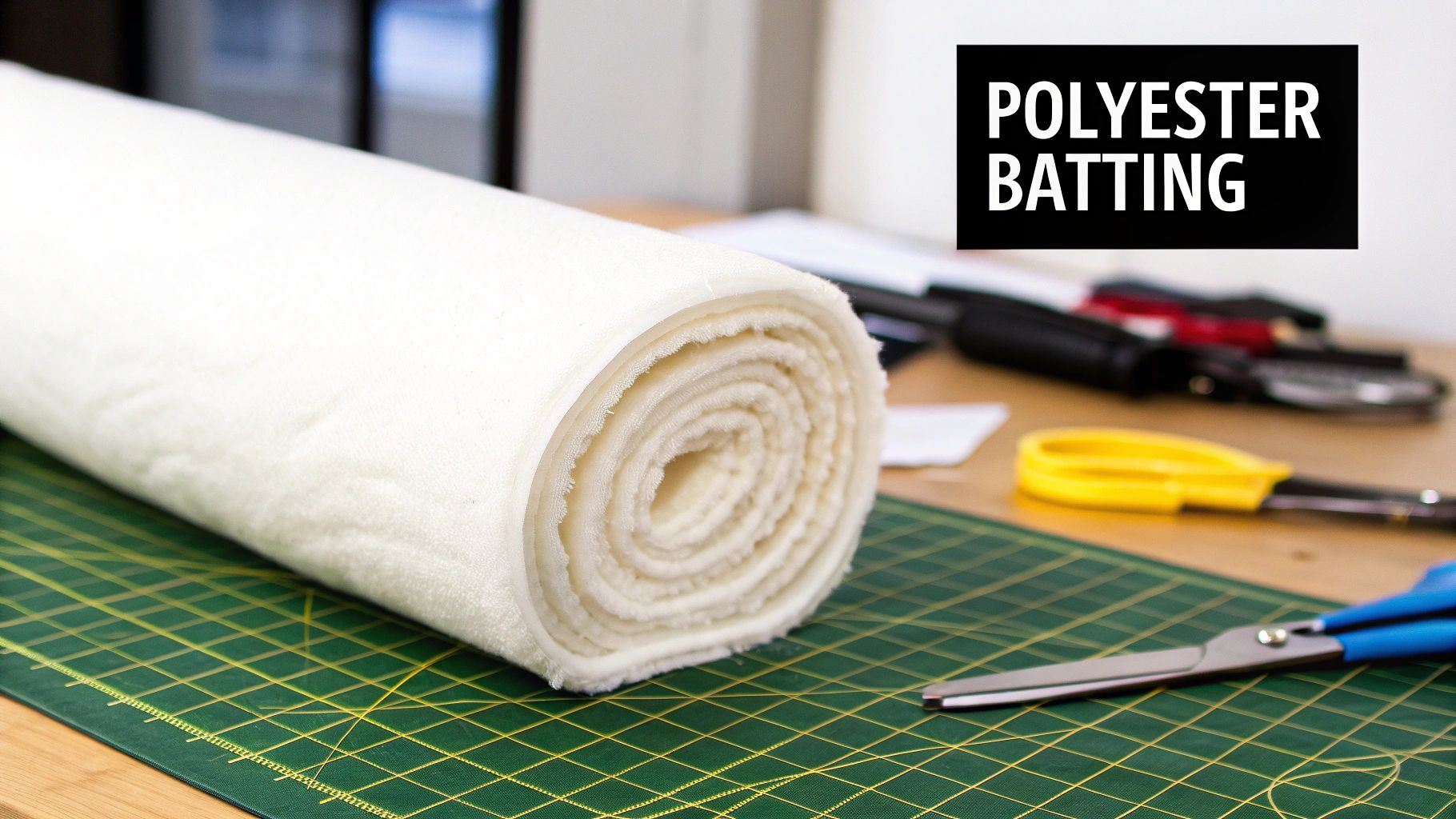
When you imagine that soft, puffy layer sandwiched inside a quilt, that’s the batting. Polyester is the modern, engineered take on this essential layer. Unlike natural fibers from cotton or wool, polyester is made in a lab, which gives it a unique set of skills perfect for quilts that need to survive real life—spills, frequent washes, and all.
Here’s a good way to think about it: you wouldn't wear a delicate silk blouse to go hiking in the rain, right? You'd grab a sturdy rain jacket. In the quilting universe, polyester batting is that rain jacket. It’s practical, tough, and gets the job done without any fuss. It naturally resists moisture, bounces back into shape, and keeps you warm without weighing you down like some natural fibers can.
This mix of performance and affordability has cemented its place in the quilting industry. It’s not a niche product; it’s a powerhouse. Industry analysts estimated the global quilt batting market to be worth somewhere between USD 1.2 billion and USD 2.0 billion in 2024 alone. Polyester is a massive part of that, with some projections suggesting its slice of the pie will grow to a USD 1.15 billion market value by 2035. If you're curious about the numbers, you can dig into more trends about the quilt batting industry on openpr.com.
Polyester vs. Natural Fibers
To really appreciate what polyester brings to the table, it helps to see how it stacks up against the more traditional, natural options. It’s not about which one is "better," but which one is right for your project. Polyester shines when you need durability and easy care above all else. For a deep dive, check out our guide on the different types of quilt batting.
But for now, here's a quick side-by-side look to get you started.
Batting at a Glance: Polyester vs. Natural Fibers
This table breaks down the core differences, giving you a snapshot of what each fiber offers.
| Attribute | Polyester Batting | Cotton Batting | Wool Batting |
|---|---|---|---|
| Material | Synthetic Fibers | Natural Plant Fibers | Natural Animal Fibers |
| Loft (Puffiness) | High loft is common | Low to medium loft | Medium to high loft |
| Weight | Lightweight | Heavier | Lightweight |
| Durability | Excellent | Good | Good, but more delicate |
| Price Point | Most affordable | Mid-range | Higher-end |
| Shrinkage | Very low to none | Shrinks (creates a crinkled look) | Can shrink if not treated |
| Best For | Everyday quilts, kids' blankets, high-loft comforters | Traditional quilts, breathable summer quilts | Warm, lightweight quilts, show quilts |
When it comes down to it, choosing polyester is a practical move. It's the smart, go-to option for quilters who need a low-maintenance, high-performance filling that delivers consistent, beautiful results without emptying their crafting budget.
Getting to Know Polyester Batting’s True Colors
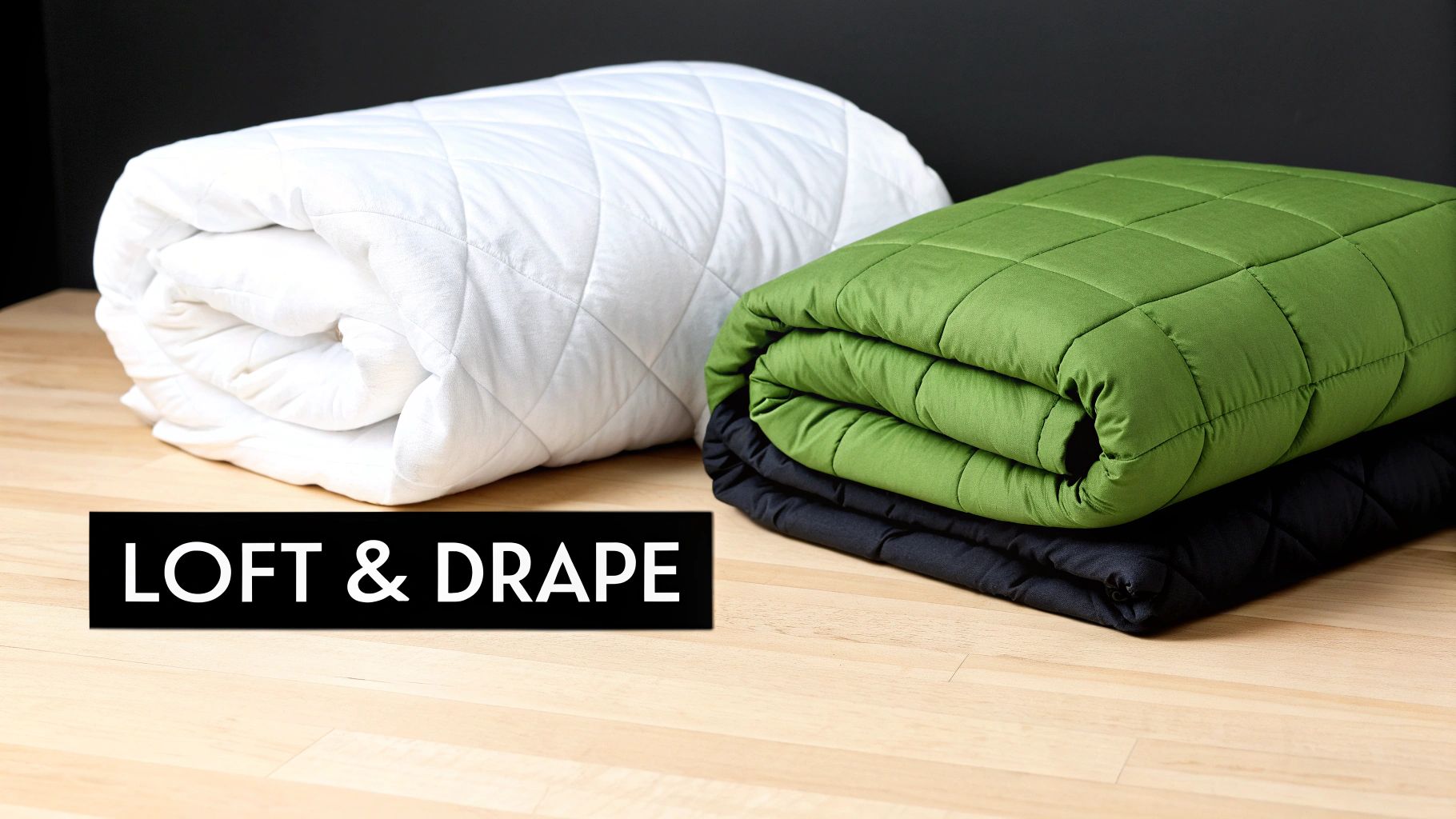
To really get why so many quilters reach for polyester quilt batting, you have to look past the "synthetic" label and get to know its personality. Four key traits truly define how it’s going to behave inside your quilt: loft, warmth, drape, and shrinkage. Each one plays a huge role in the final look, feel, and function of your masterpiece.
Think of these properties as the ingredients that give your quilt its character. They’re what make the difference between a sleek, modern wall hanging and a big, puffy, cloud-like bed quilt.
Loft: The Secret to a Puffy Quilt
In the quilting world, loft is just our word for thickness and puffiness. It's the first thing you'll notice about polyester batting and the trait that most dramatically shapes your quilt's appearance. While cottons tend to be flatter, polyester is famous for its bouncy, high-loft options.
- Low Loft: This batting is thinner and less puffy. It's perfect when you want your intricate stitching to be the star of the show—think detailed machine quilting on a table runner or a set of placemats.
- High Loft: Thick, fluffy, and full of air, this is what gives you that classic comforter feel. It’s the go-to for tied quilts or any project where you want a deep, pillowy texture that makes your quilting lines pop.
Deciding on loft is basically like choosing the "volume" for your quilt.
Expert Tip: High-loft polyester is your best friend when you want the quilting itself to stand out. That extra thickness creates deep, beautiful shadows around your stitches, making any pattern look incredibly defined.
Warmth Without the Weight
One of polyester’s best-kept secrets is its incredible insulating power. It’s fantastic at trapping heat, which means you get a ton of warmth without a lot of heavy, dense material. This makes it an amazing choice for cozy bed quilts that won't feel like a lead blanket.
That lightweight warmth is a huge win over heavier options like 100% cotton, especially when you're making a king-size quilt where the final weight really matters.
Drape: How Your Quilt Hangs and Folds
Drape is all about how a quilt hangs, folds, and settles. The natural springiness of polyester fibers gives a quilt more body, so it doesn't fold as fluidly as one made with the soft, heavy drape of cotton.
This structure is actually a huge plus for wall hangings or decorative throws that need to hold their shape and look crisp. But if you’re making a quilt you want to snuggle under and have it contour softly around you, a lower loft polyester or a blend might be a better fit. To see how different materials stack up, check out our handy quilt batting comparison chart.
Minimal Shrinkage for a Crisp, Modern Finish
Last but not least, we have polyester's most practical advantage: its stability. When you buy 100% polyester quilt batting, you're getting a material with virtually zero shrinkage—we’re talking less than 1%. This is a huge deal because it means you can skip the whole pre-washing ritual that's often necessary with natural fibers.
This incredible stability guarantees your quilt will come out of the dryer with a smooth, flat, modern finish. You won't get that crinkled, vintage look that happens when cotton batting shrinks up. For any quilter who wants a perfectly crisp and pristine final product, this is a total game-changer.
Comparing Polyester to Natural Fiber Battings
Deciding between polyester and natural fibers like cotton or wool isn’t about picking a "winner." It's more like choosing the right tool for the job. The best batting really depends on what you're making, how much you want to spend, and the look and feel you're going for.
Think of it like this: if you're making a quilt for a child that’s destined for a lifetime of spills, fort-building, and machine washing, polyester is your hero. Its sheer toughness and easy care are second to none. But if you’re crafting an heirloom quilt and want that classic flat drape and soft, crinkly texture, then cotton is the only way to go.
Durability and Everyday Use
When it comes to pure, rugged resilience, polyester is the clear front-runner. The synthetic fibers are incredibly strong and naturally resist mildew—a huge plus if you live in a humid area or plan to use the quilt for picnics. Polyester also has fantastic "memory," meaning it springs right back into shape and keeps its loft even after being stuffed in a closet.
Cotton is certainly durable, but in a different way. It’s a softer fiber that gets more supple and cozy with every single wash, which is how you get that wonderful, lived-in vintage feel. Wool is also tough, but it's a bit more high-maintenance. It needs a gentler touch to avoid shrinking or felting, making it a better choice for a decorative throw than for a toddler's go-to blanket.
The bottom line is that polyester is built for high-use, low-fuss situations. If a quilt is going to be washed a lot and needs to stand up to some serious wear and tear, polyester quilt batting is almost always the most practical choice.
Cost and Accessibility
Let's be real—budget matters. For most of us, cost is a huge factor, and this is where polyester really shines. Its affordability is a big part of why it’s a staple in just about every quilter's stash. In fact, market data consistently shows that the combination of price and performance has made polyester a dominant choice for anyone watching their budget. You’ll almost always find polyester batting at a lower price per yard than similar cotton or wool options. This has made it a go-to for hobbyists and large-scale makers across North America, Europe, and Asia. If you’re curious about industry trends, you can explore more about the quilt batting market on datainsightsmarket.com.
This lower price point means you can tackle that king-sized quilt or make gifts for the whole family without breaking the bank. It truly makes quilting more accessible for everyone.
Breathability and Feel
Now, where natural fibers usually pull ahead is in breathability. Both cotton and wool are fantastic at wicking moisture away from your body, which makes them incredibly comfortable for bed quilts that need to work in different temperatures. They also create a quilt with a bit more weight and a cozier feel that drapes beautifully.
Polyester is incredibly warm for how light it is, but it's not as breathable. It works by trapping heat, which is great for staying toasty but can sometimes feel a little too warm if you tend to sleep hot. The drape is different, too. A polyester quilt has more body and springiness, feeling puffier and lighter instead of dense and heavy. For a complete side-by-side comparison, check out our guide on the differences between cotton and polyester batting.
Ultimately, the best batting depends on your quilt's destiny. For a tough, affordable, and easy-to-care-for project, polyester is a fantastic workhorse. But for a soft, breathable heirloom, a natural fiber is probably the right fit.
How to Choose the Right Polyester Batting
Walking into a fabric store or browsing online can feel a little overwhelming when you're faced with a wall of polyester quilt batting. They all look so similar, right? But those subtle differences in loft, construction, and special features can completely change the way your project turns out. Choosing the right one isn't about finding the single "best" batting, but about matching the batting’s specific personality to your creative vision.
This decision tree gives you a quick visual guide to help you choose between polyester and natural fibers based on what your project really needs—durability, cost, and that all-important final look.
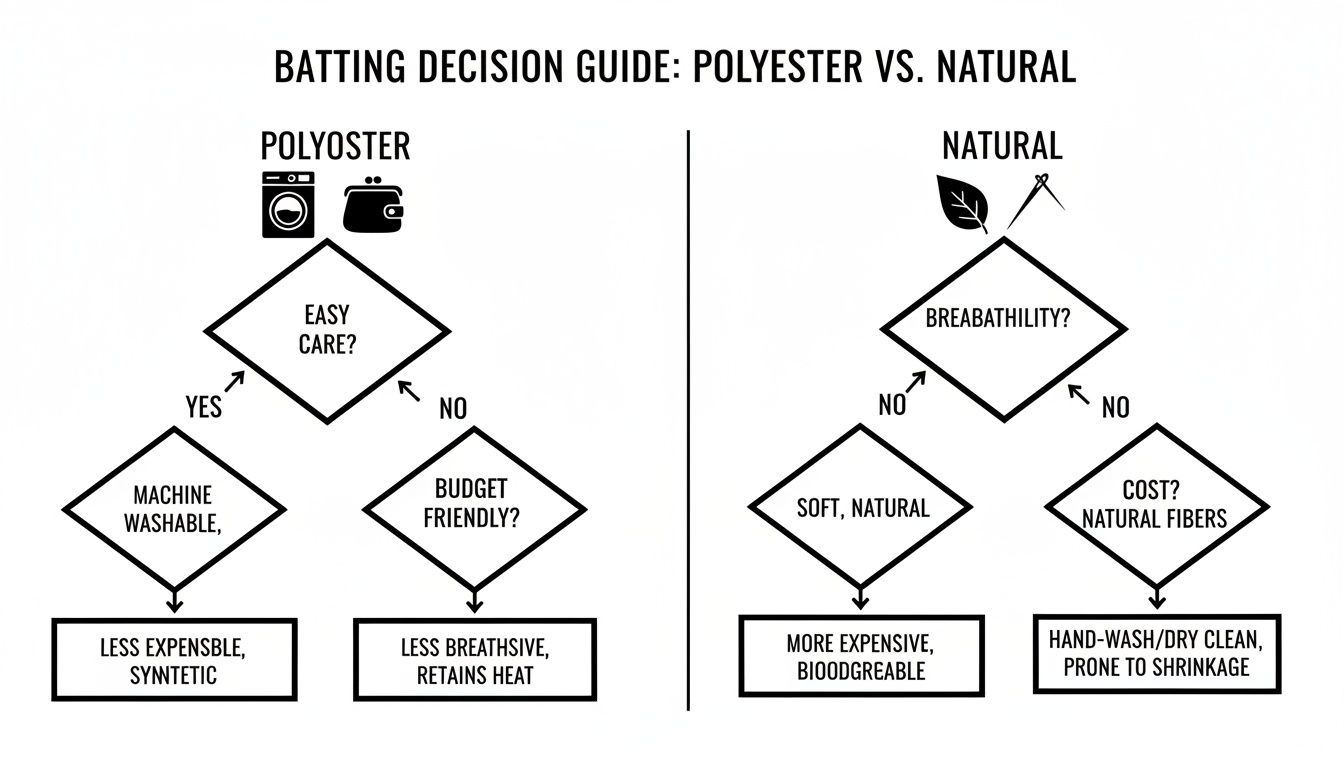
As you can see, polyester is the hands-down winner for projects where easy laundry care and affordability are at the top of the list. On the other hand, natural fibers really shine when you're creating heirloom pieces or want to show off incredibly detailed stitch work.
Translating Loft into Your Desired Look
In the quilting world, loft is just our word for thickness and puffiness. It's probably the most important decision you'll make, as it directly controls your quilt's final texture. Think of it as choosing the "volume" for your project.
To make it even clearer, here’s a quick guide to help you pick the perfect loft.
Polyester Batting Loft Guide
| Loft Type | Typical Thickness | Best For | Finished Look |
|---|---|---|---|
| Low Loft | ~ 1/8 inch | Table runners, placemats, wall hangings, detailed machine quilting. | Flat, crisp, and modern. Allows intricate stitching to be the star. |
| Medium Loft | ~ 1/4 to 3/8 inch | Everyday quilts, lap quilts, baby quilts. A great all-rounder. | A gentle puffiness that feels cozy but doesn't hide your quilting. |
| High Loft | ~ 1/2 inch or more | Tied quilts, comforters, projects where you want maximum warmth. | Plush, pillowy, and cloud-like. Makes quilting stitches "pop" dramatically. |
Ultimately, low loft is your go-to when the stitch work is the star, while high loft is what you grab when you want a project that screams "cozy and warm!"
Specialty Options for Modern Quilters
Beyond the basics, some specialty polyester battings offer fantastic shortcuts and solve common quilting headaches. These innovations can be real time-savers and open up some new creative doors.
One of my favorites is fusible polyester batting. This stuff is brilliant—it comes with a light, heat-activated adhesive on both sides. You just press it with an iron to temporarily bond your quilt top, batting, and backing together. It completely eliminates the need for all that tedious pinning or messy spray basting. It’s a game-changer for smaller projects like baby quilts or wall hangings.
Another thing to keep in mind is whether you'll be using a longarm quilting machine. If so, you’ll want to look for a polyester batting that is needle-punched or bonded. This type of construction keeps the fibers from separating or stretching under the high speed and tension of the machine, giving you a beautifully smooth result without any bearding (those annoying fibers that poke through your fabric).
Buying in Bulk The Smart Way
For those of us who are always dreaming up the next project, buying polyester batting by the roll is a total game-changer. It's not just more economical; it also means you have a consistent, reliable material ready to go whenever inspiration strikes.
Rolls typically come in standard widths like 96" or 120", which are absolutely perfect for creating those large, seamless quilt backs without having to piece your backing fabric.
When you buy by the roll, you often slash your per-yard cost significantly. This is a huge benefit for longarm quilters or small businesses that need to keep a solid inventory of high-quality materials on hand for client work.
Figuring out what you need is pretty simple. For example, if a roll is 30 yards long and 96 inches wide, you have enough batting for about ten queen-sized quilts. For a more detailed guide on measuring your projects and figuring out exactly how much you need, check out our post on purchasing quilt batting by the yard. Making the switch to buying by the roll can really streamline your whole process and free up more of your budget for all that beautiful fabric.
Caring for Your Polyester Batting Quilts
One of the best things about working with polyester quilt batting is just how tough it is. After pouring all that time and love into making a quilt, the last thing you want is to be afraid to actually use it. Polyester's easy-care nature makes it a fantastic choice for quilts that are meant to be lived with, from baby blankets to everyday placemats.
Unlike some of the fussier natural fibers, polyester can handle a spin in the washing machine. That durability gives you peace of mind, knowing your creations can be freshened up without a fuss.
Washing and Drying Best Practices
To keep your quilt looking beautiful for the long haul, a few simple habits are all it takes. Following these tips will help maintain the loft and structure of your polyester batting, keeping it soft and cozy for years.
- Machine Wash Cold: Stick to a gentle cycle with cold water. Hot water isn't necessary for getting things clean and can be hard on synthetic fibers over time.
- Use a Mild Detergent: A simple, color-safe detergent is perfect. You don't need any harsh chemicals to get your quilt fresh and clean.
- Tumble Dry Low: This is the big one. Always dry your quilt on a low heat setting. High heat is polyester's worst enemy and can cause the fibers to stiffen or even melt. Tossing in a few wool dryer balls can help fluff everything up and cut down on drying time.
Preventing Common Issues
Two headaches that can pop up with any batting are "bearding" and bunching. Bearding is when tiny fibers work their way through the quilt top or backing fabric, and bunching is when the batting shifts and clumps up inside.
Luckily, most modern polyester quilt batting is bonded specifically to stop these things from happening. Starting with a quality needle-punched or resin-bonded batting is your best first step. Beyond that, quilting density is key. Stitching your layers together every few inches, according to the manufacturer's directions, is what really locks everything in place.
Pro Tip: For quilts you know will see a lot of trips through the wash—like ones for kids or pets—I recommend a slightly tighter quilting pattern. It's a little extra insurance to keep the batting from shifting around and ensures it stays perfectly distributed, wash after wash.
It's also worth noting how environmental awareness is shaping the market. While global polyester production is still massive, quilters are asking for more sustainable options. This has pushed manufacturers to create fantastic recycled polyester (rPET) battings, giving us an eco-friendly choice that doesn't sacrifice an ounce of durability. You can find more details about how the quilt market is evolving on expertmarketresearch.com.
Your Top Questions About Polyester Batting, Answered
Alright, we’ve covered a lot of ground, but you probably still have a few practical questions buzzing in your head. Let’s dive into some of the things quilters ask most often when they’re thinking about using polyester quilt batting. Getting these answers sorted out will help you choose your next batting with confidence.
Think of this as the friendly advice you'd get at the quilt guild—just the straight-up, practical answers you need to get quilting.
Will Polyester Batting "Beard" or Poke Through My Fabric?
"Bearding" is every quilter's nightmare—those pesky little fibers that work their way through your quilt top or backing. While it's a possibility with any batting, modern polyester battings are made to combat this very issue. Most are either resin-bonded or needle-punched, two techniques that do a fantastic job of locking the fibers together.
Want to make sure bearding never happens to your quilt? Here are a few simple tricks of the trade:
- Stick with Bonded Batting: Always reach for a high-quality, bonded polyester batting. It's your first line of defense.
- Pick a Tight Weave: Fabric with a high thread count acts like a stronger fence, keeping those fibers where they belong.
- Quilt It Securely: Don’t skimp on the quilting! Stitches spaced every four to six inches will hold everything together beautifully.
- Use the Right Needle: A smaller, sharper needle makes a smaller hole. It’s a tiny detail that makes a huge difference.
Do I Really Need to Pre-Wash Polyester Batting?
Here’s some great news: nope! This is one of the biggest perks of working with 100% polyester. It has virtually no shrinkage, usually less than 1-2%, so you can pull it right out of the bag and get started.
That stability means you can skip the whole pre-washing song and dance. It’s fantastic if you're aiming for that crisp, modern look, especially if you haven't pre-washed your cotton fabrics and want to avoid the crinkly, vintage vibe that comes after the first wash.
The fact that you can skip pre-washing makes polyester a lifesaver for last-minute gifts or massive quilts where all the prep work can feel like a mountain to climb. It just gets you to the fun part—the actual quilting—so much faster.
Is Polyester Batting a Good Choice for Hand Quilting?
It definitely can be, but you have to choose the right kind. For hand quilting to be a joy and not a chore, you need a batting that your needle can glide through like butter.
A low-loft, needle-punched polyester batting is what you’re looking for. It’s less dense and a dream to stitch through by hand. Trying to hand quilt a high-loft or heavily bonded batting, on the other hand, can feel like a real workout—you’ll need a sturdy thimble and some serious muscle. Always check the packaging to see if it’s recommended for hand quilting.
Can I Iron a Quilt with Polyester Batting Inside?
You’ll want to be very, very careful here. Polyester is a synthetic, and that means it can melt if it gets too hot. A hot iron should never touch the batting directly.
When you need to press a finished quilt, turn your iron down to a low to medium heat setting. More importantly, always use a pressing cloth as a buffer between the iron and your quilt top. Keep the iron moving, too—letting it sit in one spot for too long is asking for trouble. And if you’re using a fusible polyester, follow the manufacturer’s heat instructions to the letter.
At Quilt Batting, we believe your creative work deserves the best foundation. Whether you're quilting for fun or running a small business, our selection of premium, bulk-friendly batting ensures you have exactly what you need for every project. Explore our full range of high-quality batting rolls and find the perfect match for your next masterpiece at https://quiltbatting.shop.