

Ever found yourself staring at a wall of batting packages, completely stumped? You're not alone. It can feel a little overwhelming, but the good news is there's a simple system behind it all.
Most batting comes in standard sizes, from Crib (45" x 60") all the way up to King (120" x 120"). These are designed to correspond with common quilt and bed dimensions, but they include a crucial bit of extra material to make your quilting life easier.
Decoding Standard Batting Sizes
When you see batting sold in pre-cut packages, think of it like buying bedsheets. A "Queen" package is meant for a queen-sized quilt. But here’s the key difference: unlike a fitted sheet that needs to be an exact match, your batting must be larger than your quilt top.
This extra margin is your best friend during the quilting process. It accounts for any shifting or shrinkage that happens as you stitch, and it gives you (or your longarmer) the necessary fabric to clamp onto the quilting frame. Without that buffer, you could end up with a quilt where the batting doesn't quite reach the edges. A quilter's nightmare!
A Quick Reference Guide
To take the guesswork out of it, here’s a handy chart that matches the most common pre-cut batting packages with the quilt tops they're designed for. Keep this in mind next time you're shopping, and you'll always grab the right size with confidence.
The Golden Rule of Batting
Your batting and backing fabric should always be larger than your quilt top. The professional standard is to have at least 4 inches of extra material on all four sides. This gives you a stress-free quilting experience with plenty of room to work.
Standard Pre-Cut Batting Sizes vs Quilt Top Dimensions
This table breaks down the typical dimensions to help you make a quick and accurate choice at the store.
| Quilt Size Name | Typical Quilt Top Dimensions (Inches) | Standard Batting Size (Inches) | Overlap Provided (Approx) |
|---|---|---|---|
| Crib | 36" x 52" | 45" x 60" | 4.5" per side |
| Throw/Lap | 50" x 65" | 60" x 60" | 5" per side (adjust length) |
| Twin | 70" x 90" | 72" x 90" | 1" per side (tight fit) |
| Full/Double | 80" x 90" | 90" x 96" | 5-6" per side |
| Queen | 90" x 108" | 96" x 108" | 3" per side |
| King | 110" x 108" | 120" x 120" | 5-6" per side |
| Cal King | 104" x 112" | 120" x 120" | 8" per side |
As you can see, most packages give you a comfortable buffer. Just be mindful of sizes like Twin, which can be a tighter fit and might require a little extra care when you're making your quilt sandwich.
Why Getting the Right Batting Size Is So Important
Think of batting as the heart of your quilt. It's the cozy, warm layer that gives your project its substance. But if the batting is the heart, its size is the blueprint—and getting that blueprint right from the start can make or break your entire quilt.
Choosing the right dimensions isn't just about matching numbers on a ruler. It's one of the most critical decisions you'll make, often separating a smooth, professional-looking quilt from a frustrating project riddled with puckers and uneven edges. It's all about setting yourself up for success.
The Quilter's Golden Rule: Always Add Overage
In the quilting world, you'll hear the term "overage" (or "overlap") constantly, and for good reason. Overage is the extra batting that extends beyond the edges of your quilt top. The standard rule of thumb is to have at least four inches of extra batting on all four sides.
This isn't wasted fabric; it's your quilting insurance policy. This essential buffer zone serves a few critical purposes:
- It Accounts for Shifting: As you stitch, your quilt sandwich will inevitably shift and pull. That extra batting ensures that even with a little movement, your quilt top remains completely covered, with no scary gaps appearing at the edges.
- It's Essential for Longarm Quilting: If you use a longarm machine, this space is non-negotiable. The machine's clamps need something to grab onto at the edges to create even tension. Without overage, you'd be clamping onto the quilt itself, which is a recipe for distortion.
- It Manages Shrinkage: Batting, especially natural fibers like cotton, can shrink during the quilting and washing process. A little extra size gives you a safety margin to absorb that shrinkage without your quilt becoming smaller than intended.
Your batting size isn't just a suggestion; it's a safety net. A generous overage protects all the hard work you've poured into your quilt top and gives you the freedom to quilt creatively without worrying about coming up short.
How Your Batting's Material Affects Sizing
The type of fiber you choose also has a huge impact on your sizing decisions. The global quilt batting market, currently valued between $2.0 to $3.0 billion, gives us a good idea of what quilters prefer. Cotton batting is the undisputed champion, claiming about 45% of the market share thanks to its breathability and classic, traditional feel. You can dive deeper into these global quilt batting market dynamics if you're curious.
Here's where it gets practical: cotton is famous for shrinking a bit after the first wash, usually around 3-5%. This is what creates that wonderfully crinkly, lived-in texture we associate with heirloom quilts. If that's the look you're going for, the standard overage is perfect. But if you're aiming for a sleek, modern quilt that lays perfectly flat, you might opt for a polyester blend that has minimal shrinkage.
By thinking about your material choice and your sizing together, you gain complete control over the final look and feel of your masterpiece. It ensures the quilt you pull out of the dryer is the exact one you imagined from the very first stitch.
Decoding Batting By the Roll
For the quilter who's always got a project (or three) on the go, or for the professional longarmer managing a queue of client quilts, buying batting by the roll is a total game-changer. It’s a shift in mindset. You're moving from a project-by-project scramble to a well-oiled, efficient quilting operation.
This isn't just about convenience; it's a smart business move that saves money, cuts down on waste, and guarantees you’re always ready when inspiration strikes. Instead of being stuck with whatever pre-cut sizes are on the shelf, buying by the roll gives you access to generous widths perfect for those bigger projects. You get to be in control, cutting exactly what you need with hardly any leftovers.
Matching Roll Width to Your Quilting Needs
So, how do you choose the right roll? The secret to buying smart is matching the roll width to the kinds of quilts you make most often. Think of these rolls as your in-house inventory, ready to go for whatever quilt top lands in your studio.
-
90" and 96" Rolls: These are the absolute workhorses of the quilting world. A 96-inch width is your best friend for making cozy throw quilts, twin-sized bed quilts, and even some smaller queen quilts. The best part? No need to piece your batting together.
-
108" and 120" Rolls: When you start tackling queen, king, or California king-sized quilts, these wider rolls become essential. A 120-inch roll is the pro's secret for getting that flawless, seamless finish on massive bed quilts. It completely eliminates the headache of creating bulky, stitched-together batting seams.
Buying by the roll is more than an economic decision—it's an investment in your workflow. Having the right width on hand means you can jump right into a project without a last-minute run to the store, keeping that creative energy alive.
Before you invest, it’s worth taking a look at the quilts you’ve made over the last year. What sizes do you produce most often? Answering that question will point you directly to the most economical roll for your studio.
Here’s a quick comparison to help you decide.
Choosing the Right Batting Roll Width for Your Projects
| Batting Roll Width | Best For Quilt Sizes | Ideal For | Key Advantage |
|---|---|---|---|
| 96" | Throws, Twins, Full/Double, Smaller Queens | Quilters who frequently make gift quilts and bed quilts for smaller rooms. | Maximum versatility for a wide range of common project sizes. |
| 108" | Queens, Smaller Kings | Quilters and studios that specialize in standard bed quilts. | Perfectly sized for queen quilts with generous overage, minimizing waste. |
| 120" | Kings, California Kings, Oversized Quilts | Longarm studios and quilters who create large or custom heirloom quilts. | Eliminates the need to piece batting for even the largest projects, ensuring a smooth finish. |
Ultimately, choosing the right roll width comes down to simple math. By aligning your purchase with your production, you ensure that every inch of batting gets used, which translates directly into cost savings and less waste.
The Language of Bulk Batting
When you start shopping for batting by the roll, you'll run into a few key terms. The rolls themselves typically come in lengths of 15, 30, or even 40 yards—a serious supply that will keep you quilting for a good while.
You might also see batting sold on a "board." Don't let that throw you; it's just a more compact, neatly folded version of a 15-yard roll. This format is brilliant for studios with limited storage space.
Getting familiar with these options helps you make the most cost-effective choice for how much quilting you do. If you want to dive deeper, you can learn more about the specific advantages of rolls of cotton batting and find the perfect material for your studio. Choosing the right roll is the first step to maximizing your material, slashing waste, and saving a surprising amount of money over time.
How to Calculate Your Perfect Batting Size
Let’s cut to the chase—figuring out how much batting you need doesn't have to be a guessing game. Forget eyeballing it. There’s a simple, reliable formula that I and every other experienced quilter swear by. It works every time, whether you're making a tiny baby quilt or a massive California king.
The magic formula is just this: (Quilt Top Width + Overage) x (Quilt Top Length + Overage).
That’s it. You know the size of your quilt top, but the real secret to a beautifully finished quilt is nailing that "overage." Think of it less as extra fluff and more as your project's insurance policy.
Why Overage Isn't Optional
Talk to any professional longarmer, and they'll tell you the same thing: you need at least four inches of extra batting on all four sides. That means your final piece of batting should be a full eight inches wider and eight inches longer than your quilt top.
Why so much? This buffer is absolutely crucial for a few reasons:
- It Handles Shifting: As you quilt, those layers are going to pull and shift. It’s just what they do. This overage gives you a generous margin of error, making sure your quilt top stays centered and you don't end up with batting peeking out from under your binding. Trust me, it’s a dreaded sight.
- It Accounts for Shrinkage: Natural fibers like cotton are prone to a little shrinkage—often around 3-5%—once they’re quilted and washed. That extra batting absorbs this pull-up, so your finished quilt ends up at the size you actually intended.
- It's a Must for Longarm Quilting: This is a big one. A longarm machine needs that extra material to clamp onto the frame. This creates the tension needed for those gorgeous, even stitches. Without it, the clamps would have to grab your actual quilt top, which can easily damage or distort your beautiful piecing.
This image really helps visualize how different batting widths work for different stages and project sizes.
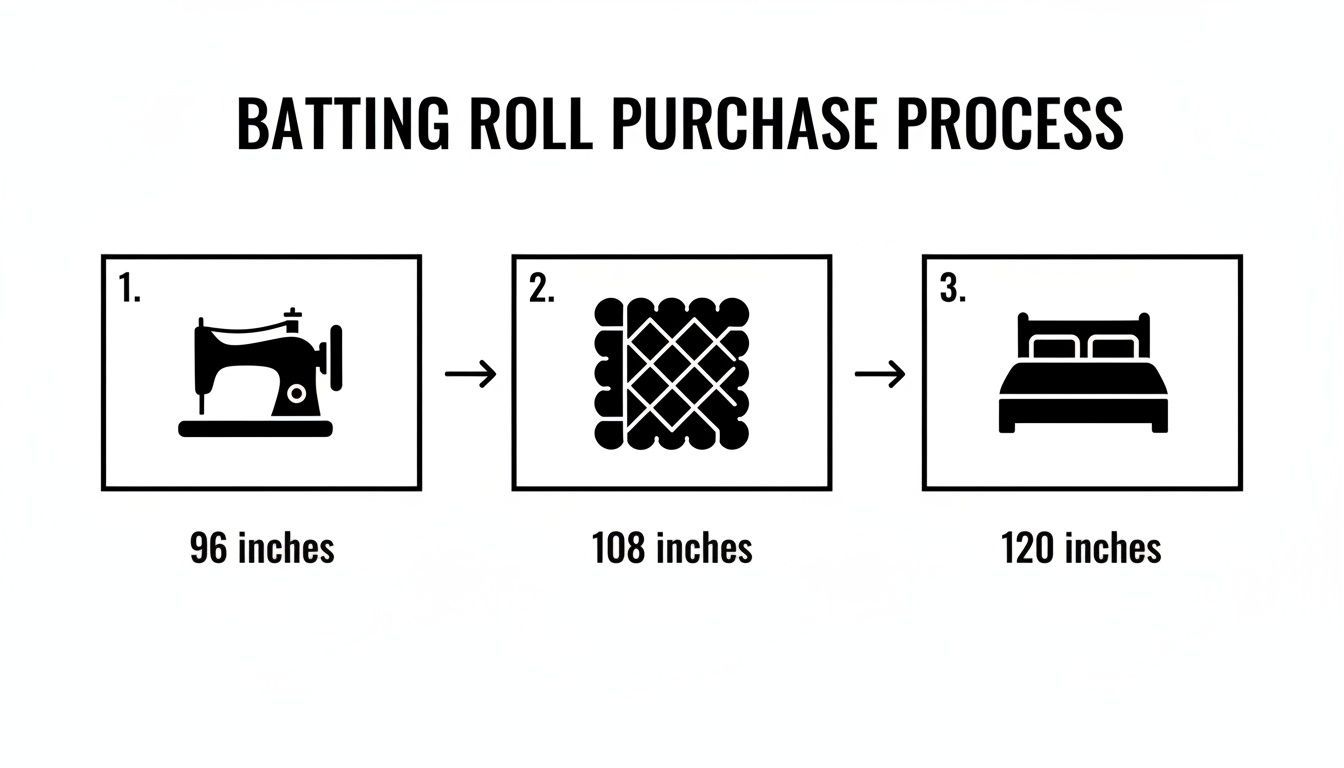
You can see how a quilter might use a 96" roll for general projects, but step up to a 120" roll for those big bed quilts, making the whole process so much smoother.
Putting the Formula Into Practice
Let's walk through a real-life example. Say you’ve just finished piecing a gorgeous throw quilt top that measures 60 inches wide by 72 inches long.
My best advice? Don't even think about calculating your batting needs until your quilt top is completely finished and measured. Trying to estimate before you're done is a surefire way to end up with the wrong size.
Here's how we'd apply that trusty formula:
- Calculate the Width: 60" (Quilt Top Width) + 8" (4" Overage on Each Side) = 68"
- Calculate the Length: 72" (Quilt Top Length) + 8" (4" Overage on Each Side) = 80"
For this project, you need a piece of batting that’s at least 68" x 80".
When you’re not working with a standard pre-cut size, your best bet is often buying quilt batting by the yard. It lets you get exactly what you need without paying for waste. This little bit of math upfront will save you a world of headaches later and give you the confidence to cut your batting perfectly every single time.
How Batting Material Affects Your Sizing Choice
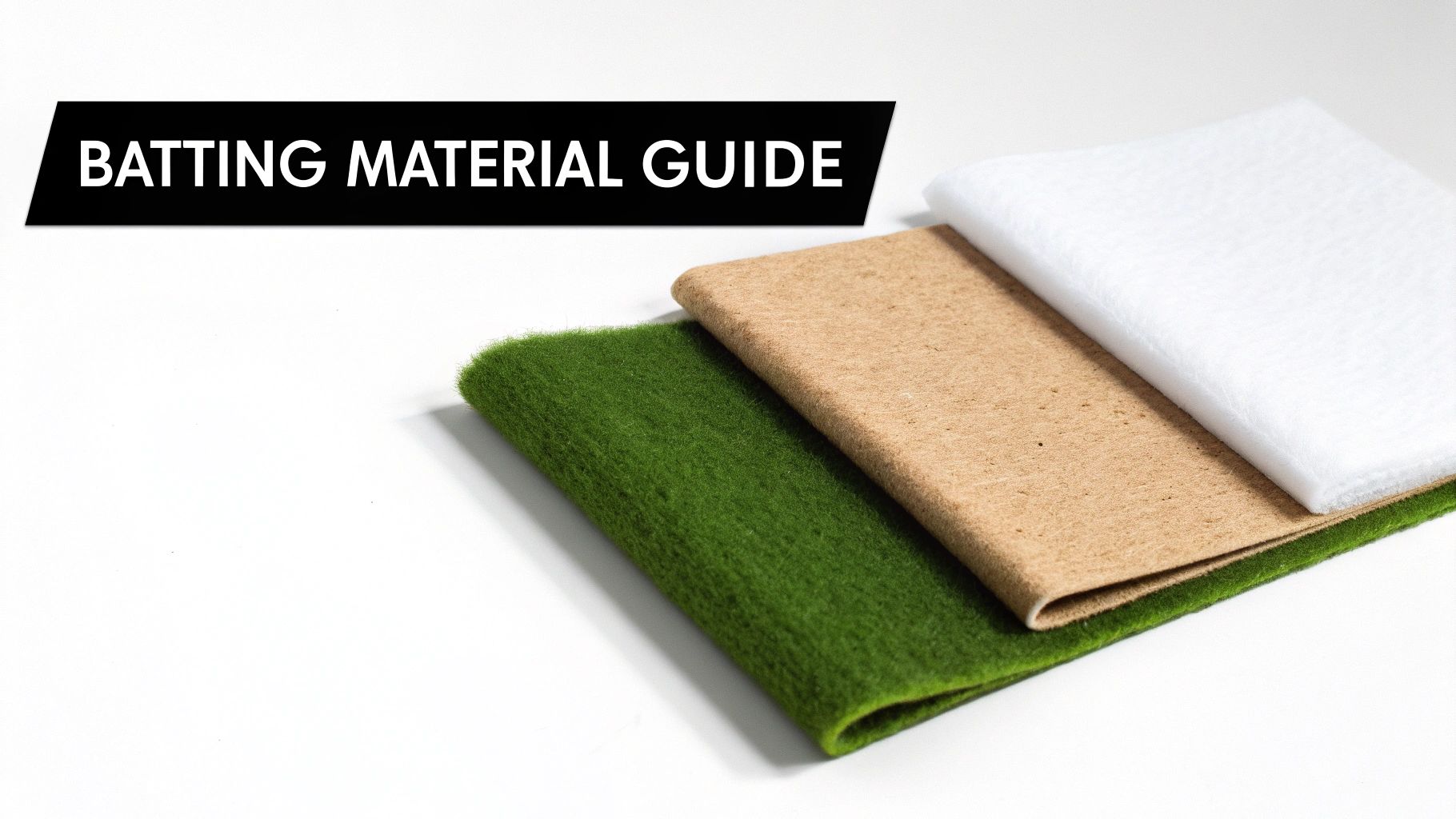
The material you choose for your quilt's middle layer does more than just add warmth; it fundamentally shapes the final look and feel of your project. This is a critical decision because different fibers behave in their own unique ways, especially when it comes to shrinkage.
Think of it like choosing fabric for a dress. You wouldn't use stiff canvas for a soft, flowing gown. In the same way, picking your batting is about matching the fiber's personality to your project's goal. Are you making a flat, modern wall hanging or a crinkly, well-loved heirloom? The batting makes all the difference.
Embrace the Crinkle with Cotton
For so many quilters, that classic, slightly puckered texture is the very soul of a quilt. That lovely, lived-in effect comes from using 100% cotton batting, which typically shrinks by a predictable 3-5% after its first trip through the wash.
This gentle shrinkage is your friend! It pulls the quilt top and backing together ever so slightly, creating that soft, antique finish that we all adore. If this is the look you’re going for, you don’t need to do any special math. Your standard 4-inch overage on each side is more than enough to accommodate this natural process.
Aim for Stability with Blends and Polyester
But what if you want a quilt that lies perfectly flat with crisp, defined lines? Maybe you're creating a modern art piece or a sleek table runner. This is where polyester and popular cotton/poly blends really shine.
-
Polyester Batting: This synthetic powerhouse is known for having close to zero shrinkage. It's incredibly lightweight, holds its shape beautifully through wash and wear, and is the go-to choice for projects where a flat, smooth finish is non-negotiable.
-
80/20 Cotton/Poly Blends: This is a fan favorite for a reason. An 80/20 blend gives you the best of both worlds—you get the soft, breathable feel of cotton with the added strength, stability, and lower shrinkage of polyester. It’s a wonderfully balanced option for almost any project.
Choosing your batting material is a creative decision. By understanding how each fiber behaves, you can confidently select the right material and size to bring your specific quilting vision to life, ensuring the final result is exactly what you imagined.
At the end of the day, the fiber content is just another tool in your creative toolbox. By aligning your material choice with your quilting batting sizes, you ensure every single project turns out just the way you planned. To dive deeper into all the options, check out our detailed guide on the different types of quilt batting.
Pro Tips for Longarmers and Quilt Shops
If you're running a longarm studio or a quilt shop, you know that batting isn't just a creative choice—it's a core part of your business. Getting smart about your inventory and how you talk to clients can make a huge difference in your efficiency, profitability, and reputation.
For longarmers, the magic begins long before the machine starts humming. It starts with clear communication. That’s why having a firm policy on what clients bring you is non-negotiable.
When you insist on a minimum of 8-10 inches of overage for both the batting and the backing fabric, you're not just being picky; you're setting the project up for success. That extra material is absolutely critical for loading the quilt properly onto the frame, getting the tension just right, and running a few test stitches without eating into the actual quilt top.
Think of your longarm frame as a precision instrument. Requiring enough overage from your clients is the best way to protect their quilt, your equipment, and your ability to deliver those flawless, professional results you're known for.
Strategic Stocking for Retail Success
For quilt shops, the key to becoming the heart of your local quilting community is offering batting that meets every need. While pre-cut packages are great for grab-and-go projects, stocking versatile batting by the roll is what will truly set you apart.
Having 96-inch and 120-inch rolls on hand makes you the go-to destination for quilters working on everything from baby quilts to king-sized masterpieces. Selling batting by the yard from a roll isn't just a fantastic revenue stream; it's how you build a loyal following of customers who know they can count on you.
Of course, knowing your customers is everything. For instance, global trends show that Asia-Pacific drives over 53% of textile revenue, while Europe holds a solid 23.2% of the quilt batting market. You can learn more from these global insights into the quilt batting market. While interesting, what truly matters are the trends in your own backyard. Pay attention to what your local quilters and longarmers are making.
By anticipating their needs, you can make smarter inventory bets. If you're ready to take that next step, our guide on purchasing wholesale quilt batting rolls can help you transform your shop from just another store into a trusted partner in your customers' creative journeys.
Common Questions About Batting Sizes
Once you start quilting regularly, you'll inevitably run into some specific questions about batting sizes that go beyond the basics. I've been there! To save you some guesswork, I've rounded up the most common questions I hear from fellow quilters.
Think of this as your personal cheat sheet for those tricky situations.
Can I Piece Batting Scraps Together?
Yes, and you absolutely should! Don't you dare throw away those big leftover chunks. Piecing scraps together is a fantastic way to save money and cut down on waste. It's my secret weapon for smaller projects like table runners or baby quilts.
The trick is to get a nice, smooth join. First, trim the edges of your batting scraps so they're perfectly straight. Then, just butt the two clean edges up against each other—don't overlap them.
You can then use a wide zigzag stitch on your machine to sew them together. Or, for a super seamless finish, grab some fusible batting tape. It lets you iron the pieces together, creating a join that’s almost invisible.
How Much Batting Overage Do I Really Need?
This is a big one. The golden rule is to have at least four inches of extra batting on all four sides of your quilt top. That means your batting should be eight inches wider and eight inches longer than your top.
Trust me, this isn't just a "nice-to-have." This extra space is your safety net. It gives you room to work, accounts for any shifting as you quilt, and is a non-negotiable if you’re sending your quilt to a longarmer.
Pro Tip: While four inches is standard, some longarmers prefer five inches of overage per side (for a total of 10 extra inches). Always, always check with your longarmer before you cut anything. It'll save you a major headache later.
Does Batting Type Affect the Size I Should Buy?
It sure does, and the biggest factor is shrinkage. Different fibers behave differently after they're washed, which can totally change the final look of your quilt.
- 100% Cotton: Expect this to shrink about 3-5%. This isn't a bad thing! It’s what creates that gorgeous, crinkly, lived-in vintage look that so many of us love.
- Polyester or Poly-Blends: These have very little to no shrinkage. If you’re going for a modern, flat look where your quilting stitches are the star of the show, this is your best bet.
The batting package will always have the manufacturer’s notes on shrinkage, so give it a quick read before you make your final decision.
What Is the Most Economical Way to Buy Batting?
If you quilt more than a couple of times a year, buying batting by the roll is, without a doubt, the smartest move you can make. The price per yard drops significantly compared to buying individual packages.
Plus, you'll always have batting on hand, ready for when inspiration strikes. It means less waste, more savings, and no more last-minute trips to the store.
At Quilt Batting, we believe you should always be ready for your next masterpiece. We make it easy to stock your studio with high-quality batting by the roll from the best brands in the business.
Find the perfect roll for your quilting style at https://quiltbatting.shop.