

So, you're ready to dive into the wonderful world of quilting? It can seem like a huge mountain to climb at first, but let me tell you a little secret: you only need a few key things to get started. Don't worry about all the fancy gadgets you see online. We're going to keep it simple.
Your First Step Into Quilting
Welcome! Standing at the very beginning of your quilting journey is an exciting place to be. It's also normal to feel a little overwhelmed by all the information out there. Think of this guide as your personal roadmap, designed to cut through the clutter and point you straight to what you really need to create something beautiful.
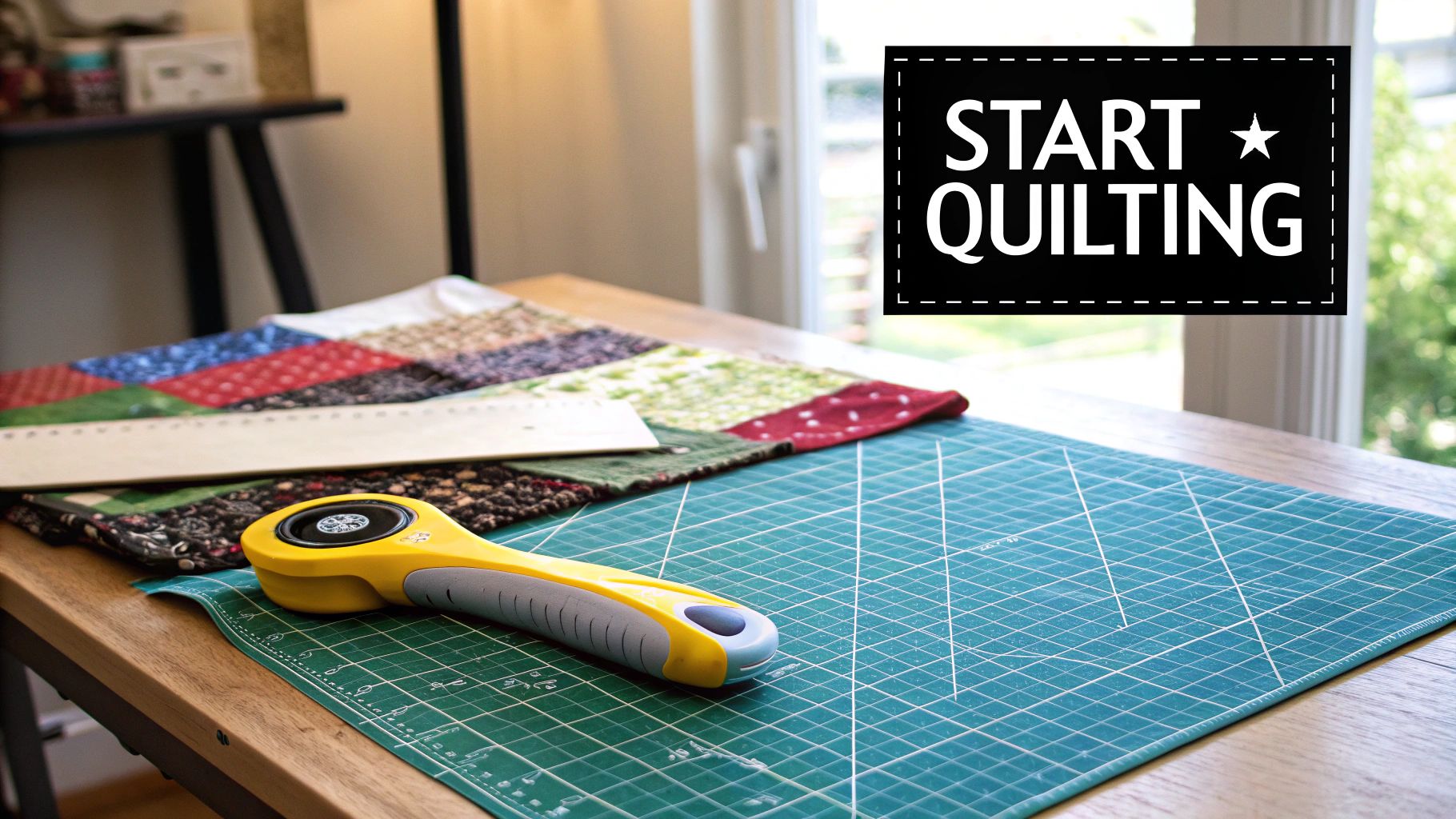
Let's forget those endless, confusing shopping lists. We're going to focus on the absolute essentials—the tools that truly make a difference from day one. This is your first hands-on lesson, where you'll understand not just what to buy, but why each piece is a total game-changer for your projects.
The Foundation of a Great Quilt
At its core, a great quilt is a perfect marriage of precision and creativity. And that precision all starts with just three fundamental tools that work together as a team. They are the non-negotiables for getting clean, accurate cuts, which is the secret behind quilt blocks that fit together perfectly.
To give you a clearer picture, here’s a quick rundown of the must-haves.
Essential Quilting Tools for Your First Project
| Tool | Primary Function | Beginner's Tip |
|---|---|---|
| Rotary Cutter | Slices through fabric cleanly and quickly. | A 45mm cutter is the most versatile size for starting out. |
| Self-Healing Mat | Protects your work surface and provides a grid for measuring. | Get the largest mat you can afford and have space for—an 18" x 24" is a great starting point. |
| Quilting Ruler | Ensures straight lines and precise, repeatable measurements. | A 6" x 24" acrylic ruler will handle most of your basic cutting needs. |
This simple toolkit is the bedrock of quilting. Once you have this trio, the only other true essentials are some quality thread to hold it all together and the right batting to give your quilt its cozy loft and structure. For more foundational advice, be sure to check out our essential quilting tips for beginners.
You're picking up this craft at an amazing time! You're joining a community that's growing bigger and more vibrant every day. The global quilt market is expected to jump from USD 5.61 billion to an incredible USD 9.67 billion by 2035, and a big reason for that is people just like you falling in love with quilting. In fact, recent surveys show that 18% of quilters are new to the craft, so you're in fantastic company. You can read more about this trend in the full market report. Our goal is to give you the confidence to just jump in and start creating.
Getting to Know the Heart of Your Quilt
Every beautiful quilt has a secret ingredient, a hidden hero tucked between the top and bottom layers: the batting. It’s the soft, fluffy middle that turns your pieced fabric into an actual, huggable blanket. The easiest way to think about it is like a sandwich. Your quilt top and backing are the bread, and the batting is the yummy filling that gives it all its warmth and body.
Honestly, picking the right batting is one of the most critical choices you'll make. It completely changes the final look, feel, and even the drape of your quilt. It’s a core piece of your quilting supplies for beginners, so getting a handle on the basics now will save you headaches later.
Learning the Lingo
When you start browsing for batting, you'll see a couple of words pop up again and again. Don't let them intimidate you! They're just simple ways to describe how the batting will behave in your quilt.
- Loft: This is just a fancy word for thickness or fluffiness. A low loft batting will give you a flatter, more modern-looking quilt. A high loft batting creates that puffy, cloud-like comforter you want to dive into.
- Scrim: Think of this as a very fine, lightweight mesh that’s needle-punched right into the batting fibers. This little addition makes the batting much stronger, which means you can place your quilting stitches farther apart without worrying about the batting shifting or pulling apart over time.
Having a scrim is a huge advantage, especially for beginners. It gives you more freedom in your quilting designs and is wonderfully forgiving. If you want to go a little deeper, we have a whole guide that explores what is quilt batting.
The right batting doesn’t just add warmth; it defines the quilt's personality. It can make a design look crisp and modern or soft and antique, all depending on the material and loft you select.
Great Batting Choices for Your First Quilt
While the options might seem endless, there are three types of batting that I almost always recommend to new quilters. Each one is a fantastic starting point, offering a lovely mix of texture, warmth, and ease of use to help make your first project a roaring success.
- 100% Cotton: The tried-and-true classic. It's breathable, gets softer with every wash, and gives you that wonderful, slightly crinkled "I've been loved for years" look. It’s a pretty low-loft batting, which makes it a dream to quilt through, whether by hand or machine.
- 80/20 Cotton-Polyester Blend: Many seasoned quilters (myself included!) swear by this blend as the perfect do-it-all batting. You get the softness and breathability from the 80% cotton, but that 20% polyester adds a touch of durability and a little more loft without being bulky.
- Wool: If you want to make the coziest bed quilt imaginable, look no further. Wool is incredibly lightweight yet surprisingly warm. It has a beautiful, springy loft that really makes your quilting stitches pop, and it naturally resists creases, so your quilt always looks smooth and inviting.
Once you understand these basics, you’ll be able to walk into any fabric store or shop online and pick out the perfect batting for your project with total confidence.
Building Your Quilting Toolkit
Once you have your cutting essentials sorted, it's time to gather the smaller gadgets that make all the difference. In the quilting world, we call these little lifesavers notions. Think of them as your trusty sidekicks, the tools that handle all the small but absolutely crucial jobs that pop up.
First on the list is thread, the literal stitch that holds your masterpiece together. It might be tempting to grab just any spool, but trust me on this: using a high-quality, 100% cotton 50wt thread is a game-changer for beautiful, lasting quilts. It's strong enough for durable seams but fine enough to practically disappear into your fabric, so you don't get that annoying bulk where your points meet.
Next, you need a way to hold your fabric pieces in place while you sew. This brings us to the great debate: traditional pins or modern clips?
Pins Versus Clips: Which Is Best?
Honestly, the best choice really depends on what you're doing. Most quilters I know keep both in their toolbox.
- Quilting Pins: You'll want long, fine pins, preferably with glass heads. They're perfect for piecing tiny, intricate shapes and keeping everything perfectly aligned. The best part? The glass heads won't melt if you accidentally hit them with your iron.
- Wonder Clips: These little clips are brilliant for holding thicker layers together, especially when you're attaching the binding to your finished quilt. They don't poke holes in your fabric and are so much easier to manage than pins on those bulky edges.
Every quilter, from novice to expert, has a seam ripper within arm's reach. It's not a sign of failure but a tool for precision, allowing you to fearlessly correct mistakes and perfect your work.
Another absolute must-have is a good fabric marking tool. These come in all sorts of forms, from water-soluble pens to chalk wheels, and they let you draw guidelines right on your fabric that vanish later on. They're essential for everything from marking quilting lines to tracing complex pattern pieces.
Holding your quilt top, batting, and backing together securely is a critical step called "basting." Before you even think about stitching, you’ll want to get this right. For a complete walkthrough, check out our guide on how to properly baste a quilt.
The quilting world is booming, and the demand for these useful notions is growing right along with it. The Four Seasons Quilt market, for instance, is projected to hit nearly USD 8 billion by 2033, fueled by a new wave of quilters who need reliable supplies. You can discover more insights about quilting market growth to see just how much beginners like you are shaping the industry.
How To Purchase Batting Like A Pro
Walking into the batting aisle for the first time can feel a little intimidating. So many choices! But once you know the lingo, buying this essential quilting ingredient is actually pretty straightforward. Your main decision will come down to buying a pre-cut package or getting your batting cut from a large roll.
Pre-cut packages are definitely convenient if you have one specific project in mind. They come in standard bed sizes—crib, twin, queen, you name it. But if you’ve been bitten by the quilting bug and see more quilts in your future, buying batting by the roll is hands-down the smartest way to go.
Pre-Cut Packages Versus Buying By The Roll
I like to compare it to buying spices. That little jar is perfect if you’re trying a recipe just once. But if you’re a baker who uses cinnamon all the time, you buy it in bulk to save money and frustration. Batting is the exact same. Buying from a roll drastically drops the price per yard, which really adds up over time.
Plus, a roll gives you incredible freedom. You can slice off a piece for a tiny mug rug one day and a giant king-sized quilt the next, all with minimal waste. It’s the go-to method for quilters who are serious about saving money and working efficiently.
Understanding Batting Widths
When you buy batting off a roll, it comes in a few standard widths. The most common you’ll see are 96 inches and 120 inches. These generous widths are designed so you can cover most quilt tops with a single, seamless piece of batting—a huge win for beginners who don't want to mess with franken-batting two pieces together.
A 96-inch wide roll, for instance, is your workhorse for everything from baby quilts to large throws and even some queen-sized projects. For a sprawling king-sized quilt, the 120-inch roll is your best friend. A good rule of thumb is to always measure your finished quilt top and then add at least four inches of extra batting on all four sides. This gives you breathing room for the quilting process and trimming later.
Calculating How Much Batting You Need
Not sure how much to ask for at the cutting counter? Just follow this simple math:
- Measure Your Quilt Top: Let's say your masterpiece is 60 inches wide and 80 inches long.
- Add Your Overage: Add 8 inches to both the width and the length (that’s 4 inches for each of the four sides). Your new, larger dimensions are 68 inches by 88 inches.
- Choose Your Width: Since your project requires a length of 88 inches, that’s how much you’ll ask them to cut from the roll. If you pick a 96-inch wide roll, you’ll walk away with a piece that’s 88 inches long by 96 inches wide—perfectly sized for your quilt with plenty of wiggle room.
Buying from a roll not only saves you money but also ensures you're working with a consistent, high-quality material from one project to the next. It’s a pro move that makes the whole process smoother.
And don't forget about specialty options! You might run into fusible batting, which has a light, heat-activated adhesive on both sides. It’s a game-changer for small projects like placemats or wall hangings because it temporarily sticks your quilt sandwich together, meaning you can skip the pins or spray basting.
This handy decision tree can help you figure out the best way to hold your quilt layers together, whether you're using pins, clips, or fusible batting.
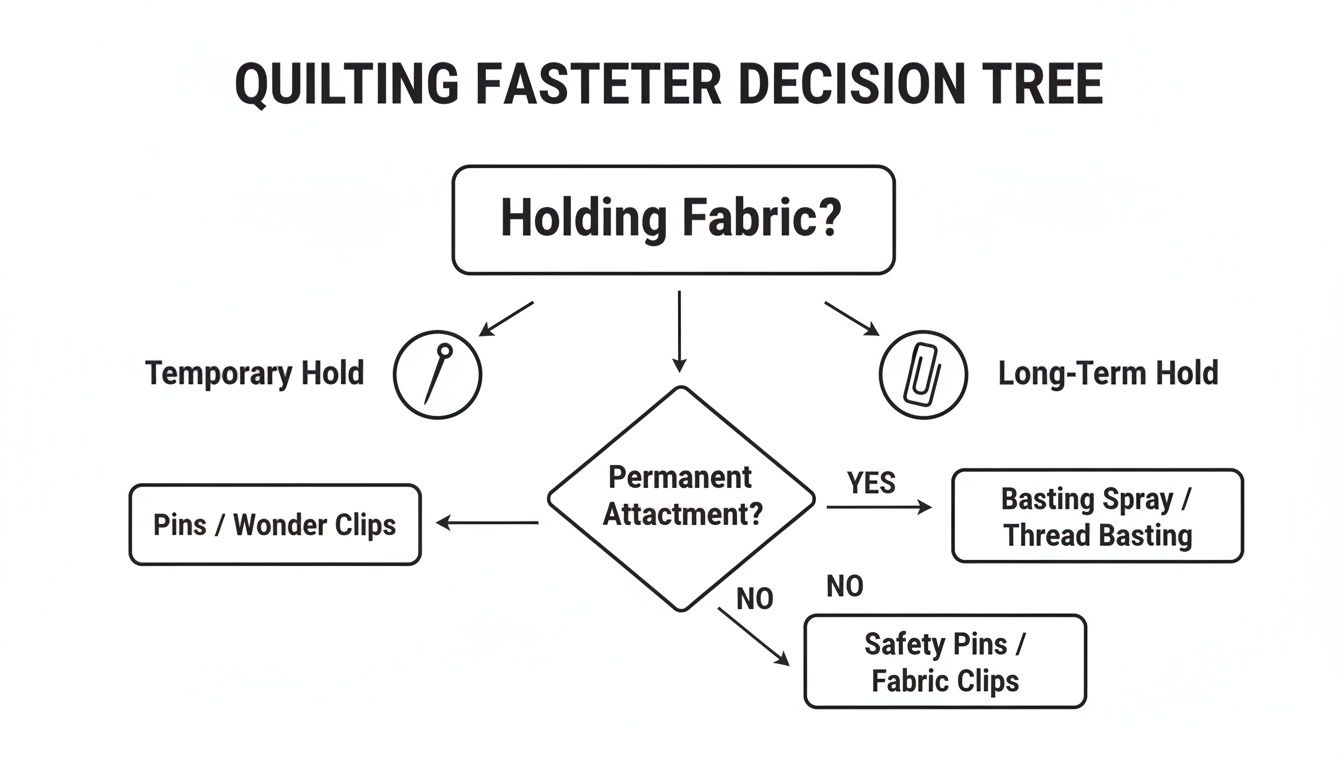
As you can see, simple pins are great for temporary holds while you’re piecing, but clips are much better for holding thick layers like binding in place for longer. If you want to dive even deeper, you can explore the many different types of quilt batting out there. With this foundation of knowledge, you're ready to choose and buy batting with total confidence for every quilt you dream up.
Beginner Projects To Build Your Skills
The absolute best way to become a quilter? Just start quilting! Now that you’ve gathered your essential supplies, it’s time to dive into a project that makes you feel confident and leaves you with something you’ll be proud to show off.
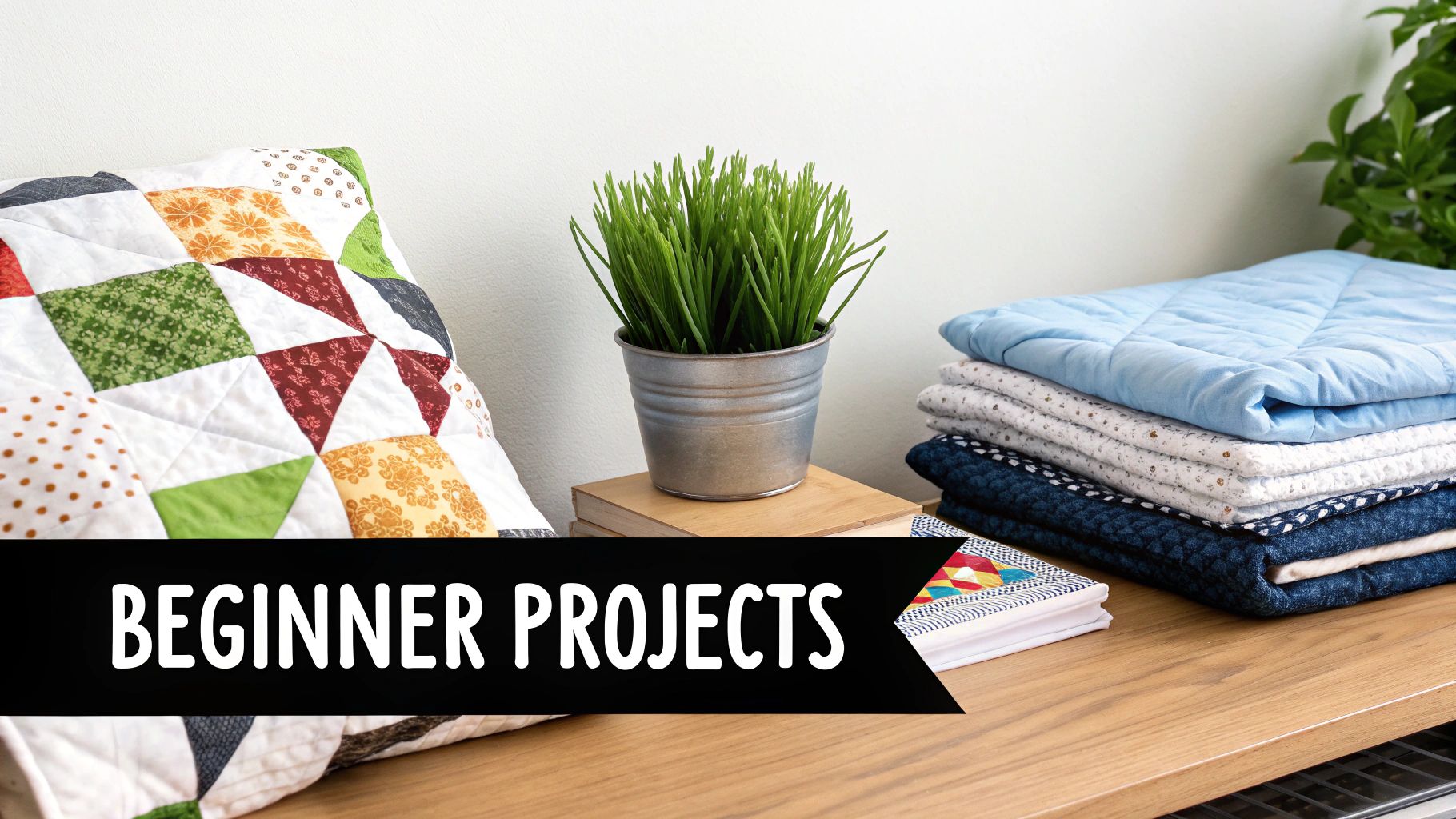
Trust me, starting small is the secret. Don't even think about that king-sized masterpiece just yet. Instead, pick fun, practical projects that let you master the core skills on a much more manageable scale.
Perfect First Quilting Projects
Here are three fantastic starter ideas. I’ve chosen each one specifically to teach you key techniques without making you feel overwhelmed.
-
Patchwork Pillow Cover: This is the perfect first dip into the quilting waters. You'll learn accurate cutting, how to piece simple squares, and basic quilting—all on a small canvas. Best of all, you get a beautiful piece of home decor in just an afternoon!
-
Stylish Table Runner: Think of a table runner as a mini quilt. It's the ideal size for practicing those long, straight seams and getting comfortable with straight-line quilting using your walking foot.
-
Cherished Baby Quilt: A small baby quilt, usually around 30" x 40", is such a meaningful and achievable goal. It gives you the chance to experience the entire quilting process from start to finish on a project that isn't too big to handle.
Beginner's Tip: Make life easier by using pre-cut fabric bundles like charm packs (5-inch squares) or layer cakes (10-inch squares). They save a ton of cutting time and come in perfectly coordinated colors, letting you get straight to the fun part—sewing!
You Are Joining A Vibrant Community
When you start that first project, you’re not just making a quilt; you're stepping into a wonderfully creative and growing community. The quilting fabric market alone is expected to jump from USD 3.5 billion in 2023 to an impressive USD 5.7 billion by 2032.
That incredible growth is powered by people just like you, discovering the pure joy of creating something beautiful and comforting with their own hands. If you're curious about the industry's expansion, you can discover more insights about the quilting market.
Choosing one of these projects is the perfect, low-pressure way to put your new tools and skills to the test. That feeling of finishing your very first piece is what will truly spark your passion and give you the confidence to tackle the next, bigger project with genuine excitement.
Answering Your Top Quilting Supply Questions
Jumping into a new hobby always brings up a few questions. As you start pulling together your first quilting supplies, it’s completely normal to second-guess your choices. Think of this as your friendly quilting help desk, where we tackle the practical questions that always seem to pop up when you're standing in a store aisle or have a full online cart.
We've been there! So, let's clear up some of the most common points of confusion so you can shop smart and quilt with real confidence.
Can I Just Use Scissors Instead of a Rotary Cutter?
Honestly, while a sharp pair of fabric scissors has its place, the rotary cutter, mat, and ruler are the real power trio in quilting. You can cut with scissors, but for the kind of precision patchwork requires, it's a recipe for frustration.
A rotary cutter lets you slice through multiple layers of fabric at once with surgical accuracy. This isn't just about speed; it's about getting perfectly identical pieces every single time. That precision is the secret ingredient for sharp points and blocks that fit together like a dream. Trust me on this one—investing in this setup from the start will save you a world of headaches and make the whole process so much more enjoyable.
What Is the Best All-Purpose Batting for a Beginner?
When you’re just starting out, you can't go wrong with an 80/20 cotton-polyester blend. It’s the trusty, forgiving workhorse of the batting world and my go-to recommendation for almost any project.
This blend really does give you the best of both worlds. You get the soft, breathable feel of cotton, but the polyester adds a touch of durability and a little more loft (or puffiness). It drapes beautifully, is a breeze to quilt by hand or machine, and holds up great in the wash. It’s the perfect, no-fuss batting to start with for everything from your first bed quilt to a simple wall hanging.
An 80/20 blend is like the perfect utility player on a sports team—versatile, reliable, and performs well in almost any situation. It takes the guesswork out of the equation so you can just focus on your sewing.
How Much Fabric Do I Need for My First Quilt?
Ah, the million-dollar question! The answer is: it all depends on your pattern. This is exactly why I always tell beginners to start with a pattern. A good pattern is your roadmap; it will lay out a detailed list of exactly how much fabric you need for each color and print. No guessing, no stress.
If you’re just too excited to wait and want to buy fabric now, I get it! In that case, look for "pre-cuts." These are curated bundles of coordinating fabric already cut into quilter-friendly sizes.
- Charm Packs: Bundles of 5-inch squares.
- Layer Cakes: Bundles of 10-inch squares.
- Jelly Rolls: Bundles of 2.5-inch strips.
Starting with pre-cuts means you can skip a lot of the initial cutting and dive straight into the fun part—sewing!
Should I Buy Quilting Supplies Online or at a Local Shop?
This is a "both/and" situation, not an "either/or." Both offer huge benefits, and most quilters I know use a mix of the two. Your local quilt shop is an incredible resource. Nothing beats feeling the fabric in person, getting hands-on advice, and being part of that community.
That said, online specialty stores often have a much wider selection and more competitive prices, especially for bulk items like batting by the roll. A great strategy is to visit your local shop to get a feel for the basic tools and see what you like. Once you know what you need, you can confidently shop online for great deals and larger quantities to feed your growing hobby.
At Quilt Batting, we specialize in that online convenience, bringing a curated selection of top-quality batting and supplies right to your door. Explore our shop today and find the perfect foundation for your next masterpiece.