

There's a special kind of magic in a flannel quilt. It’s the one you instinctively grab on a cold night, the one that feels like a warm, comforting hug. When you quilt with flannel, you're not just piecing together fabric; you're crafting an experience of pure coziness.
Why Quilters Everywhere Are Falling for Flannel
This fabric’s incredible softness and comforting weight have made it a staple in the quilting world for generations. It’s what we turn to for everything from baby blankets to king-sized bedspreads meant to fight off the winter chill.
Unlike the crisp quilting cottons we're all used to, flannel has a brushed surface—what quilters call a "nap"—that gives it that signature fuzzy feel. That texture is exactly what makes it so special. It can take a simple patchwork design and turn it into a treasured heirloom that feels perfectly worn-in from the very first stitch.
The Unique Personality of Flannel
Working with flannel is a joy, but it helps to know its quirks before you dive in. Think of it as a fabric with its own personality, and getting to know it is the first step toward a project you'll love.
- Incredible Softness: This is why we're all here, right? The brushed fibers create a plush, gentle surface that’s simply unmatched.
- Tendency to Shrink: This is a big one. Flannel is notorious for shrinking, sometimes by as much as 5-10%. Prewashing isn't just a suggestion; it’s a non-negotiable step.
- Pronounced Fraying: The loose weave that gives flannel its softness also means it frays. A lot. You’ll want to account for this with a slightly larger seam allowance and careful handling.
Flannel invites you to create something truly comforting. It’s less about achieving perfectly sharp points and more about crafting a piece that radiates warmth and durability. If you can embrace its cozy nature, you’ll absolutely love the process.
More Than Just a Fabric Choice
Choosing flannel is a commitment to creating a quilt with real depth and character. The global quilt market is valued at over USD 5.3 billion, which shows just how much people crave quality, comforting materials. Flannel stands out in that market because it delivers on that promise of coziness.
This popularity isn't just about nostalgia; it’s about making beautiful, practical things that bring a little more comfort into our homes. Whether you’re dreaming up a rustic log cabin design or a modern, minimalist patchwork, flannel adds a level of warmth you just can't get with anything else.
If you're still exploring your options, our complete guide on fabric for quilting can help you weigh the pros and cons of different materials. But if you’re ready to turn a simple stack of fabric into a masterpiece of comfort, you're in the right place.
The Secret to Perfect Flannel Preparation
If I could give just one piece of advice for working with flannel, it would be this: don't skip the prep work. I know, I know—it's tempting to dive right into cutting and sewing when you've got beautiful new fabric. But trust me, taking the time to prepare your flannel is the single most important thing you can do to avoid a frustrating, puckered mess later on.
It all comes down to tackling flannel's two biggest quirks right from the start.
First up is shrinkage. Flannel is notorious for shrinking, and I'm not talking about a tiny amount. It can easily shrink by 5% or more in its first wash. Imagine sewing that unwashed fabric into a beautiful quilt top, only to have the flannel shrink up after the first wash while your other fabrics and thread stay the same. You'll get puckers, distorted seams, and a quilt that just doesn't lay flat. It’s a heartbreaking sight after all your hard work.
Taming Shrinkage and Color Bleeds
So, the first rule of flannel club is: prewash your flannel. No exceptions.
Wash it just like you plan to wash the finished quilt—think a gentle cycle with cool or warm water and your favorite mild detergent. If you're working with those deep, saturated colors like rich reds, dark navies, or true blacks, I highly recommend tossing a color catcher sheet into the wash. It's cheap insurance against dye bleeds.
You’re also going to meet flannel’s other messy little secret: lint. It sheds like crazy in the first few washes. Do yourself a favor and clean out your washing machine filter and dryer’s lint trap before and after you run the load. A little cleanup now saves a big headache later.
My Two Cents: Don't cram your washing machine full. Give that flannel some room to tumble around. This helps it get cleaner and, more importantly, keeps deep-set wrinkles from forming, which makes ironing a whole lot easier.
Once it's washed, pop it in the dryer on low heat. I like to pull my flannel out when it’s just the slightest bit damp, as it really helps minimize those stubborn wrinkles. A well-prepped piece of fabric is the foundation of a great quilt, and this upfront effort pays off big time when you get to your sewing machine.
Understanding Fabric Nap
After your flannel is washed, dried, and beautifully soft, you'll notice that signature coziness comes from a brushed surface called the nap. Take a moment and run your hand over it. You’ll feel that one direction is smooth, while the other feels a bit rougher. That's the nap.
For your finished quilt to look truly professional and cohesive, you'll want the nap of every single piece to run in the same direction. It might sound fussy, but it makes a huge difference in how the light hits the fabric.
Here's my simple method for keeping it all straight:
- Find the Flow: Lay your flannel out flat and run your hand along the length to find which way feels smoothest.
- Mark It Up: Grab a fabric marker or a few pins and, on the wrong side of the fabric, draw little arrows that point in the smooth direction of the nap.
- Keep it Consistent: As you lay out your pattern pieces, just make sure all your arrows are pointing the same way. Easy peasy.
This small step ensures your finished quilt top has a uniform, polished look. It's one of those little details that takes a project from looking homemade to looking handmade with care. This kind of thoughtful prep sets the stage for a smooth process, especially before you put your quilt sandwich together. For more tips on that stage, be sure to check out our guide on how to baste a quilt to keep those layers from shifting.
Choosing the Right Batting for Your Flannel Quilt
The batting is the heart of your quilt. It’s the unsung hero that gives it warmth, weight, and that perfect, drapey feel. Since flannel is already heavier and warmer than your typical quilting cotton, picking the right batting is a crucial decision. You're not just adding warmth—you're defining the entire personality of the finished quilt.
Think of it like this: the flannel top is the beautiful face, but the batting is the cozy soul inside. If you pair a thick, heavy flannel with an equally thick batting, you can end up with a quilt that’s stiff, cumbersome, and just plain too heavy. The real goal is to find a partner for your flannel that complements its softness without completely overpowering it.
Matching Loft To Your Project
Your first big decision is about loft, which is just a fancy word for the thickness and puffiness of the batting. The loft you choose will dramatically change the final look and feel of your quilt.
-
Low-Loft Batting: This will give you a flatter, more traditional-looking quilt. It’s absolutely perfect for wall hangings, table runners, or any project where you want the piecing and quilting stitches to be the star of the show. The end result is a quilt with a beautiful drape that feels vintage and well-loved from the very first wash.
-
High-Loft Batting: This is how you get that puffy, cloud-like quilt everyone dreams of snuggling under. A higher loft creates more texture and definition in your quilting, making each stitch pop. It’s the ideal choice for cozy bed quilts and lap throws designed for maximum comfort.
For a deeper dive into the world of batting, our guide on the different types of quilt batting can help you explore even more options for all your quilting projects. It's a fantastic resource for understanding how different fibers behave.
Comparing Popular Batting Fibers for Flannel
Since flannel brings so much of its own weight and warmth to the party, let's look at a few of the most popular batting choices and how they really perform when paired with it.
Before you get to the batting, though, remember that proper fabric prep is everything. This flowchart lays out that first critical step.
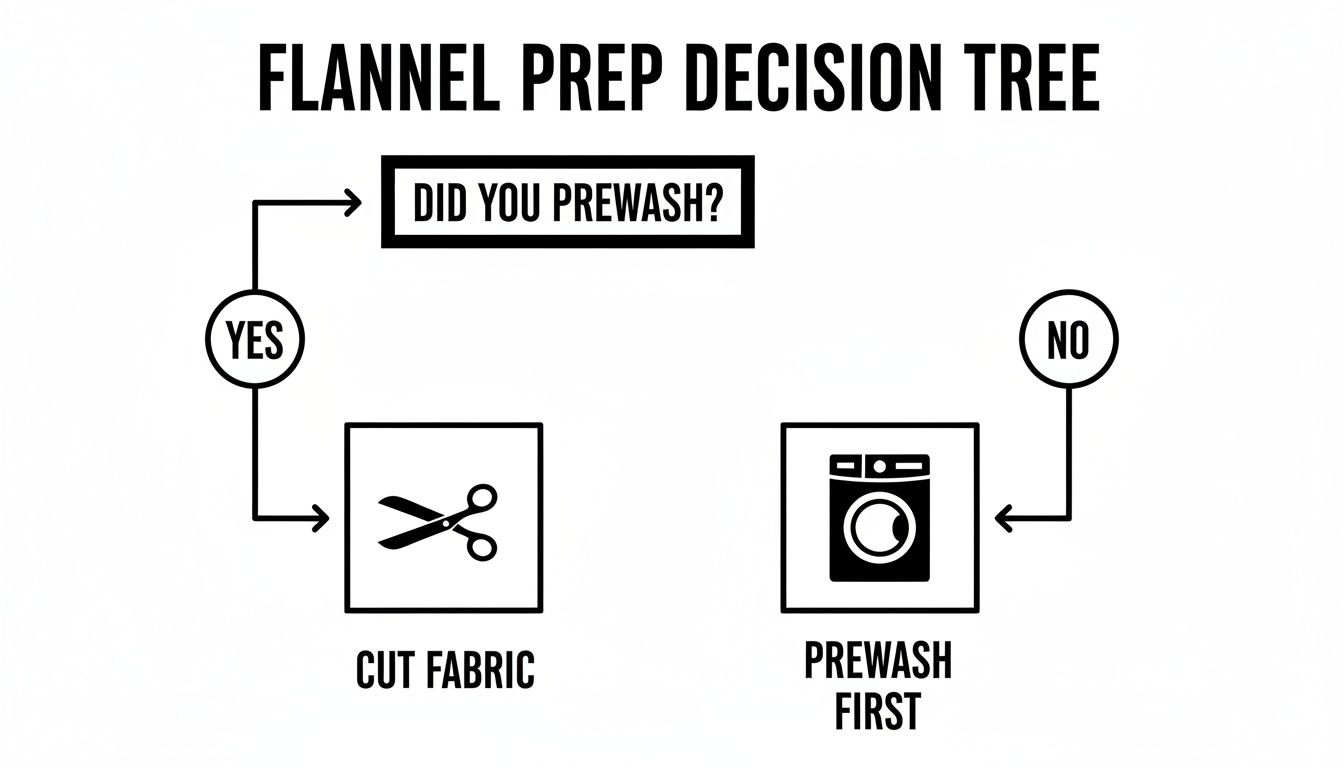
As you can see, prewashing is pretty much non-negotiable if you want to avoid a shrunken, distorted quilt down the line.
To help you decide on the best interior for your quilt, I've put together a quick comparison of some of my favorite batting types for flannel.
Quilt Batting Options for Flannel Quilts
| Batting Type | Fiber Content | Best For | Key Benefit |
|---|---|---|---|
| Cotton Batting | 100% Cotton | Traditional-style quilts, wall hangings, heirloom projects | Breathable and soft, creates a classic flat, crinkled look after washing. |
| 80/20 Cotton/Poly Blend | 80% Cotton, 20% Polyester | All-purpose bed quilts, lap quilts, longarm quilting | The perfect middle ground: soft like cotton but with a bit more loft and stability from the polyester. |
| Wool Batting | 100% Wool | The ultimate warm winter quilt, luxurious throws | Incredibly warm yet lightweight and breathable; offers a beautiful high loft and resiliency. |
Each of these options brings something unique to the table, and the "right" choice really depends on what you want your finished quilt to be.
100% Cotton Batting A classic for a reason. 100% cotton batting is breathable, soft, and naturally low-loft. It pairs beautifully with flannel, creating a quilt that has a traditional weight and feel without being overwhelming. From my experience, it’s the go-to for creating an heirloom-quality quilt that feels perfectly broken-in after that first wash.
80/20 Cotton-Poly Blend Batting This is probably the most versatile and popular choice for flannel quilts, and for good reason. A blend like Hobbs 80/20 offers the softness and breathability of cotton with the added durability and slightly higher loft of polyester. It gives just enough puff to add definition to your quilting stitches while staying lightweight and easy to manage, which is a huge plus for both domestic and longarm quilters. It’s just a fantastic all-arounder.
A word of advice: With an all-flannel top, a super-thick batting can be overkill. A quilt can absolutely be too heavy. Opting for a medium or low-loft batting like a cotton blend often creates a much better drape and a more usable quilt.
Wool Batting If your goal is to make the ultimate winter quilt, wool is your answer. Wool batting is incredibly warm yet surprisingly lightweight and breathable. It has a higher loft than cotton, creating a wonderfully puffy and resilient quilt that bounces back beautifully. It’s a premium choice, but it transforms a flannel quilt into a luxurious, warm-as-a-hug masterpiece.
Getting Flannel Cut and Sewn Just Right
Alright, now that your flannel is prepped and ready, we can get to the fun part. Working with flannel’s cozy thickness and slight stretch can feel a little different under the rotary cutter and sewing machine, but it’s nothing you can’t handle with a few smart adjustments. The trick isn't to fight its nature but to work with it.
The biggest things to remember are its heft and its tendency to fray. One of the best ways to tackle this head-on is by rethinking your seam allowance. That standard scant 1/4 inch we all use for quilting cotton just won't cut it here. With flannel's looser weave, the fabric can easily fray right up to your stitches, putting your beautiful quilt's durability at risk.
Smart Seams and Why Pressing Matters More Than Ever
Trust me on this one: use a slightly larger seam allowance. I always go for a generous 1/4 inch or even a scant 1/2 inch when I'm piecing flannel. That little bit of extra fabric acts as a crucial buffer against fraying and keeps your seams strong and secure, even after years of snuggling and washing.
Pressing is another area where flannel asks for a different approach. Because the fabric is so much thicker, pressing seams to one side can create a ton of bulk. This makes it a real challenge to match up your points and get your blocks to lay perfectly flat.
To get around this, press your seams open whenever you can. It’s a simple change, but it makes a world of difference. Pressing them open distributes all that bulk evenly to both sides of the seam, giving you flatter blocks and a much cleaner, more professional finish.
If you're just starting out, getting these fundamentals down is key. We have a great guide with more foundational quilting tips for beginners that can help build your confidence on any project.
The Right Tools for a Flawless Finish
Your sewing machine setup can be your best friend or your worst enemy when sewing flannel. Its weight and texture demand a bit more from your tools, and making a few key swaps will save you a world of frustration.
Here are my absolute non-negotiables for sewing with flannel:
- A Walking Foot: This is a total game-changer. A walking foot (or a dual-feed system) grips the top and bottom layers of your fabric at the same time, feeding them through the machine evenly. It's the secret to preventing the shifting, stretching, and puckering that flannel is notorious for.
- A 90/14 Sharps Needle: Don't even try to get by with an old or undersized needle. Start fresh with a 90/14 Sharps or even a denim needle. It has a stronger shaft and a much sharper point designed to pierce cleanly through dense fabric without snagging or pushing the fibers down into your bobbin case.
- Quality All-Purpose Thread: Stick with a good, reliable 50-weight cotton or polyester thread. It has all the strength you need to hold the heavier fabric together without adding any unnecessary bulk to your seams.
It's no surprise that flannel's popularity for quilting and clothing just keeps growing; we all love comfort and quality! In North America, the flannel market is growing steadily. Meanwhile, Europe, which accounts for over 30% of global revenue, is seeing even faster growth. This just goes to show that learning to master flannel is a valuable skill for any quilter. By putting these simple techniques into practice, you’re not just sewing a quilt—you're creating a durable, beautiful heirloom that will truly stand the test of time.
Finishing and Caring for Your Cozy Creation
You’ve pieced your top, layered your quilt sandwich, and now you’re on the home stretch. This is where the magic really happens—where all your hard work comes together to create that finished quilt you’ve been dreaming of.
When finishing a flannel quilt, the goal is always to honor the fabric. We're working with a heavier, softer material, and our finishing techniques need to complement that, not fight against it.
The quilting itself is a big part of this. With flannel, you’re not trying to quilt it into submission with dense, complex patterns. That just creates a stiff, uninviting quilt. Instead, let it breathe! Simple, open designs are your best friend here. Think gentle, wavy lines or a simple grid quilted a few inches apart. These designs do the job of securing the layers without sacrificing that wonderful drape and snuggle factor. The flannel’s texture should be the star of the show.
Creating a Durable Flannel Binding
Binding a flannel quilt is a little different from binding a standard cotton one. Flannel is thick and has a tendency to fray, so the usual 2.25-inch binding strip often feels skimpy and can be a real struggle to work with.
Do yourself a favor and cut your binding strips wider from the get-go. I’ve found that 2.75-inch or even 3-inch strips are the sweet spot. That extra width gives you plenty of fabric to wrap comfortably around the quilt's edge, creating a full, sturdy binding that can handle years of love and washing. Trust me, you’ll thank yourself for that extra wiggle room when you’re stitching it down.
When you’re quilting with flannel, your goal is to complement its weight, not fight it. Opt for quilting designs and finishing touches that enhance its natural drape and coziness.
Long-Term Care for Lasting Softness
You’ve poured so much of yourself into this project, so let's make sure it lasts a lifetime. Thankfully, caring for a flannel quilt is straightforward.
Flannel has become a powerhouse in the fabric world. It’s no surprise, given its universal appeal. The global flannel market was valued at a staggering USD 3.2 billion in 2023 and is expected to climb to USD 5.5 billion by 2030. If you're curious, you can explore more about these market trends and flannel's rising demand.
To protect your own piece of this wonderful fabric, just follow these simple care rules:
- Washing: Stick to a gentle cycle with cool or lukewarm water. This helps prevent any more shrinkage and is much kinder to the fibers and your stitching.
- Drying: Tumble dry on low. High heat is the enemy of soft flannel; it can make the fibers feel rough and brittle over time. I like to pull my quilts out when they're still just a tiny bit damp to keep wrinkles at bay.
- Storage: If you’re putting it away, store your quilt in a breathable cotton bag or just fold it neatly in a linen closet. Steer clear of plastic bins, as they can trap moisture and lead to mustiness.
With these finishing touches and a simple care routine, your flannel quilt will be more than just a beautiful project—it will be a warm, comforting companion for years and years.
Your Flannel Quilting Questions, Answered
Working with a new fabric always brings up questions, and flannel is no exception. It’s a completely different animal than crisp quilting cotton. Getting the little details right is what will make your flannel quilt a cozy masterpiece you'll love for years. Let's dig into some of the most common questions I hear from fellow quilters.
Can I Mix Flannel with Quilting Cotton?
This is probably the number one question I get. The answer is a big, enthusiastic yes—but you have to follow one non-negotiable rule. You must prewash and dry every single piece of fabric before a single cut is made.
Flannel is notorious for shrinking, sometimes up to 5-10%, while quilting cotton shrinks far less. If you skip this step, your finished quilt top will pucker and distort in the wash. Trust me, it's a heartbreaking mistake you only make once! After a good pre-shrink, though, they get along beautifully, creating a wonderful mix of textures. Just be sure to use that walking foot to keep the different fabric weights from shifting as you sew.
How Do I Keep My Seams from Getting So Bulky?
Ah, the bulk. Flannel's thickness can create some chunky intersections where seams meet, making it tough to get your blocks to lie flat. My favorite trick is simple but effective: press your seams open.
I know, I know—most quilters are taught to press to one side to nest seams. But with flannel, pressing seams open is the key. It distributes the fabric on either side of the seam line, dramatically reducing the bulk and giving you a much flatter block. If you absolutely have to press to the side, try alternating the direction you press with each row to avoid creating one massive ridge.
Think of it this way: a flannel quilt is all about comfort and durability, not about achieving razor-sharp, perfect points. A flatter seam is a stronger seam, and that’s what we’re aiming for.
Does a Flannel Quilt Even Need Batting?
It's a fair question! Since flannel is already so warm, do you really need that middle layer? While you could skip it for a simple rag quilt, a traditional quilt absolutely needs batting for structure and stability. Without it, the quilt top and backing would just shift around.
The trick is to choose a lower-loft batting. You want to add stability without creating a quilt that’s stiff or overly heavy. My go-to options for flannel are:
- 100% Cotton: For that classic, traditional drape that gets softer with every wash.
- Bamboo: My personal favorite for an incredibly soft, lived-in feel from day one.
- 80/20 Cotton-Poly Blend: Gives you a bit more stability and loft without adding too much weight.
The goal is a cozy, cuddly quilt, not a weighted blanket. The right batting makes all the difference.
At Quilt Batting, we know that what's inside your quilt matters just as much as the top. Find the perfect low-loft cotton or blend batting to make your flannel projects soft, warm, and built to last. Explore our full selection of premium batting by the roll and start your coziest quilt yet.