

If you ask ten quilters what the best batting is, you might get ten different answers. But if you’re looking for a tried-and-true workhorse, the 80/20 cotton-poly blend is the one most of us reach for time and again. It really is the best of both worlds—you get the soft, natural feel of cotton blended with the strength and stability of polyester. This makes it a fantastic choice for nearly any project, from a bed quilt that needs to withstand years of love to a wall hanging that needs to look just right.
Your Quick Guide to the Best Quilt Batting
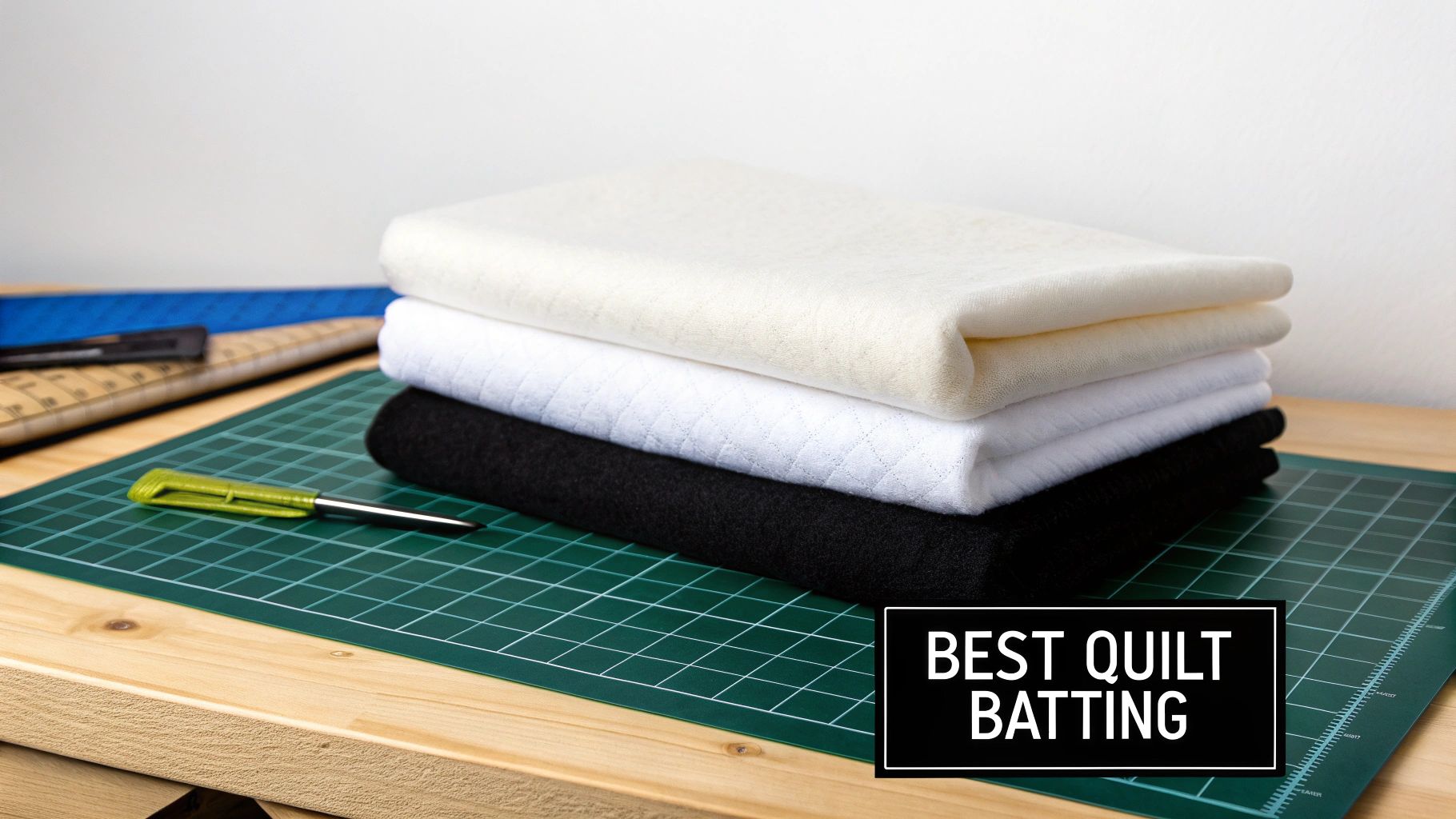
Think of batting as the soul of your quilt. It’s the hidden middle layer, but it completely dictates the final look, drape, and feel of your masterpiece. While that 80/20 blend is a superstar, the "best" batting truly depends on what you're making. For machine quilters, the 80/20 gives you gorgeous stitch definition, but it’s still soft and easy enough to needle if you’re quilting by hand.
It’s this do-it-all nature that has made it a favorite in both home sewing rooms and professional longarm studios. It’s just so reliable. You avoid the common headaches of stretching or bunching, giving you a solid, dependable foundation for all your creative work. If you're just starting and want to get a feel for the basics, our complete guide on what is quilt batting is a great place to begin.
Comparing Popular Batting Types
Choosing a batting is all about matching its personality to your quilt’s. Are you going for a light, modern feel with crisp lines, or are you aiming for a warm, traditional quilt with that classic crinkly texture? The fiber you choose is what gets you there.
The right batting doesn’t just fill your quilt; it brings it to life. It controls the drape, highlights your stitching, and creates the texture that makes someone want to wrap themselves in your work.
You’re not alone in this search, either. Quilting is more popular than ever! The global quilt batting market was valued at USD 2,000 million and is expected to soar to USD 3,500 million by 2035. This incredible growth shows just how much we quilters rely on high-quality materials, especially the trusted blends that deliver consistent results.
To make things a little easier, here’s a quick-glance chart to help you navigate the most common options on the shelf.
Quick Batting Reference Chart
This table breaks down the most popular batting types to help you quickly match a material to your project's needs. Think of it as your cheat sheet for the batting aisle.
| Batting Type | Primary Material | Best For | Key Feature |
|---|---|---|---|
| 80/20 Blend | 80% Cotton, 20% Polyester | Everyday quilts, longarm quilting | The perfect balance of softness, stability, and minimal shrinkage. |
| 100% Cotton | Cotton | Traditional quilts, wall hangings | Creates a classic, crinkled vintage look after washing. |
| Polyester | Polyester | Bedding, high-loft comforters | Lightweight, holds its shape well, and offers excellent warmth. |
| Wool | Wool | Show quilts, warm winter blankets | Offers superior loft and stitch definition while being light and breathable. |
Ultimately, the best way to find your favorite is to experiment. But this guide gives you a solid starting point for making a choice you’ll be happy with when that last stitch is in.
Breaking Down the Different Types of Batting Fiber
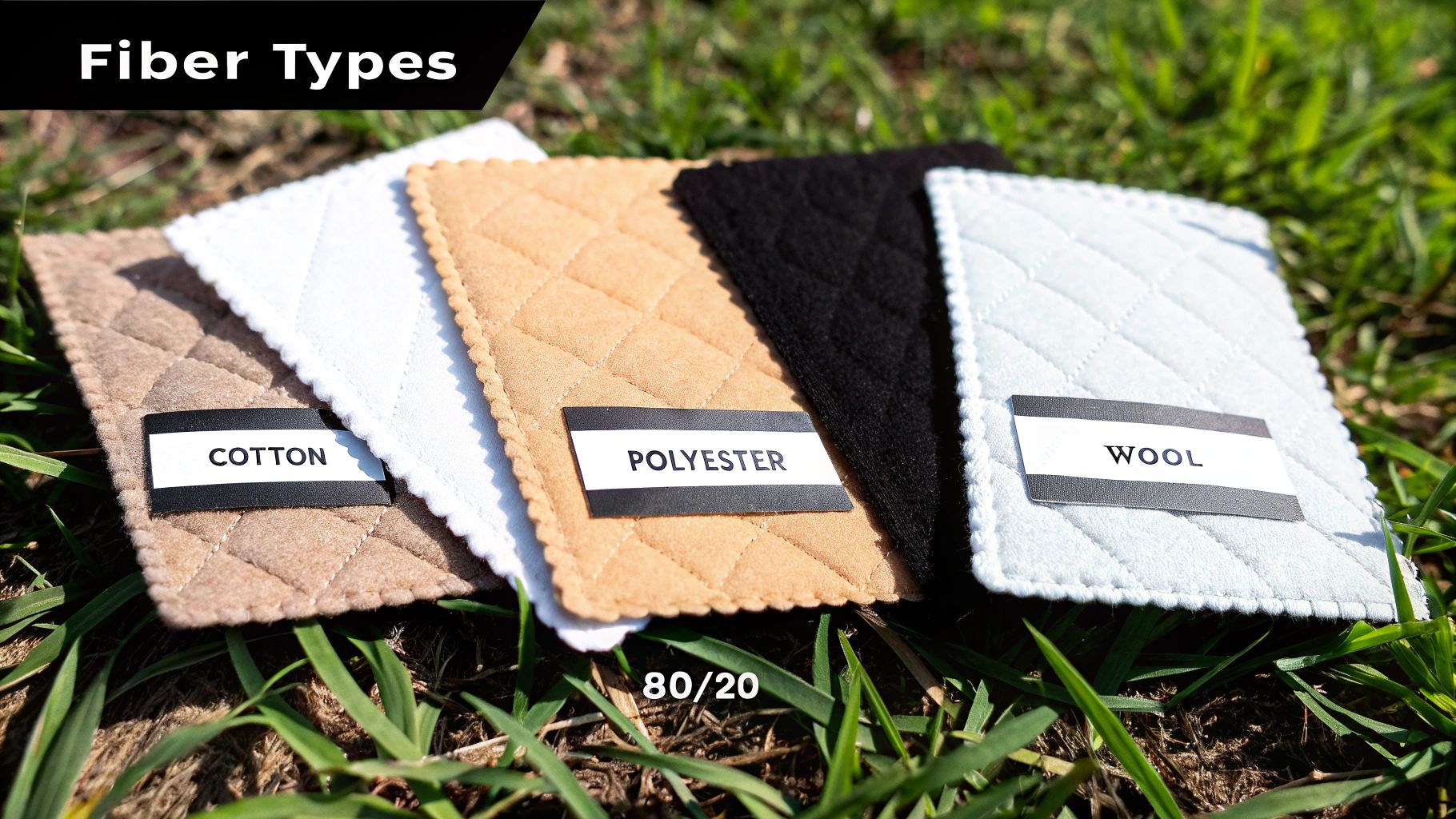
Choosing the right batting is a lot like picking the perfect ingredients for a recipe. Each fiber has its own personality, and understanding what makes each one tick is the secret to getting the look, feel, and performance you want out of your final quilt.
Let's cut through the jargon and get a real feel for how these fibers behave inside your quilt sandwich. This is the knowledge that lets you confidently answer the question, "what is the best batting for quilts?" for every single project you dream up.
Classic Comfort with 100% Cotton Batting
Think of 100% cotton batting as your favorite, well-worn t-shirt. It’s breathable, soft, and has that wonderfully natural feel that so many of us love. This is the classic choice, the one quilters reach for when they want a timeless, traditional quilt.
As a heavier fiber, cotton gives a quilt a comforting weight and a beautiful drape. But its most famous trait is how it shrinks just a little after that first wash. For many quilters, that’s not a bug—it’s the best feature!
This slight shrinkage is exactly what creates that classic, slightly puckered, and crinkly look. If you want a quilt that feels like a treasured family heirloom right from the start, cotton is your best friend.
The gentle puckering caused by cotton batting shrinkage isn't a flaw—it's a feature. It softens the quilt, enhances the texture, and gives your work a cozy, lived-in charm that's difficult to replicate with other fibers.
Now, if you love the feel of cotton but aren’t looking for that crinkle, many brands offer options with a scrim. This is a very fine, lightweight stabilizer that gets needle-punched right into the batting. It acts like a hidden skeleton, adding strength and stopping the fibers from stretching or separating. This extra stability also means you can space your quilting lines further apart—sometimes up to 8-10 inches—giving you a lot more creative freedom.
Durable and Dependable Polyester Batting
If cotton is a vintage t-shirt, then polyester batting is your high-performance activewear. It’s lightweight, incredibly durable, and fantastic at holding its shape, wash after wash. This synthetic fiber is a workhorse, making it an excellent choice for bed quilts that will see a lot of use.
Polyester resists shrinking, so your quilt will keep a smoother, flatter appearance over its life. It's also known for providing amazing warmth without adding a lot of bulk, which is perfect for creating those big, puffy comforters.
One thing to watch for, especially with lower-quality options, is "bearding"—those tiny fibers that can migrate through your quilt top. The good news is that choosing a high-quality, bonded polyester almost completely eliminates this problem. To see how all the different options stack up, you can explore the various types of quilt batting in our more detailed guide.
Luxurious Warmth with Wool Batting
Wool batting is the cashmere sweater of the quilting world. It gives you incredible warmth while being surprisingly lightweight and breathable. As a natural fiber, it’s also exceptionally resilient, resisting creases and springing back into shape beautifully.
Quilters typically reach for wool for two main reasons:
- Superior Insulation: Nothing beats wool for pure, cozy warmth, making it the top pick for winter quilts.
- Stitch Definition: Wool has a wonderful loft that really makes your quilting stitches pop, showing off intricate patterns like nothing else.
It's also a dream to work with, whether you're quilting by hand or machine, because the needle just glides right through it. While it's a more premium and expensive option, the luxurious feel and incredible performance make it a worthy investment for show quilts and special heirloom projects.
The Best of Both Worlds: Blended Batting
So, what is the best batting for quilts when you can’t quite decide? For a huge number of quilters, the answer is a blend. The undisputed champion is the 80/20 cotton-polyester blend, which has become a true industry standard for its perfectly balanced performance.
With an 80/20 blend, you get:
- The softness and natural drape of cotton.
- The strength, stability, and lower shrinkage of polyester.
It’s this winning combination that makes 80/20 blends a favorite for longarm quilters and everyday hobbyists alike. In the $4.5 billion US quilting industry, these blends are celebrated for their ability to hold up to repeated use and washing. In fact, studies show 80/20 blends have 8-10% higher loft retention after washing compared to 100% cotton. Meanwhile, sustainable wool boasts up to 40% better insulation, which is driving its surge in popularity. You can dive into more quilting trends and market insights by reading the full report from the Craft Industry Alliance.
Choosing the Right Loft for Your Quilt Project
Once you’ve picked your fiber, the next big decision is loft. Think of loft as the batting’s fluff factor—its thickness. This one choice has a huge impact on the final personality of your quilt, controlling everything from its texture and warmth to how your quilting stitches either pop or blend in.
Getting the loft right is what turns a pretty quilt top into a masterpiece with the perfect feel. Are you picturing a flat, modern wall hanging, or a puffy, cloud-like comforter to curl up under? The answer to that question starts with the loft.
Low Loft Batting for Crisp Definition
Low-loft batting is your thinnest option. It creates a quilt that’s flat, drapes beautifully, and feels lightweight. Think crisp, cool bedsheet versus a big, puffy duvet. With a thickness typically under 1/4 inch, it’s the perfect canvas for letting intricate quilting shine.
This is my go-to choice when detail is the most important thing:
- Wall Hangings: A low loft helps the quilt hang perfectly flat, letting your piecing or detailed quilting be the star of the show.
- Table Runners: It creates a stable, even surface so your centerpiece won't wobble.
- Quilted Garments: For a jacket or vest, low loft adds a layer of warmth without any unflattering bulk.
- Intricate Machine Quilting: If you’ve spent hours on detailed free-motion work, this batting ensures your design doesn’t get lost in the puff.
Because it's so streamlined, low-loft batting is also a dream to work with. It's much easier to handle, whether you're quilting by hand or wrestling a big quilt through the small throat of your home sewing machine. For a deeper dive, check out our complete guide on low-loft batting for quilts.
High Loft Batting for Maximum Coziness
Now, let's jump to the other extreme: high-loft batting. This is your ticket to a thick, fluffy, and incredibly warm quilt. Often reaching 1/2 inch or more in thickness, high-loft batting creates that plush, sink-into-it comforter feel we all love.
This type of batting is a fantastic insulator because it traps more air. It’s the obvious choice when your main goal is pure, unadulterated coziness for a bed quilt.
High-loft batting is all about texture. It gives your quilt a deeply pillowy look, making the quilting stitches sink in and create dramatic, shadowed valleys. This effect is perfect for simpler quilting patterns that just want to emphasize that wonderful squishiness.
That said, its thickness can make it a beast to work with for dense or detailed quilting. Instead, high-loft is best for quilts that are hand-tied or have simple, wide-set quilting lines that play up its volume. You’ll often find polyester in high-loft options, as it gives you all that puff without adding a ton of weight.
Finding the Sweet Spot with Mid-Loft Batting
What if you don’t want either extreme? Mid-loft batting is that "just right" Goldilocks option. It offers more body and warmth than a low-loft batting but avoids the cloud-like puffiness of a high-loft one, making it incredibly versatile for all sorts of everyday quilts.
A great mid-loft, like a quality 80/20 blend, has just enough dimension to make your quilting stitches pop without overwhelming your piecing. It gives the quilt a lovely weight and a soft, huggable feel—perfect for bed quilts, throw blankets, and baby quilts that are meant to be used and loved. It's no surprise this is a favorite among longarm quilters who want to give their clients' quilts beautiful stitch definition and an inviting, cozy texture.
How to Match Batting to Your Quilting Style
Picking the right batting isn't just about what the finished quilt will be used for—it's also about you. The way you quilt, whether by hand, on a home machine, or with a longarm, completely changes the game. Matching the batting to your personal quilting style is the real secret to a project that feels like a joy, not a fight.
This guide can help you visualize how your project goals point you toward the right loft.
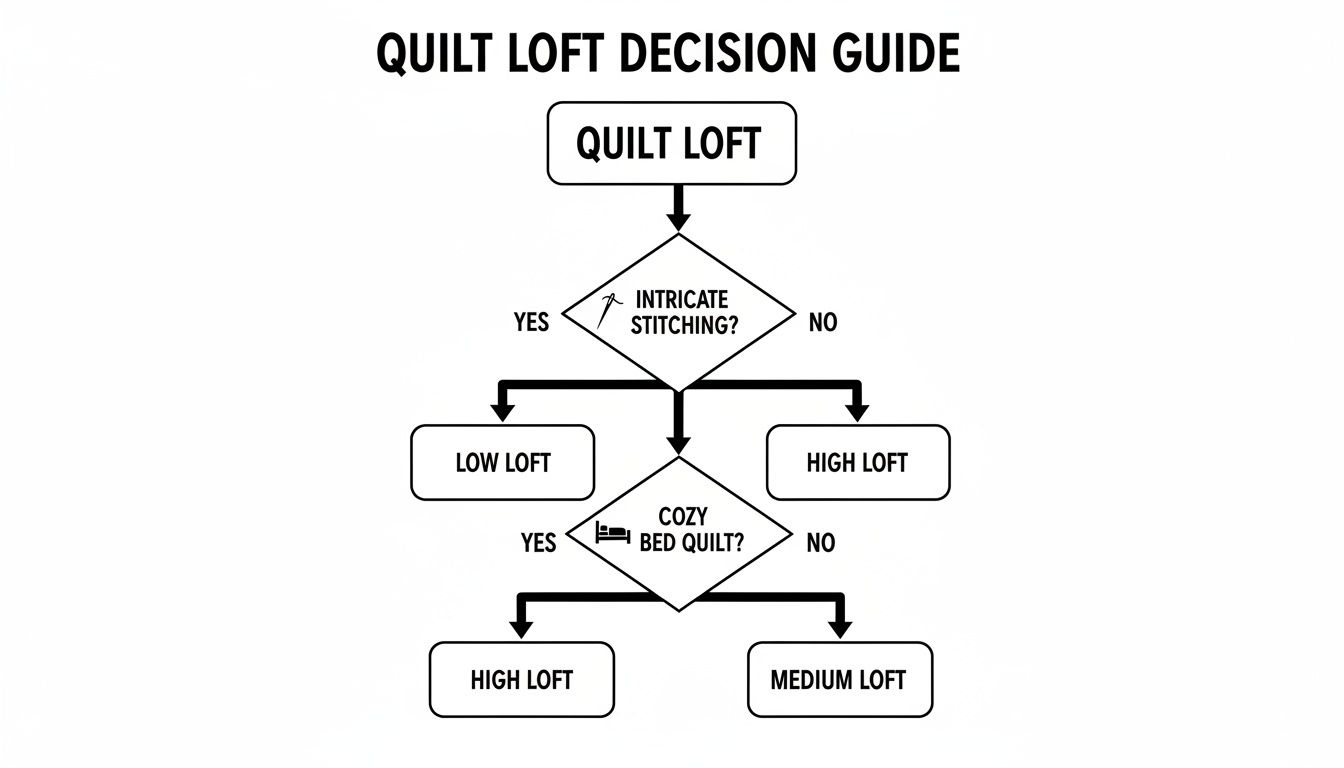
The big takeaway here? The more you want your stitching to shine, the lower the loft you should choose. A flatter batting creates the perfect canvas for intricate thread work to stand out.
For the Hand Quilter: A Gentle Touch
If you love the slow, rhythmic process of pulling a needle and thread through fabric, your top priority is a batting that’s easy on your hands. Trying to force a needle through dense, resistant batting will leave you with sore fingers and take all the pleasure out of your craft.
For this gentle art, a few fibers are clear winners:
- 100% Cotton: A soft, needle-punched cotton batting is a dream to work with. It gives you that classic, traditional feel without putting up a fight.
- Wool Batting: Many hand quilters consider wool the absolute gold standard. It’s incredibly soft, light, and easy to needle, creating a luxurious quilting experience and gorgeous, puffy stitches.
You'll want to steer clear of battings with a dense scrim or any fusible coatings. These additions are designed for machine stability and will make pushing a needle through by hand a real chore.
For the Domestic Machine Quilter: Stability Is Key
Quilting on a domestic machine means wrangling a whole lot of quilt through a tiny little space—the throat of your machine. The last thing you need is a shifty, stretchy batting that bunches up while you’re trying to stitch. For home machine quilters, stability is your best friend.
A stable batting keeps your quilt sandwich from getting distorted, preventing those dreaded puckers and tucks on the back. You need something that’s engineered to hold its shape.
The best batting for a domestic machine quilter acts like a reliable partner, holding everything in place so you can focus on your creative stitching, not on fighting the fabric.
Excellent choices include 80/20 cotton/poly blends, which give you the perfect marriage of cotton’s softness and polyester’s structural integrity. A 100% cotton batting with a scrim is another fantastic option, as that lightweight internal grid adds strength and prevents the batting from stretching out of shape.
For the Longarm Quilter: Consistency and Performance
Longarm quilting is all about efficiency and achieving flawless results over huge surfaces. Whether you're a professional running a business or a dedicated hobbyist, consistency is king. You need a batting that behaves the same way from the first stitch on a king-sized quilt to the very last.
This is where high-quality rolls really matter, ensuring there are no thin spots or blemishes to disrupt your flow. The 80/20 cotton/poly blend is the undisputed workhorse of the longarm world. It delivers reliable performance, creates beautiful stitch definition, and has minimal shrinkage. It’s also strong enough to handle the high tension of a longarm frame without stretching or tearing.
Batting and Project Pairing Guide
Beyond your personal quilting style, the project itself has its own needs. Pairing the right batting with the right project is crucial for getting the results you envision. This table breaks down some common pairings to set you up for success.
| Project or Quilting Style | Recommended Batting | Reasoning |
|---|---|---|
| Heirloom Hand Quilting | Wool or 100% Cotton (no scrim) | These fibers are exceptionally soft and easy to needle, preventing hand fatigue. Wool, in particular, creates a beautiful, lofty stitch. |
| Intricate Machine Quilting | Low-Loft Cotton or an 80/20 Blend | A flatter batting provides a smooth canvas that allows detailed stitching and thread work to be the star of the show. |
| Cozy Bed Quilts | High-Loft Polyester or an 80/20 Blend | These battings provide warmth and a classic puffy look without adding too much weight, making them perfect for snuggling. |
| T-Shirt Quilts | Low-Loft Polyester or Blend with Scrim | The stability of polyester or a scrim is essential to control the stretch of knit t-shirt fabric, preventing a wavy, distorted quilt. |
| Wall Hangings & Show Quilts | Wool or Black Polyester | Wool offers unparalleled stitch definition, making quilting pop with texture. Black batting is ideal for dark fabrics to prevent white "bearding." |
| Microwave Bowl Cozies | 100% Cotton (Wrap-N-Zap) | Safety first! Only 100% cotton (fabric, thread, and batting) is microwave-safe. Synthetics can melt or catch fire. |
| Table Runners & Placemats | Thin 100% Cotton or Fusible Batting | A low-loft batting ensures items lay flat on the table. Fusible batting makes assembly quick by eliminating the need for pinning or basting spray. |
Choosing the right batting is one of those small decisions that makes a massive impact on both your quilting process and the final look and feel of your project. When in doubt, always consider the quilt's end-use and how you plan to stitch it.
Smart Shopping Tips for Buying Batting by the Roll
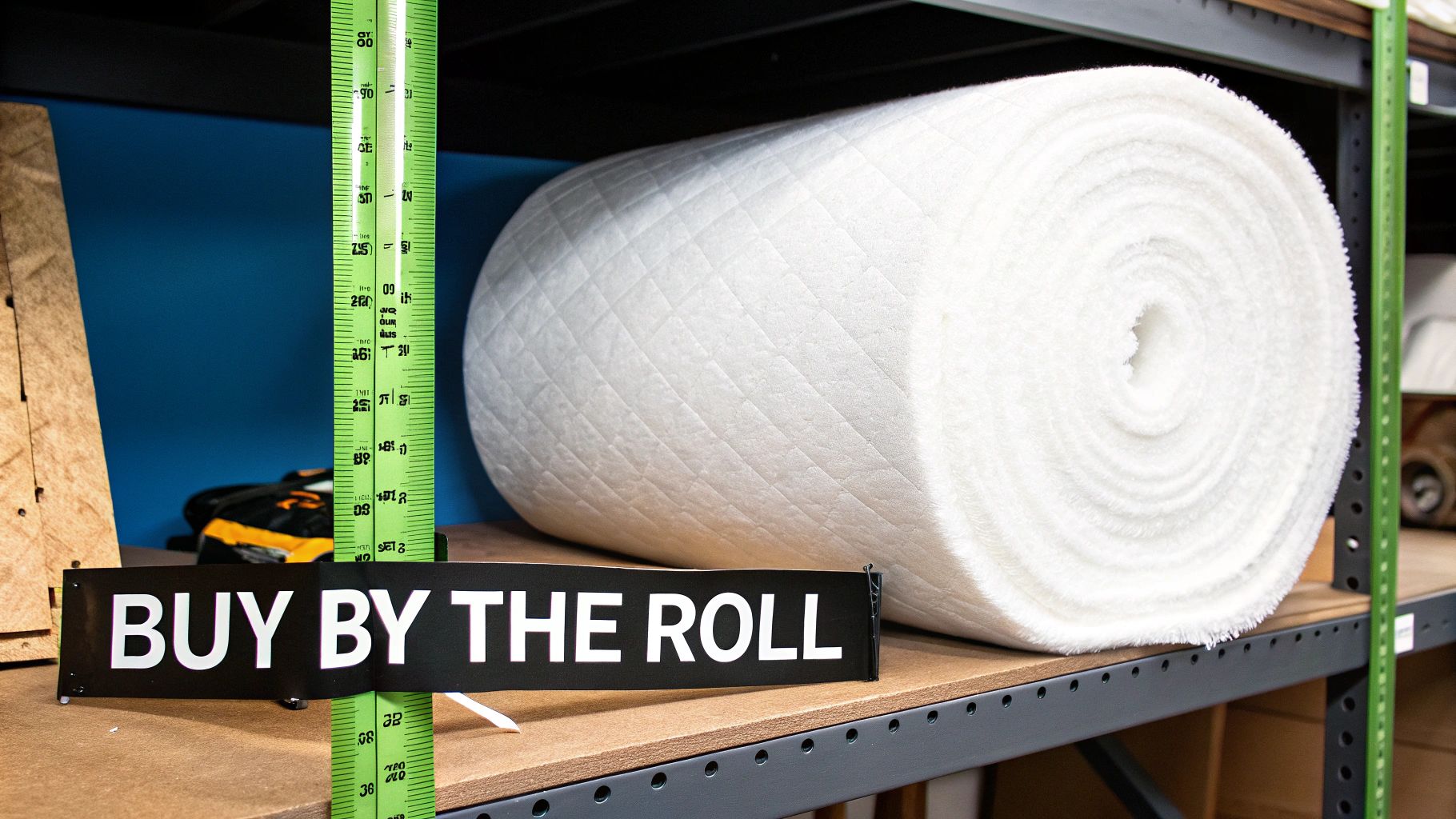
If you're a serious quilter, you know the frustration of running to the store for a single package of batting for every new project. It’s time-consuming and expensive. Making the leap to buying batting by the roll is a true game-changer, especially for longarm studios or anyone with a constant stream of quilt tops waiting. It’s an investment that pays off big time in both cost savings and consistent quality.
When you buy a whole roll, you get one continuous length of batting—often 30 or 40 yards—all from the same manufacturing lot. This means no more surprises. You get the same loft, feel, and performance from the start of the roll to the very end, guaranteeing uniformity across all your quilts.
Choosing the Right Batting Width
One of the biggest decisions you'll make when buying a roll is the width. The goal here is simple: get the most out of your batting and create as little waste as possible. It can be tempting to go with a narrower, cheaper roll, but you'll likely regret it when you find yourself constantly piecing scraps together for larger quilts.
Let’s break down the common widths:
- 90" or 96" Width: This is a fantastic, versatile choice for throws, twin-sized quilts, and even some full-sized projects. It's a solid workhorse for many home quilters.
- 108" Width: Perfect for easily accommodating queen-sized quilts. This width gives you just enough extra on the sides for quilting without the headache of piecing.
- 120" Width: This is the king of batting widths, literally. It's the go-to for king and California king-sized quilts and a favorite among longarm quilters who need to be ready for any project that comes through the door.
Take a moment to think about the quilts you make most often. If you’re regularly making bed-sized quilts, investing in a wider roll from the get-go will save you a world of time and frustration. Our guide on quilt batting sizes is a great resource for matching standard bed dimensions to the right batting width.
Pro Tips for Storing Your Batting Roll
So, your beautiful new roll of batting has arrived! Now what? Storing it properly is the key to protecting your investment. The absolute worst thing you can do is store it incorrectly, which can lead to permanent creases that are a nightmare to quilt out.
Never, ever fold a roll of batting. Always store it standing upright on its end or laying horizontally on a sturdy rack. Folding creates deep creases that can completely ruin the smooth, even finish of your final quilt.
To keep your batting in perfect shape, find a spot that’s cool, dry, and out of direct sunlight—a closet or a dedicated corner in your sewing room is ideal. Keep it wrapped in the plastic it came in or slide it into a large fabric bag to protect it from dust, pet hair, and moisture. Taking this one simple step ensures every last inch of that roll is pristine and ready for your next masterpiece.
You’ve poured so much of yourself into that quilt—every stitch, every fabric choice. Now, let's talk about how to make sure it lasts long enough to become a treasured family heirloom. The secret to a long and beautiful life for your quilt often comes down to how you care for it, and that starts with the batting you chose.
A question I hear all the time is, "What's the best batting for a quilt I want to pass down?" The answer really depends on the story you want your quilt to tell over time. If you love that soft, crinkly, lived-in look, then 100% cotton and wool battings are your best friends. That gentle shrinkage after the first wash is what creates that classic, vintage texture we all adore. It’s not a bug; it’s a feature!
But maybe you're aiming for a more modern, crisp aesthetic. In that case, polyester batting is the hero. It's incredibly resistant to shrinking and wrinkles, so your quilt will keep its smooth, flat appearance wash after wash. Understanding this from the start helps you choose the right batting for the quilt you envision years from now.
Simple Washing for Lasting Beauty
Keeping your quilt looking its best doesn't require a complicated routine. Just a few simple habits will protect its colors and stitches for decades.
- Go Gentle: Always, always use the gentle or delicate cycle on your machine with cold water. This is the kindest way to treat the fibers and prevent fading.
- Mild Soap is Key: Stick with a mild, color-safe detergent. Harsh chemicals are the enemy of both your fabric and the batting inside.
- Low and Slow Drying: Tumble dry on the lowest heat setting you have. Here’s a pro tip: pull the quilt out while it’s still just a little damp and lay it flat to finish air drying. This takes all the stress off your seams and quilting.
Storing Your Quilt for the Future
How you store your quilt is just as important as how you wash it. The biggest mistake you can make is tucking it away in a plastic bag or bin. Plastic traps moisture, which is a recipe for mildew and can damage the fibers over time.
Instead, loosely fold your quilt and slip it into a breathable cotton or muslin storage bag. An acid-free archival box works great, too. Find a cool, dry, and dark spot—like the top shelf of a closet—to keep it safe. Once or twice a year, take it out and refold it differently. This simple step prevents sharp, permanent creases from setting in, ensuring your masterpiece stays pristine for the next generation to enjoy.
Got Questions About Batting? We’ve Got Answers.
Even after you've picked the perfect fiber and loft, a few nagging questions can pop up right when you're ready to put your quilt sandwich together. Nailing these final details is what separates a good quilt from a great one. Let’s walk through some of the things quilters ask us all the time.
Getting these right helps you sidestep those classic quilting headaches, like pesky fibers poking through your beautiful fabric or your quilt getting lumpy after the first wash. It's all about making smart choices so you can quilt with confidence.
Is There a Right and Wrong Side to Batting?
Ah, the million-dollar question! The short answer is: sometimes. For many of the workhorse battings we use every day, like a standard 80/20 blend, it really doesn't matter. Either side works just fine.
But for certain types of batting, paying attention to which side is up is a game-changer for your finished quilt. It’s one of those small things that makes a huge difference.
- Look for the Scrim: If your batting has a scrim (a very thin stabilizer layer that adds strength), it has a "right" side. You'll want that scrim facing up, toward your quilt top, to give your project the most stability.
- Feel for the "Dimples": Some battings are needle-punched during manufacturing. This process creates tiny little indentations, or "dimples," on one side and slightly fuzzy nubs on the other. The rule of thumb is "dimples down"—that side should always face your quilt backing.
Why does this matter? Placing a needle-punched batting with the dimples facing down is your secret weapon against "bearding"—that super frustrating moment when you see batting fibers migrating through the weave of your fabric. This orientation helps lock the fibers down where they belong.
How Far Apart Can I Quilt My Lines?
This isn't just a casual suggestion; it's a critical rule for the health of your quilt. The maximum quilting distance tells you how far apart your stitches can be to prevent the batting from shifting, bunching, or separating over years of snuggling and washing.
You'll find this information right on the batting package, and believe me, it varies a lot. A high-quality cotton batting with a scrim, for example, might give you the freedom to quilt up to 8-10 inches apart. This is perfect for modern, minimalist designs. In contrast, some looser battings without a scrim might need to be quilted every 2-4 inches to keep everything secure. Always, always check the manufacturer’s instructions—it’s the best way to make sure your masterpiece stands the test of time.
Should I Pre-Wash My Batting?
To wash, or not to wash? This really boils down to the final look you're going for.
If you love that classic, crinkly, vintage vibe—the kind that makes a quilt feel like it's been in the family for generations—then do not pre-wash your batting. That wonderful texture comes from the slight shrinkage that happens to the cotton fibers the first time the finished quilt goes through the wash.
On the other hand, if you're making a sleek wall hanging or just prefer a perfectly flat, modern quilt, then pre-washing is the way to go. For cotton or blend battings, just soak the batting in cool water, gently squeeze the excess out (never wring it!), and lay it flat to air dry. As a general rule, polyester and wool battings don't need—and shouldn't get—a pre-wash.
At Quilt Batting, we know that the right foundation can turn a project into a treasure. Find the perfect batting to bring your vision to life. Shop our full collection today!