

If you’ve ever spent what feels like an eternity trying to coax a thick strand of quilting thread through a ridiculously tiny needle eye, you know the frustration. It’s a moment that can make even the most patient quilter want to give up. This is precisely why big eye sewing needles are such a lifesaver in any quilter's toolkit.
These needles are designed with one simple but brilliant modification: a significantly larger eye. This isn't just a minor tweak; it's a design that completely removes one of the most common headaches in hand sewing, saving your eyesight and preventing your beautiful thread from fraying before you even make the first stitch.
Why Big Eye Needles Are a Quilting Game Changer
Let's face it, trying to thread a standard needle with quilting thread can feel like pushing a rope through a keyhole. It’s a recipe for frayed thread and frayed nerves. This is exactly where big eye sewing needles come in and transform your hand-sewing experience.
Think of them as the needle you've always wished for. That elongated, generously sized eye is the whole point—it makes threading a breeze. No more squinting, no more splitting your expensive thread, and no more wrestling with a tiny target.
More Than Just Easy Threading
While the easy threading is the main attraction, the real magic of these needles is how that one feature improves your entire quilting process. A smooth start leads to a more enjoyable and efficient workflow from beginning to end. When your thread glides through the eye without a fight, it stays strong and intact, which means you get stronger, more beautiful stitches in your quilt.
This simple tool upgrade offers a few fantastic advantages for quilters at every skill level:
- Reduces Hand Fatigue: When you're not struggling to thread the needle and pull the thread through, your hands can stay relaxed and focused on making those perfect, even stitches for longer.
- Protects Your Materials: The larger eye creates less friction, which is a big deal. It helps prevent shredding and weakening, especially when you're working with specialty quilting threads, floss, or even delicate yarns.
- Improves Stitch Quality: A happy thread makes for a happy stitch. Because the thread isn't damaged on its way through the eye, it lays down smoothly, giving your binding, appliqué, and hand quilting a much more polished, professional look.
In the end, choosing a big eye needle isn't just about convenience. It’s a smart move that elevates your craftsmanship. It helps you work more smoothly, create cleaner results, and truly get back to enjoying the art of quilting by hand.
If you're just getting started on your quilting adventure, getting the fundamentals right is everything. For more great advice, be sure to check out our complete guide covering essential quilting tips for beginners.
Getting to Know the Big Eye Needle
So, what exactly makes a "big eye" needle different from any other needle in your sewing kit? They might look alike from a distance, but the secret is in the smart, subtle design choices made specifically for quilters. Let's break it down.
Every hand-sewing needle has the same three basic parts: a point, a shank, and an eye. The point is sharpened to pierce through multiple layers of fabric and batting without a fight. The shank, or the body of the needle, provides the strength and stability to create a clean, perfectly-sized hole for your thread.
But the real game-changer, the feature that solves one of the biggest headaches in hand-sewing, is the eye.
The Genius is in the Eye
The eye of a big eye needle is where all the magic happens. It’s intentionally designed to be much larger than a standard needle's eye, either longer or wider, which makes threading a breeze. Imagine trying to get a bulky piece of furniture through a narrow doorway versus a wide one—it's the same principle. Thicker threads, embroidery floss, and even some fine yarns can slip right through without a struggle.
This seemingly small change has a huge impact on your quilting experience.
- No More Frayed Thread: The larger opening means less friction. That friction is what shreds and weakens your thread as you pull it through. With a big eye, your beautiful quilting threads stay strong and smooth.
- Works with Thicker Threads: It’s built to handle the heft of quilting cotton, perle cotton, and other decorative threads that you couldn't even dream of using with a tiny-eyed needle.
- Saves Your Eyesight: Let’s be honest, nobody enjoys squinting and struggling to thread a needle. The wide target saves you from eye strain and frustration, especially during those long, relaxing hand-stitching sessions.
It's a simple but powerful idea: the needle should make your life easier, not harder. By creating a bigger, smoother path for the thread, a big eye needle works with you, not against you.
This design isn't just a modern convenience; it’s a solution born from necessity. These needles really took off during the quilting revival that swept the United States after World War II, when quilters started working with thicker, warmer materials. By 1950, quilting guilds were reporting a staggering 40% increase in needle breakage with standard needles. This pushed manufacturers to get creative, leading to the big eye designs we love today—some with eyes up to 50% larger to make threading almost effortless. It’s a great example of how a small tweak has been boosting quilting productivity for decades. You can find more fascinating tidbits on the history of best-selling needles.
How to Choose the Right Big Eye Needle
Picking the perfect needle shouldn't be a guessing game. Honestly, it's a lot like choosing the right knife in the kitchen—you wouldn't try to chop a carrot with a butter knife, right? The same logic applies here. The best big eye sewing needles for your project are the ones designed for that specific job.
The real secret is matching the needle to your fabric, thread, and—most importantly for us quilters—your batting. A delicate little appliqué project just doesn't need the same tool you'd use to power through a thick, fluffy wool quilt sandwich.
Match the Needle to the Task
Different quilting techniques really do call for different needles. While they all share that wonderfully large eye that saves our sanity, their points and lengths are fine-tuned for specific tasks. Getting to know these subtle differences is the first step toward those perfect, even stitches we all crave.
- Sharps: Think of these as your all-around workhorses. With a sharp point and medium length, they're fantastic for general hand sewing and piecing.
- Darners: These needles are long and slender. They’re designed to hold a good bit of thread, which makes them absolutely perfect for those long basting stitches you’ll be pulling out later.
- Crewel (or Embroidery) Needles: With a super sharp point and that signature large eye, these are your go-to for big-stitch quilting with thicker decorative threads like perle cotton.
This handy chart breaks down the anatomy of a big eye needle.
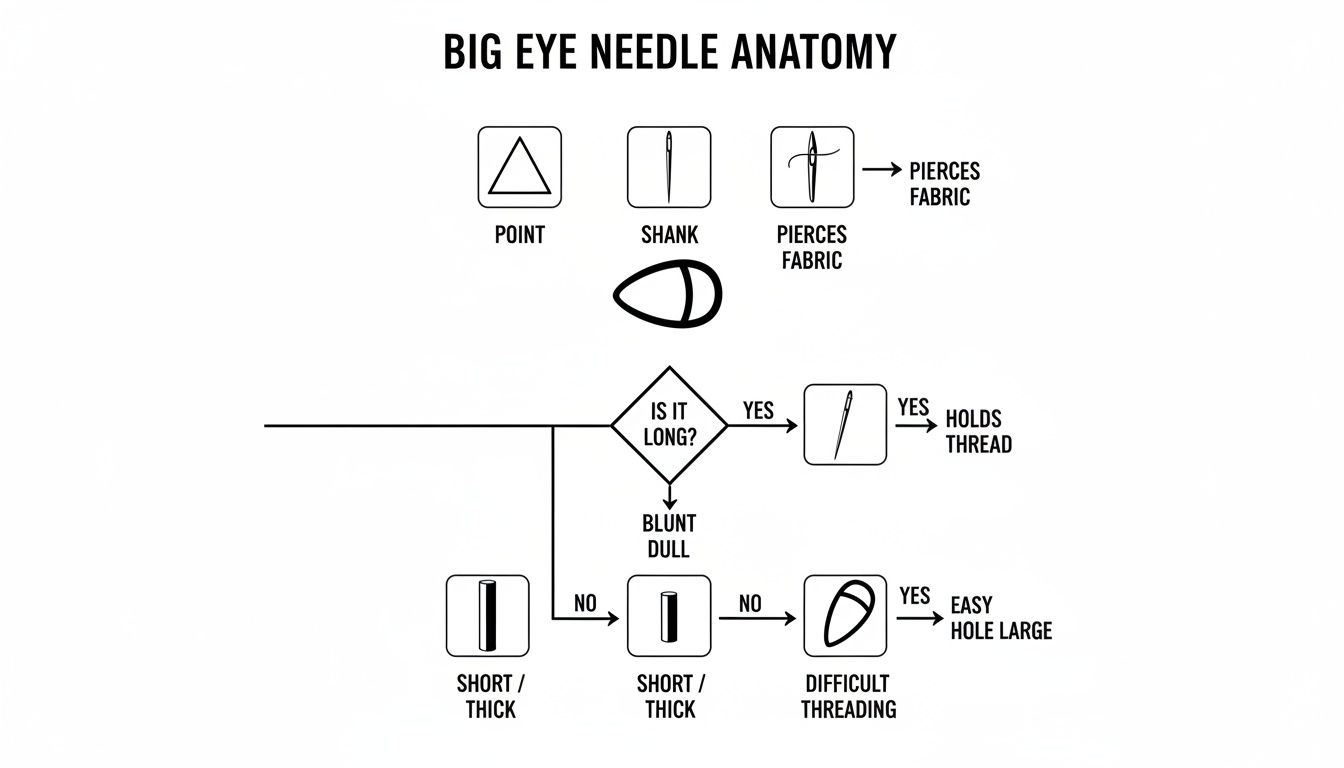
As you can see, that big eye is a lifesaver for threading, but it’s the combination of a sharp point and a sturdy shank that truly lets it glide smoothly through your quilt sandwich.
The Batting and Fabric Factor
The density of your quilt sandwich—your top fabric, batting, and backing all layered together—is probably the biggest factor in choosing your needle. A thicker, denser quilt simply requires a stronger, often larger, needle that can push through all those layers without bending, breaking, or making you work too hard.
For instance, if you're hand quilting through a light and airy 100% cotton batting, a smaller size 9 or 10 needle will probably feel just right. But if you’re tackling a dense wool or a high-loft polyester batting, you'll want a sturdier needle, like a size 7 or 8, to handle that extra resistance. Getting this right not only improves your stitch quality but also saves your hands from a world of fatigue. You can learn more in our guide on the best batting for hand quilting to see how these materials change the game.
Pro Tip: Ever hear a little "pop" as your needle pushes through the fabric? That's your project telling you something! It's a clear sign your needle is either too big for the fabric's weave or has gotten dull. Swap it out for a smaller size or a fresh one to avoid damaging your beautiful work.
Big Eye Needle Selection Guide for Quilters
To take the guesswork out of it, I've put together this simple chart. It's a quick reference to help you match your task and batting with the right needle every time.
| Quilting Task | Batting Type (Examples) | Recommended Needle Type | Recommended Size Range |
|---|---|---|---|
| Hand Quilting | Cotton, Cotton/Poly Blends | Big Eye Quilting/Betweens | 8-10 |
| Big-Stitch Quilting | Wool, High-Loft Poly | Crewel/Embroidery | 5-7 |
| Binding & Appliqué | Fusible, Low-Loft Cotton | Big Eye Sharps | 7-9 |
| Basting Layers | Any Batting Type | Darners | 5-7 |
With this guide, you can confidently grab the right tool for the job and get back to what you love—stitching.
Mastering Techniques for Flawless Stitches
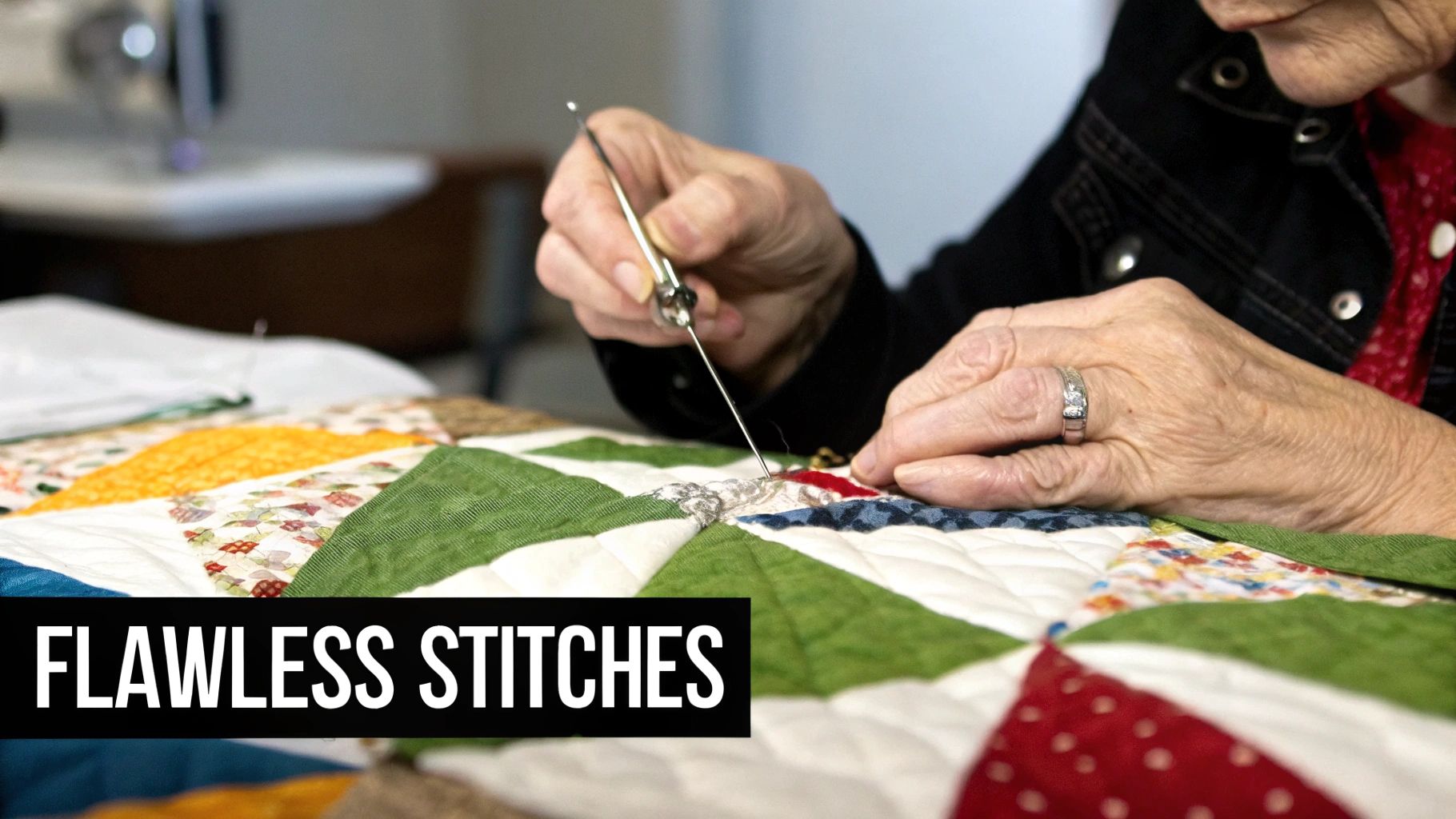
Alright, you've picked out the perfect needle. Now the real fun begins. Using your big eye sewing needles well is what separates a good quilt from a great one, giving you those crisp, beautiful stitches that really make your work sing. And it all starts with threading—the one step these needles make an absolute breeze.
Say goodbye to squinting and struggling with frayed thread ends. That larger eye opens up a world of easy, stress-free threading.
- The Pinch and Push Method: This is my go-to. Just fold the thread over your index finger, pinch it tight with your thumb so only a tiny loop peeks out, and guide it right through the eye. The big eye gives you a much bigger target.
- Using a Needle Threader: While you might not even need one, a simple wire-loop needle threader works like a dream. The large opening makes it incredibly easy to hit your mark, getting you back to sewing in seconds.
Putting Your Needle to Work
Once you're threaded up, it’s all about the technique. You’ll really feel the difference when you're tackling thick bindings or adding delicate decorative stitches. The thread just glides through the eye without much friction, which means no more of that frustrating snagging or shredding that can mess up your beautiful work.
This smooth flow is the secret to maintaining consistent tension and, ultimately, uniform stitches. Whether you're hand quilting complex patterns or just basting your layers together, the needle takes on the tough job, letting the thread pass through your quilt sandwich without a fight. If you're looking for inspiration, take a peek at our guide on some gorgeous hand quilting designs where a good needle makes all the difference.
The time you save is nothing to sneeze at, either. Some U.S. longarm studios found that just by switching to big eye needles, they cut their threading time by as much as 40%. Think about that—this one small change helped them quilt an extra 500 square feet of popular 80/20 batting blends per session. It’s amazing how a tiny tool can have such a huge impact on your productivity.
Expert Tip: To keep your stitches even and save your hands during those long quilting marathons, always use a thimble and try the "rocking" motion. Instead of jabbing the needle straight down, rock your hand to let the sharp point do the work. This uses the needle's own strength to pierce the fabric and brings it back up smoothly, putting way less strain on your wrist.
Proper Needle Care for Project Success
Think of your sharp, clean big eye sewing needles as your project’s most trusted partner. But like any good tool, even the best ones can't work magic forever. Taking care of your needles isn't a chore; it’s a simple, crucial step that protects your beautiful fabrics and batting, ensuring your final piece looks as professional as you envisioned.
After hours of happily stitching away, the point of your needle will naturally start to dull. All those passes through fabric can also create microscopic burrs—tiny, rough spots you can't even see. These little imperfections act like hooks, snagging delicate threads and pulling at your fabric fibers. Pushing through with a dull or damaged needle is one of the fastest ways to frustrate yourself and undermine all your hard work.
Recognizing a Tired Needle
So, how do you know when your trusty needle is ready for retirement? It will usually tell you. You might notice you have to push a little harder to get it through your quilt sandwich. Sometimes, you’ll even hear a distinct "popping" sound as it pierces the fabric.
Pay attention to those little clues. They’re signs that the needle is tearing its way through the fibers instead of gliding cleanly between them. If you ignore them, you risk creating visible pulls in your quilt top or, even worse, snagging the batting and causing annoying little lumps. To make sure you're set up for success from the start, check out our guide to essential quilting supplies for beginners.
A good rule of thumb is to swap out your hand-sewing needle after about 8 to 10 hours of solid stitching. A fresh needle is a joy to work with—it glides through fabric effortlessly and keeps your stitches smooth from the first to the last.
Smart Storage and Retirement
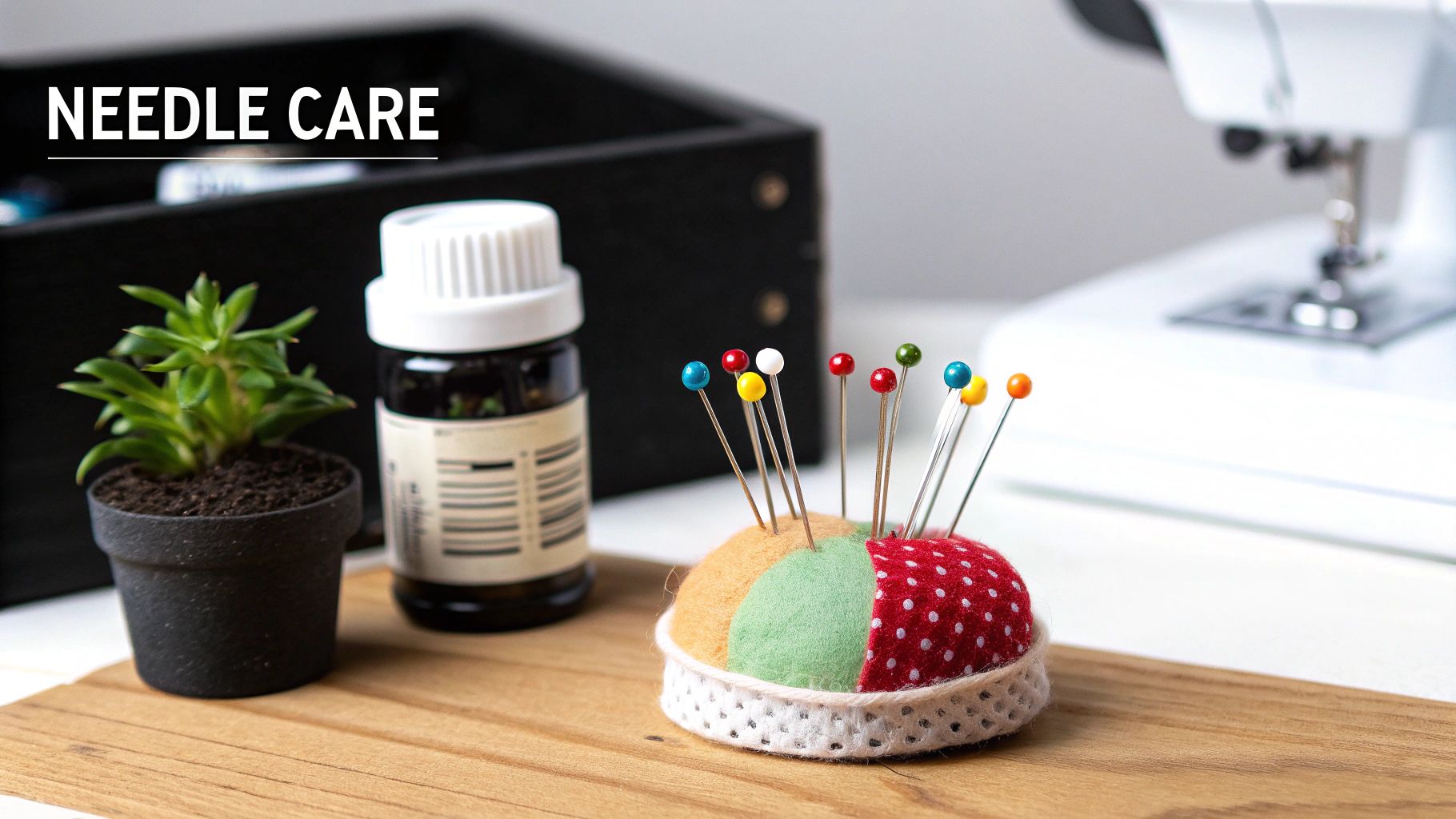
Where you keep your needles matters. A good pincushion does more than just hold them; many are filled with emery powder, a super-fine abrasive that gently cleans and sharpens your needle every time you stick it in. It’s a small habit that keeps your tools in prime condition.
When a needle is truly done—whether it's bent, hopelessly dull, or has a spot of rust—it’s time to let it go. Please don't just toss it in the bin where it could poke an unsuspecting hand! A great trick is to keep a small, dedicated container like an old spice jar or a film canister for your used needles. It’s a safe, simple way to dispose of them and ensures the needles you are using are always sharp and ready to go.
Your Essential Guide to Big Eye Needles
Even after you've used big eye sewing needles for a while, a few questions can pop up. That’s totally normal! Let's walk through some of the most common ones so you can get back to stitching with complete confidence.
Think of this as your go-to cheat sheet for all things big eye needles. I'll give you clear, no-fuss answers so you can spend less time wondering and more time quilting.
Are Big Eye Needles Only for Poor Vision?
Not at all! It’s a common misconception. While they're an absolute game-changer for anyone who struggles with threading, that’s just scratching the surface of what makes them so great. For quilters, the real magic is how effortlessly they handle thicker quilting threads and specialty floss without shredding them.
That larger eye gives the thread a smoother ride, which means less friction as you pull it through the fabric. This simple design tweak leads to some big wins every quilter can appreciate:
- Stronger Stitches: Less friction means your thread stays intact, without the fraying or weakening that can happen with a smaller eye.
- Reduced Hand Strain: The needle glides so much more easily, which is a lifesaver for your hands and wrists during long quilting sessions.
- A Polished Look: When your thread isn't damaged, it lays beautifully flat and gives your quilt that clean, professional finish.
Can I Use Big Eye Needles in My Machine?
This is a big one, so let's be crystal clear: never use a hand sewing needle in a sewing machine. Big eye needles made for hand quilting have a completely round shank and just aren't built for the high-speed mechanics of a machine.
Machine needles are built differently. They have a flat-sided shank that lets them lock securely into the machine. Trying to force a hand needle in there is a surefire way to cause serious damage—and a potentially hefty repair bill. Always, always stick to needles that are specifically designed for your machine.
Do They Leave Bigger Holes in Fabric?
It’s a fair question, but thankfully, the answer is no. What determines the size of the hole isn't the eye, but the needle's shaft (or shank)—the main body of the needle.
A well-made big eye needle from a trusted brand is designed so the shaft is the standard diameter for its size number. As long as you match the right needle size to your fabric and batting, the hole it makes will be just right for your thread. The fabric will close up snugly around the stitch, leaving no trace behind.
How Often Should I Change My Needle?
A sharp needle is your best friend in quilting. As a rule of thumb, I recommend swapping out your hand quilting needle after every 8 to 10 hours of solid stitching. After being pushed through fabric thousands of times, even the best needle will start to dull.
You’ll know it’s time for a change when you have to push harder to get the needle through your quilt sandwich. This can snag your batting, create wonky stitches, and lead to tired hands. If you hear a tiny "popping" sound as the needle pierces the fabric, that's your cue—it's definitely time for a new one.
Here at Quilt Batting, we know that the right tools can make or break a project. Pair your favorite big eye needles with our premium selection of batting and supplies for a truly exceptional result. Find the perfect foundation for your next project at Quilt Batting.