

When you first peek into the batting aisle, the sheer number of options can feel like a maze. From pure cotton’s gentle drape to wool’s lofty warmth, each fiber tells a different story in your quilt. Let this guide light the way, so you can match batting to project with confidence.
Exploring Quilt Batting Varieties
Batting doesn’t just sit quietly between your quilt top and backing—it defines texture, warmth, and stitch definition. Here’s a quick rundown of the go-to fibers:
-
100% Cotton
Breathable, soft to the touch, and develops that sought-after crinkle after washing. -
Cotton/Poly Blends (like 80/20)
Strike a balance: crisp stitch lines with less shrinkage than pure cotton. -
Polyester
Budget-friendly, machine washable, and holds loft consistently without “bearding.” -
Wool
Naturally insulating, lofty, and perfect for showing off intricate quilting motifs. -
Specialty Batting
Fusible batting for in-the-hoop projects, deep black batting for shadow-free dark quilts, and the microwave-safe Wrap-N-Zap for instant basting.
Key Batting Characteristics
Before you pick up your rotary cutter, get clear on these three fundamentals:
-
Loft
How “puffy” your quilt lies. Low loft hugs the top layer; high loft creates bold texture. -
Weight
Stated in ounces per square yard, it controls drape and how your quilt feels in hand. -
Warmth
Depends on fiber density and loft. Heavy, dense batts keep you toasty; lighter ones breathe during warmer months.
Polyester batting dominates the market due to its low cost, dependable loft, and easy care. Learn more in this report from DataInsightsMarket.
Trends In Batting Choices
Quilters are turning toward greener and more specialized fill options:
- Eco-friendly cotton/bamboo blends for a softer environmental footprint
- Black batting to eliminate show-through on vivid, dark fabrics
- Fusible and Wrap-N-Zap batting to speed up small projects with built-in basting
Keep these quick tips in mind when you shop:
- Allow a 4" overlap around your quilt top to prevent shifting
- Test a small scrap in your machine to check drape and needle compatibility
With this overview under your belt, you’re ready to dive into each batting type and zero in on the one that best suits your next quilting adventure.
Sizing And Availability
Batting commonly ships in widths ranging from 90" to 120", perfect for everything from baby quilts to king-size spreads. You’ll find 15-yard boards for smaller runs or 40-yard rolls for marathon stitching.
Quilt Batting offers straightforward USD pricing, frequent promotions, and modern checkouts like Apple Pay and PayPal.
Key Insight Polyester leads the market in quilt batting.
Next, let’s explore each fiber choice in detail.
Exploring Different Batting Materials
Batting comes in a surprising array of fibers and blends, each bringing its own character to your quilt. You’ll find classic staples alongside specialized options that cater to everything from sustainability to quick basting.
You might gravitate toward 100% cotton, prized for its breathable loft and that soft, crinkly finish after laundering. Cotton/poly blends like 80/20 strike a balance between crisp stitch definition and minimal shrinkage. And if warmth is your top priority, wool batting delivers lofty volume without excess bulk.
- Scrim-Reinforced Cotton adds stability on wide quilting stitches.
- Eco-Certified Organic batting appeals to eco-conscious makers.
- Black Batting prevents color show-through on darker tops.
- Fusible and Wrap-N-Zap options speed up basting on smaller projects.
It’s no surprise North America dominates demand: polyester rules on price, while sustainable cottons are gaining ground as quilters shift toward greener choices. Discover more insights about quilting market share on Craft Industry Alliance.
Cotton And Blends
100% cotton batting has a gentle drape that only gets softer—and crinklier—with every wash. That’s why it’s a baby-quilt favorite: the fabric feels cozy yet breathable.
If you want less shrinkage and a firmer finish, try an 80/20 blend of cotton and polyester. It resists wrinkles and keeps your quilt’s shape intact.
-
100% Cotton
Softens into crisp crinkles; moderate drape; 2.0 oz batting weight. -
80/20 Blend
Balanced shrinkage; maintains shape; 2.5 oz batting weight.
Some cotton options include a scrim-reinforced layer for extra support on large throws. Read also: Check out our guide on bamboo batting to discover eco-friendly options that enhance drape and softness in our article.
Wool And Warmth
When you need ultimate warmth without weight, turn to wool batting. Its lofty structure traps heat and showcases your stitching beautifully.
To quilt through dense wool layers, most quilters switch to a sharps or topstitch needle—it slices cleanly without tugging the fiber.
“A fine wool batt transforms a simple quilt into a cozy heirloom with minimal bulk,” says expert quilter Jane Doe.
Specialty Batting Options
If you’re tackling a bold design or in-the-hoop project, these specialized battings have your back:
-
Black Batting
Eliminates show-through for dark or jewel-toned quilts. -
Fusible Batting
Features a heat-activated resin backing—ideal for hooping or minimal pinning. -
Wrap-N-Zap
A microwave-friendly batt that secures small projects between layers in minutes.
With a clear sense of fiber traits and specialty perks, you’ll know exactly which batting to pair with your technique and machine.
Next up, we’ll break down loft, weight, and warmth across these types to help you zero in on the perfect match.
Tip: Always pre-wash a small batting swatch first—this quick test reveals shrinkage and drape before you tackle the whole quilt.
Comparing Loft Weight And Warmth
Loft, weight, and warmth dictate how a quilt looks, feels, and performs. Loft measures puff, weight tells you how it drapes, and warmth defines insulation. Together, these three factors determine whether your quilt floats like a cloud or wraps you snugly.
Reading Ounces And Warmth Ratings
Weight shows up as ounces per square yard (osy). It’s a simple metric that directly affects how your quilt hangs. A high osy number means a heavier, more insulating quilt; a low osy gives you a lighter, breezier finish.
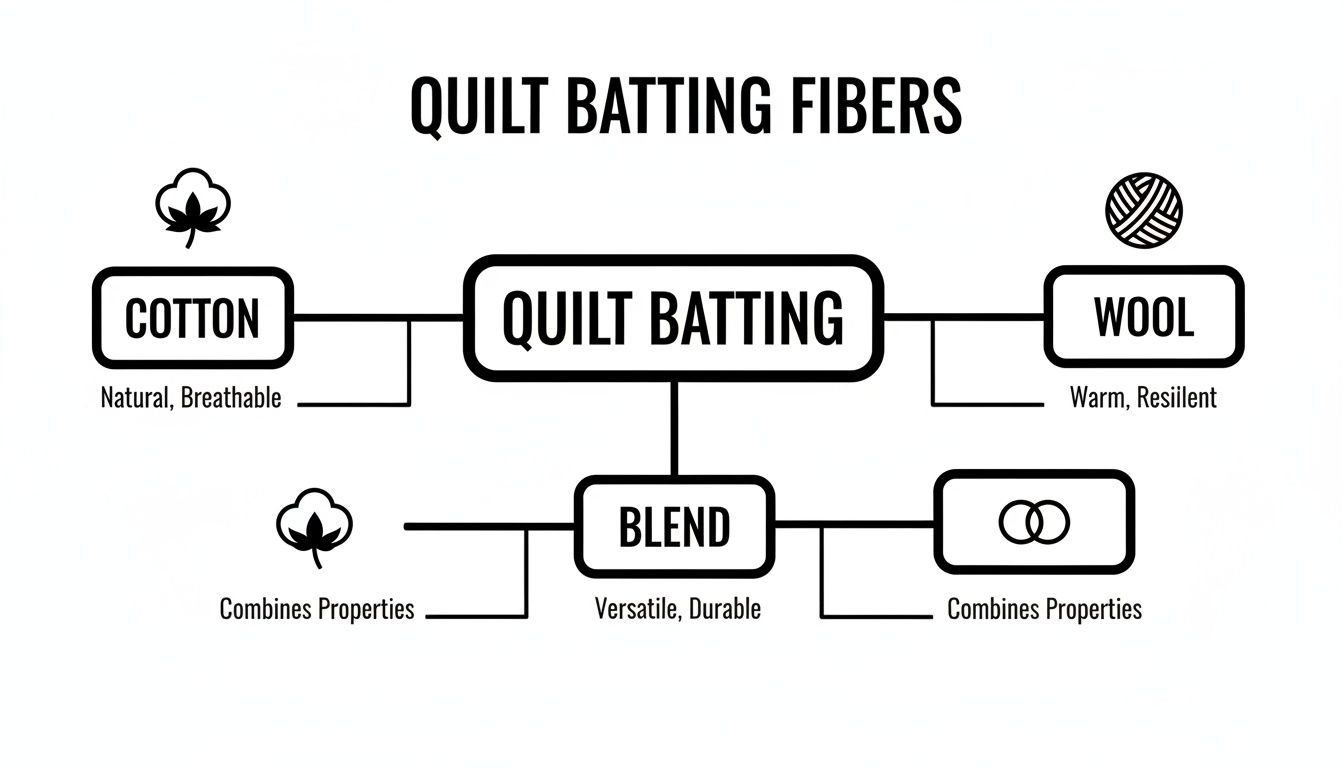
This graphic lays out how cotton, blends, and wool stack up in loft and warmth.
- Low Loft: Cotton/poly blends at 2.0 osy hug the fabric, ideal for quilts with detailed stitching.
- High Loft: Polyester around 6.0 osy puffs up boldly, showcasing quilting patterns.
- Wool: At 3.5 osy, wool strikes a balance between warmth and drape without bulk.
Comparison Of Loft Weight And Warmth
Before you decide, here’s a quick look at how common batting materials compare across loft, weight, and warmth.
| Batting Type | Loft | Weight (oz per sq yd) | Warmth Level |
|---|---|---|---|
| Cotton | Low-Medium | 2.0 | Moderate |
| 80/20 Blend | Medium | 2.5 | Moderate-High |
| Polyester | High | 6.0 | High |
| Wool | Medium-High | 3.5 | High |
This snapshot should help you land on the batting that matches your project’s needs.
Choosing Based On Warmth
Often, warmth aligns with weight, but fiber traits matter too. Wool and polyester deliver more insulation per ounce, making them top picks for cold-weather quilts. If you’re aiming for a cozy winter blanket, these fibers outpace cotton blends in heat retention.
Dive deeper into specific performance details with the Quilt Batting Comparison Chart. Balancing loft, weight, and warmth ensures your quilt performs exactly as you envision it.
Practical Buying Tips
Shopping for batting online usually means choosing from generous widths—96", 108", or even 120". Quilt Batting’s site lays out prices in USD per roll or yard, so you can quickly compare options.
- Art quilts craving bold texture? Aim for high loft batting.
- Summer throws need lightweight, breathable options.
- Winter bed quilts benefit from high warmth wool or polyester.
Before you commit, test a small scrap in your machine. Check tension, drape, and how the layers move together.
With loft, weight, and warmth dialed in, your quilt will not only look great but perform beautifully. Continue on to the next section for tips on quilting performance, needle choice, and thread selection.
Assessing Quilting Performance And Choosing Batting For Your Technique
Quilting performance hinges on how fibers and needles interact. Hand quilting showcases every delicate stitch, while free-motion work needs a batting that slides effortlessly. Matching your batting to your style makes all the difference.
Wool batting delivers stunning stitch definition, but a dull needle can catch on the fibers. Swap in a Topstitch 90/14 or Sharps 80/12 for clean, smooth penetration. By contrast, a cotton/poly blend with scrim lets your presser foot float, resulting in even loops.
No-scrim battings tend to shift during high-speed longarm quilting. Before committing to yards of fabric, test a small sandwich in your machine to uncover any tension issues.
Key Factors To Test:
- Needle Size And Shape
- Thread Weight
- Technique Compatibility
- Tension And Hooping
Hand Quilting And Needle Choices
Hand quilters often favor lower lofts—100% cotton or an 80/20 blend—for that heirloom look without bulk. A Quilting 7 or Chenille 10 needle cuts through fibers with minimal drag, keeping hand fatigue at bay.
For more on pairing batting fibers with hand-quilting needles, check out our guide on best batting for hand quilting. Many artisans select gentle lofts to prevent puckering and maintain stitch clarity.
“A fine hand needle paired with cotton batting creates crisp, even stitches,” notes quilter Amy Smart.
Domestic Machine And Free Motion Techniques
Home machines can tackle a variety of battings, but each fiber reacts differently under tension. Poly batting’s lofty puff can stretch stitches if you don’t fine-tune your settings. A 50wt cotton thread is a solid choice for initial tests.
Steps To Perfect Free-Motion Stitching:
- Assemble a small quilt sandwich
- Secure layers with a hoop or light adhesive
- Adjust top and bobbin tension until stitches sit flat
- Lengthen your stitch for denser battings
Tip: Aim for 8-12 stitches per inch when using scrim-supported blends.
Longarm studios favor low-loft, scrim-backed batting. It feeds smoothly through a 16" throat without drag. Paired with 16wt polyester thread and a 90/14 needle, you’ll achieve bold texture and consistent feed.
| Technique | Batting Type | Needle Size | Thread Weight |
|---|---|---|---|
| Hand Quilting | 100% Cotton (Low Loft) | Chenille 10 | 12wt |
| Free Motion Domestic | 80/20 Scrim Blend | Topstitch 90 | 50wt |
| Longarm Quilting | Low-Loft Polyester With Scrim | Universal 90 | 16wt |
| Domestic Machine | Medium-Loft Wool | Sharps 80 | 40wt |
Adjusting Tension And Hooping For Smooth Stitches
Tension is the invisible hand guiding your top and bobbin threads together. High-loft and wool batting often require lowering top tension to stop loops from forming. Dropping a few points can make stitching flawless.
Hooping matters just as much. You want a firm grip without distorting fibers. A light spray adhesive or a handful of basting pins can secure even the densest polyester layers.
In a side-by-side test, switching from a universal 80/12 to a Topstitch 90/14 on wool batting reduced skipped stitches by 70%.
When you step up to loftier battings, bump your stitch length from 12 to 10 stitches per inch. That tweak helps the needle catch both top and bobbin threads evenly. Always start with a test swatch—change just one variable, then retest.
Once your needle, thread, tension, and batting are in harmony, you’ll enjoy professional-quality feeds and flawless finishes. Next, we’ll dive into the pros and cons of each batting fiber so you can pick the perfect option for your project.
Evaluating Pros, Cons, And Best Uses
When you choose batting for your quilt, you’re really deciding on warmth, drape, and how your stitches will pop. Each fiber brings its own character, so matching that to your project makes all the difference.
For instance, cotton batting breathes beautifully and develops that beloved crinkly finish over time. Yet it does compress after repeated washes, making it perfect for baby quilts and cherished heirlooms.
Meanwhile, an 80/20 cotton/poly blend holds sharper stitch lines and shrinks less than pure cotton. Many quilters turn to it for bed quilts where you want a touch more loft and durability.
- Cotton: Breathable comfort, soft crinkles; best for throws and heirloom work.
- 80/20 Blend: Crisp stitch definition, low shrinkage; ideal for everyday bed quilts.
- Polyester: Quick-drying, lasting loft; perfect for outdoor throws and kids’ play quilts.
On the other hand, polyester batting springs back after every wash and resists moisture. However, it doesn’t breathe like natural fibers and can feel warmer than you’d like in summer.
Then there’s wool batting, which gives you lofty warmth without bulk. It highlights intricate quilting motifs, though it comes with a higher price tag and a gentler care routine.
Detailed Fiber Insights
If you hate fussing with pins, fusible batting is a huge time-saver. Iron it into place, and your layers stay put—perfect for small patches or in-the-hoop appliqué.
Even quicker is Wrap-N-Zap, which lets you microwave-baste samples in minutes. It’s a top pick for quick prototypes and time-crunched projects.
For wide, open quilting designs, scrim-reinforced cotton blends are gold. The hidden scrim layer holds stitches steady—even when you space them up to 12 inches apart.
- Fusible: Pinless basting via iron-activated resin.
- Wrap-N-Zap: Microwave-friendly basting for tiny quilts.
- Scrim Cotton: Extra stability for open-area stitching.
These specialty batts can cut basting time by 50%. That extra freedom means more time to enjoy quilting itself.
Pros Cons And Best Uses Of Batting Types
It helps to see each material side by side. The table below will guide you quickly to the best match for your next quilt.
| Material | Pros | Cons | Best Projects |
|---|---|---|---|
| Cotton | Breathable comfort, classic crinkle | Compresses over time, moderate warmth | Baby quilts, heirloom throws |
| 80/20 Blend | Crisp stitch definition, low shrinkage | Slightly synthetic feel | Bed quilts, everyday use |
| Polyester | High loft retention, quick-drying | Less breathable | Outdoor throws, quick lap quilts |
| Wool | Lightweight warmth, strong stitch show | More expensive, special care | Winter quilts, art projects |
| Fusible | Fast, pinless basting | Not for large quilts | Appliqué, hoop-ready items |
| Wrap-N-Zap | Instant microwave basting | Narrow width | Mini quilts, classes |
| Scrim-Reinforced Cotton | Stable under wide quilting gaps | Slightly stiffer | Longarm projects, open-area stitching |
Keep in mind that batts come in 96", 108", or 120" widths, and rolls up to 40 yards ensure you have what you need for any size project. Quilt Batting’s USD pricing helps you compare options at a glance.
“Picking the right batting saved me hours of basting and gave my quilts a professional finish,” notes quilter Jane Roe.
Testing Batting Before You Buy
Don’t dive in without a sample—order a few 1-yard cuts and see how they behave. You’ll test drape, loft, and how each fiber works with your machine.
- Measure your quilt top, then add 4" overlap on each edge.
- Order 1-yard cuts of your top three batting choices.
- Quilt a small patch, wash it, and note warmth, shrinkage, and stitch definition.
You’ll avoid surprises at wash time and know exactly how each fiber handles your machine tension. With these tests, you’ll choose batting with confidence.
Ready to find the perfect fill for your next masterpiece? Visit Quilt Batting to explore a curated selection built for quilters like you.
Care Washing And Storage Guidelines
Your quilt carries memories—and with the right routine, it can stay vibrant for years to come. Different battings—cotton, polyester, blends, or specialty fills—react uniquely to washing and drying.
Washing Instructions
Keep fibers happy and loft intact with these simple habits:
- Wash on a Gentle Cycle using Cold Water to curb shrinkage.
- Choose a mild, bleach-free detergent that treats fibers kindly.
- Give a short, gentle spin to remove excess water without pulling threads.
- Tumble dry on Low Heat or lay flat to air dry—both preserve fluff and drape.
Storage Tips
Shelter your quilt from dust and damp without trapping humidity:
- Skip plastic bins; they hold moisture and invite mildew.
- Slide the quilt into a breathable cotton bag for airflow.
- Refresh cedar sachets every 3 Months to keep moths at bay.
- Refold along new lines every 6 Months to prevent deep creases.
Check out our guide on fiber-specific care in our article Cotton Batting vs Polyester for detailed washing comparisons and tips.
"Consistent gentle care maintains loft, drape, and color vibrancy over time."
Rotation Reminder
Tiny rotations make a big difference. Every 6 Months, turn stored quilts to distribute wear evenly. Always let quilts air dry completely before folding away.
These simple steps ensure your quilt’s warmth, softness, and beauty endure through every season.
FAQ
Finding the perfect batting is a bit like choosing the right partner for your quilt. To help you decide, we’ve answered the questions most quilters ask about machine quilting, warmth, washing, and longarm use.
- Which batting suits machine quilting best?
- What loft keeps a blanket cozy all year?
- How do I wash quilts with fusible batting?
- Which batting glides smoothly under a longarm?
Machine Quilting Recommendations
What batting is best for machine quilting?
A high-loft cotton/poly blend, such as an 80/20 mix, strikes the right balance. You’ll enjoy crisp stitch definition without sacrificing durability when your feed dogs are racing.
Blanket Warmth And Thickness
How thick should my batting be for a warm blanket?
Aim for 4 to 6 ounces per square yard for that sweet spot—snug yet not bulky. If you crave extra snugness, a loftier polyester or wool variant will wrap you in warmth.
Washing And Care Tips
Can I wash quilts with fusible batting?
Absolutely. Choose a gentle cycle and cold water to keep the fusible web intact. Tumble dry on low or lay flat to air dry—this little step preserves adhesion and shape.
Longarm Machine Compatibility
What batting works best with a longarm machine?
Select a low-loft batting with scrim support for effortless feeding. You’ll notice less drag and cleaner, sharper quilting lines every time.
“Test a small quilt sandwich first to catch any shifting or tension issues. It’s a simple way to save yourself yards of rework.”
Keep these tips in mind before you commit to a full roll:
- Consider how blend or fiber type affects drape and shrinkage
- Match loft weight with your desired warmth-to-bulk ratio
- Verify scrim or fusible backing suits your chosen technique
Armed with this checklist, you’ll quilt with confidence—knowing each layer behaves exactly as intended.
Ready to stock up on premium batting? Visit Quilt Batting to explore our full selection and snag the perfect roll today.